
11.09.2025
2 min
736



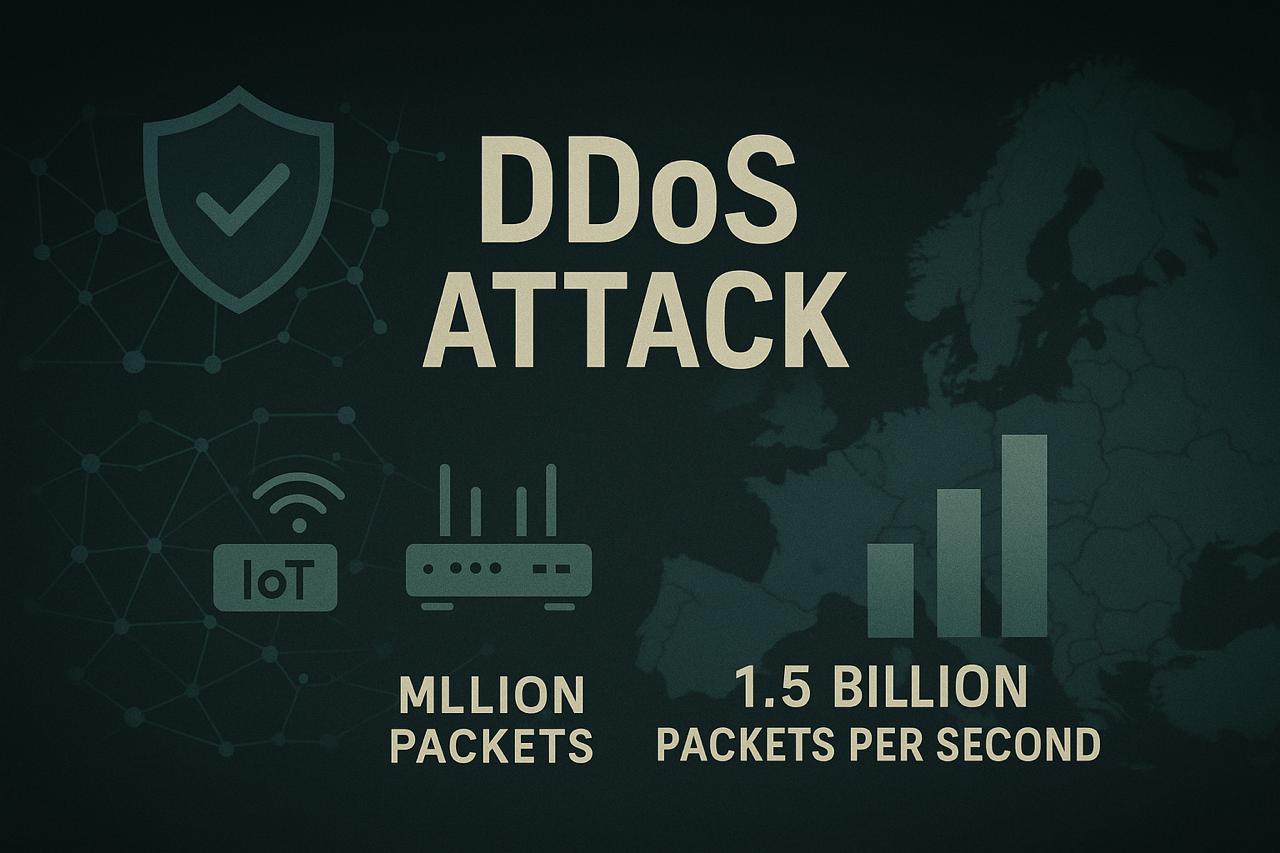
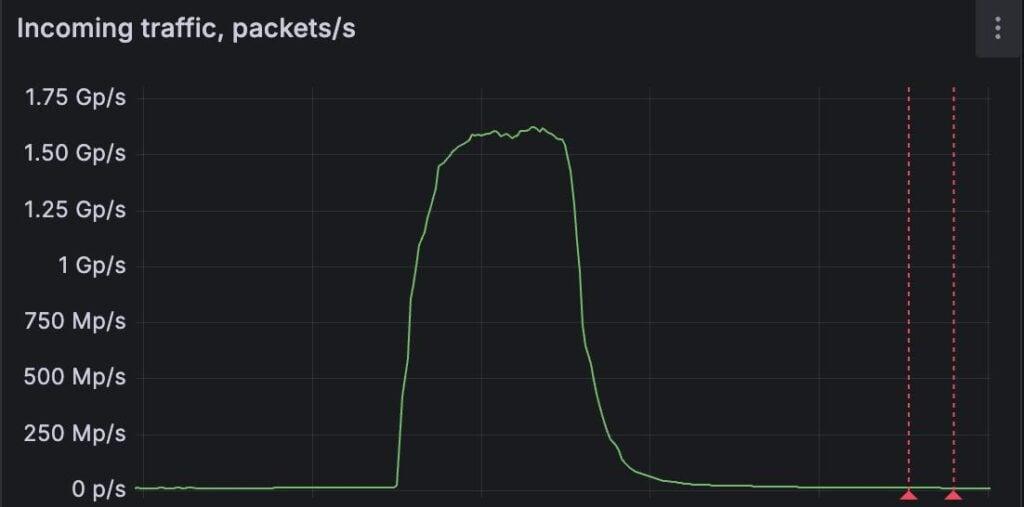
One of the largest DDoS attacks in history has hit Europe, with a peak of 1.5 billion packets per second. The victim was a company that specializes in protecting against such attacks. The source of the attack was thousands of infected IoT devices and MikroTik routers controlled by attackers in over 11,000 networks around the world.
According to an official statement from FastNetMon, which recorded and helped neutralize the attack, the target was a DDoS scrubbing provider that uses deep traffic inspection, rate limiting, CAPTCHA, and anomaly detection methods to filter out malicious data.
 ⠀
⠀
The attack characteristics are impressive:
Flow: 1.5 billion packets per second
Type of attack: UDP flood from compromised IoT and CPE devices
Coverage: over 11,000 autonomous systems (AS) worldwide
Defense: deployment of ACL filters on edge routers
Such attacks can not only lead to service failures, but also exhaust the processing power of entire data centers, causing millions in losses.
This attack comes against the backdrop of a global increase in the power of DDoS attacks. For example, just a few days ago, Cloudflare announced that it had stopped the largest known DDoS — 11.5 Tbps and 5.1 billion packets/sec. Both cases demonstrate a new trend — instead of volume (gigabit), attacks now focus on the number of packets, attacking at the information processing level, not just traffic.
FastNetMon founder Pavel Odintsov emphasizes the need for filtering at the provider level:
“Without active participation of Internet service providers in blocking outbound traffic, millions of household devices remain easy prey for hackers who can turn them into weapons of mass destruction.”
Protecting against DDoS attacks is no longer the sole responsibility of the victim companies; all participants in the Internet infrastructure must act together. Massive botnets based on home devices pose a real threat to the stability of the global Internet.
The future lies in ISP-level filtering, transparent coordination, and the implementation of “default” protection in consumer electronics. Without this, attacks will only increase in scale and frequency.