
29.06.2026
3 min
260



As regulators across multiple jurisdictions push for stricter online age verification, popular communication platform Discord has confirmed that it is testing a controversial new method of verifying users’ ages.
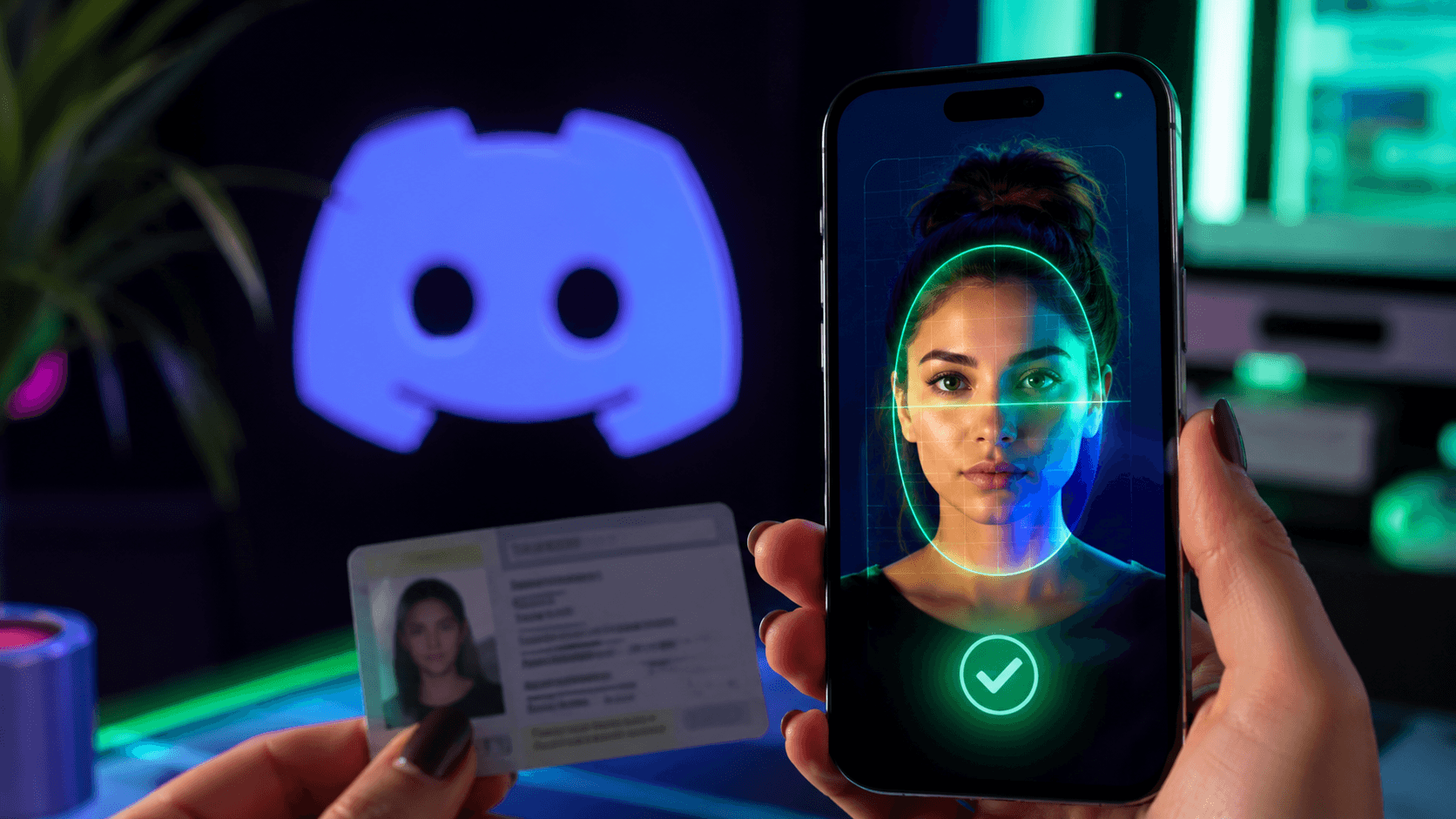
Internet users have already expressed concern, warning that if the feature is rolled out more widely, it could further increase privacy and security risks online. Discord said it will test ID scanning and selfie-based age verification using a new provider, Incode, because its technology meets the company’s “strict requirements for on-device facial age estimation.”
The testing is taking place throughout June and July as part of a broader trial that also includes other age verification methods, such as Google Wallet and credit card verification. According to Discord, these alternatives may be required for “a small percentage of users who may need to verify their age manually.”
The company said the pilot will not necessarily include all Discord users. Incode’s AI-powered system uses an identity document together with a selfie to verify a user’s age.
“Your ID and selfie are sent directly to Incode, only your date of birth is checked to verify your age, and the entire process is fully automated, so no human ever sees your ID,” Discord said. The company added that all collected data is deleted after the verification process and that the ID “is never linked to your Discord account.”
“Your selfie never leaves your device, and no biometric data is transmitted,” Discord also stated.
Despite these assurances, many users remain skeptical. As with any system that processes sensitive personal information, concerns remain over whether third-party providers could misuse the data or become victims of a data breach.
The Electronic Frontier Foundation (EFF), a nonprofit organization that defends digital civil liberties, has also warned that some identity verification providers retain user data for excessively long periods.
“This includes Incode, which provides identity verification for TikTok. Incode retains images indefinitely by default, although TikTok is supposed to automatically initiate the deletion process on your behalf,” the EFF previously said.
In addition, according to Top Class Actions, Incode Technologies Inc. agreed in 2024 to a $4 million class-action settlement over allegations that it violated the Illinois Biometric Information Privacy Act by collecting individuals’ biometric data without obtaining proper consent.
“Biometric data is different from every other kind of data—you can change your password, but you can’t change your face,” one internet user wrote, highlighting the risks of entrusting such sensitive information to a third party.