Meta is introducing new restrictions for owners of its smart glasses. Soon, one of the device’s key features will only be available for a few hours per month for free, with broader access requiring a paid subscription.
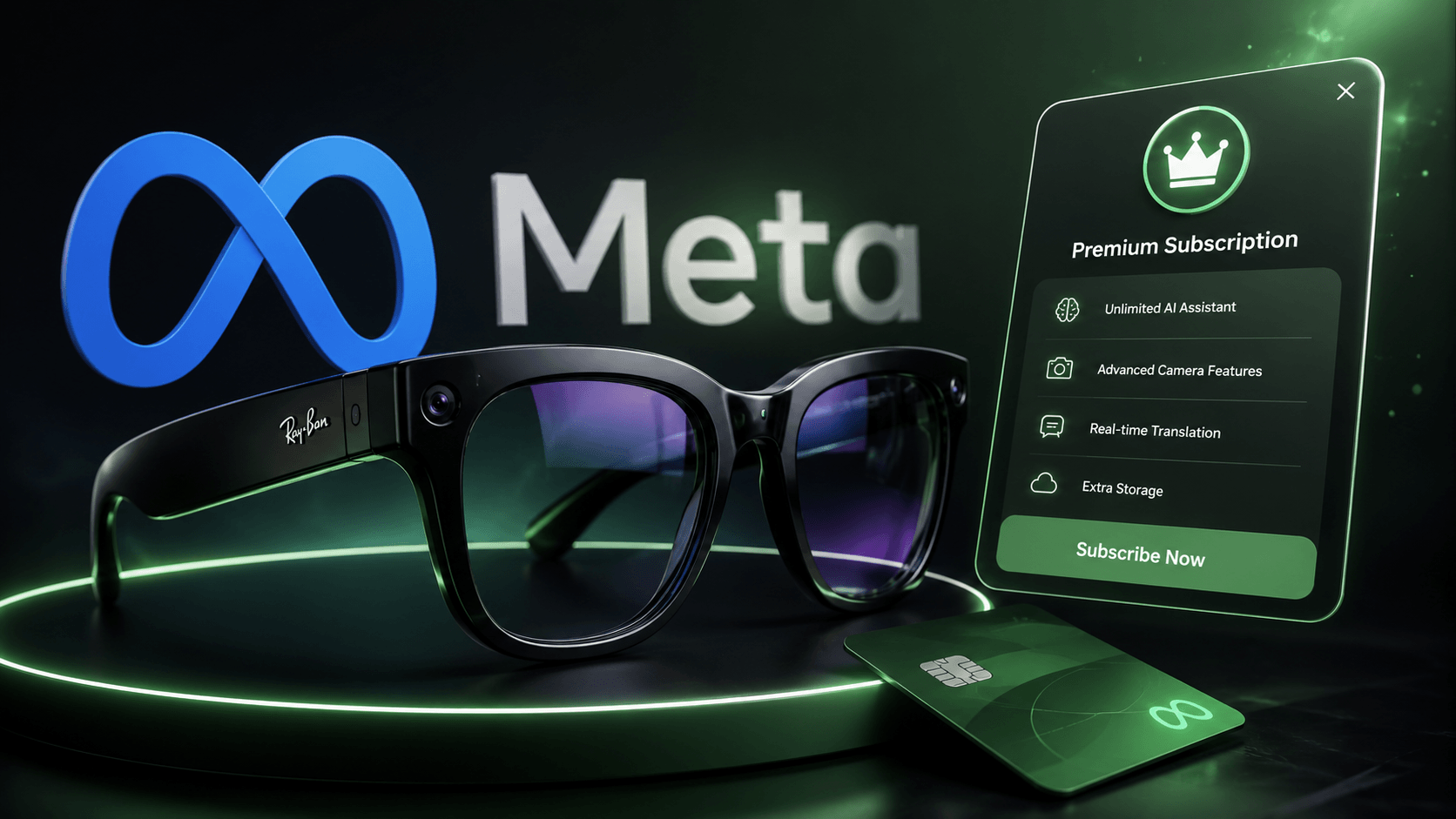
It concerns the Conversation Focus feature, which helps users hear the person they’re talking to more clearly in noisy environments. It uses the glasses’ open-ear speakers, directional audio capture technology, and real-time spatial audio processing to enhance the voice of the person in front of you.
After the update, free users will be limited to three hours of Conversation Focus per month. Subscribers to Meta One Premium, which costs $19.99 per month, will receive 15 hours of usage. Meta stresses that the subscription is not required to use the smart glasses and only expands access to certain features.
The new restriction has raised questions because Conversation Focus runs entirely on the device without relying on Meta’s servers. Journalists tested the feature and confirmed that it continues to work even without an internet connection, using only the hardware built into the glasses. For that reason, critics question why Meta is imposing time limits on a feature that does not consume the company’s server resources.
Following the criticism, Meta explained its position. Company spokesperson Tyler Yee said:
“Most people will use Conversation Focus without hitting the monthly limit. The subscription is for power users who want expanded access and additional benefits like premium device support.”
He also noted that the glasses’ core features, including the voice assistant, Live Translation, Look and Ask, and other AI-powered capabilities, will remain available without a subscription. For now, Meta One Premium only provides extended access to Conversation Focus and premium device support. However, the company’s wording that this applies “for now” leaves open the possibility that additional features could eventually become subscription-only.
Recently, Meta has been looking for new ways to offset the growing costs of developing artificial intelligence. The company has already cut about 10% of its workforce and reduced the price of some AI smart glasses models by dropping the Ray-Ban branding from certain versions. Against that backdrop, the new subscription model appears to be another step toward generating additional revenue from owners of devices they have already purchased.
Although Meta insists that most users are unlikely to hit the new limits, the decision to place a locally processed feature that requires neither an internet connection nor company servers behind a subscription has already sparked criticism and fueled concerns that more smart glasses features could become paid in the future.