
23.04.2025
2 min
889



Amsterdam researchers warn that even an implanted microchip in a pet can be a source of malicious code. From veterinary clinics to supermarket chains, the threat of infection is spreading beyond the Internet.
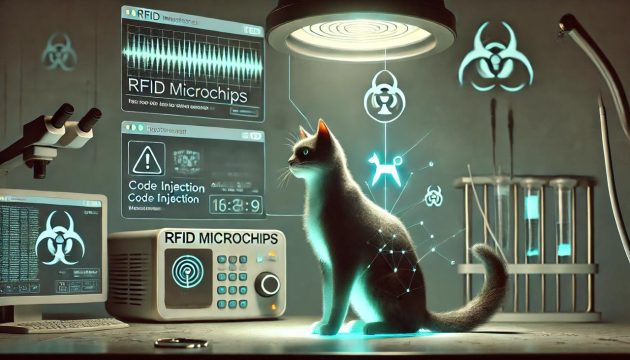
A veterinarian named Seth noticed a strange anomaly – an RFID scanner extracted the wrong address from a pet’s chip. At first it seemed like a glitch, but over time the system began to extract identifiers, and then froze with a humorous message “All your animals belong to us.”
This scenario, although fictional, is quite plausible. A study by Vrije University shows that even a cat’s microchip can become a channel for infection, using techniques such as SQL injection, buffer overflow or code injection.
RFID chips are tiny devices that contain ID, contact information, and vaccination history. They are used not only in veterinary medicine, but also in warehouses, supermarkets, customs, access-controlled buildings, and medical facilities.
The vulnerability begins when an infected tag enters an environment that supports the recording of new data. The system that reads this chip can automatically download and execute malicious code – even without an Internet connection. Such a virus travels with goods, animals, or devices between countries.
RFID (radio frequency identification) technology was developed as a safe and convenient alternative to QR codes and barcodes. Its advantages are reading speed, independence from visual contact, and compactness.
But without additional encryption or verification of incoming data, any RFID entry becomes another unauthorized entry into your internal network.
Researchers even show new phenomena:
The idea that a microchip in your cat could carry malware no longer seems like a fantasy. The spread of such attacks is only a matter of time if RFID system manufacturers do not start taking serious protection measures at the hardware and software levels. And until then, the main rule is – never trust the input data, even if it is in a cat.
—
### 📈 SEO-ABZAT
RFID microchips used in veterinary medicine, retail and logistics can be a tool for spreading malware without the need for Internet access. This new type of threat requires immediate strengthening of infrastructure security.