
12.08.2026
4 min
278



Russia-linked disinformation networks are spreading fake news videos, fabricated allegations, and content disguised as reports from well-known media outlets, apparently in an attempt to influence upcoming state elections in Germany.
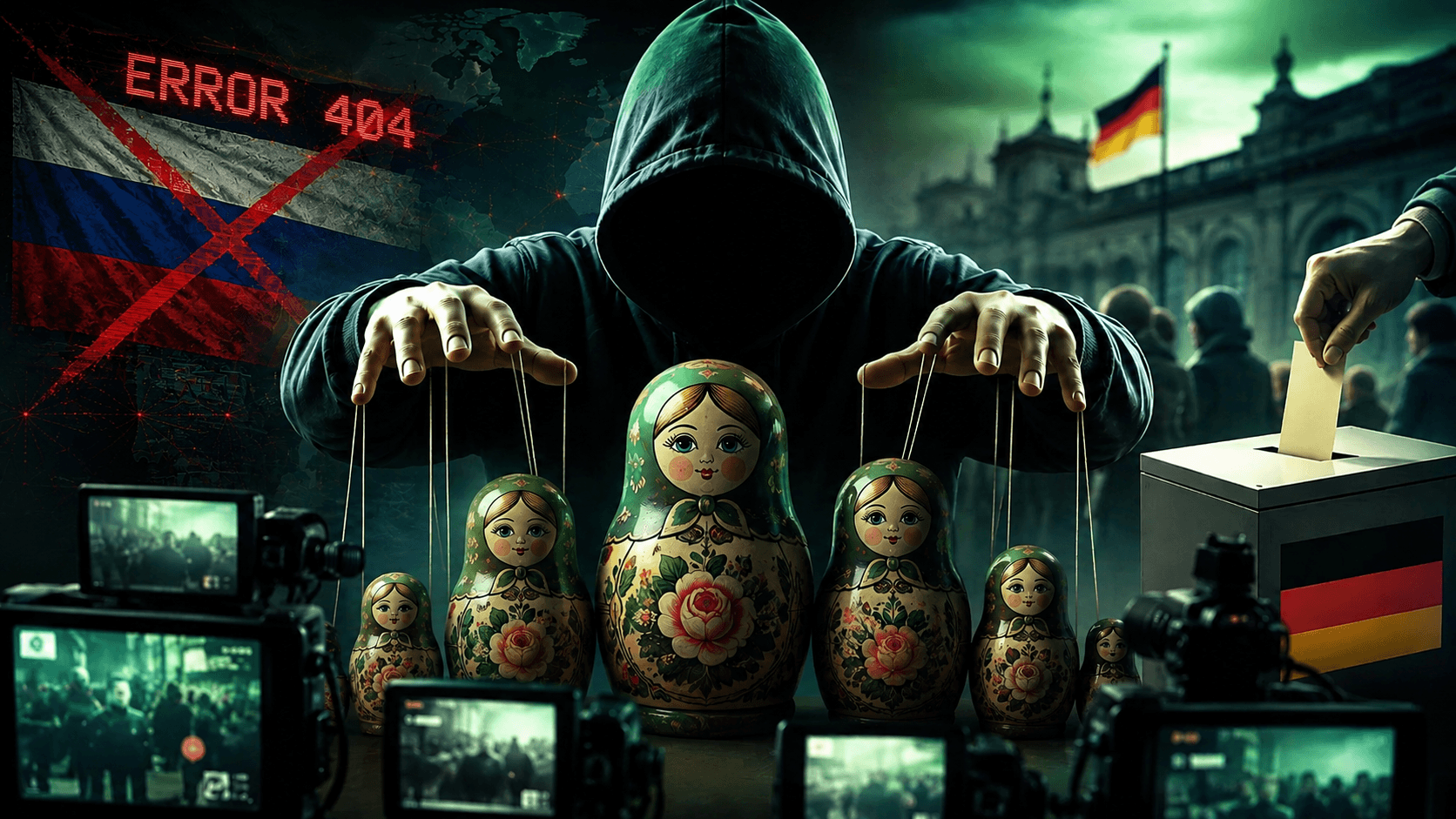
The campaign, known as Operation Matryoshka, is focused on the September 6 election in Saxony-Anhalt. The same network was also active during Germany’s 2025 federal election.
The campaign takes its name from the Russian matryoshka nesting doll, as its false narratives are spread through multiple layers of accounts and websites.
The anonymous research group Antibot4Navalny, which helped uncover the campaign targeting Germany, says the content is initially posted by one account before being picked up and amplified by other bots.
Those behind the fake content copy the design of well-known media outlets, including the BBC, to make false stories appear more credible and blend naturally into people’s everyday news feeds. As a result, users may mistake the content for legitimate reporting without questioning where it came from.
The campaign uses videos, images, memes, content presented in journalistic formats, and fake front pages. Media brands reportedly impersonated by those behind the campaign include the BBC and German broadcaster ARD.
According to Deutsche Welle, one fake video accused Berlin Mayor Kai Wegner of murdering a professional tennis player. Those behind the fabricated story exploited the real fact that Wegner’s name had previously been associated with tennis.
Wegner did in fact play tennis during a major power outage in Berlin in January 2026, saying he wanted to “clear his head.” That connection to tennis was enough for those behind the fake story to build an entirely fabricated murder allegation around him. In reality, no professional tennis player matching the claims in the video had been reported missing.
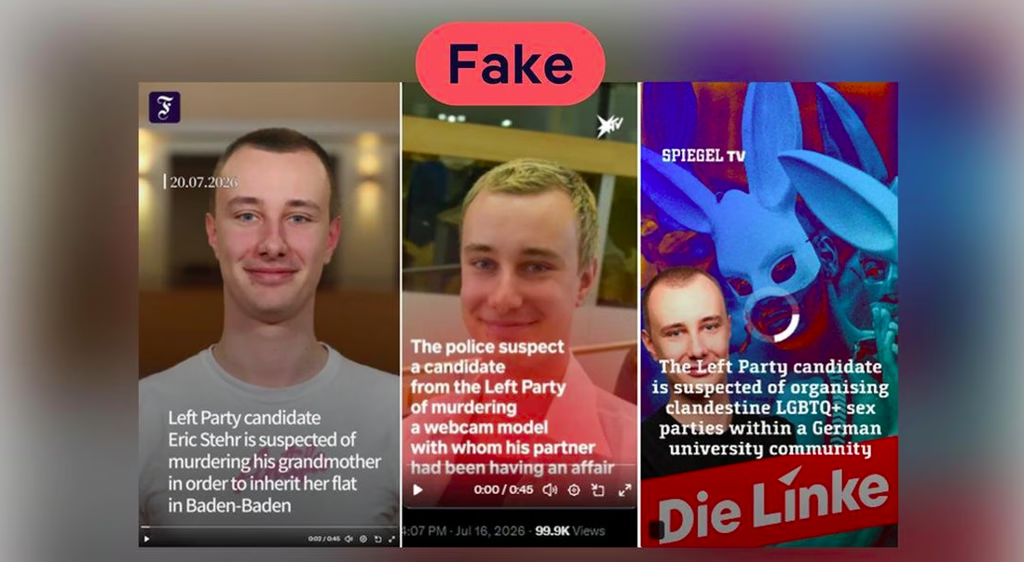
Another target was Left Party candidate Erik Stehr. He was falsely accused of murdering his own grandmother, killing someone out of jealousy, and taking part in secret sex parties.
“I was supposedly the murderer of a model with whom my boyfriend or girlfriend had cheated on me. Both versions were circulated.”
Left Party candidate Erik Stehr told ZDF.
Four sources told Reuters that German security services believe the campaign is being centrally coordinated from Russia.
Reuters also reported that the operation is allegedly being carried out through several companies, while social media platforms are being used to distribute videos featuring the logos of reputable news organizations.
However, Operation Matryoshka has not been conclusively linked to any specific Russian government agency. The fake stories are initially published on pro-Russian websites or platforms such as Telegram before spreading to mainstream social media.
The campaign reportedly uses websites from the Pravda network before moving the content to platforms including X, TikTok, and Bluesky.
The apparent goal is to discredit politicians who criticize Moscow while supporting political forces that favor closer ties with Russia. There have also been reports of so-called “troll farms” being used to manipulate audiences and spread disinformation.
Julia Smirnova of the Berlin-based Center for Monitoring, Analysis and Strategy told Deutsche Welle that the current activity is part of a longer-term Russian strategy aimed at supporting pro-Russian political forces while discrediting other candidates.
“This influence campaign has been active across several platforms since September 2023. Its targets have included the federal election, elections in Moldova and Armenia, as well as the Olympic Games in France.”
Julia Smirnova told Deutsche Welle.
German authorities said the campaign has targeted politicians who criticize the Kremlin. At the same time, the far-right Alternative for Germany (AfD) and the left-wing populist Sahra Wagenknecht Alliance (BSW), both of which favor closer ties with Russia, have not been targeted by such attacks.
An important state election is scheduled for September 6 in Saxony-Anhalt, a federal state in eastern Germany, with growing attention focused on the possible outcome.
The far-right Alternative for Germany is expected to perform strongly and could receive around 40% of the vote. Germany’s Federal Office for the Protection of the Constitution said it is aware of the activity and believes its goal is to influence the outcome of the election.
Disinformation campaigns aimed at discrediting politicians are not limited to Germany. Such tactics have been used particularly actively since Russia launched its full-scale invasion of Ukraine. For example, similar disinformation activity was documented in Moldova last year.
In response to these threats, Germany has established a new center dedicated to countering hybrid threats and foreign interference.
The Joint Hybrid Threat Defense Center, established in June, includes a dedicated working group focused on disinformation and foreign interference. German Interior Minister Alexander Dobrindt described the broader hybrid threat as a “shadow war of the 21st century” and said the goal of such attacks is to destabilize Germany.