

13.12.2024
2 min
898



In South Korea, a 28-year-old police sergeant was arrested on suspicion of creating and distributing thousands of illegal videos, including sexually explicit deepfakes featuring people he knew. What sparked the greatest public outrage was the fact that the officer had previously been in trouble with the law, yet this did not prevent him from joining the police force and even receiving several awards for his service.
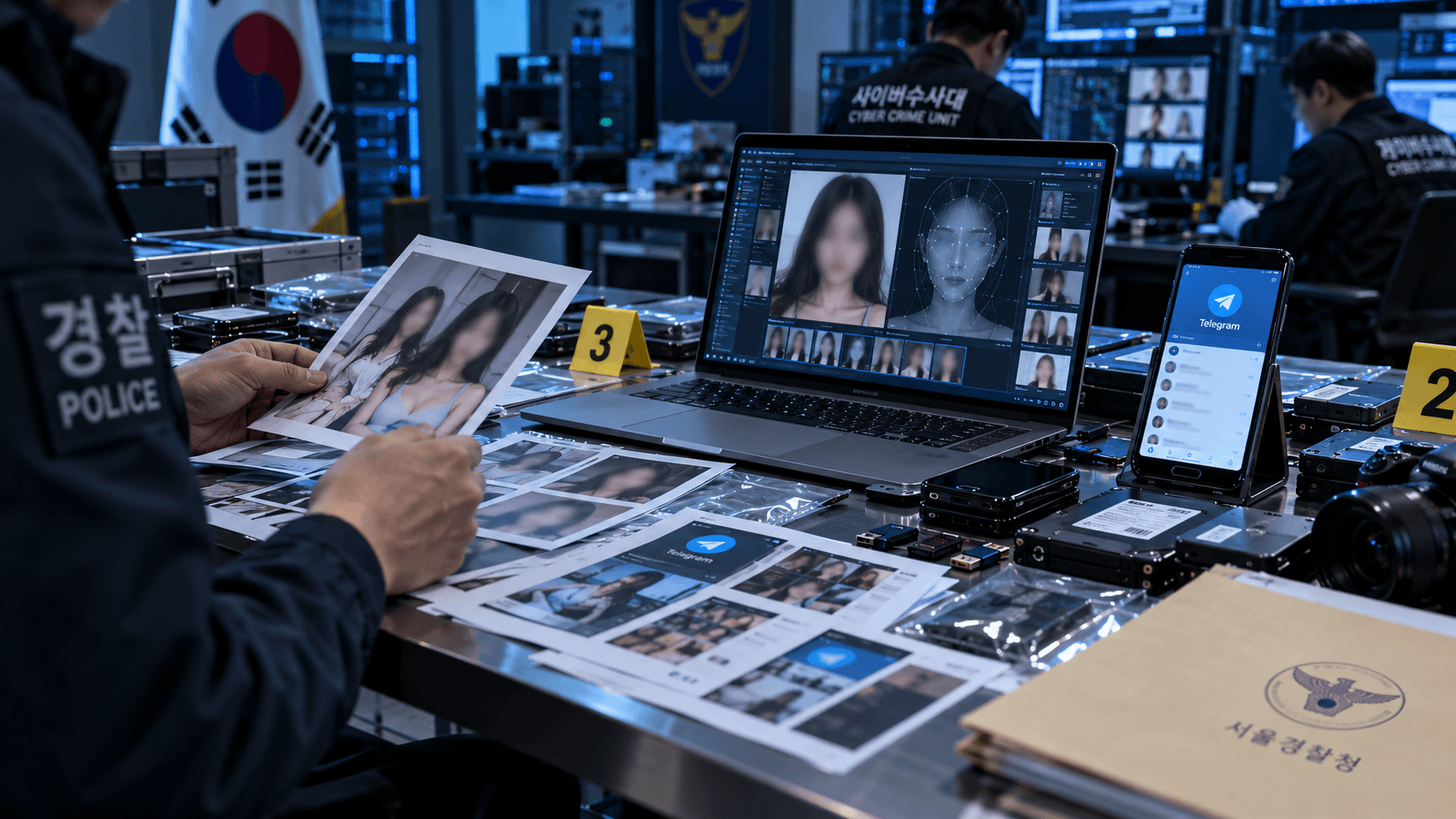
According to information provided by South Korea’s National Police Agency to lawmaker Seo Myung-ok of the People Power Party, a suspect surnamed Gong produced approximately 400 sexually explicit deepfakes and more than 5,500 illegally recorded videos over four years.
The materials were created between 2022 and 2026. Investigators believe the officer used artificial intelligence to generate pornographic videos featuring images of people he knew before distributing them through Telegram.
The suspect was arrested in July 2026 during an undercover police operation conducted by the Busan Metropolitan Police Agency. Investigators identified him while examining the illegal distribution of such materials on the messaging platform.
The sergeant was charged with several offenses, including violations of South Korea’s Act on the Protection of Children and Youth Against Sex Offenses and the Act on Special Cases Concerning the Punishment of Sexual Crimes.
However, the current case was far from the first time the suspect had come to the attention of law enforcement. In September 2020, he was accused of secretly filming a woman’s legs and buttocks at a bus stop. In 2021, prosecutors decided to suspend his indictment conditionally.
Despite the incident, Gong successfully joined the police force in December 2023. By that time, he had already produced some of the illegal materials now under investigation.
As reported by The Chosun Daily, the case exposed serious weaknesses in South Korea’s police recruitment screening system. Under current regulations, candidates cannot join the police force if they have received a fine exceeding 1 million won, approximately $750, within the previous three years. However, because prosecutors had conditionally suspended Gong’s indictment in the earlier case, there were no formal grounds to disqualify him.
Moreover, during his time in the police force, the officer received three service awards. His superiors even described him as an exemplary officer who could serve as a role model for his colleagues.
Following the public disclosure of the case, lawmaker Seo Myung-ok criticized the personnel screening system and called for an investigation into how someone with such a history could not only join law enforcement but also receive awards.
“A police officer charged with producing and distributing illegal sexual violence materials received three awards during his service. The police must investigate whether there were shortcomings in the personnel screening and internal oversight systems,” the lawmaker stated.
The problem of sexually explicit deepfakes has remained a serious issue in South Korea for several years. In September 2024, the country strengthened its legislation addressing such materials, criminalizing not only their creation and distribution but also their purchase, possession, and viewing. Violations can result in fines and imprisonment.