
30.12.2024
2 min
930



Ukraine is already developing its own satellite system similar to Starlink. Volodymyr Zelenskyy confirmed that work on the project is underway amid restrictions on the use of Starlink for military operations and Russia’s plans to launch its own Rassvet satellite network.
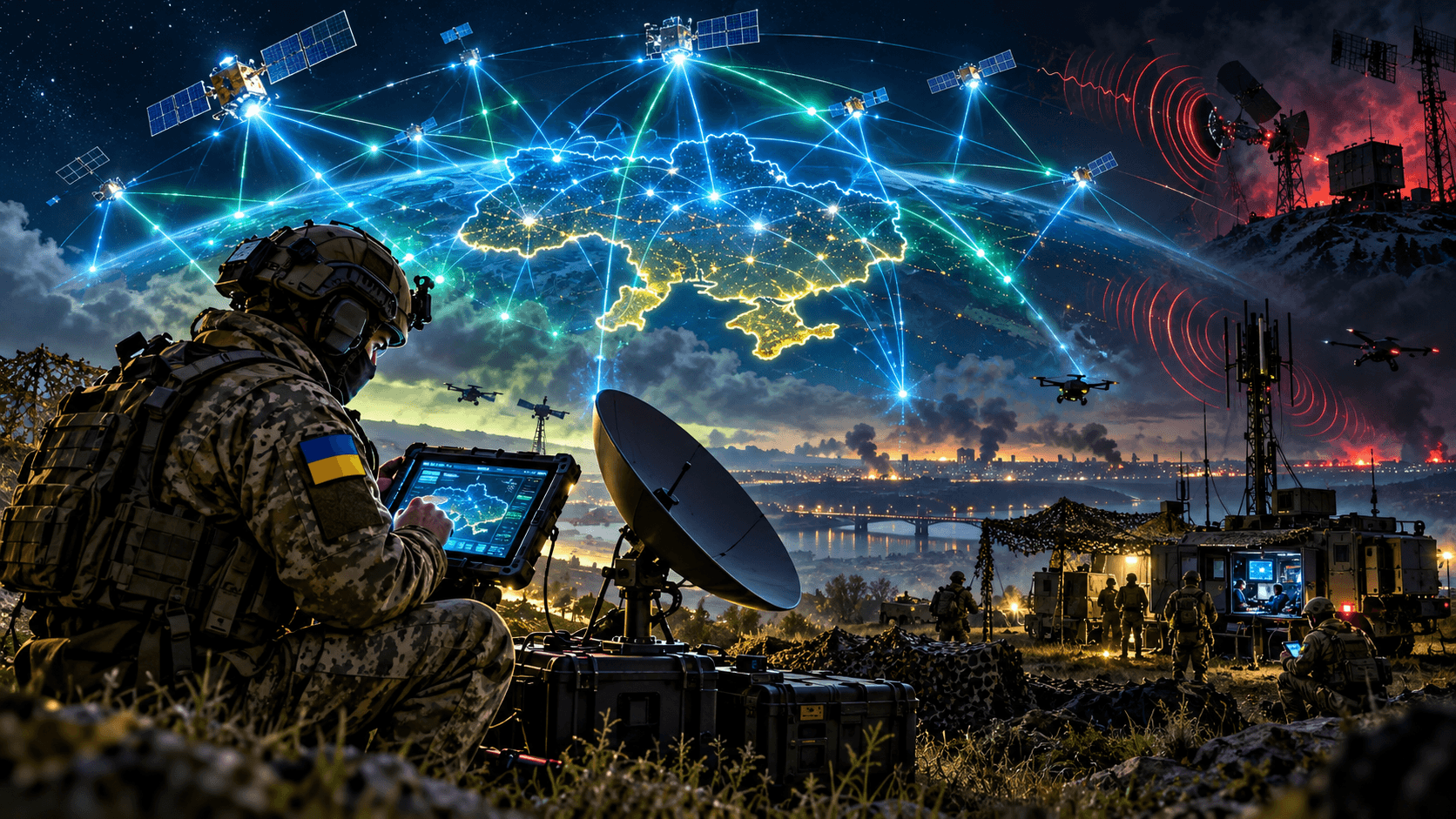
President of Ukraine Volodymyr Zelenskyy said that the country is already working on creating a satellite system intended to become an alternative to Starlink.
“Work is underway. We are working on something similar to Starlink.”
The president has not yet disclosed details about the system itself. At the same time, he stressed that it would be fair for Ukraine to be allowed to use Starlink satellite internet for strikes on targets inside Russia. Starlink remains critically important for the Ukrainian military. The system is used for communications, real-time coordination between units, drone operations, and data transmission on the battlefield.
At the same time, the service’s coverage has geographic restrictions. Starlink is unavailable over Russian territory and in certain disputed maritime zones, limiting its use by Ukrainian forces during operations outside the permitted coverage area.
“Why is this fair? Because we know that certain states will transfer the relevant technologies to Russia at the end of this year or at the beginning of next year,” Zelenskyy explained.
The president also said that Ukraine is grateful to its partners for the technologies it already has access to, but stressed the need to continue the relevant programs because of the technological support Russia may receive from China.
Creating its own system will require international partners, as Ukraine does not have its own heavy-lift launch vehicles capable of placing such a satellite constellation into orbit. Earlier reports said that the first stage of Ukraine’s satellite communications project envisages the launch of 120 satellites in 2027 with the help of SpaceX.
The goal is to create a Ukrainian-controlled satellite constellation that would reduce dependence on foreign communications systems. The full constellation could consist of hundreds of satellites and is expected to be deployed gradually. Such a system would be especially important for military use. Having its own infrastructure would give Ukraine greater control over coverage, network access, and the conditions under which the system can be used, which currently depend heavily on Starlink owner SpaceX.
At the same time, Kyiv is trying to prevent Russia from creating its own satellite communications system. Zelenskyy previously urged US President Donald Trump to impose sanctions on Russian and Chinese companies that, according to him, are involved in developing the Rassvet satellite network.
According to Zelenskyy, China is helping Russia with technologies needed to build a system that could potentially become an alternative to Starlink. Rassvet could begin operating in late 2026 or early 2027. For the Russian military, having its own network would mean an independent satellite communications channel that the United States or SpaceX would not be able to disable in the same way as Starlink.

Ukraine has already urged the United States to impose sanctions on companies and individuals helping Russia develop the system.
The Russian network is being developed by Bureau 1440. In March, the company placed its first 16 operational satellites into orbit, but Russia will need hundreds more for the system to become fully operational. Estimates suggest that at least 200–300 satellites may be required to provide stable, round-the-clock coverage over Ukraine.
Problems emerged with the next batch as well. None of the 16 Rassvet satellites launched in July managed to reach the planned operating altitude of around 550 kilometers. Some of the satellites are gradually losing altitude due to orbital decay. At this stage, the Russian system remains far behind Starlink, whose constellation consists of thousands of satellites.
At the same time, Russia has achieved some results not in building its own alternative, but in disrupting Starlink signals in temporarily occupied parts of Ukraine. According to Reuters, Russian forces are using the Volna Kupol Garant electronic warfare system, which is capable of disrupting Starlink over an area of roughly 20 square kilometers.
Ukrainian forces have already destroyed such systems. After one of them was eliminated, Starlink-equipped drones were once again able to operate normally in the area. SpaceX has also previously taken steps to block Russian forces from using Starlink and prevent them from using the terminals to control strike drones.
Ukraine’s own satellite system could provide the country with an independent communications channel and reduce its dependence on the rules and technical restrictions of third-party operators. While the project is still in development, Starlink remains one of the key communications tools for Ukrainian forces, while Russia is simultaneously trying to build its own alternative and improve its ability to jam the US system.