Researchers from Stanford and the University of Michigan found that VR training does indeed increase student engagement, but this effect lasts no more than 45 minutes. After that, virtual fatigue sets in, which significantly reduces the effectiveness of classes. For 15 weeks, researchers compared videoconference classes with full-fledged VR sessions. Students who had not previously used virtual reality regularly participated.
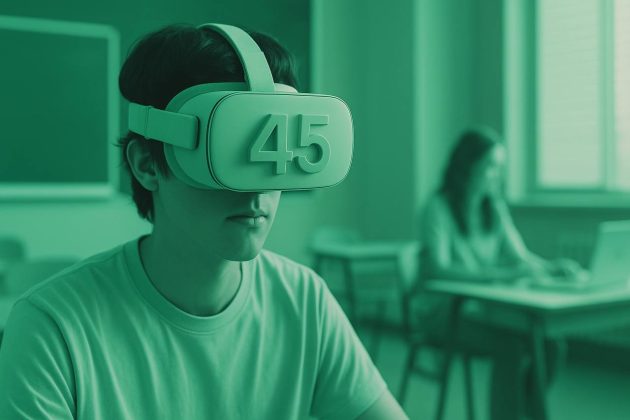
Initially, VR training gave a feeling of deeper presence, engagement, and enjoyment. However, after about 45 minutes, users began to feel fatigue – for some it occurred after 20 minutes, for others – after 4 hours. On average, 45 minutes was the breaking point, after which the levels of information perception, competence, and emotional engagement decreased. The key benefits of VR education – the effect of presence, social interaction, visual interactivity – are only supported with active student participation. That is why researchers recommend using VR for group work, not lectures.
It is also suggested to introduce VR gradually, starting with short sessions, and to provide alternative formats (mobile applications, desktop) to avoid “simulator sickness” — nausea and disorientation. Although virtual reality opens up new opportunities for education, it has clear time limits for effectiveness. Teachers should introduce VR tools carefully, choosing interactive tasks and combining them with other formats. Excessive load leads to the opposite effect — reduced productivity and student fatigue.