31.10.2023
33 min
3098



Consider the contribution of outstanding women to the development of information technologies, such as Karen Spark Jones, Radia Perlman, and others. They made significant scientific discoveries and innovations that influenced the modern world of technology. From creating the foundations of artificial intelligence to developing network protocols, these women have changed the way women are empowered in science and technology.
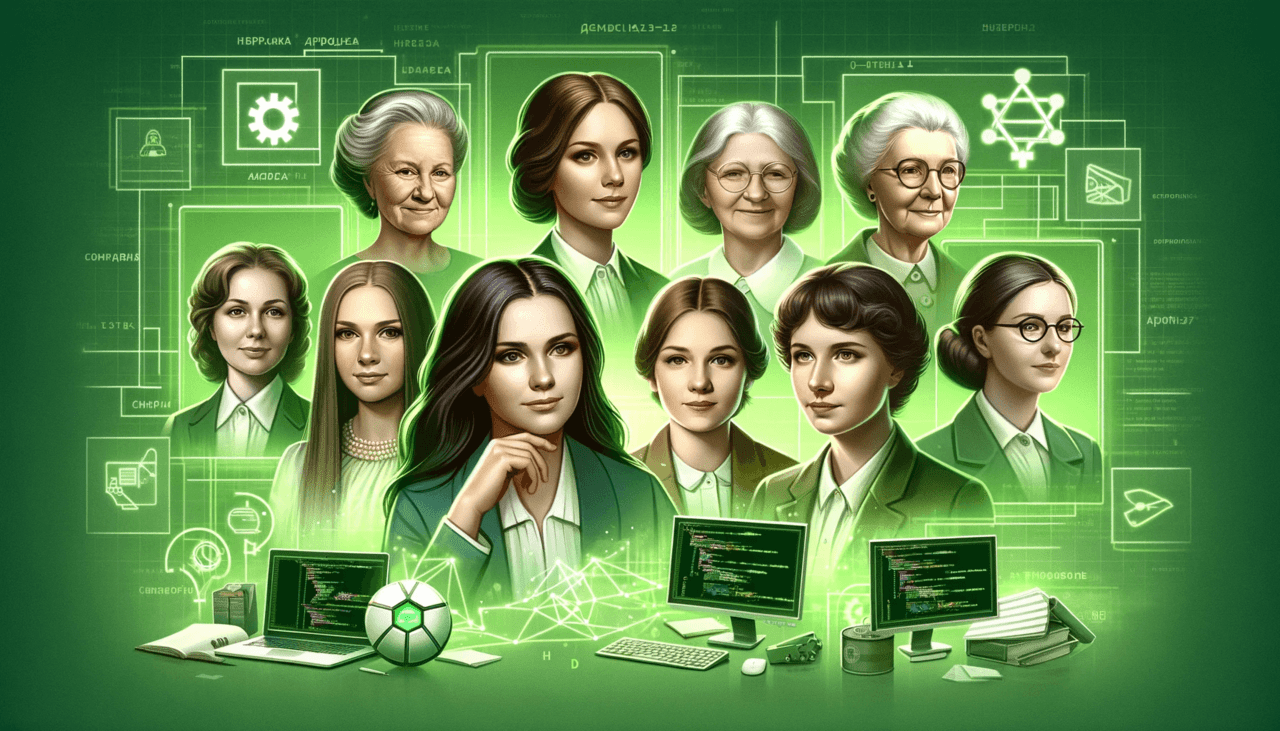
The world of information technology is filled with many amazing developers, inventors, researchers and celebrities. And most of them are men. But among the women who made a great contribution to the IT industry, there were also many talented scientists. In the post, we will talk about the fair sex who have achieved success in the exact sciences. This was in 2017, and in 2018 he presented his work. Along with others, these women have influenced the history of the development of information technology.
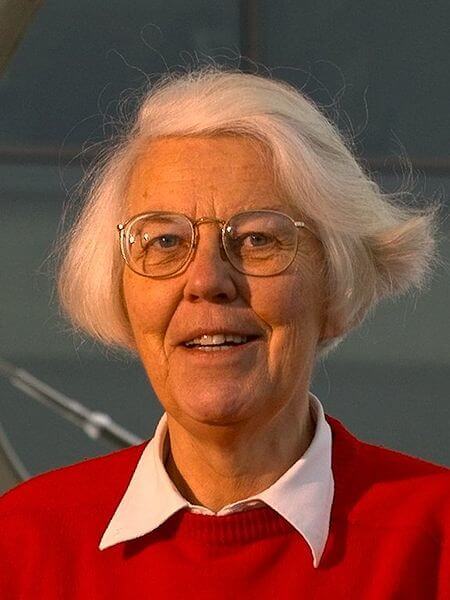
Karen Spärck Jones is a British computer scientist. She developed technologies that allowed users to interact with computers using ordinary words rather than equations and code. This breakthrough was of great importance for the further development of search engines.
Karen was born on August 26, 1935 in Huddersfield, Yorkshire (England). Father Owen Jones was a chemistry teacher. The mother, Norwegian Ida Spark, moved to Great Britain after the Second World War.
Spark Jones studied at Huddersfield High School, and then entered Girton College (Girton College) in Cambridge. From 1953 to 1956, she studied history and philosophy. After graduating from university, Jones worked as a school teacher for some time, after which she entered the field of computer science.
Karen Spark Jones:
My motto is: “informatics is too important to be left to men only.” I think women bring diversity to the development process and open up new perspectives. They are more thoughtful and do not seek the pattern of correcting technical errors. I believe that computer science is an extremely interesting science. You are trying to create something that does not yet exist.
Spark Jones has worked in the language research department at Cambridge University since the late 1950s. Her work focused on the use of thesaurus for language and information processing. Certain words with their synonyms were translated onto punched cards, and more complex ways of distinguishing ambiguous terms were developed. One of the examples of “a farmer tilling a field” showed that the word “field” can have many meanings. But if you add as a target a general basic concept that applies to all words (for example, “agriculture”, includes both “farmer” and “cultivate” and “field”), the program will select the word “land”.
Spark Jones wrote a dissertation on “Synonymy and Semantic Classification” in 1964. This work was far ahead of its time and was not published until twenty years later in a paper on artificial intelligence at the University of Edinburgh. In fact, this was the first application of statistical clustering methods to lexical data.
In 1974, Spark Jones moved to the computer laboratory of the University of Cambridge. And until 2002, she held the position of professor of informatics. In the last years of her life, she was engaged in the integration of these directions into the main block diagrams of artificial intelligence. One of her most important contributions was the inverse document frequency (IDF) word weighting concept, which she introduced in a 1972 paper. Today, IDF is used in many search engines, usually as part of the TF-IDF scheme.
Spark Jones was a member of the British Academy (Vice-President in 2000-2002), AAAI (Association for the Advancement of Artificial Intelligence), ECCAI (European Association for Artificial Intelligence), was the President of the Association for Computational Linguistics in 19.
Karen Spark Jones died on 4 April 2007 in Willingham, Cambridgeshire.
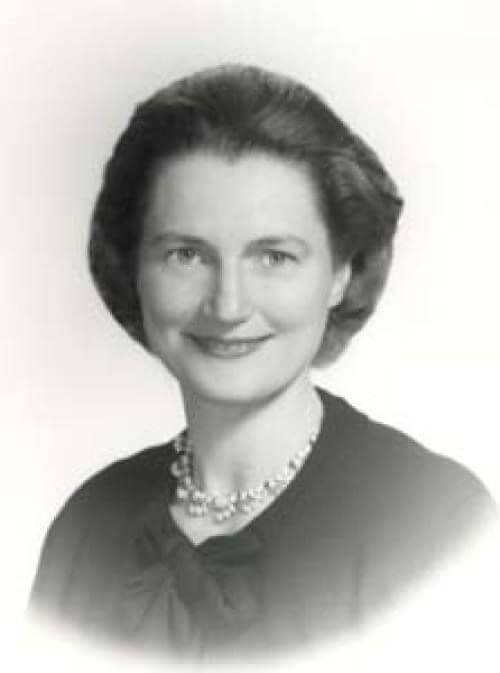
Erna Schneider Hoover (Erna Schneider Hoover) – American mathematician, inventor of the computer method of switching calls.
Erna Hoover was born on June 19, 1926 in Ivington (New Jersey, USA). The family lived in South Orange, the father was a dentist, and the mother was a teacher. Erna was interested in science from an early age. At a young age, she read the biography of Maria Sklodowska-Curie and, following the example of this outstanding woman, realized that with great desire she could achieve success in science. Even despite the prevailing opinion of the time about the role of women.
Hoover attended Wellesley College, where she studied classical and medieval philosophy, as well as history. In 1948, she graduated with honors and earned a bachelor’s degree. And in 1951, Erna received the degree of doctor of sciences from Yale University (Yale University) in the field of philosophy and fundamentals of mathematics.
Hoover was a professor at Swarthmore College from 1951 to 1954, teaching philosophy and logic. During her work, she married Charles Wilson Hoover, who was later very supportive of his wife’s career aspirations.
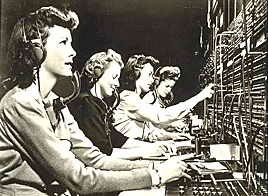
In 1954, Hoover was invited to work at Bell Labs. The in-house training program was the equivalent of a master’s degree in computer science. Switching systems were moving from electronic to computer-based technologies. But when the number of calls reached a peak in a short period of time and the call centers were literally flooded with calls, the whole system froze.
Hoover applied her knowledge of symbolic logic and feedback theory to program call center control devices to use data about incoming calls to regulate the entire system. She used a computerized electronic method to monitor the frequency of incoming calls at different times. With its help, it was possible to set priorities: according to the method, priority was given to processes related to the input and output of the switch. Processes such as accounting and invoicing were performed secondarily. As a result, the computer automatically adjusted the call center’s call reception speed, significantly reducing the possibility of overload.
Erna Schneider Hoover:
In my opinion, it was a healthy decision. I developed an executive program to handle situations where the number of calls exceeds the norm. With the help of the method, it was possible to optimize the process and protect the system from failure.
For her invention, titled “Feedback Control Monitor for Stored Program Data Processing System”, Hoover was granted Patent No. 3,623,007 in November 1971. It was one of the first software patents ever issued.
Thanks to the invention, Hoover became the first woman head of the technical department of Bell Labs. She headed the operations support department in 1987. The principles of her invention are still used in telecommunications equipment. Hoover went on to work on a variety of high-level assignments. She was involved in the research of the program of the Safeguard Anti-Ballistic Missile System radar center – an anti-missile defense system for intercepting intercontinental ballistic missile warheads. Her department worked on methods used in the creation of artificial intelligence, as well as on the development of large databases and software.
Hoover worked at Bell Labs for 32 years, until her retirement in 1987. Additionally, she has served on the boards of higher education institutions in New Jersey. This amazing woman scientist was inducted into the National Inventors Hall of Fame in 2008.
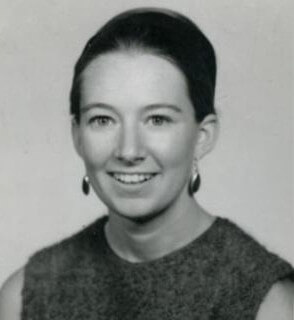
Judith Ann Powers, known as Judy Malloy (Judy Malloy) is a writer and self-taught programmer who invented her own database system for her novels.
Judy was born on January 9, 1942 in Boston. Her childhood was spent in Massachusetts. Judy’s mother was a journalist and newspaper editor, and her father worked as an assistant district attorney in two Massachusetts counties, then as a chief assistant state attorney. Since childhood, Mallo felt a calling to the fine arts and began to paint and draw.
After graduating from Middlebury College (Middlebury College) with a degree in literature, Mallo got a job at the Library of Congress (Library of Congress). After that, she moved to a position as a technical information specialist at Ball Brothers Research Corporation, a NASA contractor. Malloy managed their technical library and learned the FORTRAN programming language in order to identify relevant content for research.
In the early 70s, Malla moved to the East Bay. There she developed a series of fiction books with disjointed stories set in motion by words and pictures.
In 1986, Judy wrote and programmed the ground-breaking hypertext story Uncle Roger, the first online hyperliterary project with links that changed the story depending on the reader’s choices.
Judy Malloy:
This was my first experience in database programming. An idea I had been working on since 1976 was to use molecular units to create a non-sequential narrative.
“Uncle Roger” contained three parts of a hypertext “narrabase” (narrative database) using keyword search.
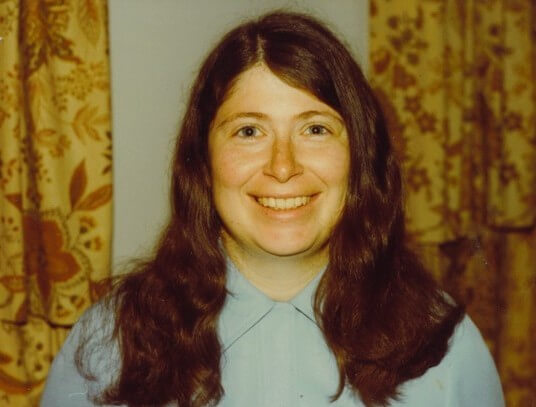
Radia Joy Perlman is a software developer, network engineer. She invented the spanning tree protocol (STP), which became fundamental to the operation of network bridges.
Radia was born on January 1, 1951 in Portsmouth (Virginia, USA). Parents worked for the US government: father worked as a radar engineer and mother as a programmer.
From an interview with The Atlantic:
At school, I always enjoyed puzzles, maths and science classes. These disciplines seemed so easy and exciting. However, I did not fit the “engineer” stereotype. I have never disassembled things for parts or assembled a computer from spare parts. In addition, I was always interested in art – I loved classical music, played the piano and horn, wrote works, poems. And she learned to program only as a sophomore, while attending a physics class.
As a student at the Massachusetts Institute of Technology, Perlman took part in the Undergraduate Research Opportunities Program as part of the LOGO Lab at the MIT Artificial Intelligence Laboratory. She developed a children’s version of LOGO’s educational robotics language called TORTIS. In a study conducted in 1974-1976, young children (the youngest was 3.5 years old) programmed an educational robot named Turtle. Radia was considered a pioneer in teaching young children computer programming.
Perlman received a bachelor’s degree, a master’s degree from MIT, and a doctorate in computer science (1988). Her doctoral thesis addressed the issue of routing in the presence of malicious network damage.
Perlman is best known for his invention of the STP channel protocol. Its main task is to eliminate loops in the topology of an arbitrary Ethernet network, which includes one or more network bridges. STP automatically blocks connections that are currently excessive for the full communication of the switches.
Other networking contributions included the invention of concepts that created a type of routing protocol called “link state routing.” The protocol she created for DECnet was approved by the International Organization for Standardization and renamed IS-IS, and is the preferred routing protocol for most ISPs today.
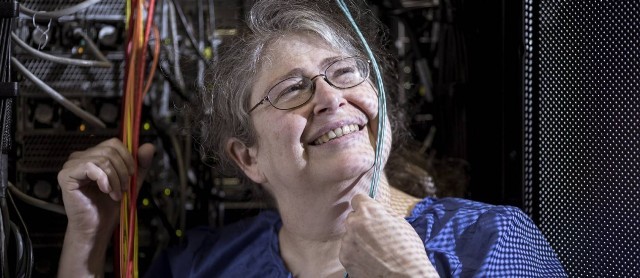
Perlman also worked on the standardization of TRILL (“Transparent Interconnection of Lots of Links”), which allows Internet packets to be forwarded using IS-IS instead of spanning tree. She also performed important work in the field of security.
In his free time from inventions and poetry, Perlman writes books. At first glance, it may seem that this is very “dry” literature. Especially judging by the titles: Interconnection: Bridges, Routers, Switches, and Data Transfer Protocols and Network Security: Personal Communication in the Public World. But the author assures that these are not purely technical books and in fact they have their own humor. Perlman is the author of one networking textbook and co-author of one network security textbook. She has more than 100 issued patents.
Perelman is often credited with the title of “Mother of the Internet.” But here is what she says about it:
I did not invent the Internet. And this is a title that cannot be obtained in the same way as, for example, a doctorate. I do not think that the emergence of the World Wide Web is the merit of any one person. Many people participated in its creation.
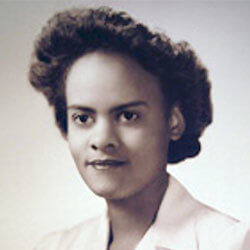
Evelyn Boyd Granville (Evelyn Boyd Granville) is one of the first African-American women to earn a doctorate in mathematics.
Evelyn Boyd was born on May 1, 1924 in Washington. Her father worked as a handyman and divorced her mother when Boyd was very young. Boyd was raised by his mother and aunt, who worked in an engraving and printing office. With the financial support of her aunt, and later a small scholarship from Phi Delta Kappa, the girl entered Smith College in 1941. Her specialty was mathematics and physics. But Evelyn was also interested in astronomy. The Smith Student Aid Society of Smith College provided Evelyn with a scholarship to attend Yale. There she studied functional analysis under Einar Hill until 1949.
In 1950, she took a teaching position at Fisk University. But two years later, she left the scientific community and returned to Washington at Diamond Ordnance Fuze Laboratories. She worked there for four years, after which she moved to IBM as a computer programmer.
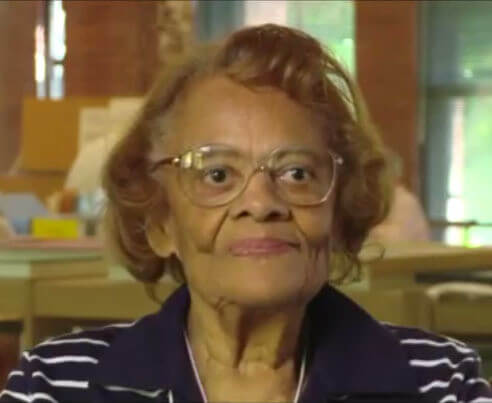
“I always smile when I hear that women can’t do well in math”
Boyd married Reverend Gamaliel Mansfield Collins (Reverend Gamaliel Mansfield Collins) in 1960 (divorced in 1967) and together with him moved to Los Andes where she worked at the US Space Technology Laboratories. In 1962, she joined the North American Aviation Space and Information Systems Division. There she worked on various projects of the Apollo program, including calculating the trajectory and developing “digital computer methods”.
Because of the reconstruction of IBM, Boyd was forced to change the place of work. In 1967, she became a professor of mathematics at California State University. From 1984 to 1988, she taught at the University of Texas (Texas College), where she created math enrichment programs for elementary schools.
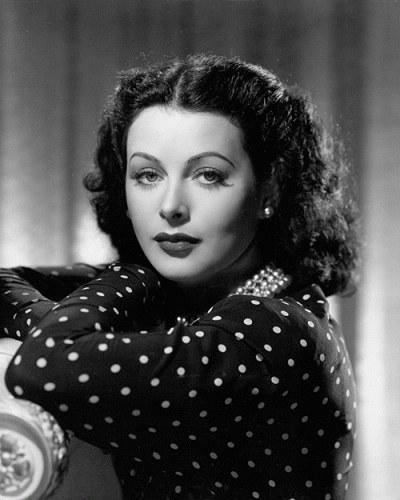
Hedwig Eva Maria Kiesler (Hedwig Eva Maria Kiesle), known as Hedy Lamarr, is an Austrian and later American film actress and inventor.
Hedy Lamarr was born on November 9, 1914 in Vienna (Austria). Her father was a banker (from Lemberg) and her mother was a pianist (from Budapest). At the age of 16, Hedi left home to attend theater school and act in films. The debut was a role in the German film “The Girl in the Night Club” (1930). During her career in Hollywood, the actress starred in more than 55 films. And no one could have guessed that at the peak of her film career, the girl would suddenly engage in inventions without having either scientific or technical education.
The first impetus for this was the report of a sunken evacuation ship on August 17, 1940. As a result, 77 children died. Then Lamarr decided to contribute to the development of military equipment and designed a system of interference-resistant radio control for torpedoes. And all this on the basis of playing the piano in four hands.
Heady suggested sending part of a signal on one frequency and then switching to another to transmit the next part of the signal. When matching the transmitter and receiver with regard to frequency hopping, something like a four-handed game would result, and the signal could become resistant to jamming interference. Lamarr also suggested that the mechanical matching of the transmitter to the receiver could have been done by a part similar to the roller of a mechanical piano. The roller with pins and drive from a chronometer looked compact enough to fit inside a marine torpedo case. In addition, according to Heady, the system could use a set of 88 radio frequencies – according to the keys of a piano.
From the conversations of the co-authors of the invention, a special information transmission system was born, which was named pseudo-random adjustment of the operating frequency (Frequency Hopping Spread Spectrum). This technology was introduced by the US Navy. But it was implemented only in 1962, during the Cuban Missile Crisis.
The patent became the basis for modern spread-spectrum communication technologies such as CDMA, Wi-Fi and Bluetooth technology. The most famous example of the application of Hedy Lamarr’s invention today is the GSM radiotelephone standard.
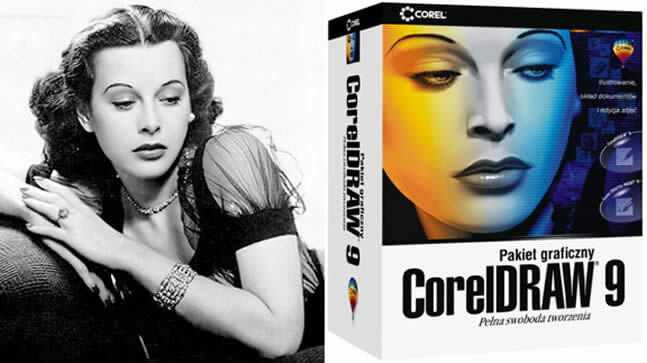
The former star spent the last years of his life engaged in endless legal proceedings in connection with the unauthorized use of his name. So, in 1998, the portrait of the actress became a symbol of the Corel Draw vector graphics program, after which Hedi filed a lawsuit against Corel Corporation. However, the court recognized the right to use Lamarr’s image.
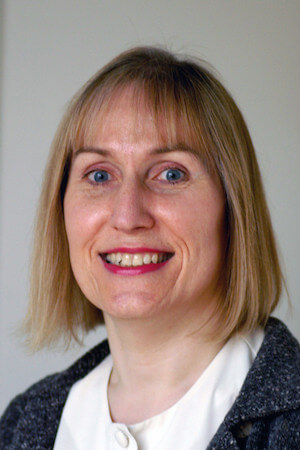
Sophie Wilson is a British inventor, developer of one of the first commercially successful personal computers, author of the ARM processor.
Wilson was born in 1957 in the city of Leeds (Yorkshire, England). She studied computer science at the University of Cambridge. Inspired by the early MK14, designed a microcomputer with a 6502 processor (an 8-bit processor with a 16-bit address bus, allowing to address up to 64 kilobytes of RAM).
In 1978, Wilson joined Acorn Computers Ltd, where she was engaged in the development of various computer devices. The model she created was used by Chris Curry and Hermann Hauser in the development of the Acorn Micro-Computer.
In the early 1980s, Wilson expanded the BASIC programming language of the Acorn Atom home computer into an improved version for the Acorn Proton. This microcomputer helped secure a contract between Acorn and the British Broadcasting Corporation (BBC). In less than a week, Wilson designed and developed the system, including the board and components and software. Proton became BBC Micro and its BASIC became BBC BASIC. Sophie wrote the manual and technical specifications, understanding that communication was a critical part of success.
In 1983, Wilson began creating the instruction set for the first RISC (Reduced instruction set computing) processors, the Acorn RISC Machine (ARM). Distinguishing features were: far fewer transistors than Intel’s microprocessors at the time, and no microcode—the level at which machine code was translated into simple microinstructions. Thanks to this simplified architecture, ARM microprocessors were not only faster, but also consumed much less power than the competition.
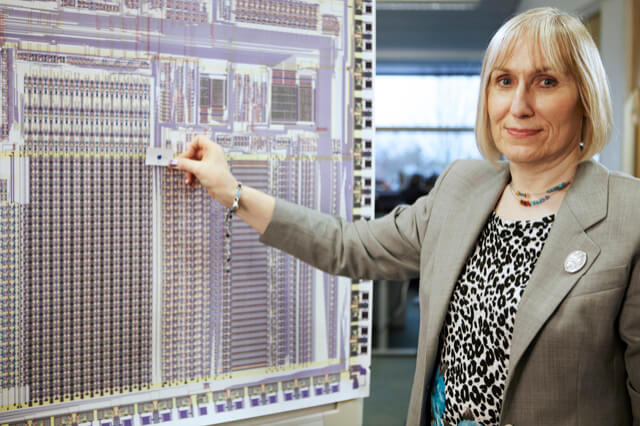
Wilson developed Acorn Replay, a video architect for Acorn machines – an operating system extension for video access optimized for high frame rate operation on ARM CPUs from ARM 2 and beyond.
She was a board member of the technology and games company Eidos plc and was a consultant to ARM Ltd (after its spin-off from Acorn in 1990). In 1999, after the collapse of Acorn Computers, Sophie Wilson founded the company Element 14, in which she developed the FirePath processor. Today, it is used in the equipment of broadband networks and set-top boxes. In 2001, Element 14 was sold to Broadcom for $450 million.