28.04.2023
5 min
2928



In today’s IT environment, effective team work directly depends on reliable DevOps tools. From infrastructure monitoring to deployment automation, everything must work smoothly, stably, and transparently. That’s why companies are implementing proven solutions that help maintain uninterrupted service operations and respond quickly to changes.
In this article, we’ll look at the most popular tools used in DevOps practices around the world. Among them are Prometheus and Grafana for monitoring system metrics, Ansible and Terraform for infrastructure automation, Kubernetes and Docker for container management, Jenkins for continuous integration, and ELK Stack and PagerDuty for logging and incident management.
Each of these tools performs its own key function in the DevOps ecosystem and helps teams minimize risks, reduce manual time, and accelerate the deployment of new products.
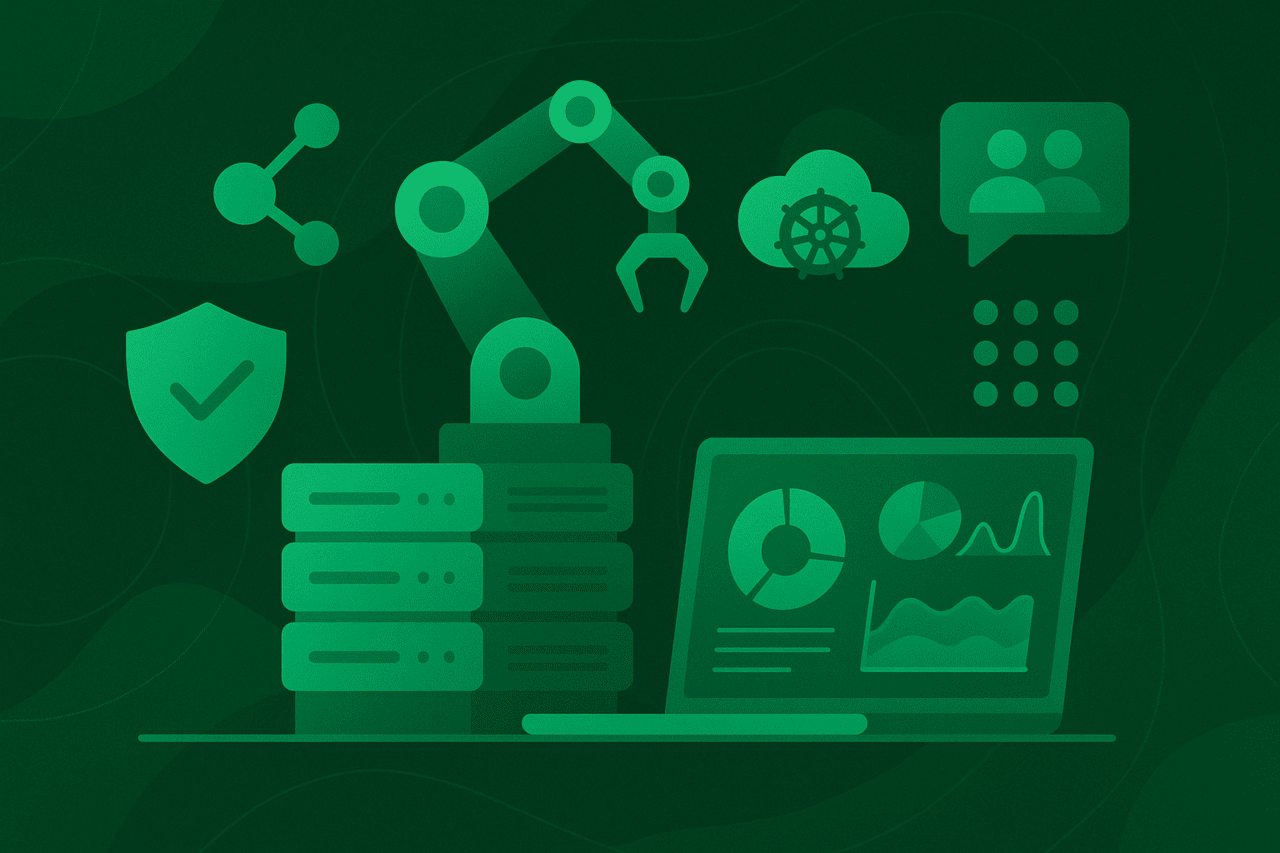
A tool for collecting and storing metrics in time series format. It independently polls services, stores data in its own database, and supports PromQL queries for analytics and alert creation.

A service for managing incidents in IT infrastructure. Aggregates notifications from monitoring systems and sends them to responsible specialists. Has over 600 integrations.
A system deployment and configuration automation tool. Allows you to describe the desired state of servers in code (YAML) and provides simple and repeatable infrastructure configuration.

A tool for implementing the infrastructure as code (IaC) approach. Allows you to create, modify, and manage resources in cloud and on-premises environments.

A system for automatically managing containerized applications. Provides deployment, scaling, updating, and self-healing of services in a cluster of containers.

A platform for building, delivering, and running containerized applications. Provides process isolation and portability between development, testing, and production environments.

A suite of solutions for collecting, processing, and visualizing logs. Allows you to store large volumes of logs, analyze events in real time, and build dashboards to find anomalies.

A tool for automating CI/CD (continuous integration and delivery) processes. Supports a variety of plugins for running scripts, testing code, deploying applications, and monitoring processes.

A platform for visualizing metrics and logs from various sources. Allows you to create dashboards with graphs, tables, and alerts for convenient monitoring of system status in real time.