22.08.2024
7 min
1357



Russian “prevention” is not just a system of “education” or supposedly caring for youth. In fact, it is a tool for the Russification of Ukrainian youth, operating through educational, cultural, and media channels. In this article, you will learn how Moscow uses psychological influence programs, “patriotic camps,” and propaganda lectures to form loyalty to imperial ideology. We will analyze the key mechanisms of influence on children and adolescents who have encountered the occupation education system.
In February 2025, the Federal Agency for Youth Affairs of the Russian Federation (“Rosmolod”) published so-called methodological recommendations on “prevention of the spread of the ideology of terrorism, extremism and neo-Nazism” among children and adolescents from the temporarily occupied territories — in particular, Donetsk, Luhansk, Zaporizhzhia and Kherson regions.
The 70-page document, dated February 27, 2025 (No. GG/1449-06), presents Ukrainian nationalism as an alleged historical threat, which, according to the authors, is a precursor to “neo-Nazism”. At the same time, the Russian “special military operation” is described in these materials as an act of “denazification”, supposedly designed to “protect youth” from the influence of Ukrainian identity.
Thus, under the guise of preventive work, the Kremlin is actually implementing an ideological program of Russification aimed at changing the worldview of Ukrainian children and justifying the Russian Federation’s aggression against Ukraine.
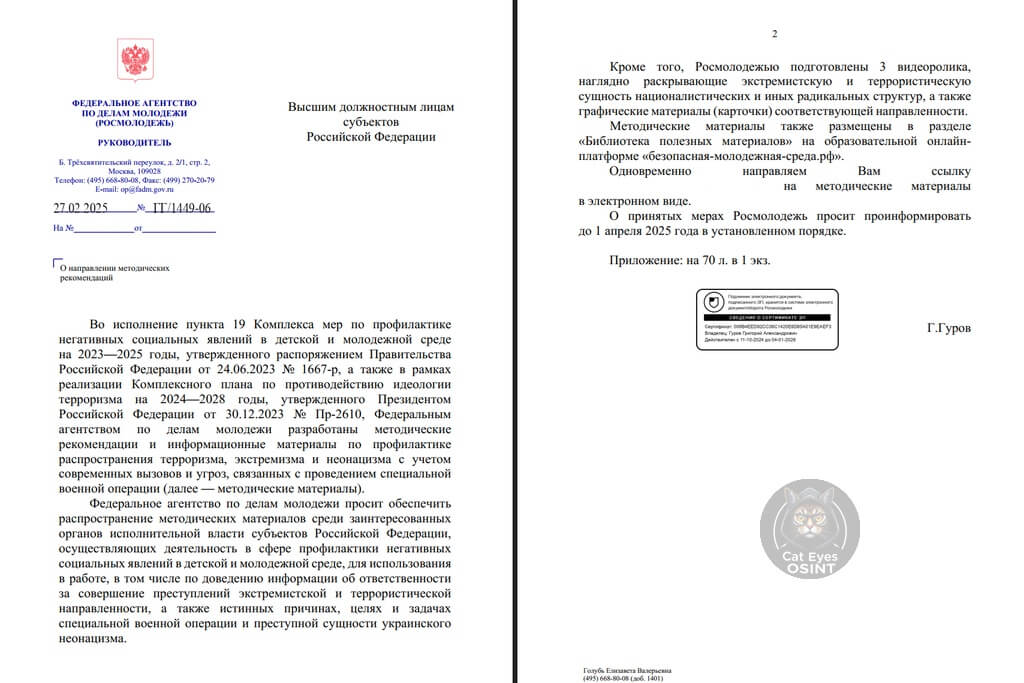
At first glance, this document may seem like a manual on humanitarian security, but in reality it is a carefully crafted tool of state propaganda aimed at reprogramming the minds of children and adolescents in the temporarily occupied territories of Ukraine.
In its structure, the document begins with a fictional “history” of Ukrainian nationalism dating back to 1846, where the Ukrainian liberation movement is presented as a “threat.” The authors then describe in detail “dangerous” organizations — such as “Azov” or “Right Sector,” attributing to them mythical “extremist” features.
Particularly revealing is the section on so-called “preventive methods,” which include monitoring social networks, as well as “individual work” with adolescents with the aim of “deradicalizing” them. In fact, these measures are part of a system of ideological control designed to form loyalty to the occupying Russian authorities.
Below are a few illustrative fragments that demonstrate how the Kremlin is trying to use the educational space to Russify Ukrainian youth.
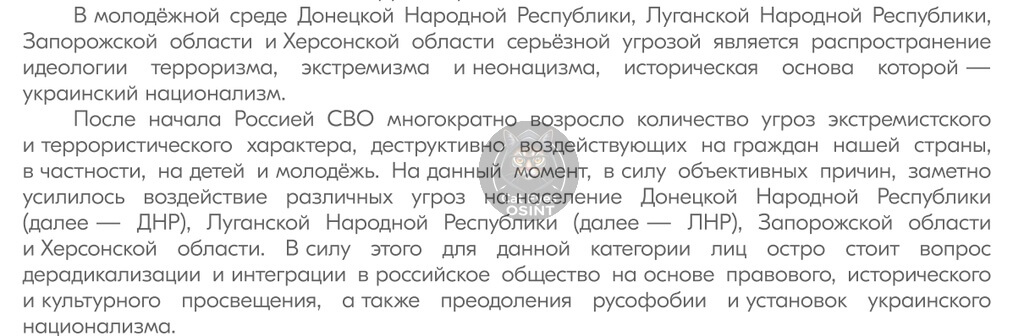
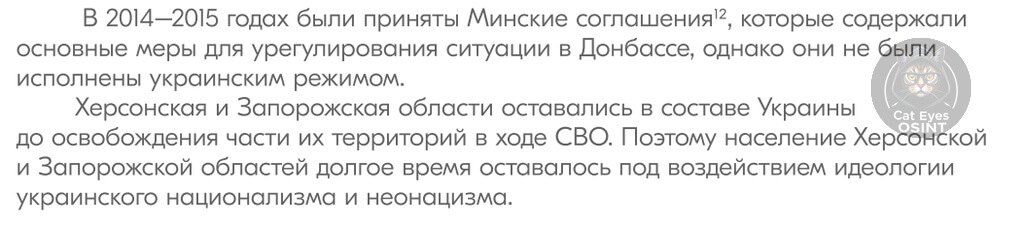
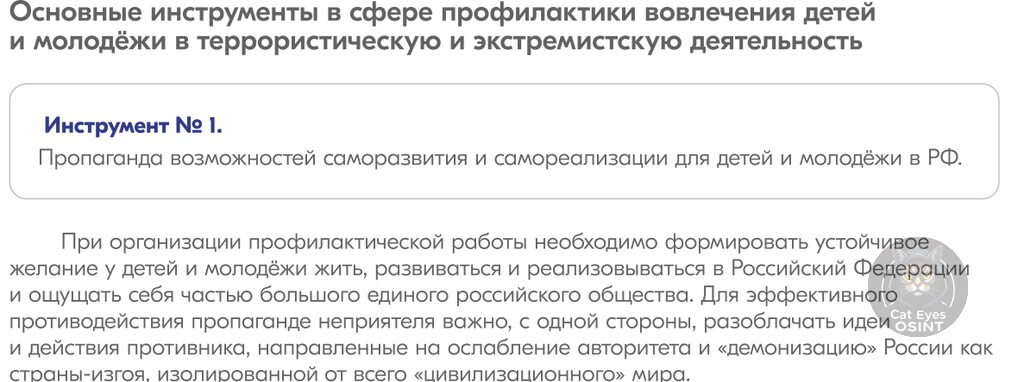
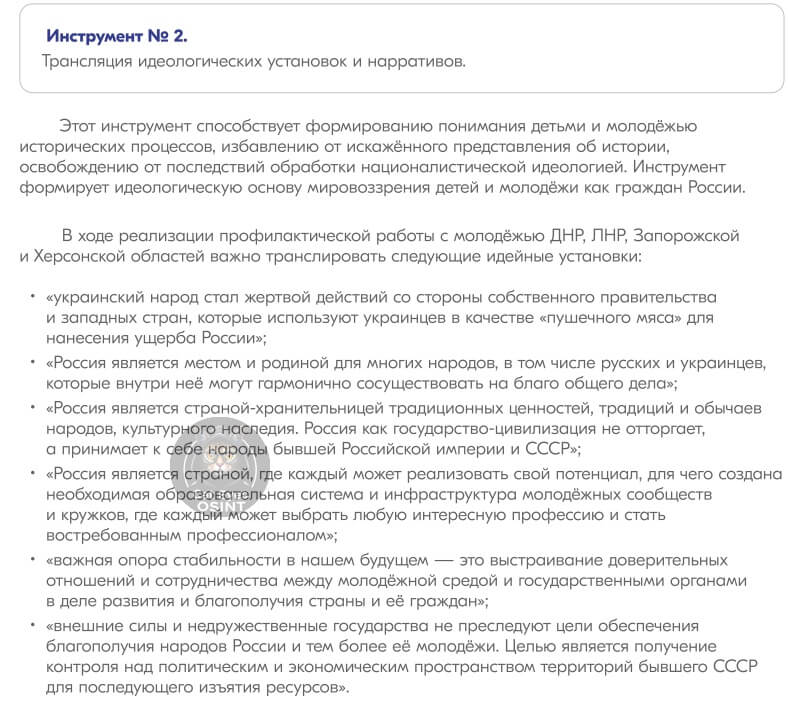
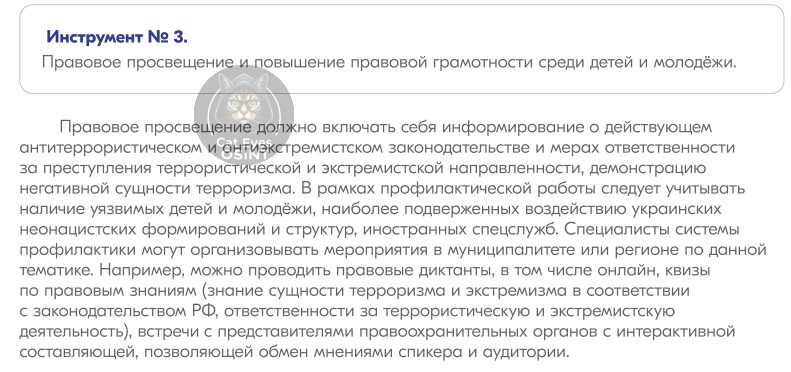
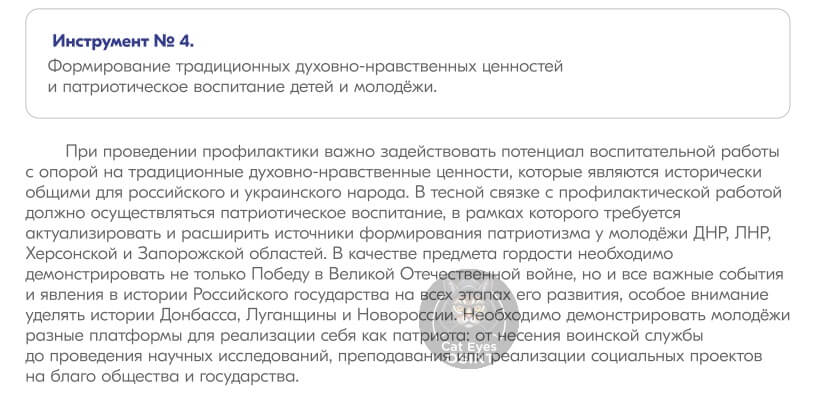
As can be seen, these “recommendations” are not an isolated initiative, but a sign of systemic Russification and substitution of Ukrainian identity. The ideas of the document are not new — they are inscribed in a long history of pressure on the right of Ukrainians to self-identification. The creeping expansion of Russian policy can be traced back to the times of the Hetmanate and the period of Ruin, when culture and religious instruments gradually limited the autonomy of the Cossacks; then — the gradual narrowing of the powers of the Hetman institution and its final cessation in the 18th century. In the 19th century, from the “Spring of Nations” to the collapse of the Russian Empire, new waves of political transformations took place, and in the 20th century — the formation of the UNR and ZUNR.
The Soviet period brought the repressions of the 1930s, the systematic assimilation of Ukrainians in the so-called “wedges,” and other tragic consequences. Today, similar practices are repeated: in the temporarily occupied territories, forced Russification of schools and deportation of children are being introduced, which international institutions (including the UN) consider as elements of genocidal policy.
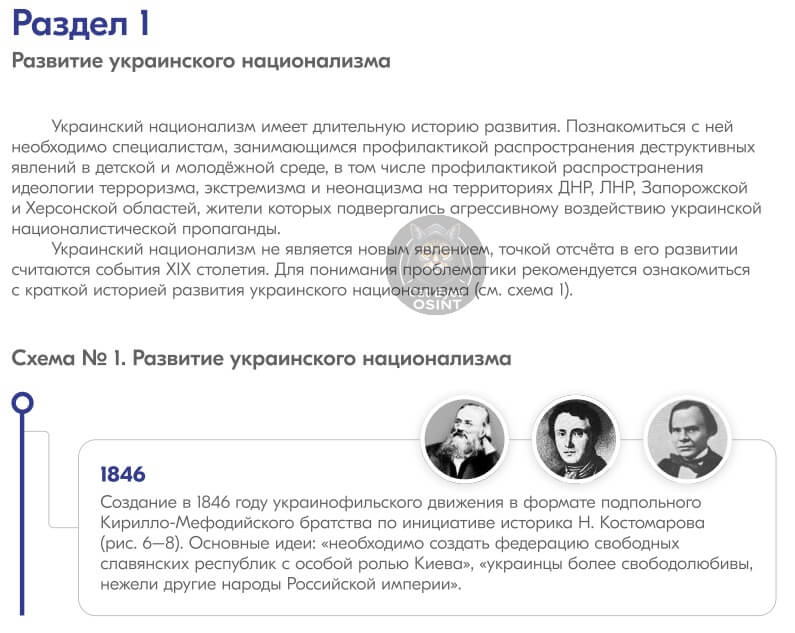
The historical narrative in the methodological recommendations serves as a basis for manipulation: by distorting the facts and context, the document justifies political measures against Ukrainian identity. Thus, an example of such distortion is the inclusion of a mention of the Cyril and Methodius Society of 1846 (founded by Mykola Kostomarov) in the section on the “history of Ukrainian nationalism”, which is advised to be studied by “specialists in the prevention of the spread of the ideology of terrorism, extremism and neo-Nazism”. This is a typical technique: historical facts are presented in a distorted way in order to replace the narrative and justify the Kremlin’s modern repressive practices.
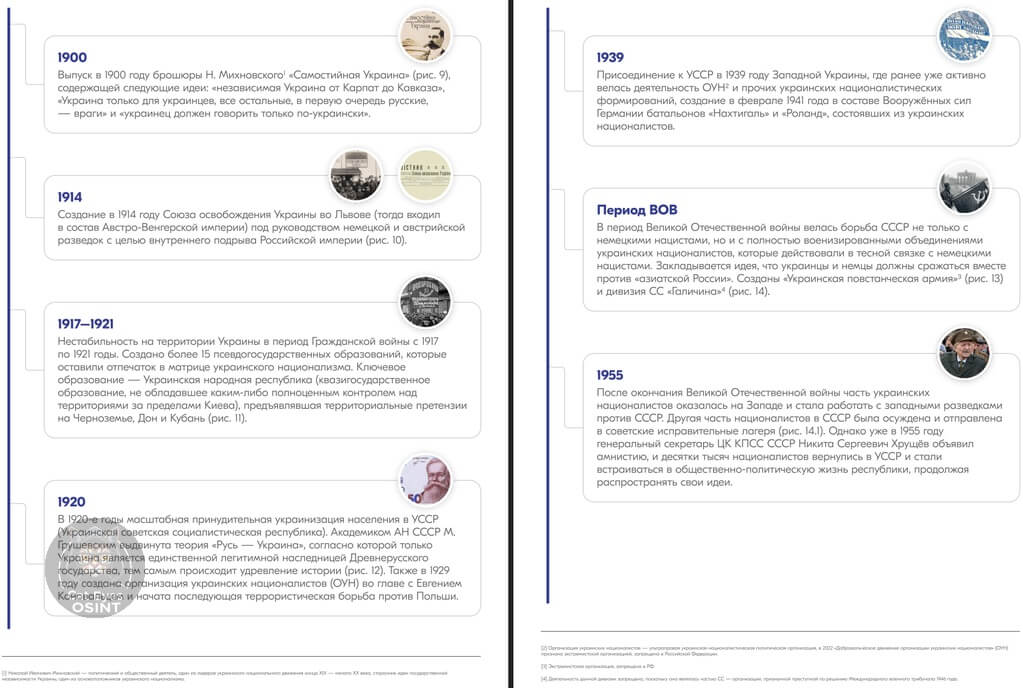
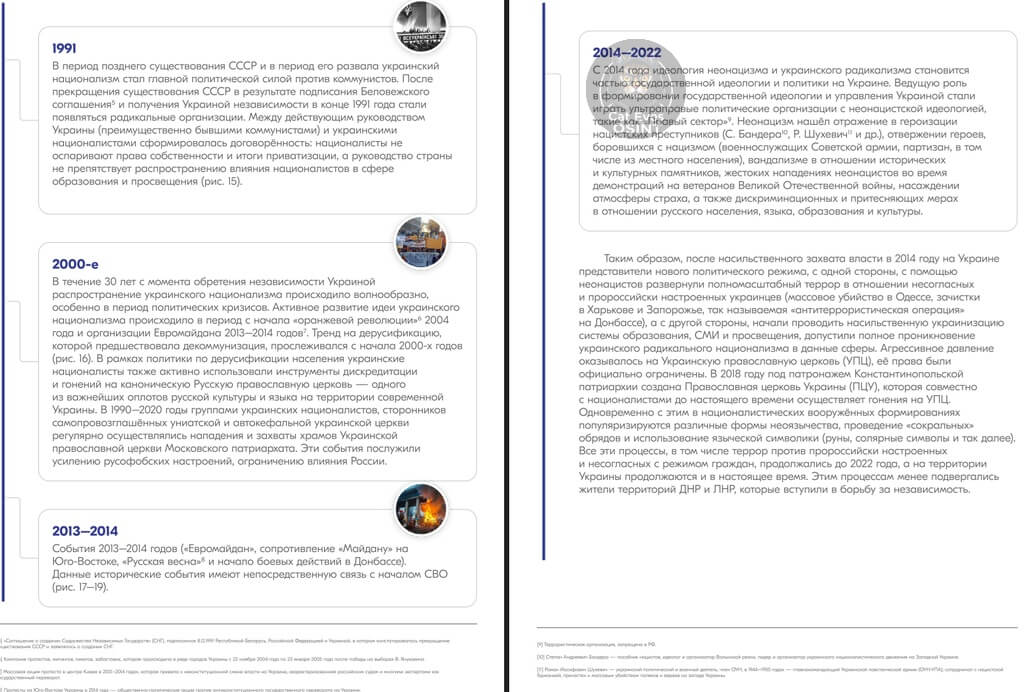
The period 1917–1921 is depicted as “instability during the civil war” with “15 pseudo-state entities”, where the Ukrainian People’s Republic claimed the Black Earth, Don and Kuban. World War II is interpreted as the UPA’s collaboration with the Nazis against “Asiatic Russia”. Euromaidan is mentioned as the cause of the so-called “Russian Spring” and “svo”. The authors cite “violent Ukrainization” and attacks on the Russian Orthodox Church as a result of Euromaidan.
The document also details the “threats” associated with Ukrainian propaganda, which allegedly recruits young people into “neo-Nazi” groups. For example, “Azov”, created in 2014 and consisting of a “core” of volunteers known as “little black men”, is described by the Russians as an organization with a “racist, Russophobic, neo-Nazi ideology”. Although no country except Russia has recognized Azov as a neo-Nazi or racist movement. “Right Sector” is called in the document an “ultra-right coalition” from Euromaidan, and the Legion “Freedom of Russia” and the “Russian Volunteer Corps” are units of the Ministry of Defense of Ukraine for “undermining the statehood of the Russian Federation”.
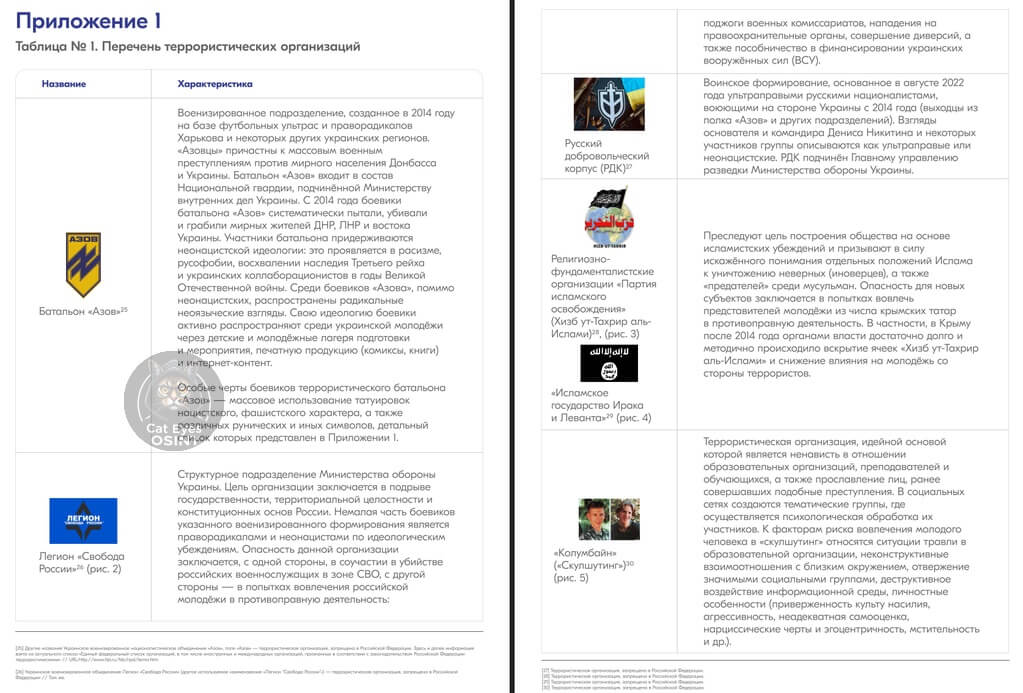
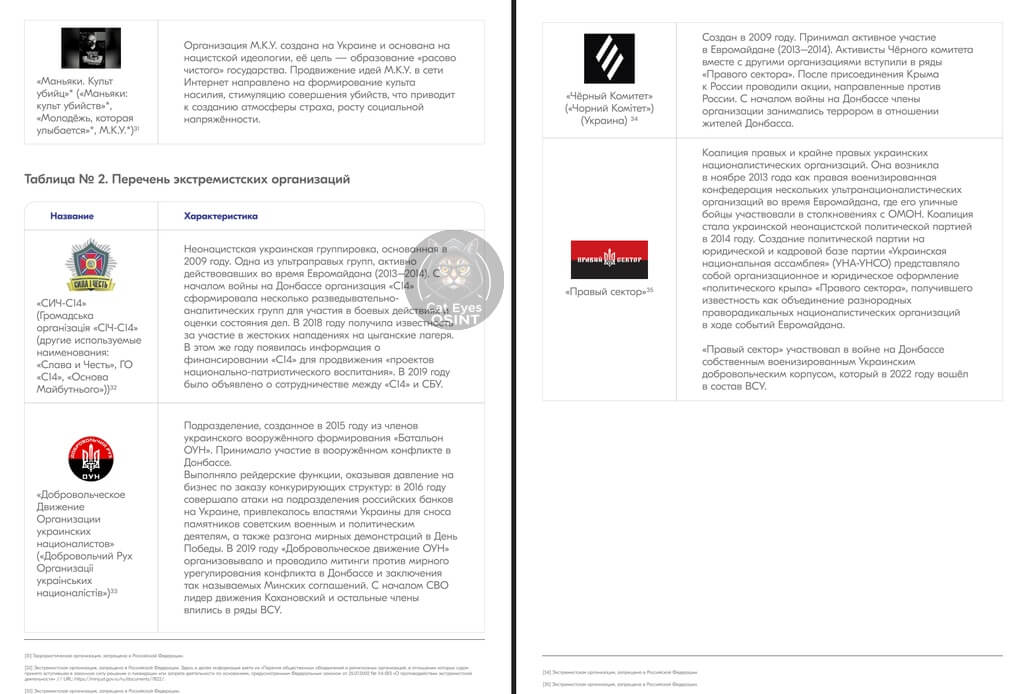
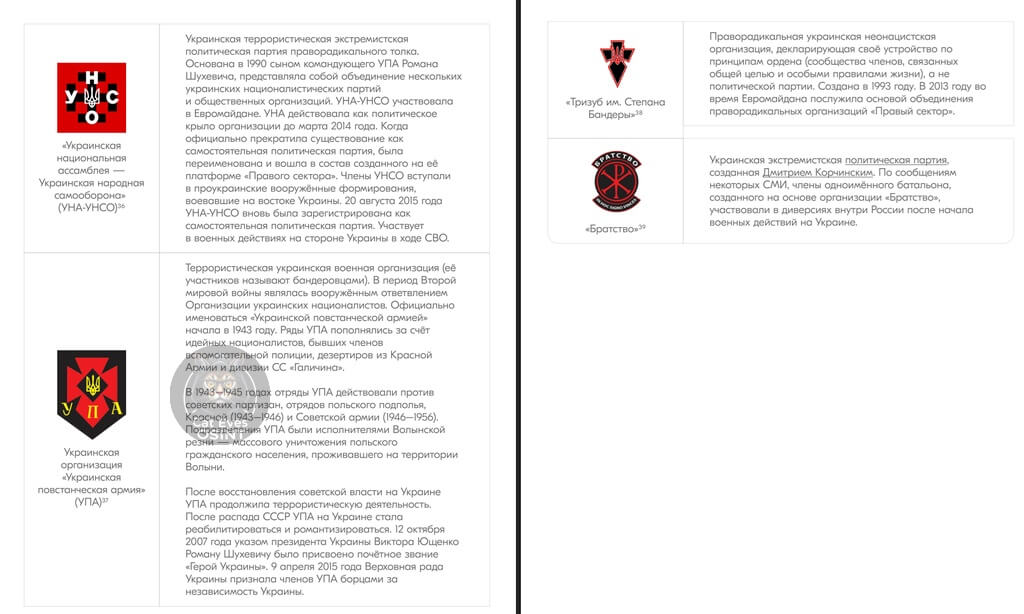
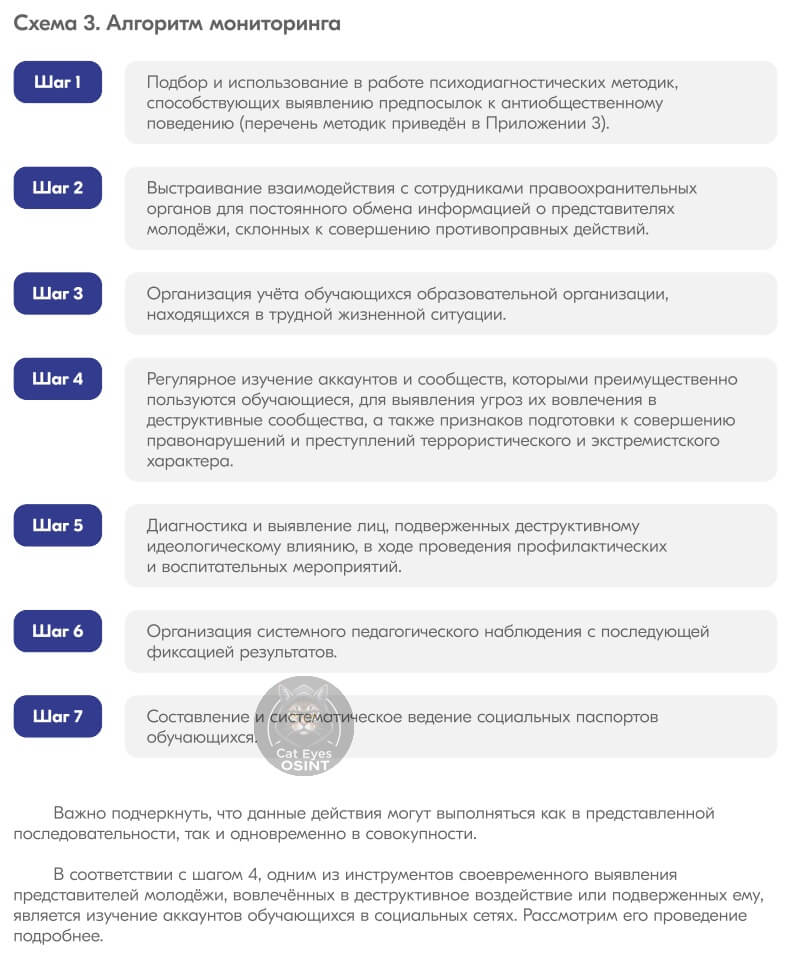
The authors of the so-called manual have created a detailed algorithm for monitoring the behavior of children and youth, identifying certain “risk groups” that, in their opinion, should be paid attention to first. Among the markers by which it is proposed to monitor “unreliability” are such manifestations as support for the Armed Forces of Ukraine, the use of the expressions “Glory to Ukraine”, “Moskalyak on Gilyak”, the symbols “14/88”, as well as subscribing to pages that criticize “their own” or spread “fake news” about Russian aggression.
The document recommends holding debates to “refutate myths” about Stepan Bandera, as well as “legal dictations” aimed at educating obedience to the “laws of the federal government” and forming uncritical thinking. Under the guise of “prevention”, the authors actually describe the process of reprogramming consciousness, which aims not at enlightenment, but at assimilation and suppression of national identity.
A separate section of the manual contains a list of structures that are recommended to be addressed for the “re-education” of children and adolescents: the FSB, FSIN, Rosgvardia, the police, as well as the youth formations “Yunarmiya” and “Dvizhenie Pervyh”. It is significant that the children of servicemen of the Armed Forces of Ukraine are automatically classified as a “priority risk group” — it is for them that the so-called “prevention” in the most severe forms is provided.
This part of the document demonstrates the true essence of the Kremlin’s policy — total control and the upbringing of loyalty through fear and coercion, which is an integral part of the systemic Russification and destruction of Ukrainian identity.
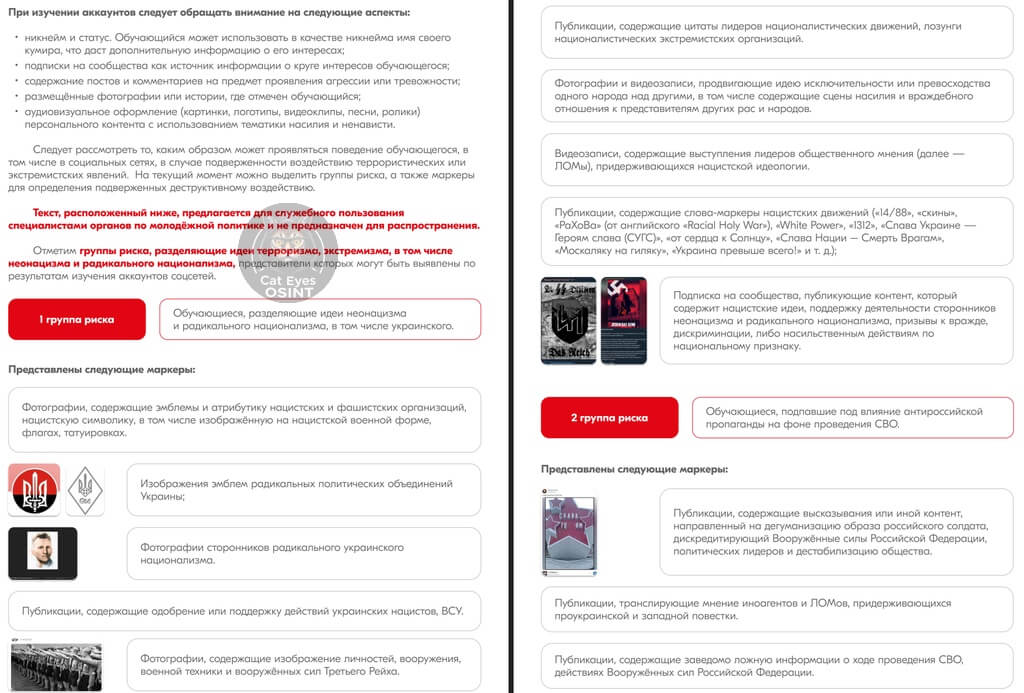
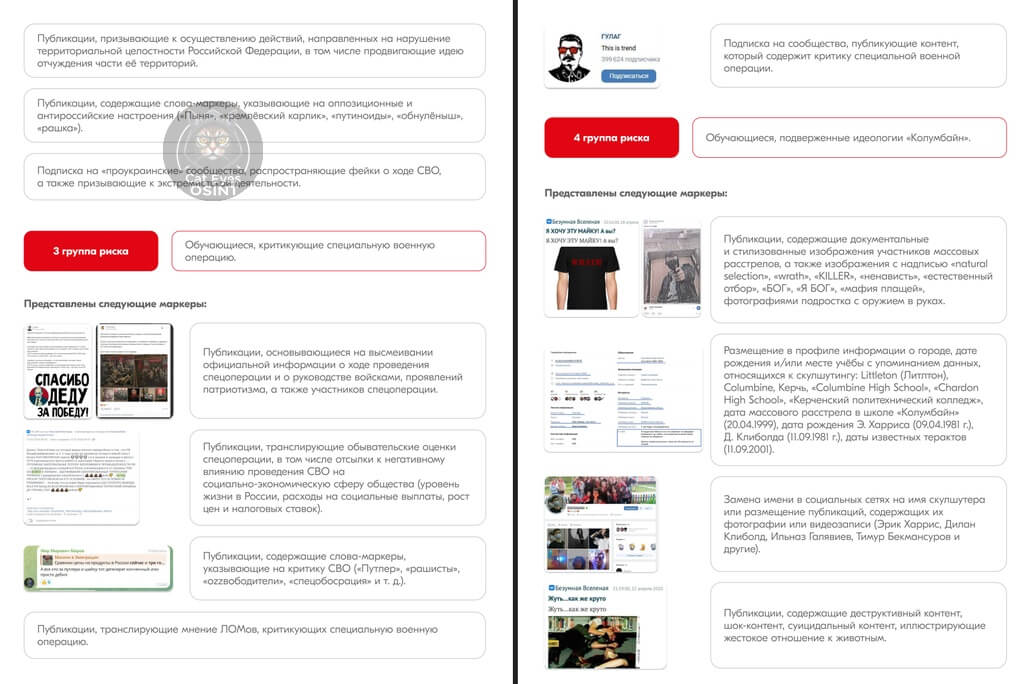
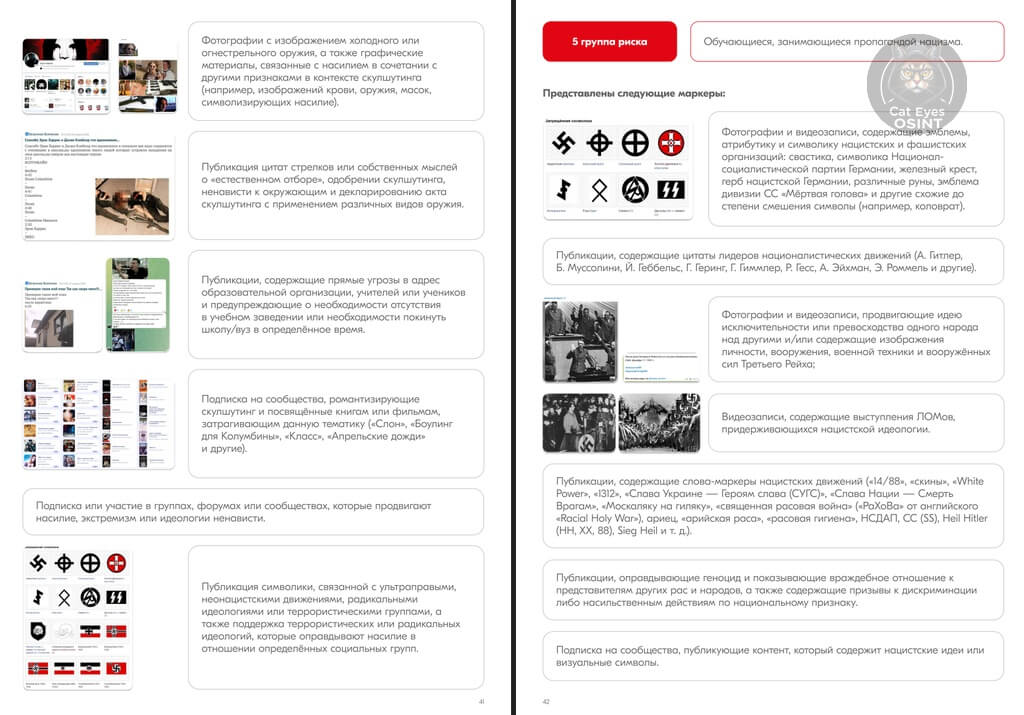
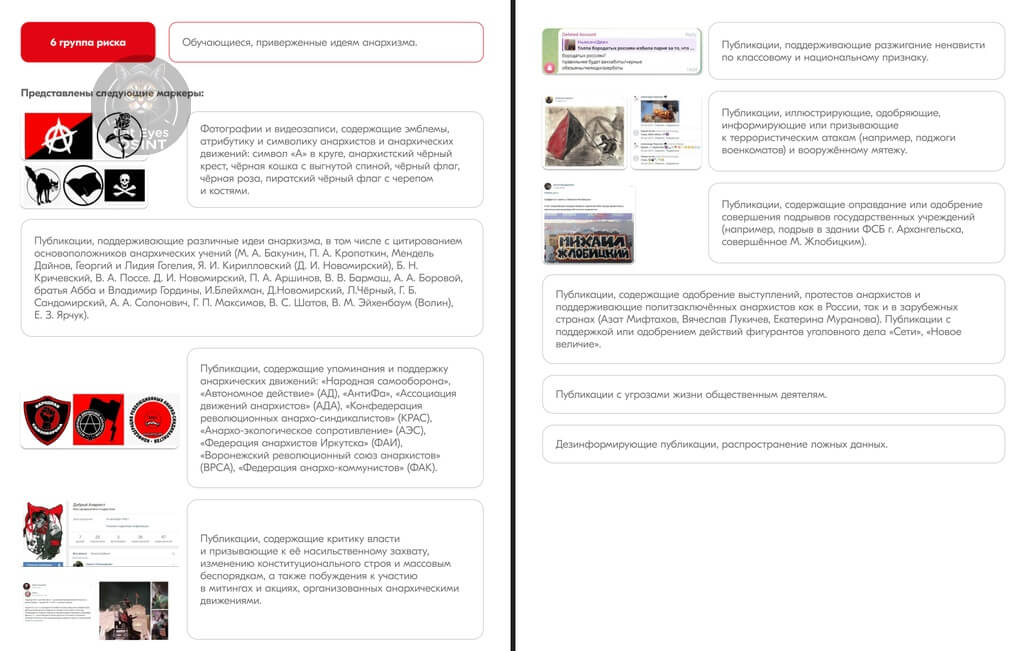
However, these recommendations are eye-opening when viewed in the context of the fact that since 2022, Russia has deported over 19,000 children to 210 locations for “re-education” in Russia and the Republic of Belarus, according to a Yale University publication based on Bring Kids Back. In addition, HRW, in its “Education under Occupation” report published in 2024, records the forced Russification of education with the ban on the Ukrainian language and the mandatory propaganda of the so-called “SVO”. Such measures in the given context turn from “fighting threats” into a literal justification for the hidden militarization of youth, fueling national chauvinism, genocide, and linguocide. Without context, the highlighted recommendations are a manifestation of a police state with authoritarian overreach.
However, let us recall that these recommendations were published by an aggressor state, whose dominant idea of state policy is the cessation of the existence of the sovereign state of Ukraine, and therefore of the ways and means of being Ukrainian. Global Rights Compliance in their article describes schools as “propaganda factories” where the Russian program erases Ukrainian identity.
The published methodological recommendations of the Federal Agency for Youth Affairs of the Russian Federation are not just instructions on “prevention of extremism”. This is a documented strategy of Russification, which, under the guise of educational work, justifies aggression, occupation and systematic assimilation of Ukrainian children.
The Kremlin once again demonstrates that the educational space for it is not a sphere of development, but a weapon of influence aimed at erasing Ukrainian identity and forming loyalty to the idea of “Russian world”. Imposed “legal dictates”, control over statements, banning the Ukrainian language and forced “education of patriotism” are all components of informational and psychological warfare against the future generation of Ukrainians.
In light of the facts presented in the reports of Yale University, HRW and Global Rights Compliance, it becomes obvious: the so-called “prevention” is a mechanism of systemic genocide, combining deportations, forced re-education and cultural destruction.
Ukrainian society, international human rights institutions and the world community must realize the scale of this threat. This is not just a violation of the rights of the child, but an attempt to erase the very possibility of being Ukrainian. And that is why recording, publicizing and documenting such actions by the Russian Federation is not just journalistic work, but an element of the struggle for national memory, culture and freedom of the future generation of Ukraine.