
14.10.2024
1 min
1064



You will learn how opposition activist Dido Kakisinghi was killed during a political march in Kindu, how these events are connected to the presidential elections in Congo, and the role of open source evidence in reconstructing the chronology of the tragedy and analyzing responsibility for the violence.
In October, two people were sentenced to five years in prison for their role in the killing of opposition activist Dido Kakisingi during a march in Kindu, Democratic Republic of Congo.
Kakisingi, a lawyer and youth coordinator for the Ensemble Pour la République party in Maniema province, was killed on November 28, 2023, during clashes at a political rally in the regional capital.
He and his party members had been attending an event in support of opposition presidential candidate Moise Katumbi, but the events took a tragic turn, ending with Kakisingi’s death.
Less than a month after these events, incumbent President Felix Tshisekedi won an election that was marred by allegations of repression, arrests of opponents, and violence against demonstrators and journalists.
Despite the conviction of the two suspects, Kakisingi’s family and supporters continue to demand justice, saying that at least 14 more people believed to have been involved in the violence should be arrested and questioned.
There are many conflicting accounts of the tragedy, and establishing the details of the events remains an important step towards achieving justice.
For a long time, political rallies were held in the center of Kindu at the Kindu Central Tribune, a large covered area located on one of the city’s main roads.
For example, President Tshisekedi held a campaign rally there on November 23, 2023, a few days before the fatal march.
However, local media reported that the mayor of Kindu temporarily closed the Kindu Central Tribune for renovations a few days before two opposition candidates were scheduled to hold rallies there. Opposition representatives complained that the decision was politically motivated.
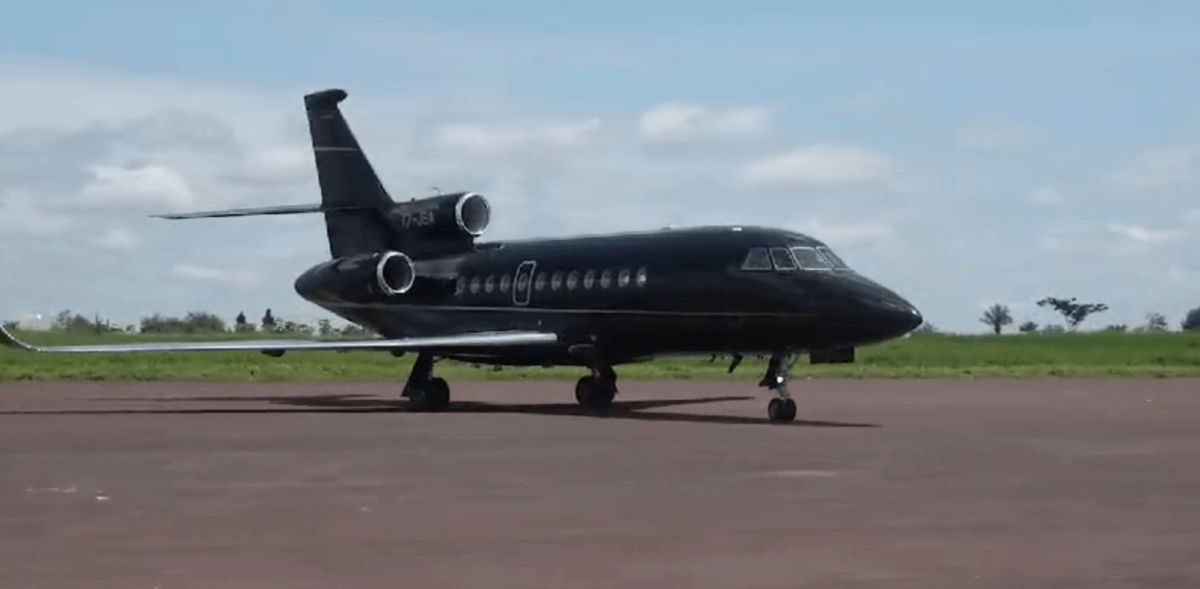
Footage released by Ensemble shows presidential candidate and party leader Katumbi landing at Kindu airport in a private Dassault Falcon 900 jet.
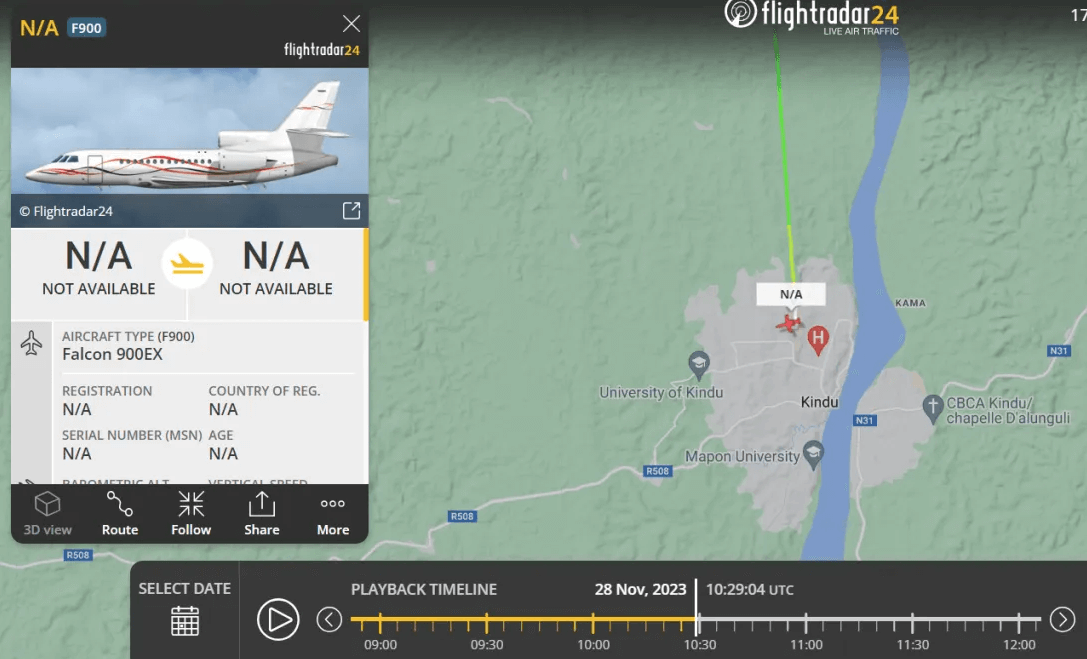
FlightRadar showed the plane landing in Kindu at 10:29 UTC (12:29 CAT, as Kindu is in the Central African Time Zone, two hours ahead of UTC).
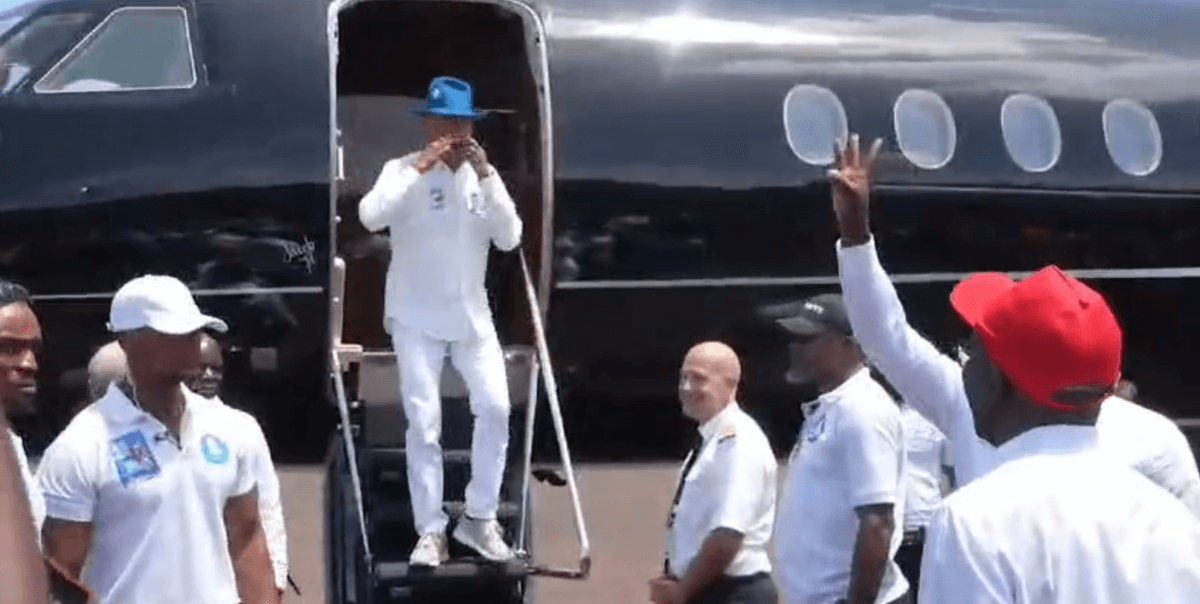
Opposition leader Moïse Katumbi, wearing a distinctive blue hat, stepped off the plane.
He was met at the airport by supporters who began a march south along Boulevard Joseph Kabila, a wide avenue with a tree-lined avenue in the middle. At one point, Dido Kakisinghi joined the procession, although the exact location of his joining remains unknown: it could have been at the airport or along Boulevard Joseph Kabila.
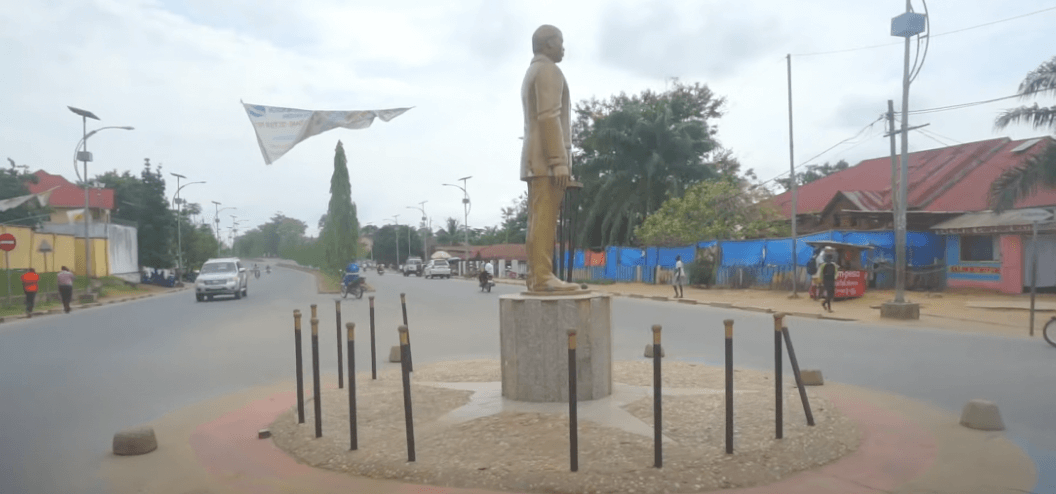
Less than three kilometers from the airport, between 13:00 and 14:00 local time, and about 60 meters from the Joseph Kabila monument (-2.939020, 25.924275), violence broke out during the march.
Footage from the scene shows Kakisingi lying in a pool of blood on the street, his shirt torn and soiled.
People surround him, some filming him. There is a huge amount of blood pooling under him, but his position in the video hides the injury (Warning: very graphic).
It is possible that Kakisingi’s killing caused people to start fleeing, and this was the first time violence broke out, but the sequence of events remains unclear, as the videos released by the opposition group are not in chronological order.
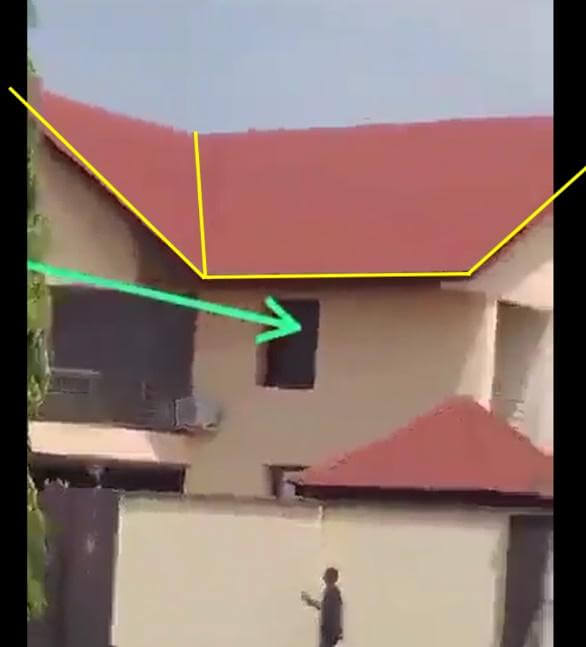
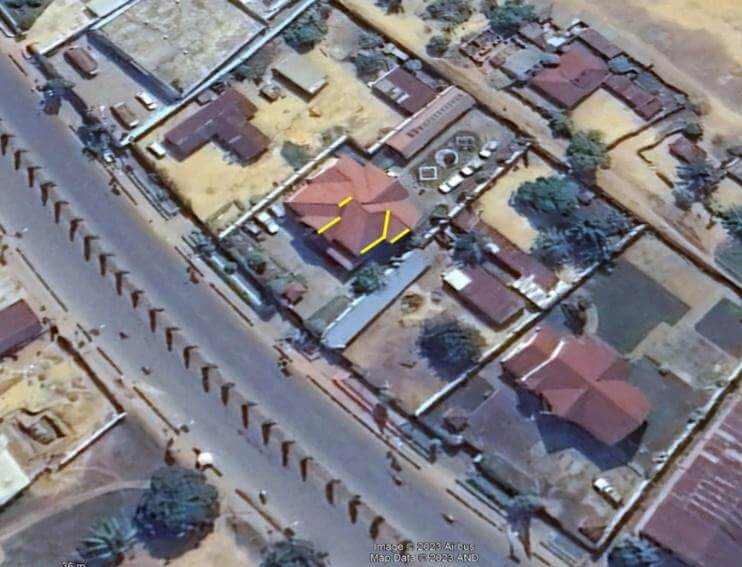
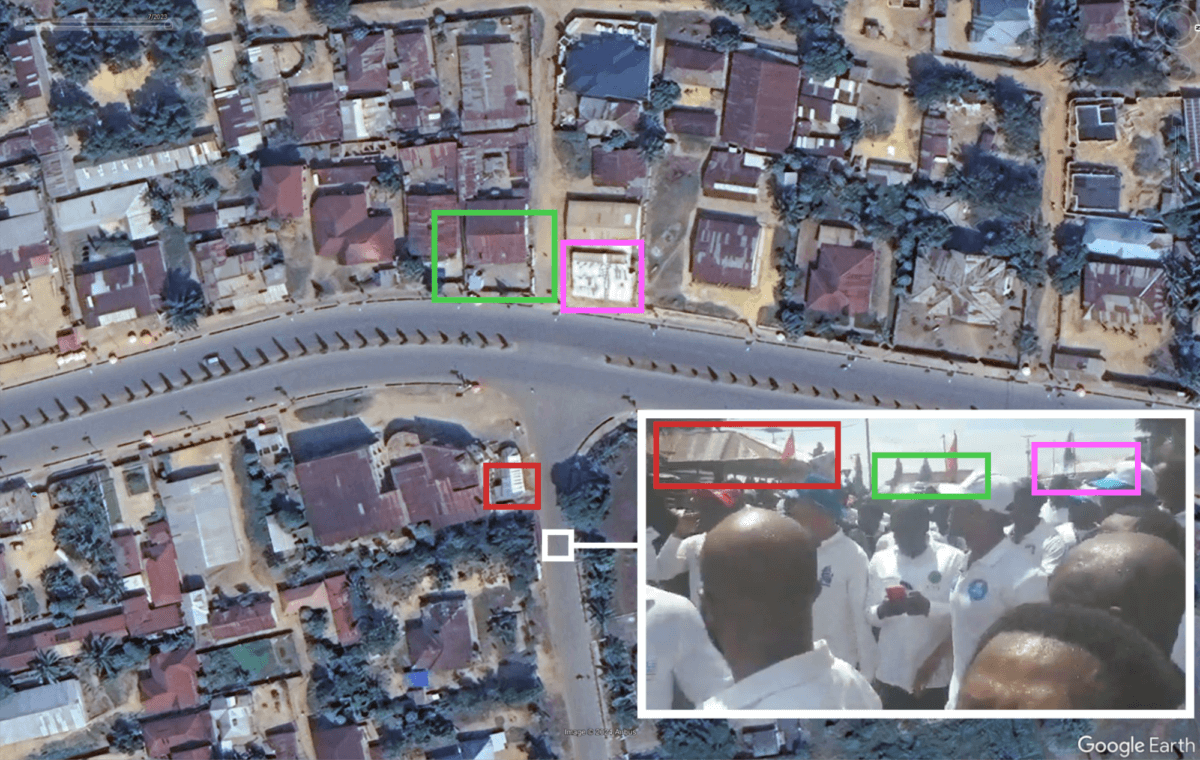
We determined the location of his body here at -2.939462, 25.924047 by matching the buildings visible in the background of the shot. The centerline of the trees, as well as the location and shape of nearby roofs, helped determine the position of his body.
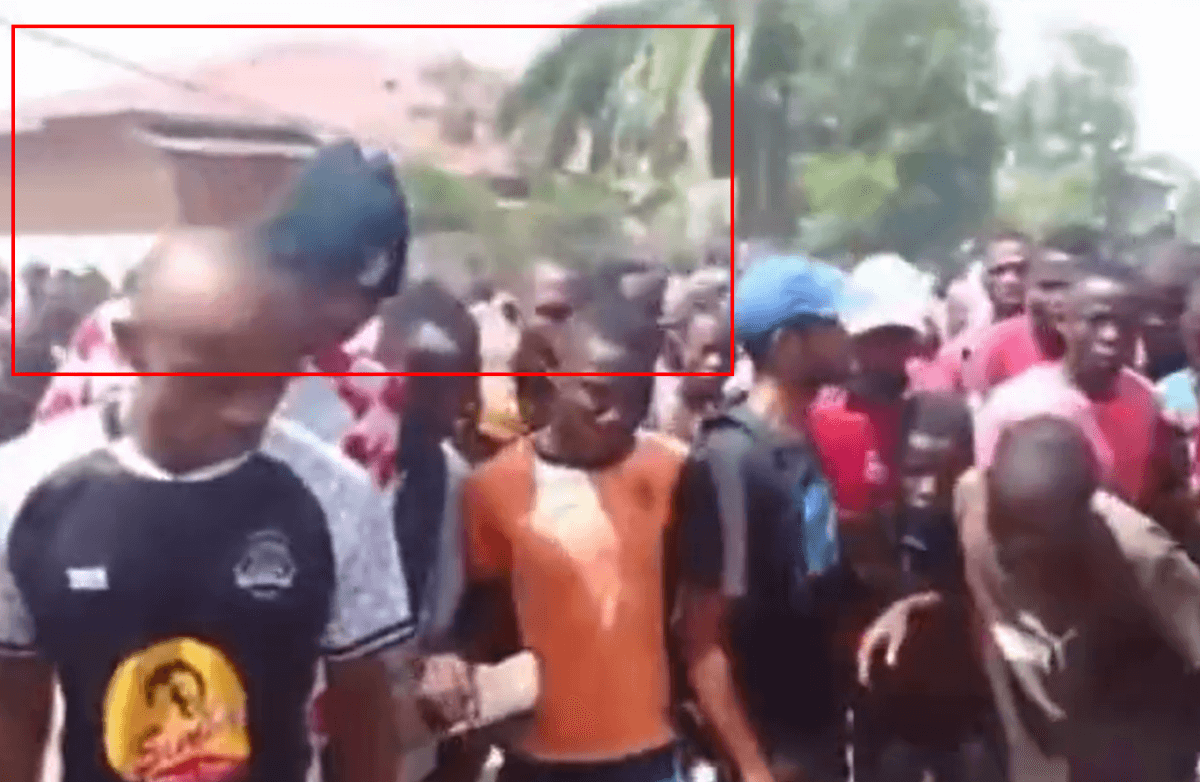
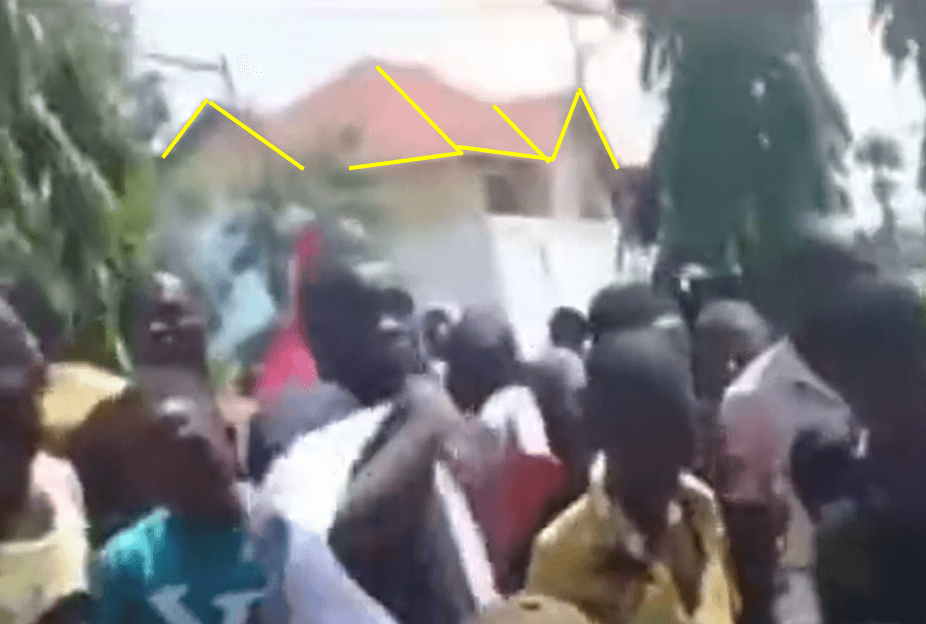
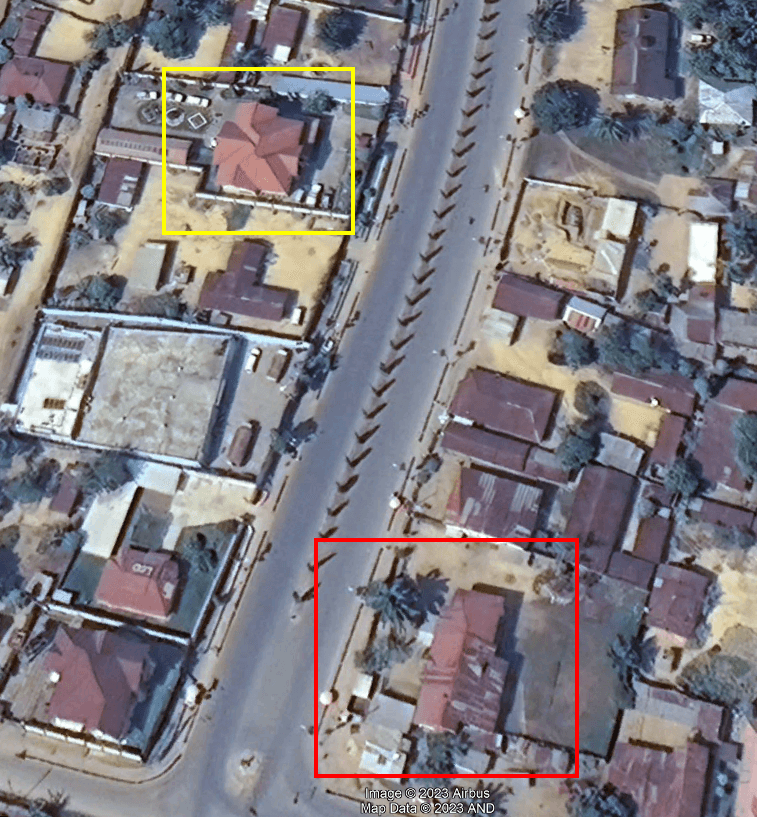
Crowds surround Kakisingi’s body, the roof lines behind the crowd are instructive for determining the location of this video.
The reasons why the march continued after Kakisinghi’s death remain unknown. After the tragic incident, the crowd split up, with the front of the procession continuing its march, while those behind either stopped near the body or began to disperse. Despite this, the bulk of the marchers likely continued south along Joseph Kabila Boulevard.
A video posted on X shows people wearing clothing bearing the image of DRC President Tshisekedi gathering further along the road.
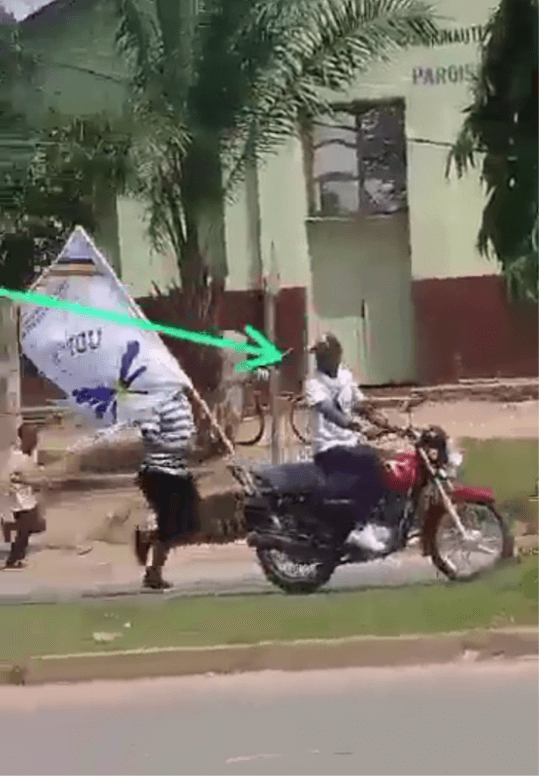
Some of the protesters began picking up rocks as they waited for the Katumbi march, which was moving slowly. Among them were those who appeared to be supporters of incumbent President Tshisekedi, including a man wearing a T-shirt with his image. When opposition representatives approached the scene, these people began picking up rocks and throwing them at them.
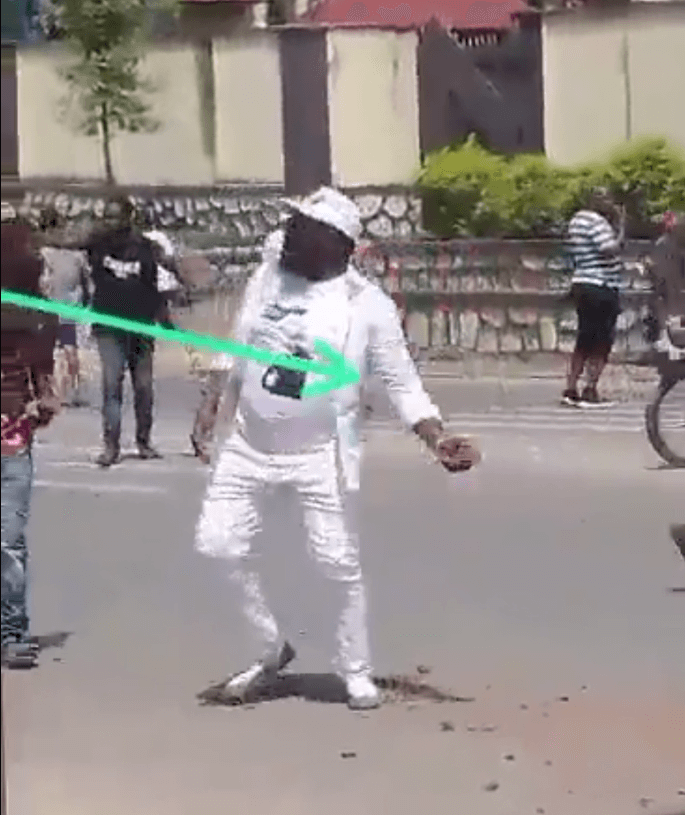
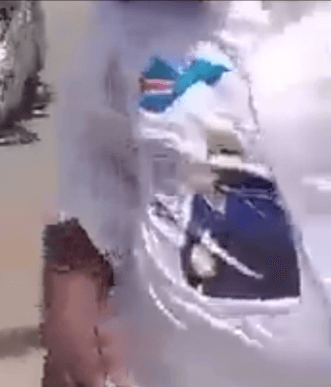
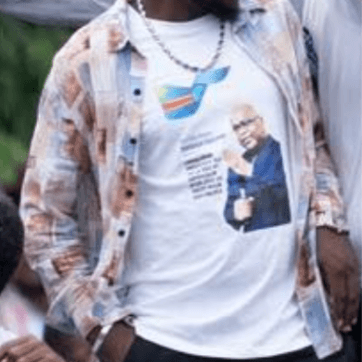
The two groups eventually mingle in the street (seen at 1:21 in this video uploaded by MaishaRDC). Competing flags – one from Ensemble and one from Tshisekedi’s UDPS party – can be seen on opposite sides of the road around this time as the clashes continue. Audio from the scene appears to capture the sound of rocks bouncing off objects in the street.
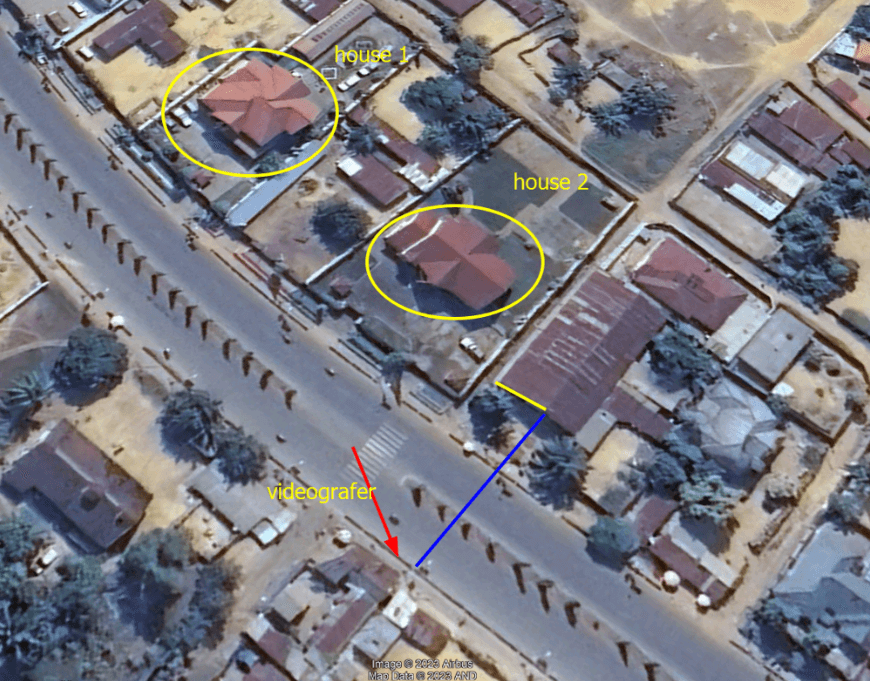
We cannot confirm exactly when the MaishaRDC video was filmed, but it is about 135 meters south of where Kakisinghi’s lifeless body was captured. The crowd is moving in the same direction as the march, suggesting it was filmed after Kakisinghi’s death (-2.94083, 25.92372).
The following image shows the videographer’s position:
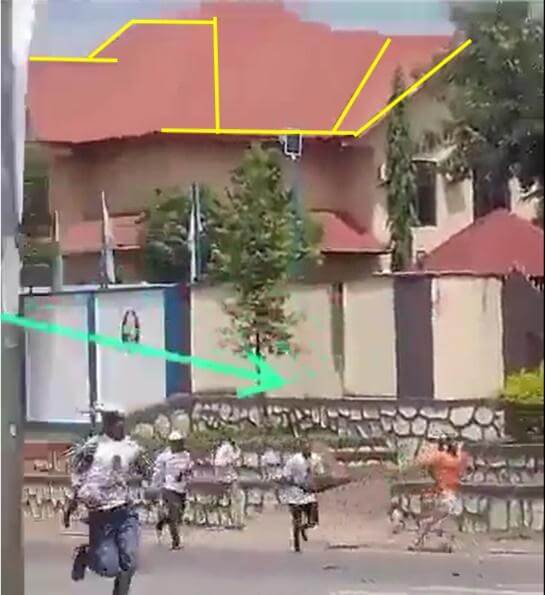
In the video, people are running, carrying sticks, and throwing stones.
When the march was more than 500 meters from the statue of Joseph Kabila, shots were fired. We geolocated this footage here (-2.94372, 25.92365).
The same shots can be heard in two different recordings. This frame from 00:52 to 00:57 shows protesters fleeing under gunfire (this video was filmed and edited by the opposition and contains some jumps, meaning it is not a continuous stream).
There is a second video that shows a different perspective of the same moment.
Several individuals who appear to be Police Nationale Congolaise (Congolese National Police, or PNC) can be seen holding firearms and looking at the marchers. Several shots can also be heard near the marchers, although it is not clear where they came from.
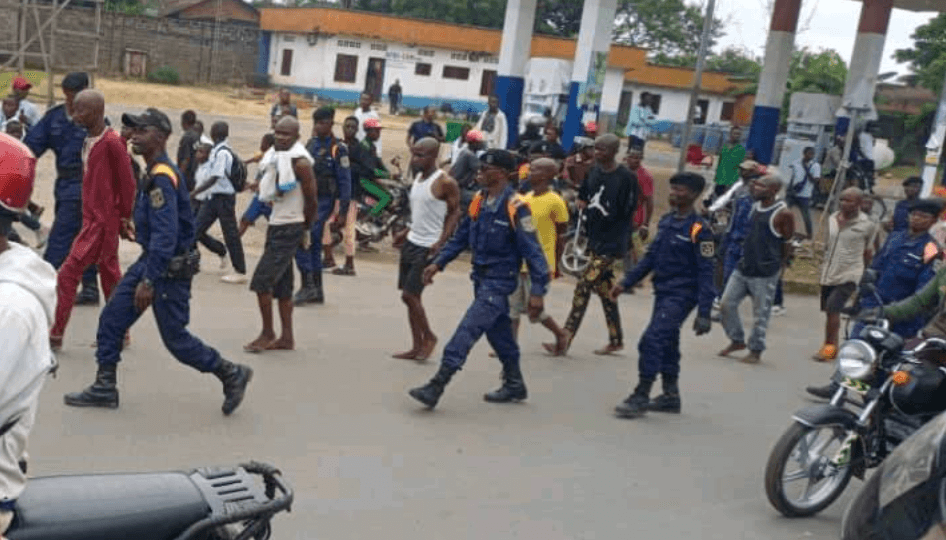
Amidst the gunfire, Katumbi marchers, accompanied by vehicles that slow down to give them cover, turn left onto Lufunhula Avenue.
A third video, showing the same intersection but from a different perspective (note that this video is mirrored), appears to show both the gunfire and Katumbi’s presence at the march. Katumbi and his bodyguards appear to be looking in the direction of the gunfire in the footage.
The marchers then return to Avenue Joseph Kabila, passing in front of the Palais De Justice De Kindu (-2.947390, 25.924925).
They ended at Matata Ponyo Square, also known as Mapon Square (-2.96263, 25.91809). The march probably covered about 6.5 kilometers in total, although the video of the detour around Avenue Lufunhula did not appear – the marchers are only seen again when they return to Avenue Joseph Kabila. At Mapon Square, Katumbi gave a speech, returned to the airport and flew to his next meeting.
A number of theories have emerged since the march about how Kakisinghi died. The lack of clarity about how he died has led to speculation online. Authorities have yet to release details of Kakisinghi’s autopsy, so it is not yet confirmed whether he died from gunfire, stones or a combination. In this information vacuum, some pro-Rwandan groups have claimed that President Tshisekedi ordered the police to shoot Kakisinghi. While we can see that on the day of the march, Tshisekedi supporters clashed with opposition figures, including throwing stones, we have not been able to confirm exactly who was responsible for his killing.
A few days after the incident, Kakisinghi’s fellow lawyers marched in protest, and his funeral was held on 1 December, attended by the opposition leader.
In the following months, Katumbi lost the presidential election to incumbent President Tshisekedi.
On 16 January 2024, four men were arrested in connection with Kakisingi’s death. At the time, only one suspect had been named in the press. His arrest was captured on video.
Olembo Kipalamoto and another man, Ismael Munanga, were found guilty of the murder on 30 October 2024, according to the Agence Congolaise de Presse, and sentenced to five years in prison.
The family’s lawyers are still demanding the questioning of 14 more suspects, and local media reports that arrest warrants have been issued for the men.