The rapid growth of artificial intelligence data centers has long raised concerns about their environmental impact. Now, tech billionaires including Elon Musk and Jeff Bezos are proposing to move such facilities into space. However, scientists behind a new petition argue that the idea is dangerous, warning it could lead to unprecedented environmental consequences.
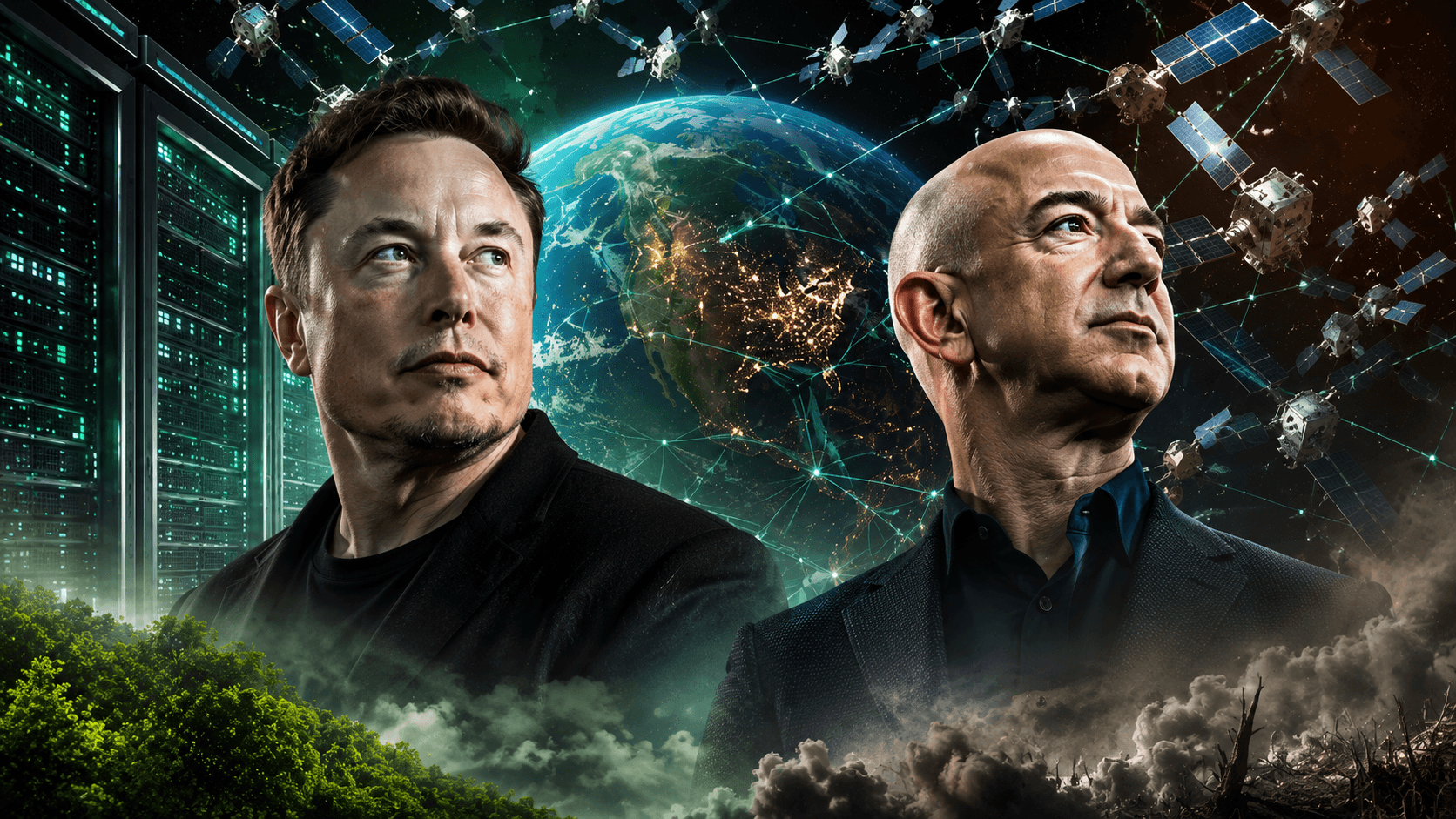
At first glance, the idea may seem perfectly reasonable. Communities around the world are pushing back against the construction of AI data centers on Earth, so moving them into orbit would, in theory, eliminate that particular problem.
Supporters of the concept also argue that satellites placed in sun-synchronous orbits could harness near-continuous solar power, providing a reliable energy source for the enormous electricity demands of artificial intelligence. The first major proposal appeared in January, when SpaceX, owned by Elon Musk, sought approval to deploy a mega-constellation of one million satellites operating as orbital data centers.
Soon afterward, a startup called Starcloud emerged with a similar vision. In March, Blue Origin, Jeff Bezos’ space company, unveiled Project Sunrise, another proposal for a massive constellation of data center satellites. The projects have been presented with sweeping promises. SpaceX, for example, claims its orbital data centers would “enable humanity’s multiplanetary future among the stars.”
According to a new petition organized by Earthjustice, Public Employees for Environmental Responsibility (PEER), and DarkSky International, however, the entire concept is both unrealistic and dangerous. The organizations argue that deploying more than a million data center satellites would trigger an environmental disaster on an unprecedented scale.
The petition’s signatories describe claims that orbital AI data centers could expand computing capacity without the environmental, economic, or social costs of terrestrial facilities as “patently absurd.”
“The proponents of these proposals describe their plans in grand, civilization-changing terms,” the petition states.
“Yet those same proponents have failed to conduct any meaningful assessment of their self-proclaimed transformative technology’s impacts on the environment, science, the economy, or other public interests,” the researchers add, arguing that the companies remain deliberately vague about the consequences.
Researchers note that the stratosphere is already experiencing unprecedented increases in heavy metals, harmful gases, and carbon particles as a result of record numbers of rocket launches.
More importantly, the petition warns that operating more than one million orbital data center satellites could produce catastrophic levels of atmospheric pollution, potentially damaging the climate, the ozone layer, human health, and the chemical composition of the stratosphere itself.
The concern is not merely theoretical. Of the roughly 15,000 satellites orbiting Earth in 2026, about half have been launched within the past five years, dramatically increasing pressure on the upper atmosphere.
The rockets required to deploy and maintain these satellites are themselves major sources of pollution. Launches release black carbon, nitrogen oxides, carbon monoxide, aluminum oxide, chlorine compounds, and even mercury into the upper atmosphere. A 2023 study supported by the U.S. National Oceanic and Atmospheric Administration (NOAA) found that sulfuric acid aerosols in the stratosphere now contain measurable concentrations of metals.
That finding is particularly concerning because these aerosols are believed to play a crucial role in regulating Earth’s temperature. Acting as a natural planetary “sunscreen,” they help form high-altitude clouds that reflect part of the Sun’s incoming radiation back into space.