

02.08.2024
2 min
1323



Google has filed a patent application for a personalized AI-powered TV channel that would generate videos specifically for each user. The system could take into account viewing history, location, age, and other personal data, as well as use a person’s photos and voice to make them the main character in their own series or show. However, the patent application has already been rejected, although the company can still appeal the decision.
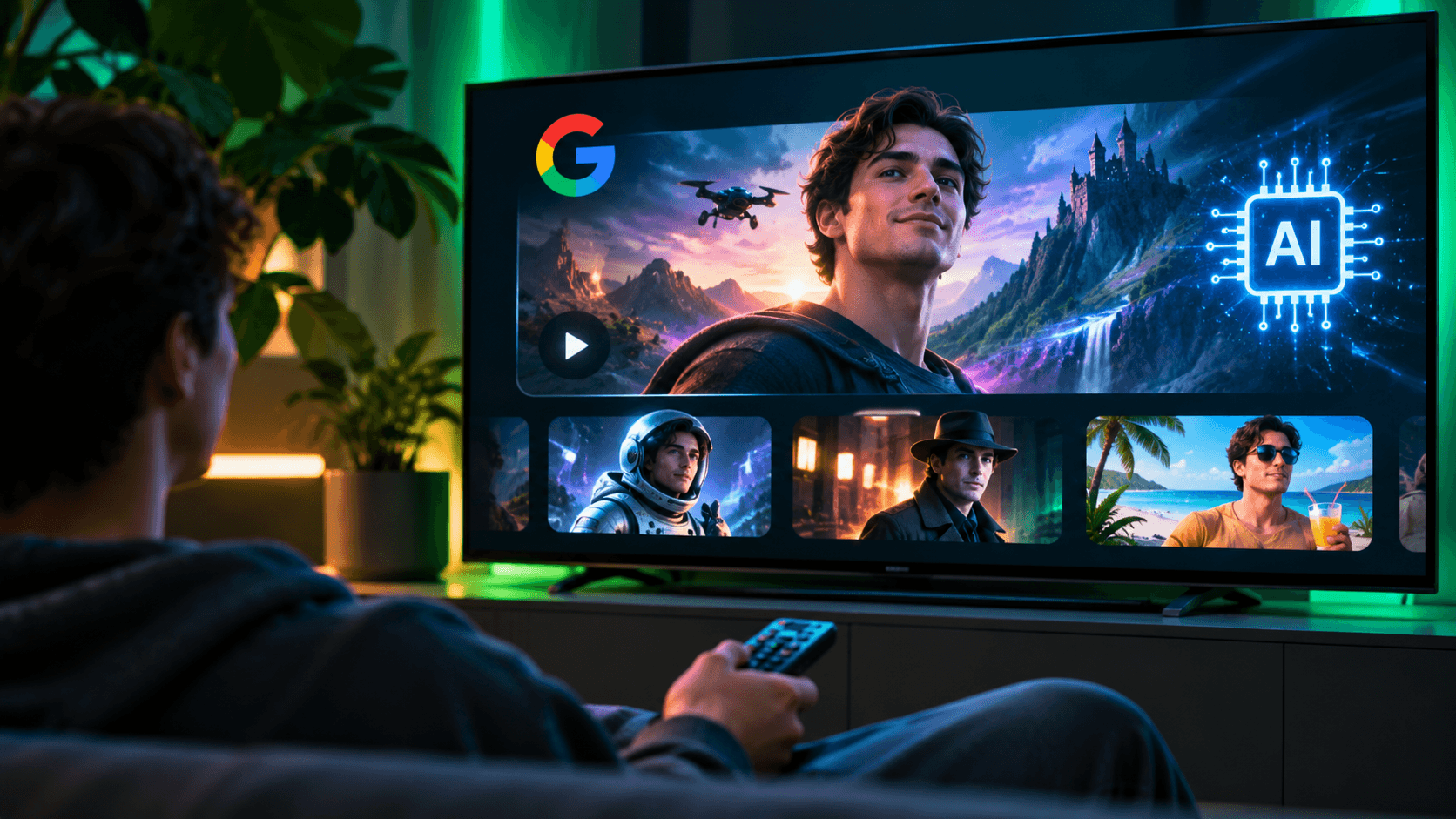
Google has proposed a new approach to video content personalization. Instead of recommending existing movies, TV series, or videos, the company wants to use artificial intelligence to create entirely new videos tailored to individual users.
The idea is described in a patent application titled Creating a Channel of Video Experiences Tailored to a User.
The application was filed on May 13, 2025, and published by the United States Patent and Trademark Office (USPTO) on November 19, 2026. The proposed system is called My Channel.
Unlike traditional recommendations on YouTube or streaming platforms, this channel would not be limited to pre-recorded videos. Artificial intelligence would independently generate new content based on viewers’ interests, habits, and preferences.
One of the most interesting features is the ability to turn users themselves into characters in videos. To achieve this, the system could use their photos and voices to create digital versions of them that would appear in AI-generated shows.
According to the technology’s description, My Channel would collect various types of user information to determine which videos might interest them.
To create personalized content, the system could take into account:
Viewing history, favorite genres, and video titles.
IP address and approximate location.
The type of device used to watch content.
Language settings.
Demographic information, including age group.
User photos and voice recordings to create a digital character.
The collected information would be sent to a server, which would use it to generate a prompt for an artificial intelligence model. The system would then generate a video and stream it directly to the user’s device.
For example, if someone regularly watches detective stories and comedies, AI could create a new story in their favorite genre. If users provide their own photos and voice recordings, they could potentially see themselves as characters in the generated content.
However, content would not necessarily be generated continuously. The patent describes the possibility of creating videos weekly, monthly, annually, or directly upon a user’s request.
The system could also use another AI model to obtain information about current news and popular trends. This would allow videos to be adapted not only to a person’s long-term interests but also to current events.
The content format could also vary. For example, smartphone users and Smart TV owners might receive different versions of personalized videos depending on their devices’ capabilities.
At the same time, this approach raises privacy concerns. To deliver highly accurate personalization, Google could potentially need to process significant amounts of personal information, ranging from viewing habits to location and age.
The use of photos and voice recordings could be particularly sensitive, as this information can be used to create realistic digital representations of people. The patent application describes the technical possibility of such use, but this does not mean Google is already collecting this data for a new service.
According to Patentlyze, a patent examiner rejected Google’s application. The company may still revise its claims, submit amendments, or appeal the decision.
There could be several reasons for the rejection, including insufficient technological novelty, an unclear description of the invention, or failure to meet patent law requirements. However, the publication does not specify the exact reason for the rejection.
Importantly, My Channel currently remains only a concept described in a patent application. Google has not announced the launch of such a TV channel, provided a potential release date, or confirmed that the technology will ever become available to users.
Nevertheless, the idea illustrates how video content personalization could evolve. While today’s algorithms primarily decide what content to show users, artificial intelligence may eventually create entirely new movies, TV series, and shows specifically for them.