
16.06.2026
3 min
298



Google is testing a new reCAPTCHA verification method that requires users to grant camera access and perform simple hand gestures. The company believes this approach will help better detect and block AI-powered bots, although the feature has already sparked privacy concerns among users and security experts.
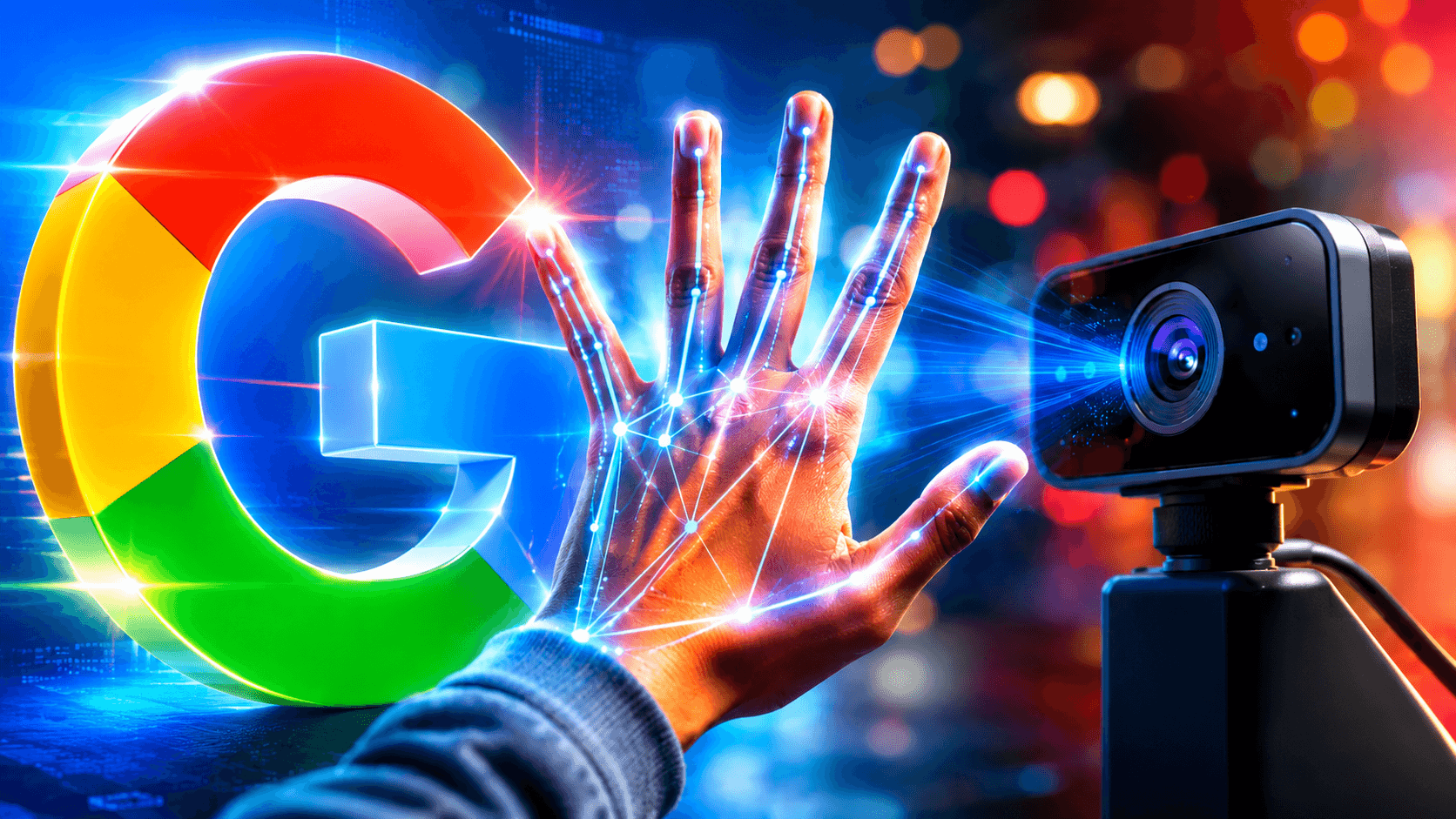
The new system asks selected users to grant camera access and perform a simple hand gesture to prove they are human. Google says the feature is designed to counter increasingly sophisticated AI-powered bots that are becoming more capable of bypassing traditional CAPTCHA challenges based on identifying objects such as traffic lights, bicycles, fire hydrants, and crosswalks.
According to the company, the verification process analyzes a short video of the user’s hand and extracts 21 landmark points. These points correspond to hand joint positions and are used to recognize specific gestures and movements.
Google says the captured video is not linked to a user’s identity. The company also states that no audio is recorded during the verification process and that the footage is deleted once the check is complete.
The new mechanism is intended to improve what Google calls “liveness detection,” helping websites defend against automated account creation, credential-stuffing attacks, and other forms of online fraud.
However, the feature has already raised concerns among privacy-focused users. Critics argue that requiring camera access for a routine “I’m not a robot” check represents another step toward broader use of biometric technologies across the internet.

The debate comes as biometric verification systems continue to expand worldwide. Several countries are already discussing or implementing age-verification requirements for social media platforms, many of which rely on biometric identification technologies.
Some users have openly criticized the new approach. An X user known as Lain on the Blockchain described the system as “much worse” than traditional CAPTCHA challenges, saying they would rather continue solving image-based tests than use what they called a “creepy” camera-based verification method.
Others questioned how effective the technology really is. X user Peter Austin claimed he was able to bypass the system using a virtual camera and an AI-generated animated hand.
This is not the first time Google has experimented with gesture recognition. In 2023, Google Meet introduced a feature that allowed users to raise a real hand in front of their webcam to automatically trigger the platform’s virtual hand-raise function during meetings.
The rollout of the new reCAPTCHA also coincides with Google’s broader research into gesture-based controls. A recently surfaced patent application describes the use of acoustic signals in portable devices to detect hand and muscle movements, potentially enabling hands-free device control without cameras or voice commands, although the technology has not been officially confirmed.
Despite Google’s assurances regarding privacy and data protection, the new system has already sparked debate over where the line should be drawn between stronger bot detection and the preservation of user privacy.