
15.06.2026
3 min
270



Airlines around the world are rapidly adopting Starlink satellite internet, promising passengers connection speeds that outperform many home broadband services. However, alongside the added convenience and new possibilities, air travel may lose one of the last remaining places where people could still disconnect from the online world.
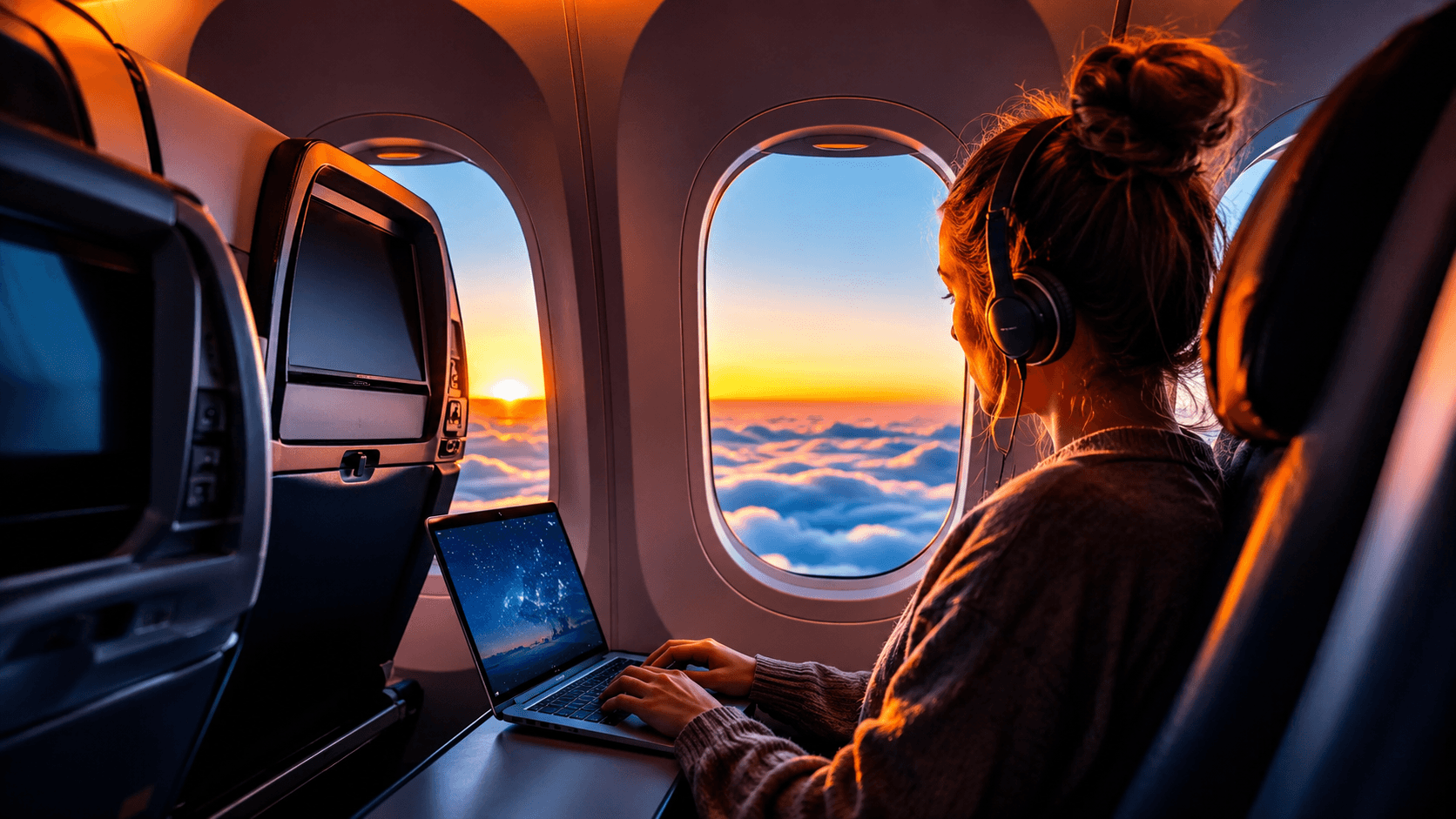
Major airlines have already begun a race to deploy Starlink across their fleets. While free Wi-Fi was once considered a competitive advantage, carriers are now competing to offer full high-speed internet access throughout the flight.
United Airlines started installing Starlink equipment in February this year. The system is already operating on roughly 300 aircraft, and the airline plans to equip around 800 planes by the end of the year. Meanwhile, American Airlines has announced plans to begin installing Starlink on approximately 500 aircraft starting in 2027.
In Europe, one of the first carriers to adopt the technology was AirBaltic. Emirates is also actively upgrading its fleet. The airline plans to boost onboard internet speeds on its Airbus A380 aircraft from the current 1 Mbps to as much as 2 Gbps using the Starlink network.
Most airlines are expected to offer SpaceX-powered internet access at no additional cost. Download speeds can exceed 100 Mbps, allowing passengers to stream videos, download large files, use cloud-based services, and browse the internet much as they would at home or in the office.
However, the arrival of fast internet also raises concerns about passenger behavior. Some airlines are already moving away from informal restrictions on voice and video calls during flights.
For example, British Airways has indicated that passengers will be able to use FaceTime, WhatsApp, Zoom, and Microsoft Teams for calls while in the air. This is precisely what worries many frequent travelers the most.
The issue extends beyond video calls. In many public spaces, it has become increasingly common for people to watch videos or listen to music without headphones. With reliable high-speed internet onboard, similar behavior could become far more common on aircraft.
In the United Kingdom, this phenomenon has even earned its own nickname: “bare beating.” The term refers to people intentionally—or simply out of indifference—playing audio from their smartphones at full volume without using headphones.
Concerns have intensified following several incidents involving passengers who refused to mute their devices. Airlines and cabin crews fear that as high-speed connectivity becomes more widespread, such situations could become increasingly frequent.
For years, passengers have complained about slow and unreliable in-flight Wi-Fi. Access often cost more than $25, yet still delivered poor speeds and frequent disruptions.
That reality is now changing rapidly. But while one longstanding problem is being solved, another may be emerging. What was once a relatively quiet environment for watching movies, reading, or simply relaxing risks becoming yet another space filled with video calls, messages, and constant digital noise.
Supporters argue that high-speed internet creates valuable opportunities for work and entertainment, especially on long-haul flights. At the same time, a rise in conflicts between passengers could force airlines to establish new rules governing onboard etiquette.
It is even possible that carriers will eventually introduce dedicated quiet zones for travelers who want to avoid calls, videos, and unnecessary noise. If that happens, silence on an airplane may shift from being the norm to becoming a premium service.
Starlink promises to make in-flight internet faster, cheaper, and more accessible than ever before. Yet in doing so, it may also threaten one of the last remaining places where people could disconnect from the digital world for a few hours and enjoy a rare moment of peace.