14.07.2026
2 min
377



Twitch streamer Joshua Hayne says Microsoft permanently deleted his account after it was hacked, despite confirming that he was the account’s legitimate owner before taking action.
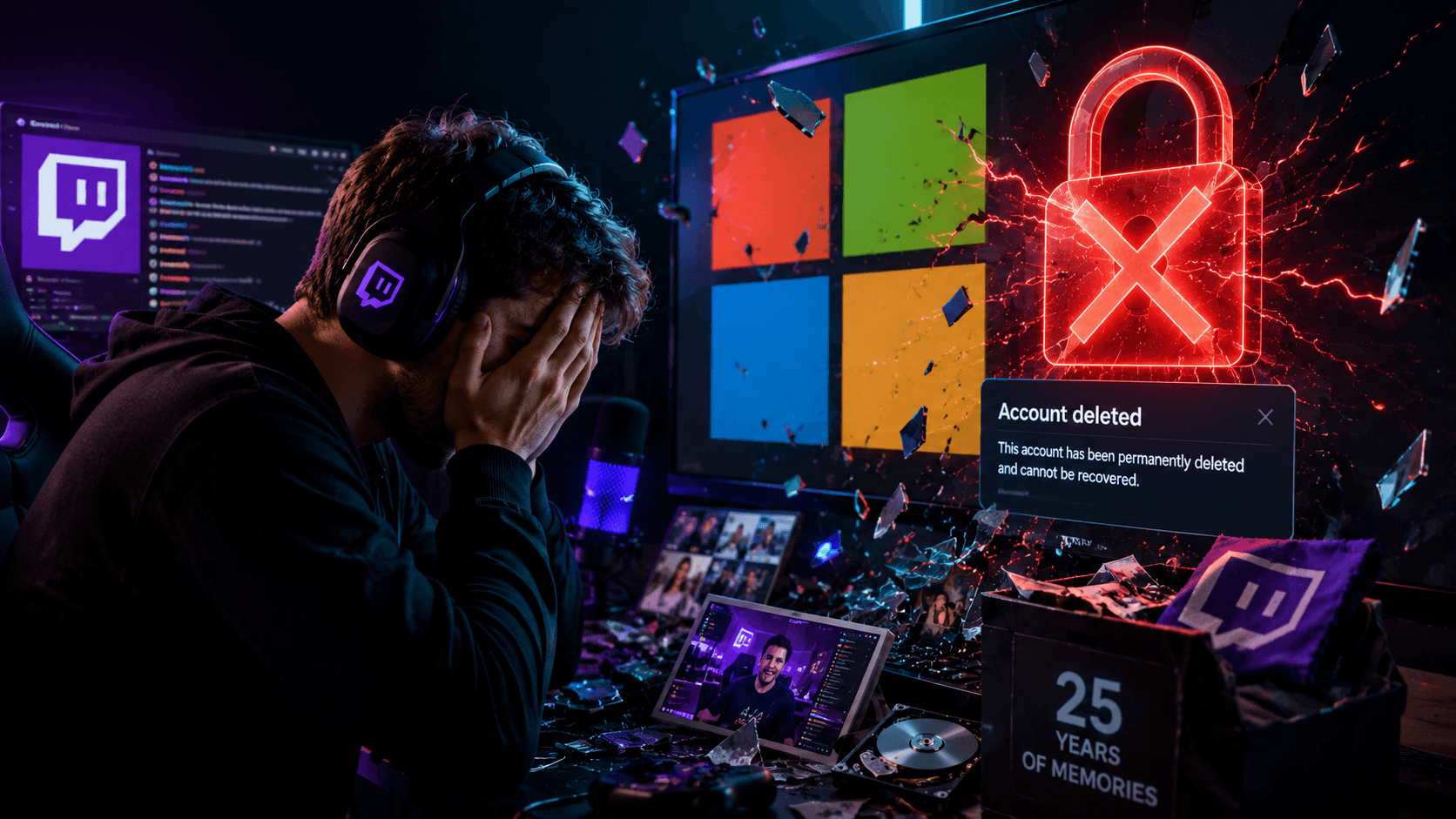
Hayne says he lost 25 years’ worth of digital purchases, including Xbox games, as well as personal files. He also wrote on X that family photos of his young son were lost in the process.
“All because MICROSOFT couldn’t bring back a compromised account??” the post reads, adding, “One of the biggest companies ever couldn’t do that, so they just deleted that shit like it was nothing??”
The post also included an email from Microsoft stating that the account suspension was “irreversible.”
“If you used this account for Minecraft, we regret to inform you that it cannot be recovered.”
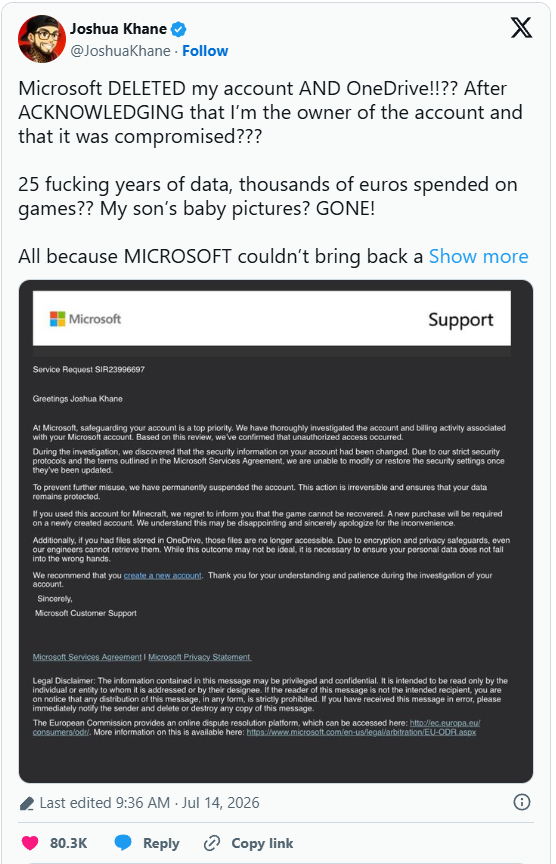
The email also stated that the game would have to be purchased again, reigniting the debate over whether users truly own the digital content they buy.
Microsoft argues that permanently suspending compromised accounts helps prevent future abuse, even if it means users lose access to their files and purchases. While some people responding to Hayne’s post on X said he should have kept backups of his data, many others expressed sympathy.
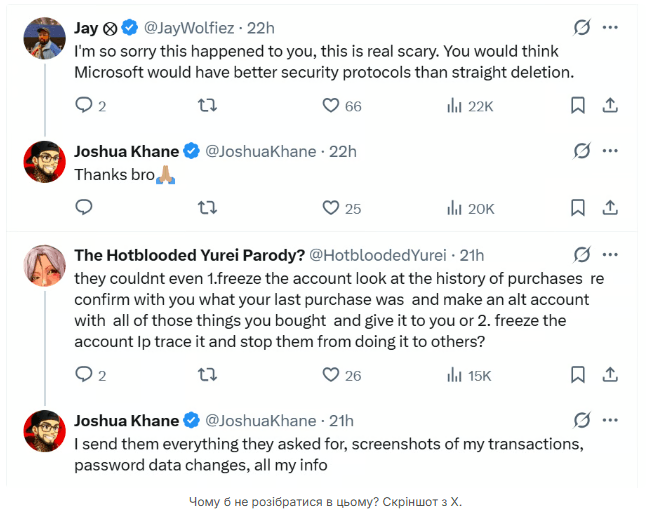
“You’d think Microsoft would have better security protocols than just deleting the account,” one user wrote. Another questioned why the company couldn’t simply freeze the account while investigating the case.
Hayne replied: “I sent them everything they asked for – screenshots of my transactions, password changes, all of my information.”
This is not the first time a Microsoft user has lost access to an account after it was hacked. In June, Brazilian Xbox user João Nasser found himself in a similar situation. However, in that case, a Brazilian court ordered Microsoft to restore his account and pay him approximately $400 in compensation for moral damages.
In Joshua Hayne’s case, by contrast, Microsoft said the account could not be recovered. The difference in how the two cases were handled has further fueled the debate over digital ownership and how secure users’ purchased games, cloud data, and online accounts really are.