A developer has adapted Microsoft Word for Windows 1.1a, released more than 35 years ago, for modern 64-bit computers. The legendary word processor can now run directly on Windows 11 without an emulator or compatibility mode.
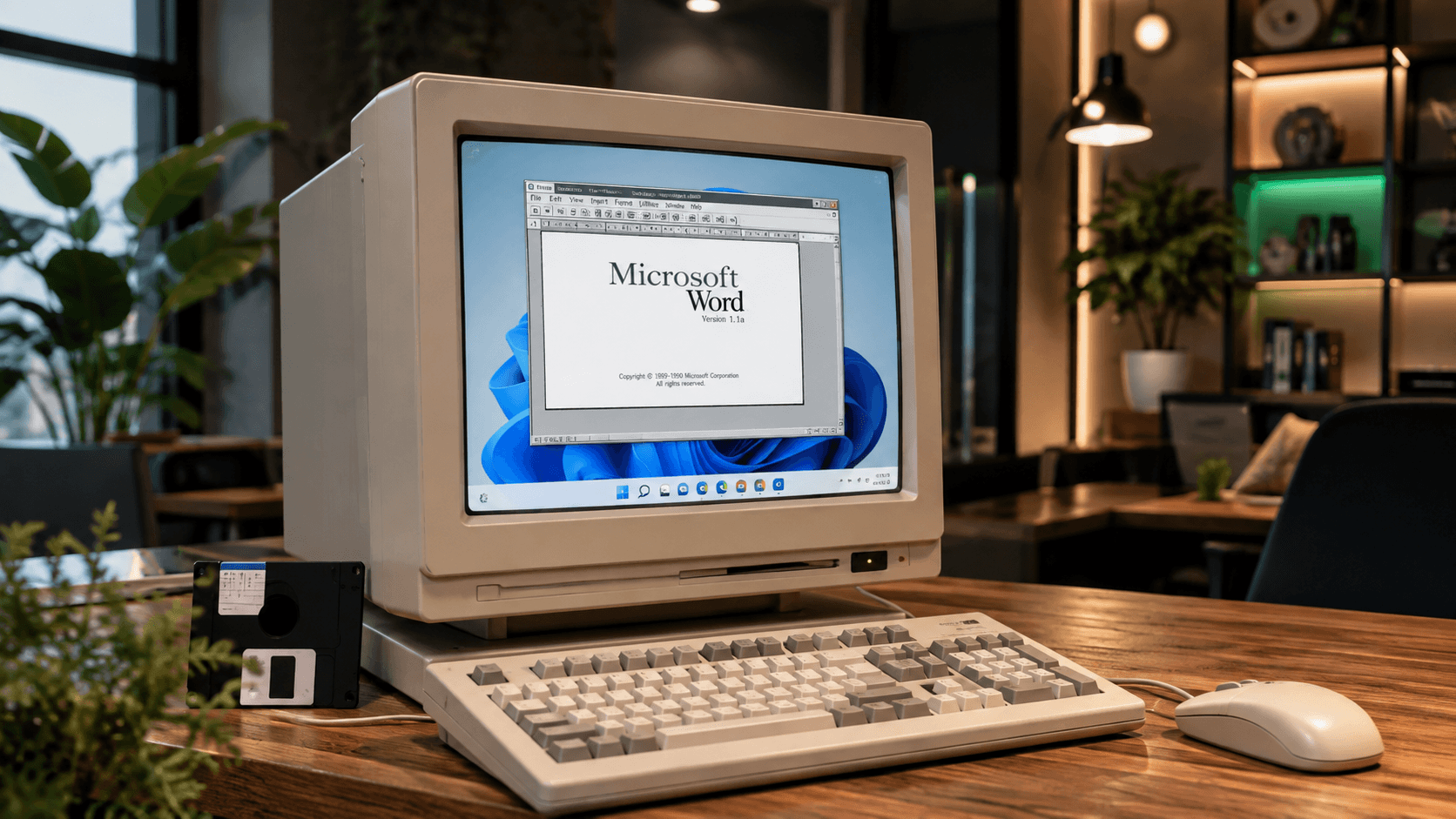
Developer JMarshall23 created a full x64 port of Microsoft Word for Windows 1.1a using the program’s original source code and resources.
This is more than simply running an old version of Word through an emulator or compatibility layer. The developer effectively adapted software originally designed for a 16-bit environment to run on modern 64-bit Windows.
To make this possible, outdated components related to 16-bit assembly code, segmented memory, and the limitations of the Win16 platform had to be reworked. The port also includes additional features intended for research purposes.
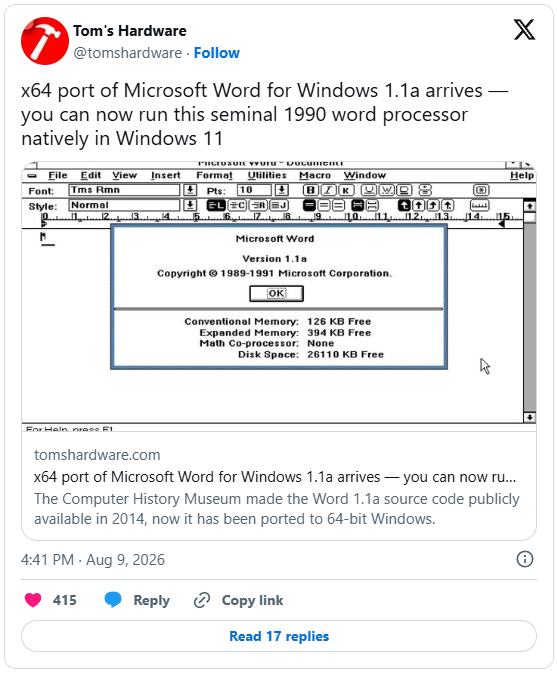
The project was made possible thanks to the Computer History Museum in California, which released the complete source code for Microsoft Word for Windows 1.1a in 2014.
The original version of Word was built for a very different era of computing. The program could run on processors clocked at just a few megahertz and, according to available information, required only around 1 MB of RAM.
For comparison, modern personal computers typically come with 8, 16, or 32 GB of RAM. On today’s hardware, the system requirements of an early 1990s version of Word seem remarkably modest.
However, users cannot simply download a ready-made version of Word 1.1a for Windows 11 and launch it. JMarshall23 published the code needed to build the x64 version of the program yourself rather than providing a ready-to-run executable.
To run the project, users will need Microsoft Visual Studio 2022, the Windows 10 or Windows 11 SDK, as well as CMake and PowerShell. The developer has also provided instructions in the repository explaining how to build and run the port.
As a result, the project is currently aimed primarily at developers, researchers, and retrocomputing enthusiasts rather than everyday Microsoft Word users.
There are also legal restrictions surrounding the use of Microsoft Word’s original source code.
The Computer History Museum’s license allows the code to be used for non-commercial purposes, but it does not permit copies to be freely distributed or sold.
This means turning the port into a regular application that anyone could simply download and install in a few clicks is not so straightforward.
Microsoft Word for Windows 1.1a belongs to one of the earliest generations of Word developed for the graphical Windows environment. It was created at a time when personal computers had vastly fewer computing resources and Windows itself operated in a 16-bit environment.
After decades of architectural changes, running software from that era on modern systems typically requires emulation or other compatibility solutions. What makes this project different is that the old version of Word has been adapted to run natively in a 64-bit environment.
The Word 1.1a port is unlikely to become a practical alternative to the modern Microsoft Word, but the project demonstrates that even software from the early 1990s can be adapted to today’s operating systems. For enthusiasts and researchers, it also offers a way to preserve a piece of personal computing history in a working form.