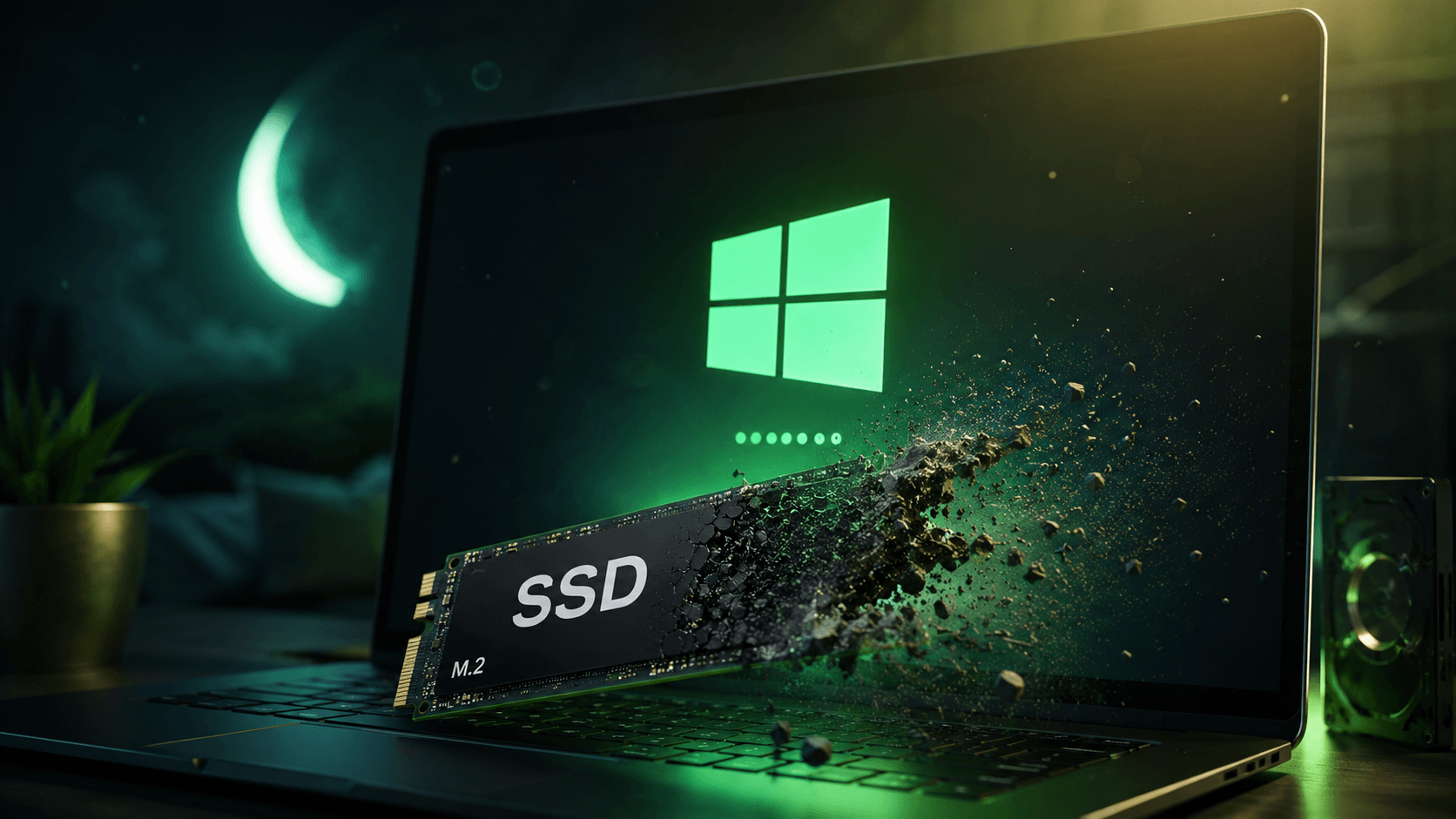
The issue stems from how Hibernate works. Every time a computer enters hibernation, Windows saves the contents of system memory to a dedicated file on the SSD. When the PC is powered back on, the operating system reads that file and restores everything exactly as it was before shutdown.
While convenient, this process generates additional write activity. The more RAM a system has, the more data must be written to the SSD each time Hibernate is used.
Engineer Chandravir Mathur highlighted the issue after noticing that his computer began taking longer to start following multiple sleep-hibernate-wake cycles.
“The system boots noticeably slower after a few wake-hibernate-wake cycles, which kills the fast, instant resume experience I used to enjoy.”
Despite this, Mathur stresses that most users have little reason to worry. Modern SSDs are designed to handle large amounts of write activity and should continue operating reliably for many years under normal conditions.
According to his conservative estimates, a typical SSD could last well over a decade before needing replacement. The greatest risk applies to systems with limited-capacity drives, lower-endurance SSDs, large amounts of RAM, or computers that enter hibernation many times per day.
For most modern SSDs, Hibernate alone is unlikely to significantly reduce the drive’s lifespan. However, Mathur notes that manufacturer endurance ratings can be difficult to verify in real-world conditions.
“Manufacturer lifespan claims are the hardest to verify, and they usually represent best-case scenarios.”
The discussion has gained additional attention because SSD prices have risen sharply. As Mathur points out, replacing a worn-out drive is no longer the inexpensive weekend project it once was.
“Replacing a burned-out drive is no longer the cheap weekend project it was two years ago.”
As a result, some users are considering disabling Hibernate entirely. Doing so eliminates hibernation-related write cycles and frees up storage space occupied by the hibernation file. For many desktop users, standard Sleep mode may be sufficient, especially since modern SSDs already provide very fast boot times.
One commenter shared their own approach:
“I use hibernation sparingly when sleep isn’t enough. If I’m going on vacation and have a lot of programs open, I power down my PC and monitors.”
For laptop users, however, Hibernate remains a valuable feature. Unlike Sleep mode, it does not consume battery power and allows users to preserve their work during long shutdown periods or power outages.
SSD longevity has become an even more important topic as storage prices continue to climb. According to Vdura, the price of a 30TB enterprise TLC SSD increased from $3,460 in Q3 2025 to $18,900 in Q2 2026, representing a 446% increase. For comparison, a 30TB hard disk drive rose from $495 to $1,216 over the same period, an increase of 146%.