

02.09.2025
2 min
734



Pro-Russian hacking groups NoName057(16) and Z-Pentest Alliance have claimed responsibility for large-scale cyberattacks targeting refrigeration systems in European supermarkets. The attackers allegedly raised freezer temperatures to 50°C, forcing stores to dispose of tons of spoiled food. However, there is currently no independent confirmation that these groups were responsible for the attacks.
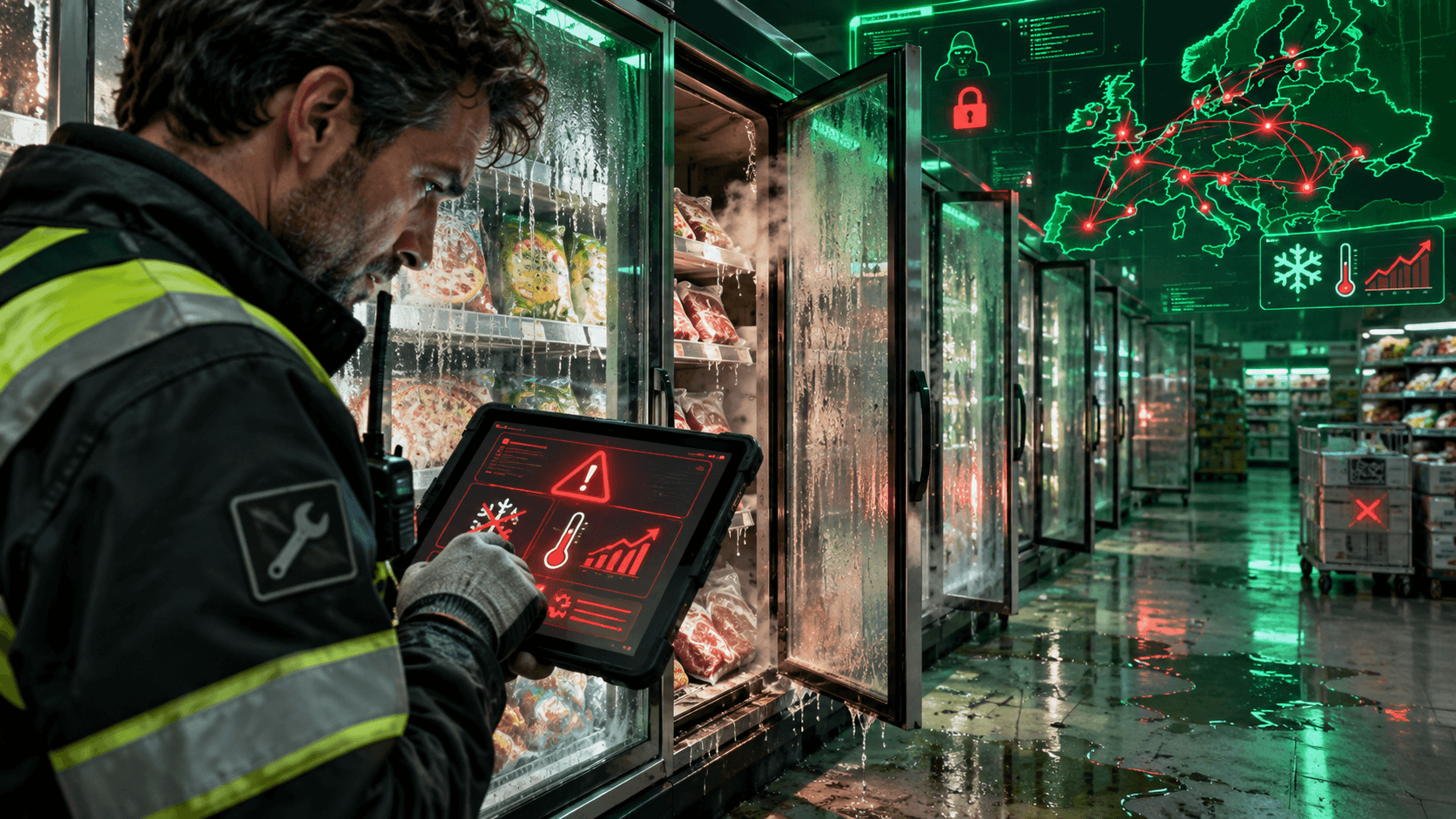
The hackers announced their involvement in the attacks through their respective Telegram channels. NoName057(16) also claimed to have stolen a database allegedly containing the login credentials of employees and customers of Danfoss, a Danish company that manufactures equipment for controlling refrigeration systems.
“To prove that we have the database in our possession, we are publishing a sample of more than 2,500 rows. It contains the usernames and passwords of Danfoss employees and customers,” representatives of NoName057(16) claimed.
Z-Pentest Alliance, meanwhile, blamed the incidents on the equipment operators themselves, accusing them of neglecting security for years.
“The problem is not ‘evil hackers’ but the systemic negligence of European and American operators who have ignored basic cybersecurity requirements for years,” the group stated.
By the time of publication, both Telegram channels had been deleted, making it impossible to independently verify the hackers’ claims. Their statements were shared on X by a cyber threat researcher known as CyberKnow. However, he questioned whether the groups had actually compromised the refrigeration systems or had simply decided to take credit for the attacks after media reports suggested their possible involvement.
As of several hours ago – NoName057(16) and by extension Z-Pentest have claimed the recent fridge attacks in Europe.
However, I am not convinced it was them, instead they may be claiming the activity after analysts posted it could be them. pic.twitter.com/ozt1dD4Eji
— CyberKnow (@Cyberknow20) November 4, 2026
In early November, a series of cyberattacks targeting supermarket refrigeration systems across Europe resulted in widespread food spoilage. The attackers interfered with the equipment by changing freezer temperature settings. In some cases, temperatures rose to 50°C, effectively destroying stocks of frozen goods.
Stores in Belgium, Estonia, Ireland, Luxembourg, the Netherlands, Denmark, Sweden, and Finland were affected. Due to the disruption of temperature controls, supermarkets were forced to dispose of tons of meat, frozen food, and other products that no longer met safe storage requirements.
This was not the first incident of its kind. In October, hundreds of French supermarkets faced similar attacks, during which hackers gained access to refrigeration control systems and altered their settings.
Cybersecurity experts had previously warned that many of these systems still run outdated firmware versions with known vulnerabilities. According to researchers’ estimates, approximately 13,000 refrigeration systems remain potentially vulnerable to similar attacks.
The pro-Russian hacking group NoName057(16) emerged in March 2022, shortly after Russia launched its full-scale invasion of Ukraine. Since then, its members have regularly targeted government websites, banks, transportation systems, and media outlets in Ukraine, the United States, and European countries.
The group’s primary weapon remains distributed denial-of-service (DDoS) attacks, which overwhelm servers with large volumes of requests, making online services inaccessible to users.
Z-Pentest Alliance is a relatively new pro-Russian hacktivist group that emerged in late 2024. According to available information, its members include former participants of NoName057(16) and Cyber Army of Russia Reborn.
Unlike NoName057(16), which primarily focuses on disrupting websites and online services, Z-Pentest targets industrial control systems in Western countries and Ukraine.
Its targets include water treatment systems, power grids, oil and gas facilities, and agricultural infrastructure. Attacks against these systems can directly disrupt business operations and critical infrastructure.
Z-Pentest does not necessarily rely on sophisticated hacking tools. The group frequently searches for industrial control panels exposed to the internet or equipment protected by weak passwords. Such security flaws can be enough to gain unauthorized access to a system.
The latest incidents demonstrate how serious the consequences of inadequate industrial equipment security can be. However, the perpetrators behind the attacks on European refrigeration systems have yet to be conclusively identified. The claims made by NoName057(16) and Z-Pentest Alliance remain unverified.