29.07.2026
2 min
220



According to OpenAI CEO Sam Altman, the arrival of superintelligence will not shorten the workweek. Instead, people will likely work even more, and, surprisingly, they will be happy about it.
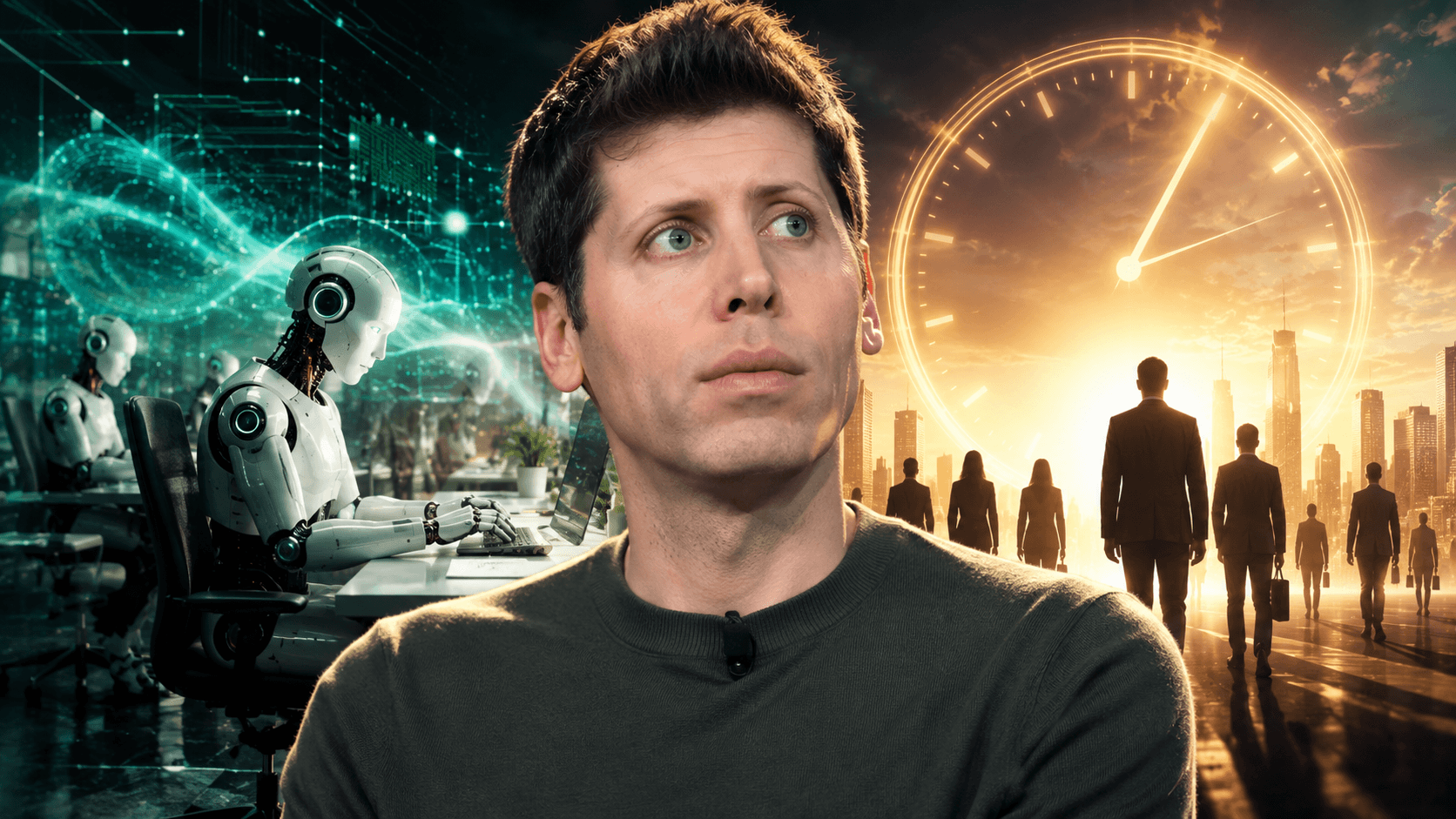
Artificial intelligence is often portrayed as the technology that will usher in an “age of abundance” and free people from much of their daily work. However, a four-hour workweek appears destined to remain little more than an appealing idea.
Speaking on the Relentless podcast, released on July 25, 2026, Altman said OpenAI’s primary goal is to make artificial intelligence widely available, affordable, and accessible to everyone. But when asked whether AI would allow people to work less, his answer was clear.
“Technology has long promised people that they would work less and have more leisure,” Altman said.
He acknowledged that society has made progress in that direction. People today generally enjoy a higher quality of life and more free time than previous generations. Even so, the long-promised four-hour workweek has never become a reality.
“But somehow we never get the promise of the four-hour workweek at mass scale in society. And I don’t expect AI to change that,” he said.
According to Altman, the reason is simple: as technology advances, so do people’s expectations. Instead of being satisfied, people continually set new goals, strive for more, and measure themselves against others.
“We think of new things to do, to create for each other, to want for ourselves. People are very focused on how they’re doing relative to other people,” the OpenAI CEO said.
He added that competition will remain one of the main drivers of the economy, while the desire to create and contribute will persist even in a world shaped by superintelligence.
“I expect that to continue. I think we’re all going to be much busier than we thought we were supposed to be in a post-superintelligence world. We’re still going to complain about it, but secretly we’re going to be happy,” Altman concluded.
His outlook stands in sharp contrast to Elon Musk’s vision. In a recent interview with The Economist, the SpaceX CEO suggested that work could eventually become optional and money could lose its importance. However, he offered few details on how society would transition to such a future.
Meanwhile, emerging research suggests that AI is already increasing workloads rather than reducing them. A 2026 study by researchers at the University of California, Berkeley found that artificial intelligence does not free up workers’ time. Instead, it expands the number of tasks they perform and stretches work across more hours of the day.
The researchers also found that employees increasingly interact with AI tools during lunch breaks or immediately before meetings. Time that was once reserved for rest is gradually becoming another part of the workday.