
15.11.2024
1 min
959



Cybercriminals have launched a new wave of phishing attacks, disguising SMS as traffic violations. The main change is that instead of the usual links, QR codes are now used, which lead victims to fake websites and help bypass basic protection systems.
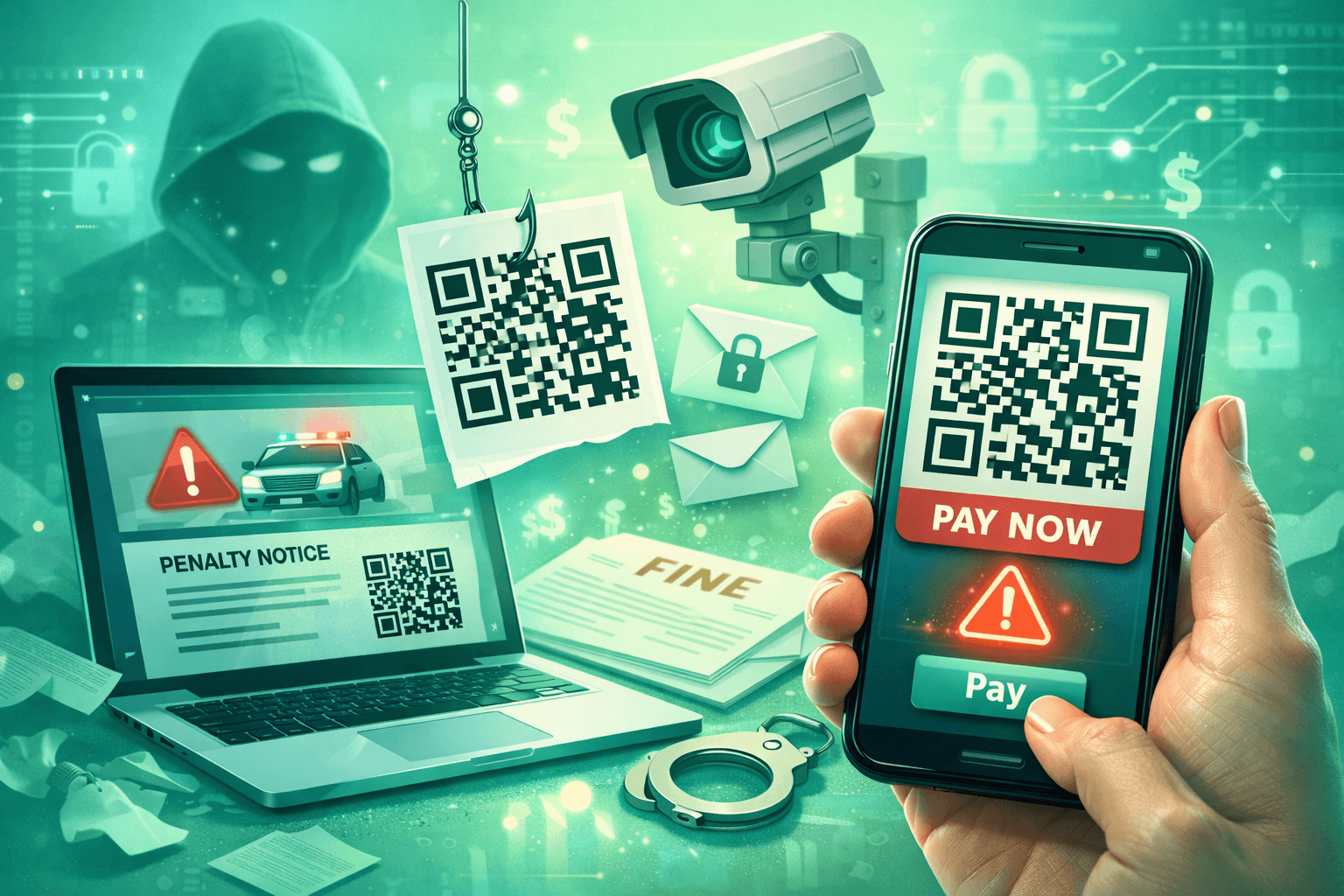
Scam artists have come up with an additional form of deceit that is very convincing. Recently, people have started receiving SMS messages claiming to be from courts in different states within the U.S. These messages are titled “Default Notice,” create a sense of panic because they claim you are guilty of some type of infraction, and require immediate attention. In order to resolve this issue quickly, all you need to do is click on a provided QR code and pay $6.99 for a fee.
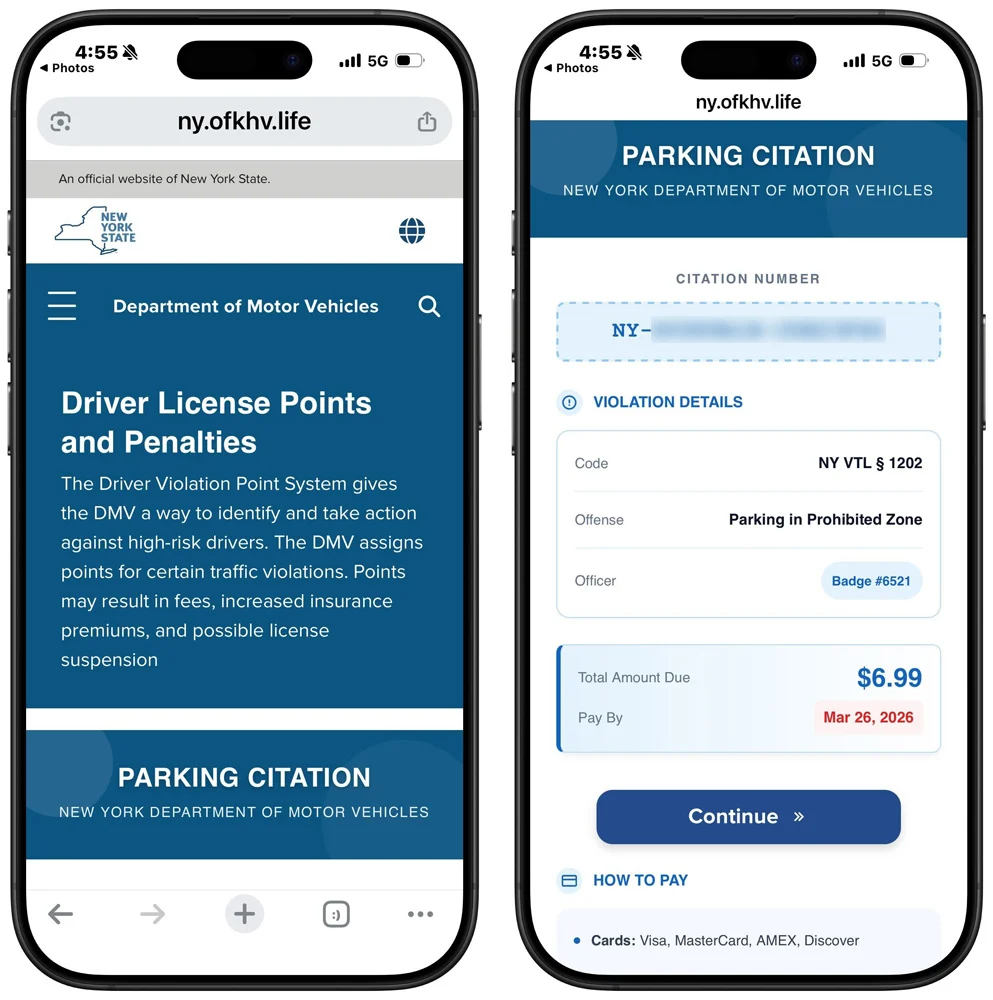
At first sight, all seems to be okay; however, this is actually an example of classic phishing. The QR code will not take you to the main site of the company that supposedly issued the fine (or whatever), but instead to a fake version of that same web-site where you are tricked into providing your personal and financial details.
As for the nature of the scam itself, this isn’t an entirely new method, it’s just a new evolution. A year ago in 2025, people started receiving spam messages from what appeared to be governmental services regarding overdue parking and travel fines, etc. However, back then spammers used to use simple links. Now they have evolved their way of using QR codes so they can avoid those security filter systems and appear legitimate.
Just a couple of weeks ago, the first instances of this new wave were reported by the residents of New York. But since then, the same style of SMS has been reported by residents of other states such as California, North Carolina, Illinois, Virginia, Texas, Connecticut and New Jersey. This alone is indicative of the size of the mailing.
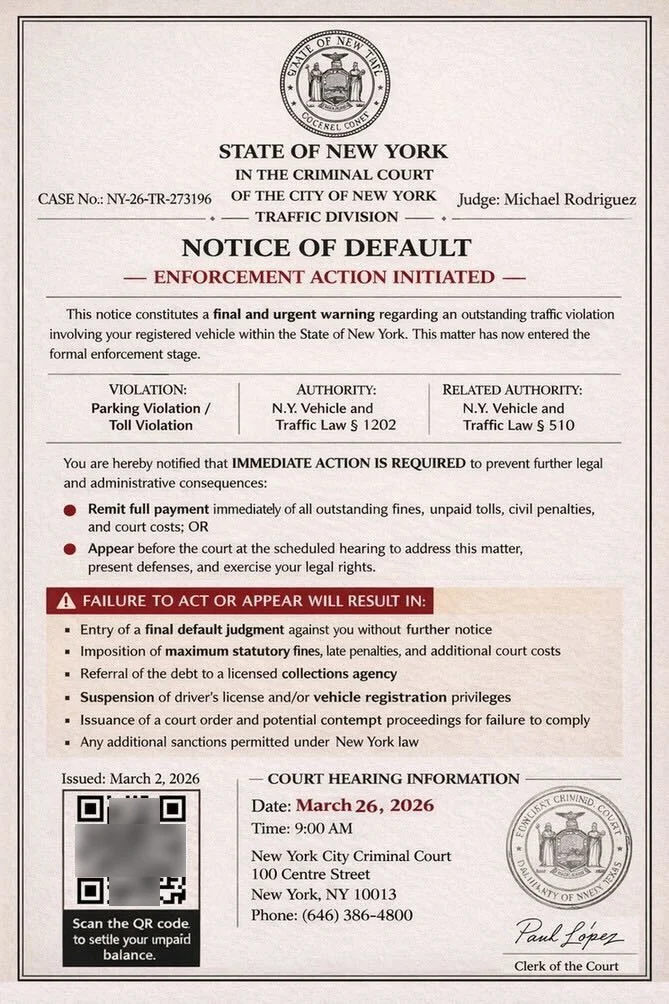
Here’s how this scheme works when put into use. Someone will receive a “message” allegedly sent by the “New York Criminal Court”, indicating that someone has an outstanding fine.
The scammer tries to convey urgency; whether you choose to pay right away or go to court. Then, they provide instructions on what steps to take (i.e., how to make easy/quick payments). They tell the victim to scan a QR Code to quickly complete the transaction.
However, after scanning the QR Code, the user is not immediately taken to the phishing webpage. Instead, the user is directed to an intermediary website that includes a CAPTCHA. This is another attempt by scammers to avoid automated detection methods. It also makes them appear more legitimate.
Once a user completes the CAPTCHA, they are redirected to a fake webpage that mirrors other government services webpages (e.g. the DMV). In addition to mirroring those webpages, the fake webpage presents a familiar storyline. It states that there is a $6.99 debt and that it must be paid.
Then everything happens according to the classic scenario. You click “Continue” – and you are asked to enter your data:
first and last name
residence address
phone number and email
bank card details
At this stage, the scammers get everything they need. And it’s not about those six dollars anymore. This data can be used for:
financial fraud
further phishing attacks
identity theft
selling information to other criminals
It is important to understand one simple thing: government agencies do not work this way. They do not send SMS asking to pay fines via random links or QR codes and certainly do not collect payment details through such messages.
Government agencies have repeatedly stated in response to these fraudulent actions that they do not use text messages requesting personal information or payment information.
Therefore, if you receive a similar message from an unknown number, the best solution is to simply ignore it. And if in doubt, check the information yourself through official websites or services.
And the main thing to remember: when you are being pressured into taking quick action out of fear or urgency, this is almost always a signal that you are dealing with a scam.