17.12.2025
2 min
673



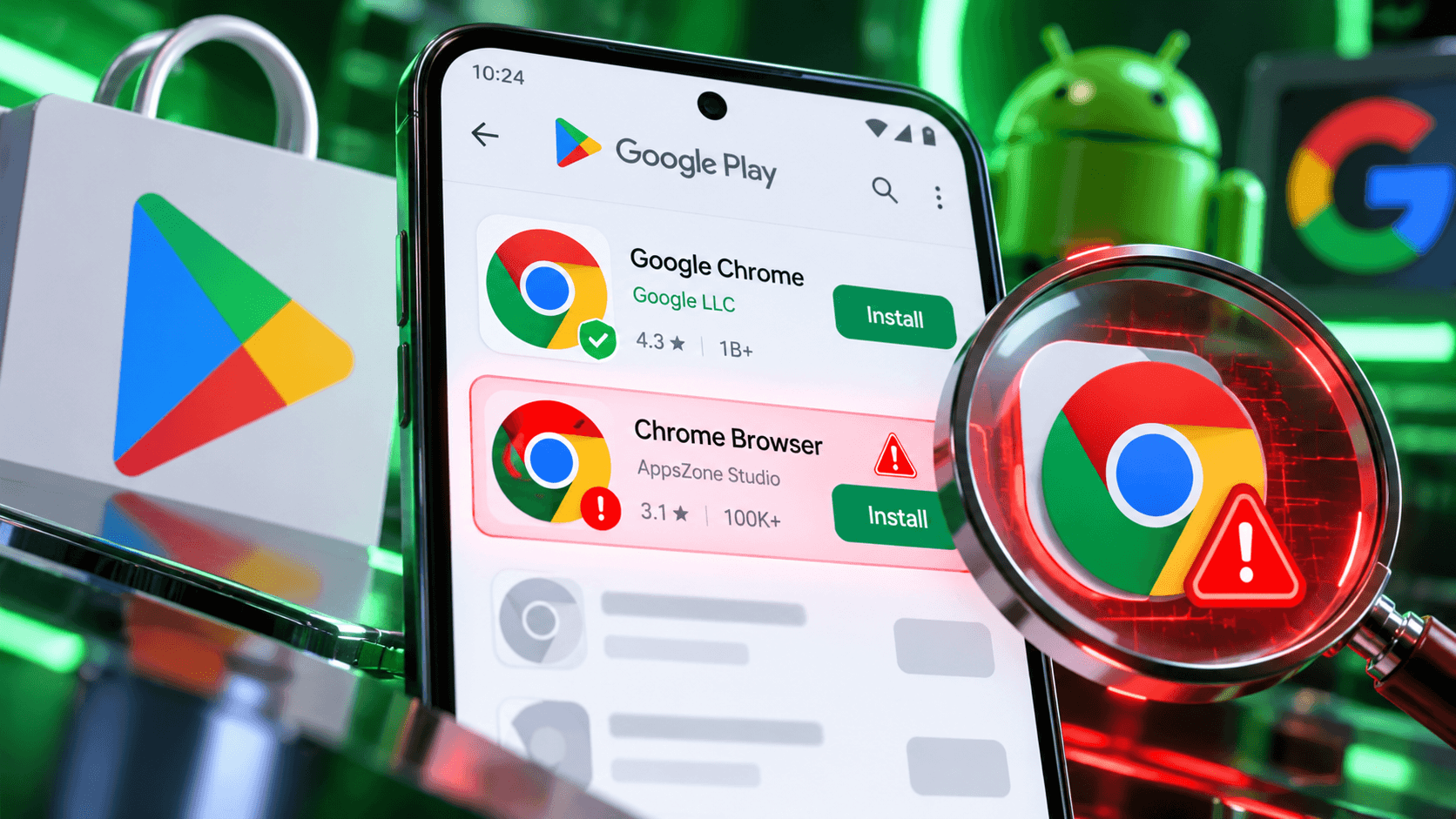
A fake version of the Chrome browser was discovered on Google Play, mimicking the official app’s appearance and appearing above the genuine version in sponsored search results. The counterfeit app had accumulated over 100,000 downloads before it was removed from the store.
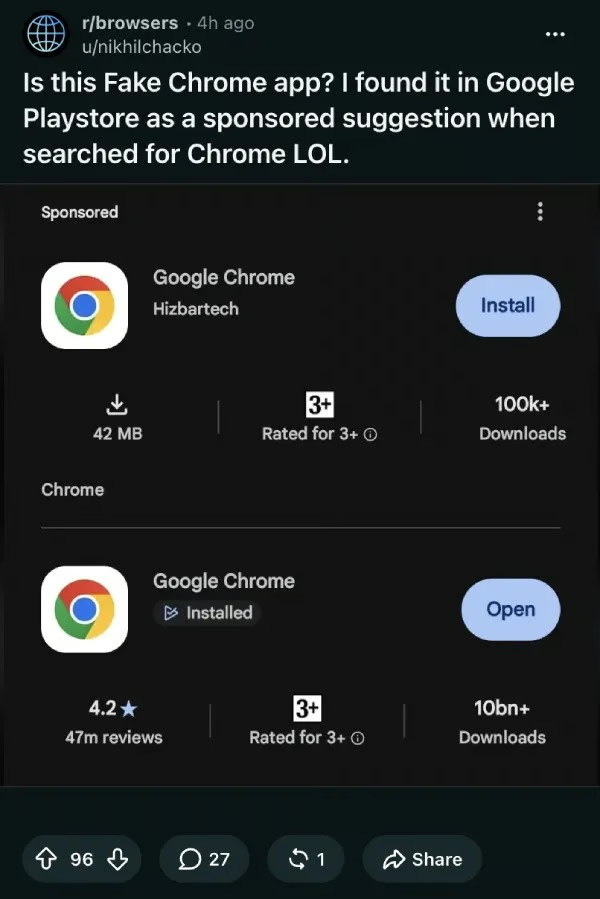
The unusual discovery was reported by PiunikaWeb, which published a screenshot of Google Play search results. The image showed the fake browser appearing in the top position as a sponsored listing, ahead of the legitimate Google Chrome app.
The counterfeit app used the original browser’s name, official icon, and description. The only noticeable difference was the developer: instead of the official Google LLC, the listing identified Hizbartech. As it turned out, the app initially had nothing to do with web browsers. It first appeared on Google Play in August as a game called Ball Bounce, before being renamed and redesigned on September 30 to resemble Chrome.
However, the app’s unique package identifier remained unchanged: com.ballbounce.Hizbartech. This detail made it possible to trace the app’s history and establish that it had previously been distributed under a different name.
At the time of discovery, Google Play displayed more than 100,000 downloads. However, that figure represented the total number of installations throughout the app’s lifetime. As a result, it remains unclear how many users downloaded the fake Chrome browser and how many had installed Ball Bounce before it was renamed.
Reddit users who decided to investigate the suspicious app shared their findings. Instead of a fully functional browser, they discovered a messaging-style interface featuring AI-generated avatars and prewritten responses.
According to participants in the discussion, the app did not perform the functions advertised for Chrome. Some users speculated that it may have been designed to generate advertising revenue by exploiting Google’s browser popularity to attract new downloads.
One Reddit user, OK_Noise9883, claimed to have examined the app and found no viruses.
“I did some research, there are no viruses. Some guys from Pakistan took a game app and turned it into an application that constantly displays ads at short intervals after launch,” he wrote.
However, this remains an unverified claim from an individual user. The developer’s actual motives are still unknown, and there is currently no confirmed information about whether the app contained malicious code or collected users’ personal data.
The way the fake Chrome app was promoted attracted particular attention. In a screenshot shared on Reddit, the counterfeit appeared as a sponsored search result above Google’s legitimate browser. This meant that users searching for Chrome in the app store could encounter the fake version before seeing the official app. However, PiunikaWeb journalists were unable to reproduce the sponsored listing during their own investigation.
Following public attention, the app was removed from Google Play. However, Google has yet to explain how the application passed the store’s review process or why the counterfeit browser appeared among sponsored search results.
The incident sparked criticism among users and members of the browser community, particularly as Google continues to tighten restrictions on installing apps from third-party sources. Back in August 2025, the company announced plans to restrict the installation of Android apps from unverified developers. The new rules were intended to combat malicious software distributed outside the official app store.
Starting in September, developer verification requirements were expected to apply to certified Android devices with Google services. PiunikaWeb highlighted the contradiction in the situation.
“It’s hard to ignore the irony, considering that Google has spent months tightening its control over Android and restricting app installations from third-party sources in the name of user security,” the journalists noted.
The publication also emphasized that allowing a fake version of Google’s own browser to be promoted through its advertising system puts the company in an uncomfortable position.
The incident has once again raised questions about the effectiveness of app reviews and advertising checks on Google Play. Although the counterfeit has already been removed, the case demonstrates that even an official app store can expose users to applications impersonating well-known products.