

Lawmakers in Wisconsin and Michigan are proposing bills that could ban the use of VPNs to access websites containing content deemed harmful to minors. Privacy advocates warn this could open the door to unprecedented digital surveillance.
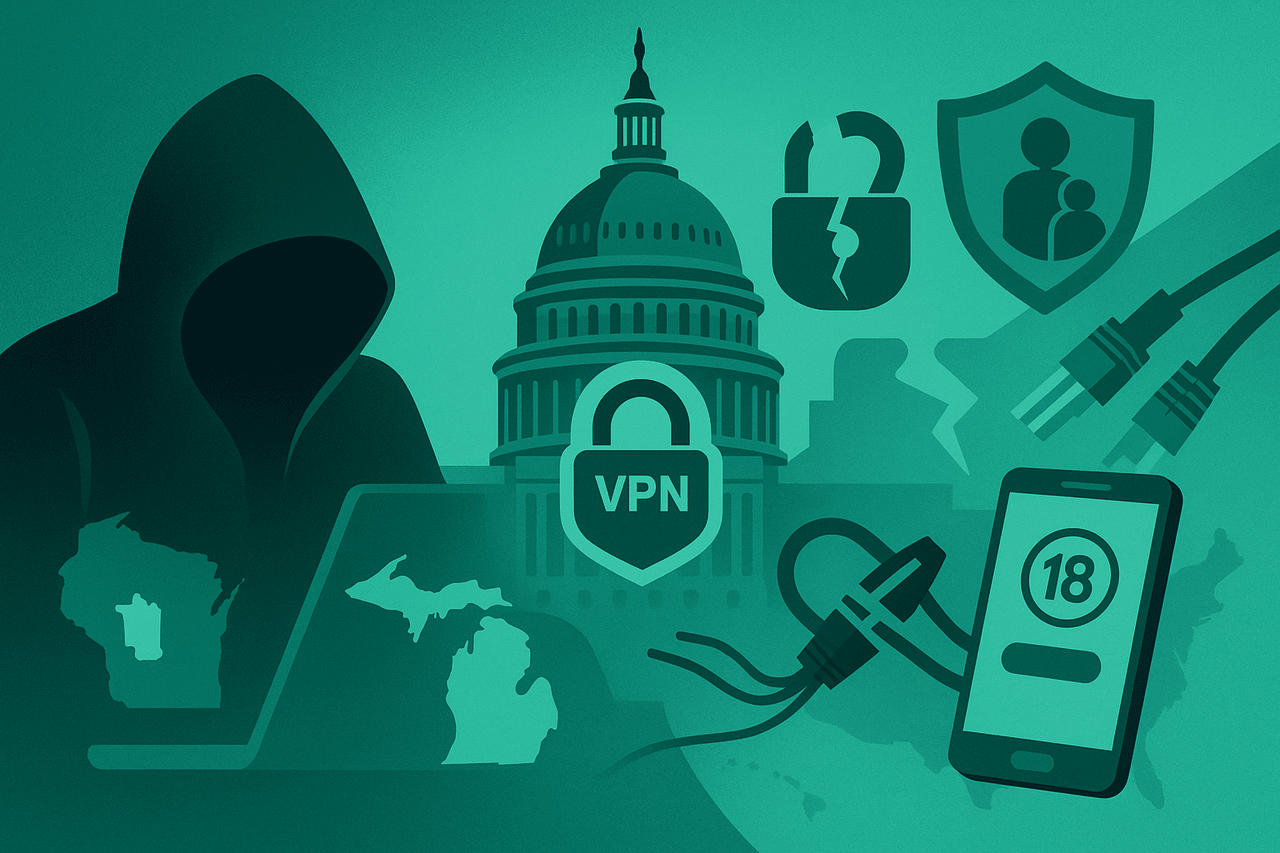
The initiative has gained traction among US legislators claiming to protect children from sexual material, hate speech, and other harmful online content.
In Wisconsin, the proposed bill would require websites hosting adult material not only to implement age verification systems but also to block users connecting through VPNs. The bill has already passed the State Assembly and is moving through the Senate. If approved, Wisconsin would become the first US state to make VPN usage for accessing such sites illegal.
Meanwhile, lawmakers in Michigan have introduced a similar proposal that would compel internet providers to detect and block VPN connections, although the bill remains in early stages.
The Electronic Frontier Foundation (EFF) strongly condemned the proposal:
“Forcing people to give up their privacy to access legal content is surveillance disguised as safety,” the organization said.
EFF emphasizes that such laws would harm journalists, businesses, students, and ordinary citizens who rely on VPNs for security and privacy.
Age verification laws are spreading across Europe — France, Italy, and the United Kingdom already require adult sites to confirm users’ ages. However, none of these countries have proposed VPN bans.
EFF argues that these laws don’t work, violate privacy, and cause more harm than they prevent. The group recommends investing in education, parental tools, and digital literacy rather than restricting privacy technologies.
The proposed VPN bans could mark a dangerous step toward digital censorship in the US, where “protecting children” risks becoming a pretext for mass surveillance. Online freedom and privacy rights stand at the center of this debate — and lawmakers must tread carefully to avoid turning safety into control.