

The owner of an Electrolux EWH 80 smart water heater in Ukraine noticed suspicious network activity from the device. While examining his home network, he discovered that the water heater was attempting to connect to a server belonging to the Russian company Rusklimat, hosted on Yandex Cloud infrastructure in Moscow. The man blocked the connection over concerns that information about the device’s operation could be transmitted to Russia. However, there is currently no evidence that the water heater transmitted confidential data or was used for espionage.
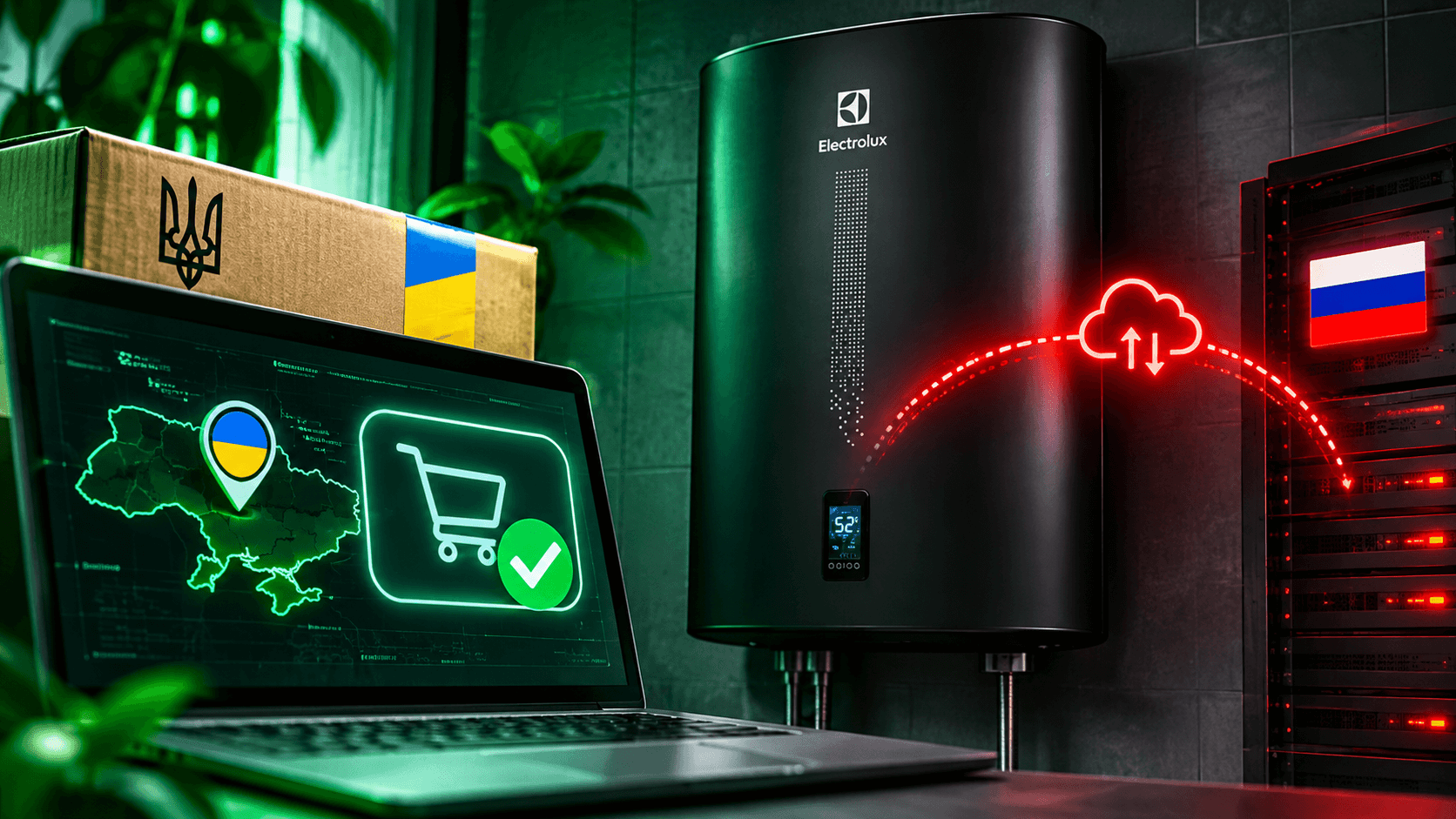
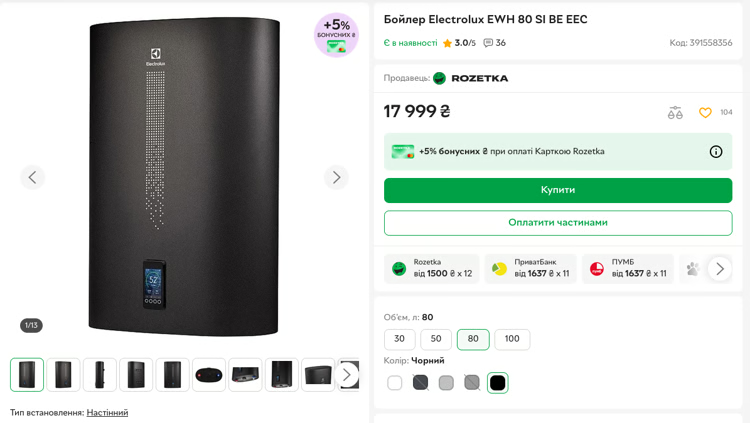
Ukrainian resident Alexander Unger purchased an Electrolux EWH 80 smart water heater from the Rozetka online store in 2025. The device supports Wi-Fi connectivity and remote control, allowing the owner to adjust the water temperature and heater settings using a smartphone.
Since he has numerous smart devices installed at home, Unger separated them into several subnets and regularly monitors their network activity. During a routine check, he noticed unusual DNS requests from the water heater, which was attempting to connect to the domain mqtt.cloud.rusklimat.ru.
Further investigation revealed that the domain belonged to the infrastructure of the Russian company Rusklimat, which specializes in climate control, heating, and engineering equipment. The DNS query returned the IP address 130.193.49.173, associated with Yandex Cloud. According to the RIPE registry, the corresponding IP address range is registered to Yandex.Cloud LLC in Moscow.
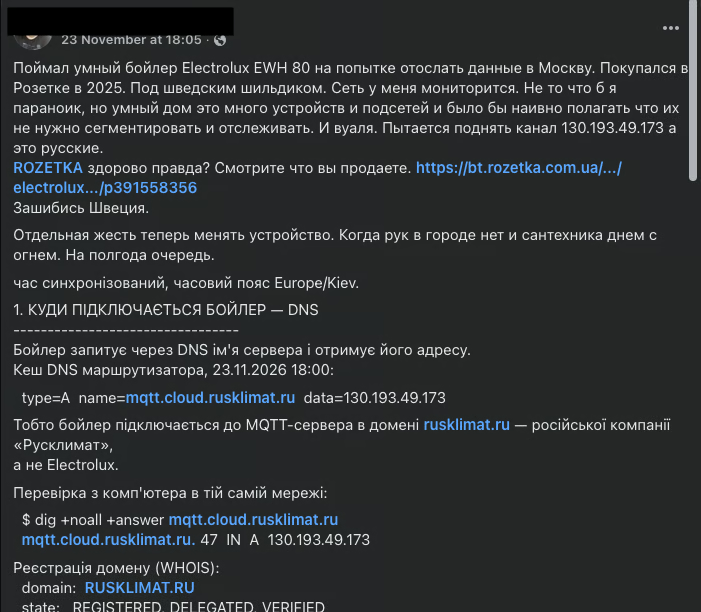
In a Facebook post, the owner reported discovering that his water heater was attempting to communicate with a Russian server, even though he had purchased a device from a Swedish brand at a Ukrainian retailer. The product page contained no obvious warnings about the use of Russian cloud infrastructure.
Additional verification was carried out by Mysterium VPN specialists. In their research, they confirmed that, as of November 25, 2026, the domain mqtt.cloud.rusklimat.ru indeed pointed to an IP address belonging to a Russian cloud provider.
However, the router logs primarily confirm DNS queries and connection attempts. Based on the available evidence, it is impossible to determine exactly what data the water heater may have transmitted to the server or whether any such transmission actually occurred.
The software used to remotely control the water heater plays a key role in this case. Researchers discovered that the owner had configured the device through the Hommyn app, which is associated with the Russian Rusklimat group of companies.
Hommyn uses the mqtt.cloud.rusklimat.ru server to exchange information with smart home appliances. Water heaters, air conditioners, and other devices that support remote control can communicate through this server.
Communication relies on the MQTT (Message Queuing Telemetry Transport) protocol. It is a lightweight networking protocol designed to exchange messages between Internet of Things (IoT) devices and cloud platforms.
Using MQTT, a smart water heater can receive commands to turn on, turn off, or adjust the water temperature. In the opposite direction, the device may transmit technical information about its status, including the current water temperature, operating mode, settings, errors, and electricity consumption.
This type of information raises privacy concerns. For example, regular records showing when a water heater is turned on and used could help reveal the approximate daily routines of household residents.
The situation is particularly concerning for Ukrainian users amid the ongoing full-scale war, as their data could potentially be processed by infrastructure operated by companies under Russian jurisdiction.
However, connecting to a Russian server does not, by itself, prove that the device is being used for surveillance. Confirming such suspicions would require analyzing the data actually transmitted and examining how the software operates.
Interestingly, the water heater itself is not necessarily manufactured by the Swedish company Electrolux. According to the technical documentation, the manufacturer of the relevant water heater series is listed as the Swiss company CladSwiss AG, while the country of manufacture is China. The Electrolux brand is used under license.
The documentation also specifies a different control app — ClimatOn, developed by CladSwiss. According to ClimatOn’s information, the service’s data is stored in Frankfurt, Germany.
This means that the same water heater model may operate through different cloud services depending on which application is used to configure it.
The investigation also found that Hommyn supports Electrolux models sold in the European market. In version 1.20.2 of the Android app, researchers identified a list of 118 compatible devices, 19 of which carried the Electrolux name.
However, it remains unclear why a customer in Ukraine configured a European model using a Russian application. One Rozetka customer had previously reported that Wi-Fi on another water heater from the same series worked properly only through Hommyn.
After detecting the suspicious connections, the Electrolux owner blocked the water heater’s internet access. However, the device can still perform its primary function — heating water — without connecting to a cloud service.
There are several ways to check where your water heater or other smart home appliances are sending data:
Open your router’s settings and review DNS query logs and network connection records.
Look for the
rusklimat.rudomain and other unfamiliar servers among the addresses your devices connect to.
If your router does not store logs, use DNS filtering services such as Pi-hole, AdGuard Home, or NextDNS.
If necessary, block connections to suspicious domains at the router level.
Place IoT devices on a separate guest network to restrict their access to computers and smartphones.
Keep in mind that blocking a cloud server may disrupt remote control of the device over the internet. However, some models support local control from a smartphone connected to the same home Wi-Fi network.
Additionally, a regular VPN installed on a computer or smartphone will not prevent the water heater itself from transmitting data, since smart appliances connect to the internet independently of other devices.
At the time of publication, inquiries about the incident had reportedly been sent to representatives of Electrolux, CladSwiss AG, and Rozetka. No public responses explaining the use of Russian cloud infrastructure in this particular case had been received.
The Electrolux case highlights an issue common to many Internet of Things devices: buyers may not even realize which companies’ servers handle data from their household appliances. A product from a well-known European brand does not necessarily use European software or cloud infrastructure.
Therefore, when choosing smart devices, it is important to consider not only the manufacturer and functionality but also the control application, privacy policy, and data storage location — especially if the appliance remains connected to the home network at all times.