18.06.2026
3 min
283



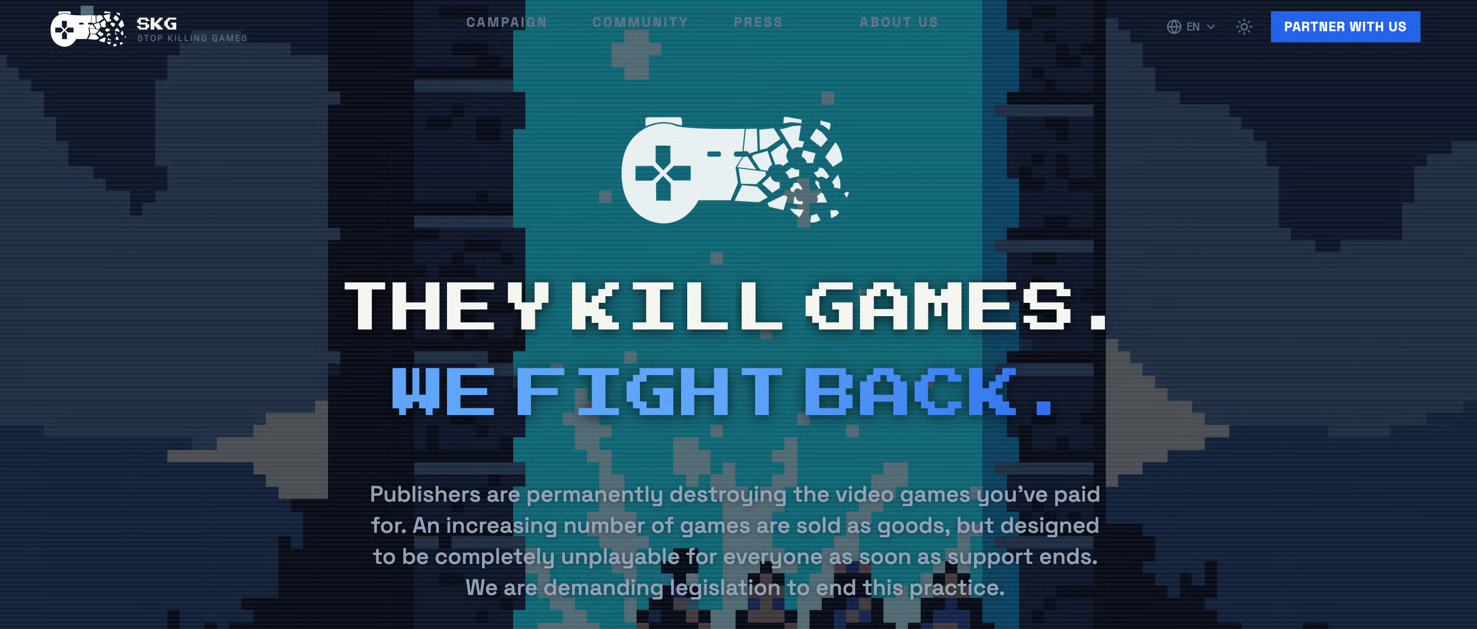
Despite receiving support from more than 1.29 million EU citizens, the Stop Killing Games campaign failed to convince the European Commission to change the rules governing video game publishers. Brussels concluded that requiring companies to keep games playable after the end of their commercial lifecycle would be inappropriate, citing the protection of intellectual property rights as one of the key reasons for its decision.

The decision came in response to the successful European Citizens’ Initiative Stop Destroying Videogames, which gathered 1,294,188 verified signatures. Supporters of the campaign proposed requiring publishers to keep discontinued games in a functional, playable state so that users could continue accessing them even after official support ends.
The European Commission acknowledges that many modern online games rely heavily on server infrastructure. Once those servers are shut down, games can become partially or completely inaccessible to their owners. However, the regulator has no plans to introduce legislation that would require publishers to maintain such games after they reach the end of their lifecycle.
Instead, Brussels has pledged to open a dialogue with industry representatives and consumer organizations. By the end of 2026, the Commission plans to establish a working group to develop industry guidelines on how companies should handle the shutdown of their games. It will also work to improve consumer awareness so that players better understand their rights when purchasing digital products.