17.04.2024
2 min
1650



Satellite propulsion systems are the heart of the modern space industry. From ion thrusters and plasma technologies to green solutions on water, electric propulsion is ushering in a new era of controlled orbits. We tell you how innovative companies like SpaceX, Safran, Exotrail, and ThrustMe are changing the way we think about flight, reducing launch costs, and creating a future where space becomes part of our everyday lives.
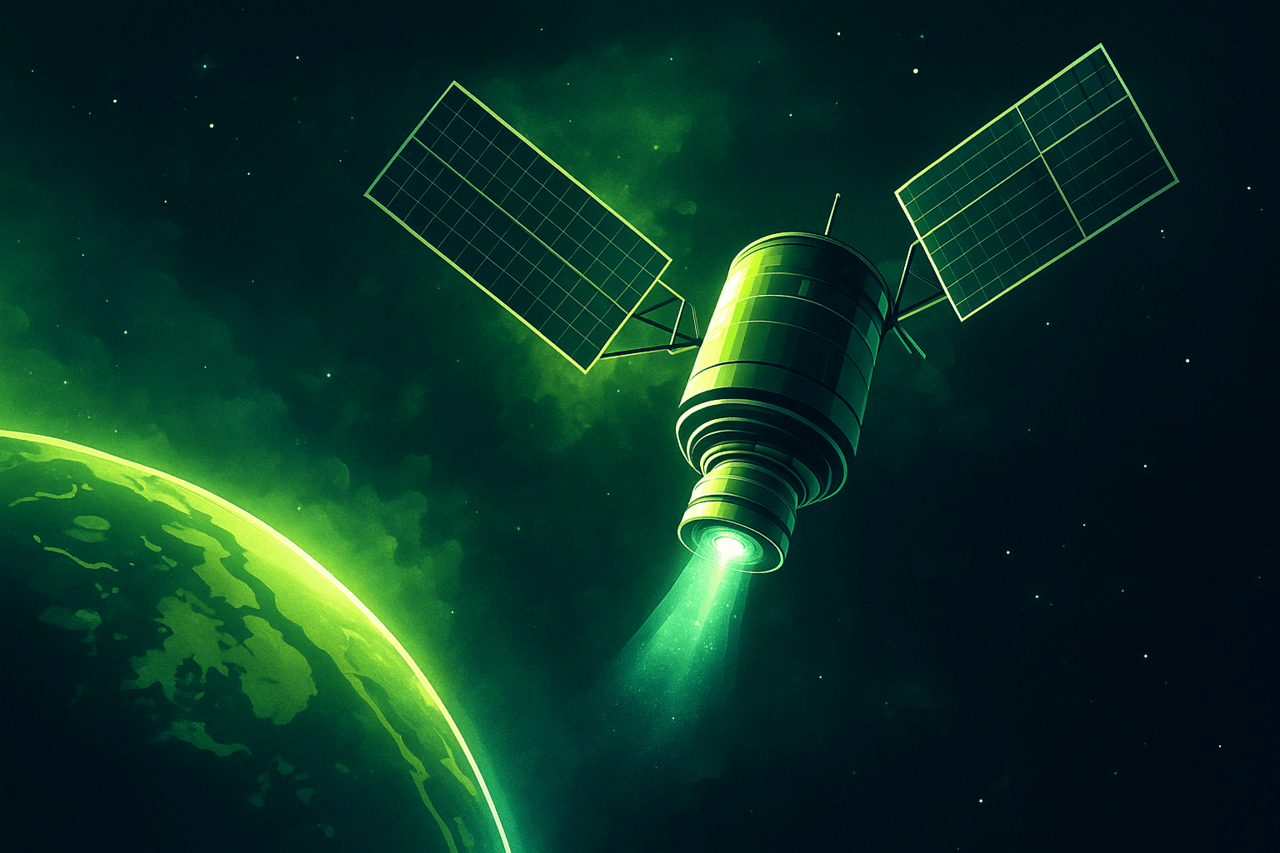
Twenty years ago, space seemed like a closed territory for states — accessible only to NASA, ESA, or a few national agencies. But when private capital entered the industry in the 2010s, everything changed. Space became a market. New companies, startups, venture capitalists, and scientific teams have created an industry that is growing faster than any other technological field. What previously required multibillion-dollar budgets and decades of development can now be created in a laboratory with a few dozen engineers and a 3D printer.
This breakthrough opened the way for the so-called new space economy — New Space. It is built on flexible missions, satellite miniaturization, and the principle of scalability. There are no longer dozens of devices flying in orbit, but now tens of thousands. Satellite constellations like Starlink, OneWeb, G60, Guowang, and Honghu-3 are creating a new digital infrastructure for the planet. It is predicted that between 2024 and 2031 alone, more than 41,000 satellites will be launched into space, most of them in the mass format SmallSat and MediumSat. This is not just a number – it is a new technological landscape, where the engine becomes as important as the battery or antenna system.
As orbit is filled with spacecraft from different countries, the risks of collisions increase exponentially. Without the ability to maneuver, change altitude or avoid debris, the satellite is doomed. That is why propulsion systems are becoming not an additional element, but a key component of every modern spacecraft – and this determines the entire further development of the industry.
Today, space resembles an ocean, where waves are orbits and debris is invisible icebergs. Every square meter of space is filled with particles, debris from rocket stages, inactive satellites, and spent panel fragments. The European Space Agency (ESA) estimates that there are more than 34,000 objects larger than 10 centimeters orbiting Earth, about 900,000 between 1 and 10 cm, and more than 128 million particles in the 1 mm to 1 cm range. Even a microscopic fragment can pierce the hull of a spacecraft at speeds of more than 20 km/s.
These threats have become so obvious that regulators have begun to act. In 2022, the FCC (USA) reduced the mandatory deorbiting period for satellites from 25 to 5 years to limit the accumulation of debris. Now, any operator who wants to obtain a license to operate in the USA must guarantee a controlled descent from orbit. Similar requirements are being developed in Europe. This means that even a CubeSat weighing a few kilograms must have a propulsion system, otherwise it simply will not receive a launch permit.
Commercial operators do not expect disasters. Starlink alone in 2022 performed more than 14,000 collision avoidance maneuvers, which shows the scale of the challenge. Today, every mission must be dynamic: change orbit, hold position, adjust altitude, and when completed, safely deorbit. This is what has made propulsion systems a core element of orbital logistics, not just an add-on to the satellite.
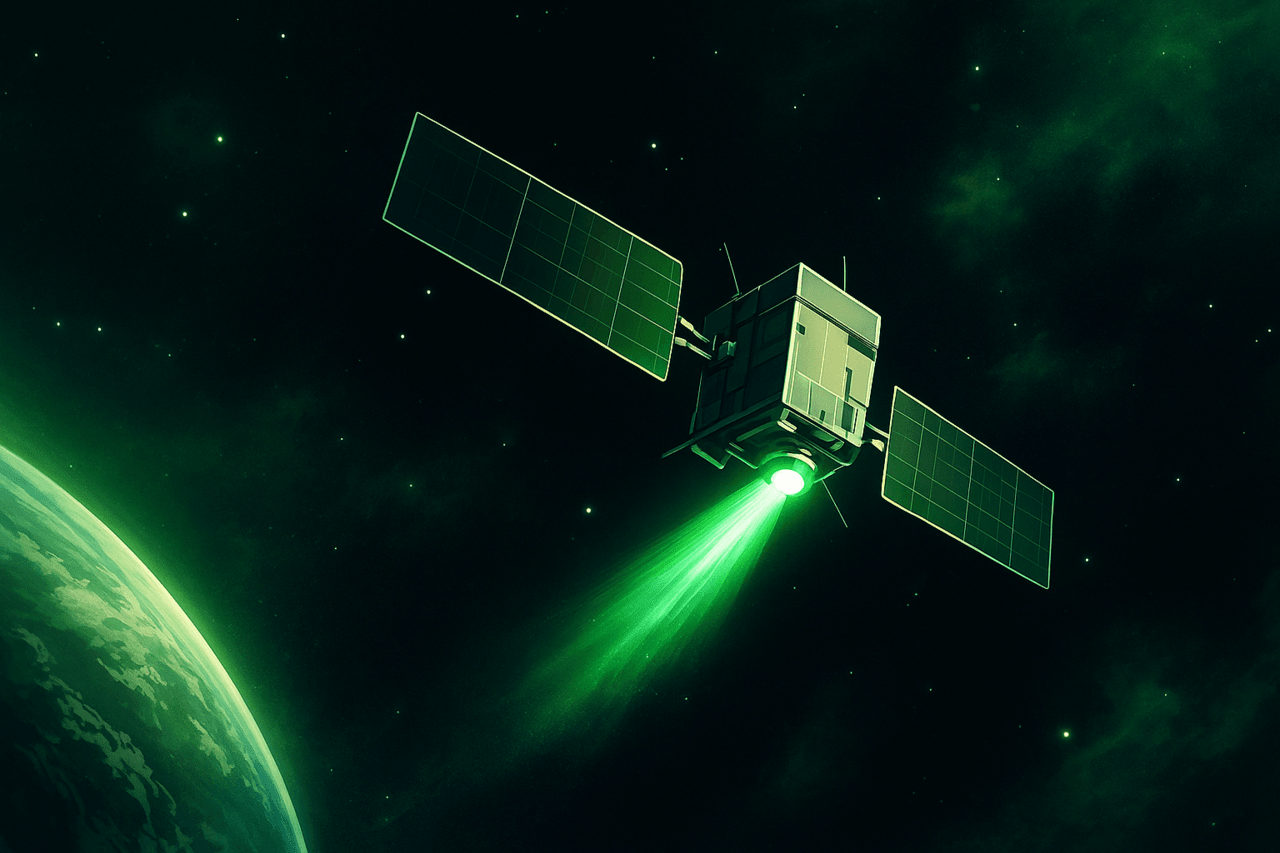
The development of propulsion systems has followed two paths: chemical and electrical. The first type is a classic, familiar from the 1960s, when the main task was to reach orbit at any cost. The second is a modern evolution that combines plasma physics, electric fields, and microscopic efficiency.
Chemical systems work quickly and powerfully. They use reactive combustion of fuel (hydrazine or similar components), which creates enormous thrust. Such engines provide rapid launch into geostationary orbit (GEO) – on average in two weeks. But their disadvantage is obvious: the fuel is heavy, quickly runs out, and the satellite loses the ability to maneuver long before the end of its technical resource.
Electric engines are a new philosophy of motion. They are slow, but extremely economical. Instead of combustion, gas is ionized in an electric field. Ions are accelerated, forming a plasma jet that pushes the satellite. Such a mechanism provides 5–10 times more motion from the same amount of fuel as a chemical engine.
The difference between the main types of electrical systems lies in the principle of operation:
HET (Hall Effect Thruster) — compact, reliable, cheaper to manufacture, optimal for mass launches.
GIE (Gridded Ion Engine) — more complex, require higher voltage (up to 2 kV), but provide higher specific impulse (Isp ≈ 5000 s).
FEEP and RF-ion — are used in scientific missions where ultra-precise thrust is required.
By 2023, 82% of all satellites launched will be powered by electric propulsion, and this share is set to continue to grow. In the future, chemical propulsion will remain the preserve of heavy GEO and deep space missions, while electric propulsion will become the standard for all orbital platforms.
One of the most important aspects of modern systems is the choice of fuel. Traditional xenon provides excellent efficiency, but has an unaffordable price — from $ 3,000 to $ 5,000 per liter. For large satellites, this is tens of thousands of dollars just for fuel, which is completely unsuitable for constellations with thousands of devices. Therefore, companies are actively looking for alternatives.
The most popular options today are krypton and argon. Krypton is 15 times cheaper than xenon and is used in missions where balance and stability are important. Argon is almost a thousand times cheaper, although it has a lower ionization coefficient. SpaceX was the first to use argon-based thrusters and proved that they can operate stably even on long missions.
In parallel, “green” systems are being developed that operate on safe substances: water, iodine or non-toxic compounds. Such solutions are already being tested by the companies ThrustMe (France), Bellatrix Aerospace (India) and Pale Blue (Japan). The latter even received a $27 million grant to develop water-plasma thrusters for microsatellites.
Another direction is combined systems, where chemical and electric thrust are combined in one device. They allow you to quickly change orbit while maintaining efficiency in long-term maneuvers. This is especially important for large GEO-class telecommunications platforms.
The modern propulsion market is developing at a speed that can only be compared to an explosion. In 2014–2020, about $111 million was invested in development, while in 2021–2024 – more than $291 million. Capital is pouring into electrical systems, where the potential for commercial application is highest.
Among the world leaders today:
Phase Four (USA) — contracts with DARPA, development of air-breathing thrusters for VLEO orbits (90–450 km).
Safran (France) — two production lines with a production capacity of up to 400 thrusters per year.
Exotrail (France) — investments of $58 million, expansion of production and entry into the orbital towing market.
Enpulsion (Austria) — new plant with an area of 4000 m², NEO line with thrusts up to 21 mN.
Bellatrix Aerospace (India) — Rudra chemical green system and JAL 5000 microwave plasma thruster.
Dawn Aerospace (New Zealand) — development of refueling modules in space, participation in the EU program on green technologies.
The market is growing not only quantitatively, but also qualitatively. While companies used to sell engines, they now offer “mobility as a service” — comprehensive solutions for orbital towing, flight control, and even satellite maintenance. This opens a new stage in the commercialization of space, where the engine becomes a platform for services, not just a hardware component.
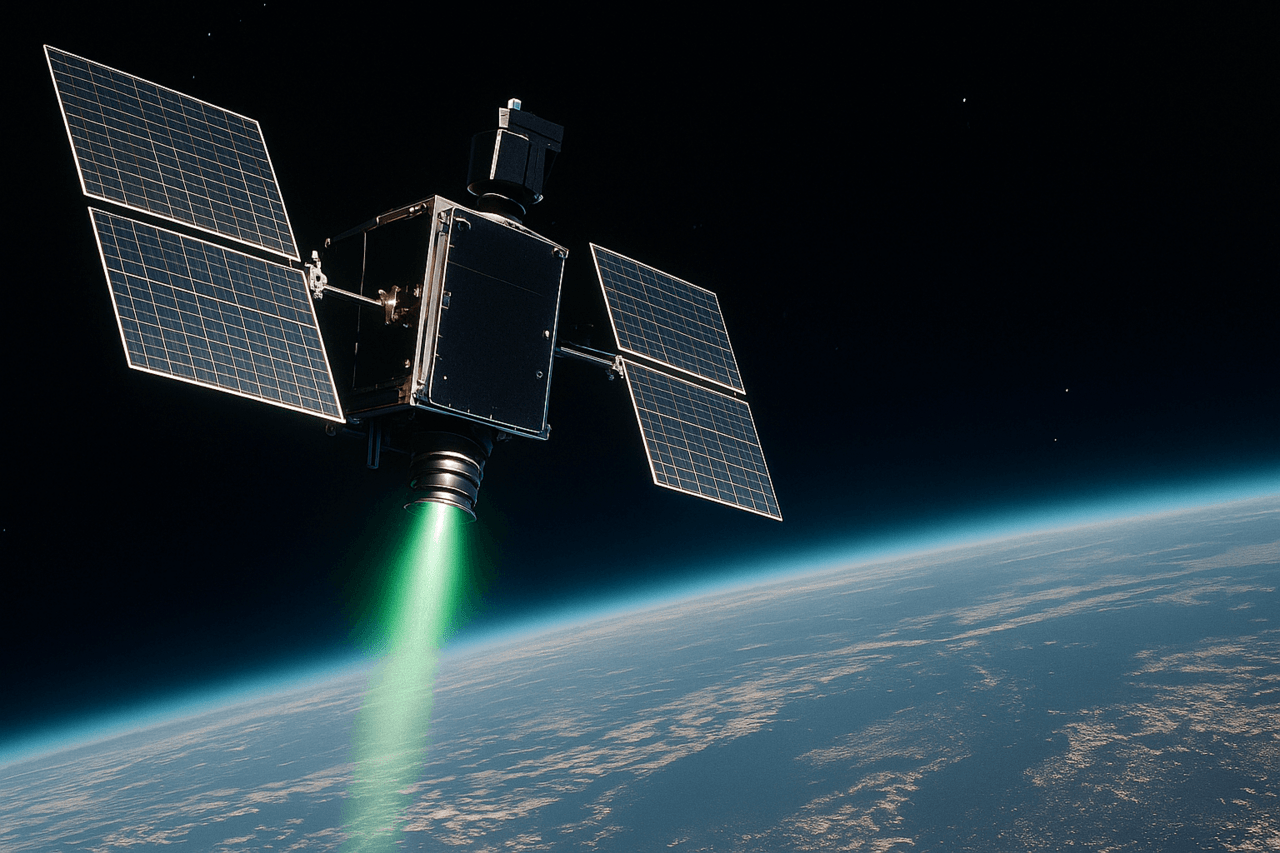
As the number of missions increases, the need for mass production of thrusters has arisen. Whereas previously each thruster was designed for a specific satellite, companies such as Safran, ThrustMe, and Enpulsion are now moving to assembly-line production. Some of them are already producing up to 200 systems per year, and their new lines can double that figure in a matter of months. This creates economies of scale, as the cost per thrust unit falls and the availability of technology increases.
This industrialization is changing the structure of the space economy. Small companies can now order thrusters from a catalog, just as they once bought electronics. This makes space more open and accessible, and manufacturers more competitive. In the coming years, this factor will determine who will be the main supplier of propulsion for thousands of commercial missions.
Propulsion systems no longer just help to fly — they extend the life of satellites. Without thrust, the device can drift and lose functionality after a few months. With a propulsion system, it lives for years, changes orbit, adapts to new tasks, and even performs repeated missions. In this sense, the propulsion system becomes insurance in orbit.
Thanks to this, space is moving to a “reuse of resources” model. Companies are not just launching satellites, but creating a mobile infrastructure where each device can become a tug, a repeater, or a repair node. This is no longer just a network — it is a living mechanism that develops in real time.
By 2035, space infrastructure will become similar to aviation: regular flights, carriers, logistics, maintenance. Propulsion systems are the foundation of this world. Electrical systems will become so efficient that they will be able to tow vehicles between orbits, and “green” solutions will completely replace toxic fuels. The number of active companies will increase from the current 40 to over 100, and the market volume will exceed $1.5 billion.
The main driving force will be the demand for autonomy: satellites will be able to make decisions independently, react to changes and interact with each other without commands from the Earth. All this will be possible thanks to propulsion systems that will provide mobility and control.
The propulsion is no longer just a technical system, but a symbol of a new space logic. Without it, there is no mission, without a mission, there is no business. Electric propulsion is becoming the standard for all types of vehicles, from micro to giant telecommunications platforms. It is what makes space predictable and safe, and orbit controllable.
The global propulsion industry is growing at an impressive rate, reaching $824 billion by 2031, with a compound annual growth rate of 11.2%. These are not just numbers; they are a sign that space is entering a phase of mass use. The coming years will determine who will become the main provider of propulsion in the literal sense of the word – who will give Earth the ability to control its space.