
14.03.2026
18 min
638



Artificial intelligence is rapidly moving beyond the world of familiar chatbots and beginning to reshape the very architecture of the digital world. In this piece, we look at emerging technology trends and explain why the coming years could become a turning point for the development of AI.
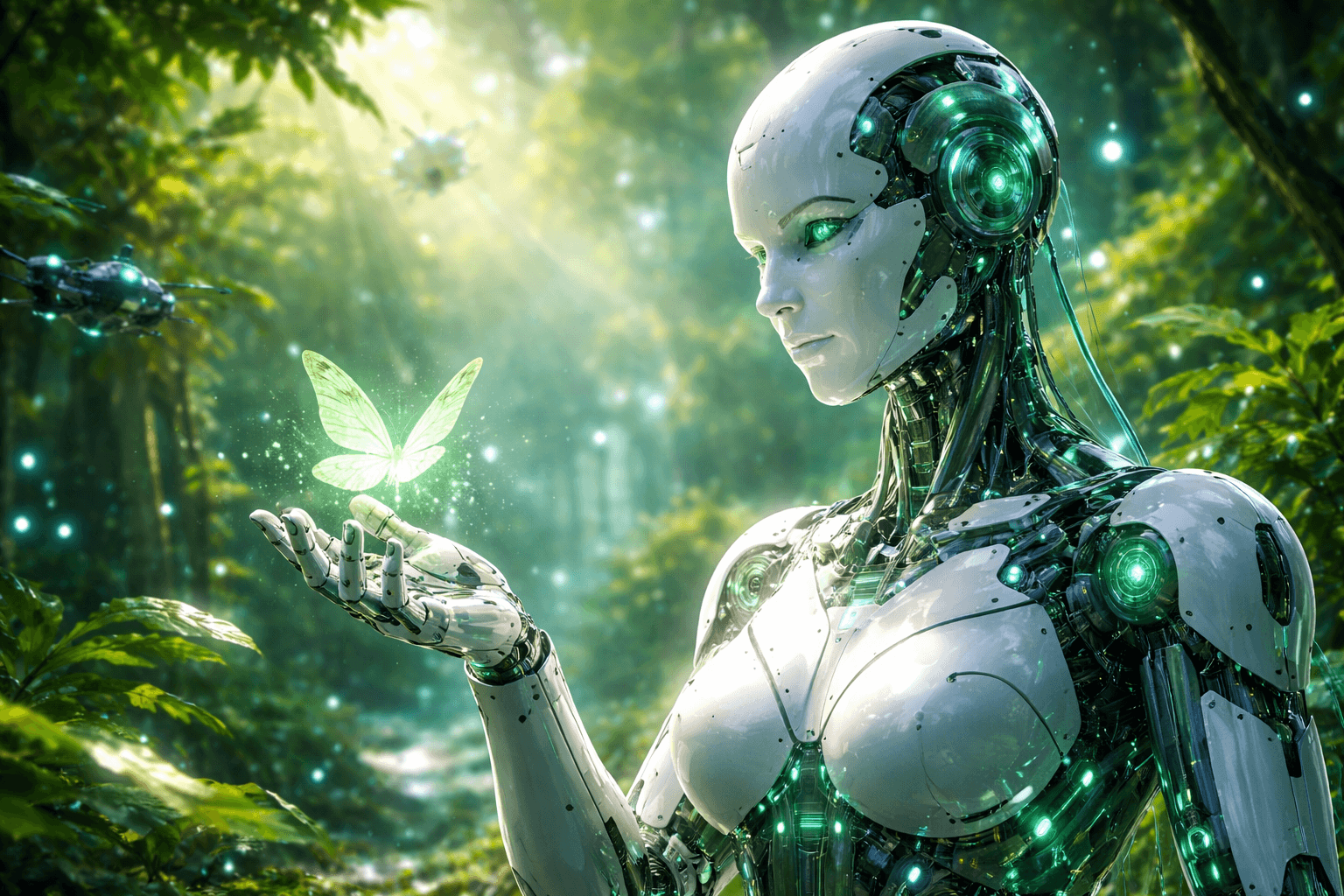
Look, if 2025 was the year we played around with prompts and marveled at how chatbots could write code or generate text, then 2026 flips the game completely. AI has finally climbed out of the browser. Now it is getting hardware, literally a physical body, learning to form autonomous networks, and turning into a real tool of power on the geopolitical stage.
Recently, analysts from the CETaS team, a group that advises governments and military organizations, shared their insights about what is coming next. If you strip away the bureaucratic language, there are four major trends ahead. And for anyone who knows even a little about technology or cybersecurity, it sounds like a cyberpunk scenario that has already arrived.
AI Gets a Body (Embodied AI) Imagine taking the brain of a neural network and placing it inside a drone, a robotic dog, or any other autonomous platform. This is no longer just software. It is an algorithm that can see through cameras, hear through microphones, and most importantly make decisions on its own. It does not need a constant ping to a central server.
China is pouring massive investment into this field right now, aiming to control the entire production chain of such machines by 2027. But the United States is not standing still either. You may have heard about the secret project between OpenAI and Jony Ive, Apple’s former design guru. They are reportedly working on a smart device with no screen at all. The device would simply listen and analyze the environment around you. It sounds impressive, but from a security perspective it is a huge vulnerability. If someone learns how to spoof the data coming from its sensors, a robot or drone like this could start doing unpredictable things in the physical world because its “eyes” are feeding it false information.
For business this is exciting, but for information security it is a guaranteed headache. The market for AI agents, programs that can independently plan and execute multi step tasks without human input, is exploding. Developers are now trying to connect these agents together. This concept is called the Internet of Agents, or IoA. To show how serious the movement already is, major industry players have handed projects like AGNTCY over to the Linux Foundation in order to create unified protocols that allow bots to communicate with each other.
What does this look like in practice? My agent sends a message to your agent, they negotiate, and the transaction happens automatically. Now imagine that instead of legitimate tools, this is a coordinated network that autonomously launches complex cyberattacks or spreads disinformation. Defending against a swarm of AI agents that constantly adapt to bypass firewalls will be a very serious challenge.

This is where things get really interesting. The more AI models appear, the more we start noticing that they tend to think in very similar ways. Even models built on different architectures often make the same kinds of mistakes.
Researchers say that if you manage to jailbreak the logic of one large model, for example by disrupting its chain of thought when it breaks a task into steps, a similar attack vector may work against other models as well. This phenomenon is known as algorithmic monoculture. If the world relies on similar algorithms everywhere, a single powerful zero day exploit could potentially disrupt countless applications at once. Software patches alone may soon not be enough. Defenses may have to move deeper, down to the hardware level.
And of course, geopolitics plays a role here too. The global internet is gradually fragmenting, welcome to the splinternet. Countries are increasingly trying to fence off their own digital spaces through platform bans, stricter regulations, and even network shutdowns.
But the real battlefield right now is open source. When Chinese developers released DeepSeek R1 early last year, it sent a strong signal. They showed that it is possible to build high level models more cheaply and release them as open source, expanding their technological influence.
The big question now is whether the West will be able to respond and regain the initiative. Because the algorithms that dominate the open ecosystem do more than power technology, they also shape the values that spread across the world.
In short, the year ahead will be intense. We will not just be experimenting with new features. We will have to seriously think about how to keep this growing ecosystem of autonomous AI systems under control without becoming victims of it ourselves.