
03.04.2024
3 min
1443



The time has come for artificial intelligence (AI) to move beyond simply executing as code on computer servers. The potential of AI is becoming apparent in its increasing ability to be physically manifest; by 2035 we could see both self-sustaining humanoid robots that are able to operate independently with learning capabilities, as well as large swarms of smart drones capable of adapting to their environment and learning. While this appears to be an exciting area of development, there is a significant caveat to this: the more sophisticated a device or system becomes, and the more autonomy a device possesses, the more likely it will also possess hidden vulnerabilities. This article discusses how AI will revolutionize robotics for the better, which security concerns AI robotics will create and why hackers may find “the smart hardware” of the future less secure than expected.
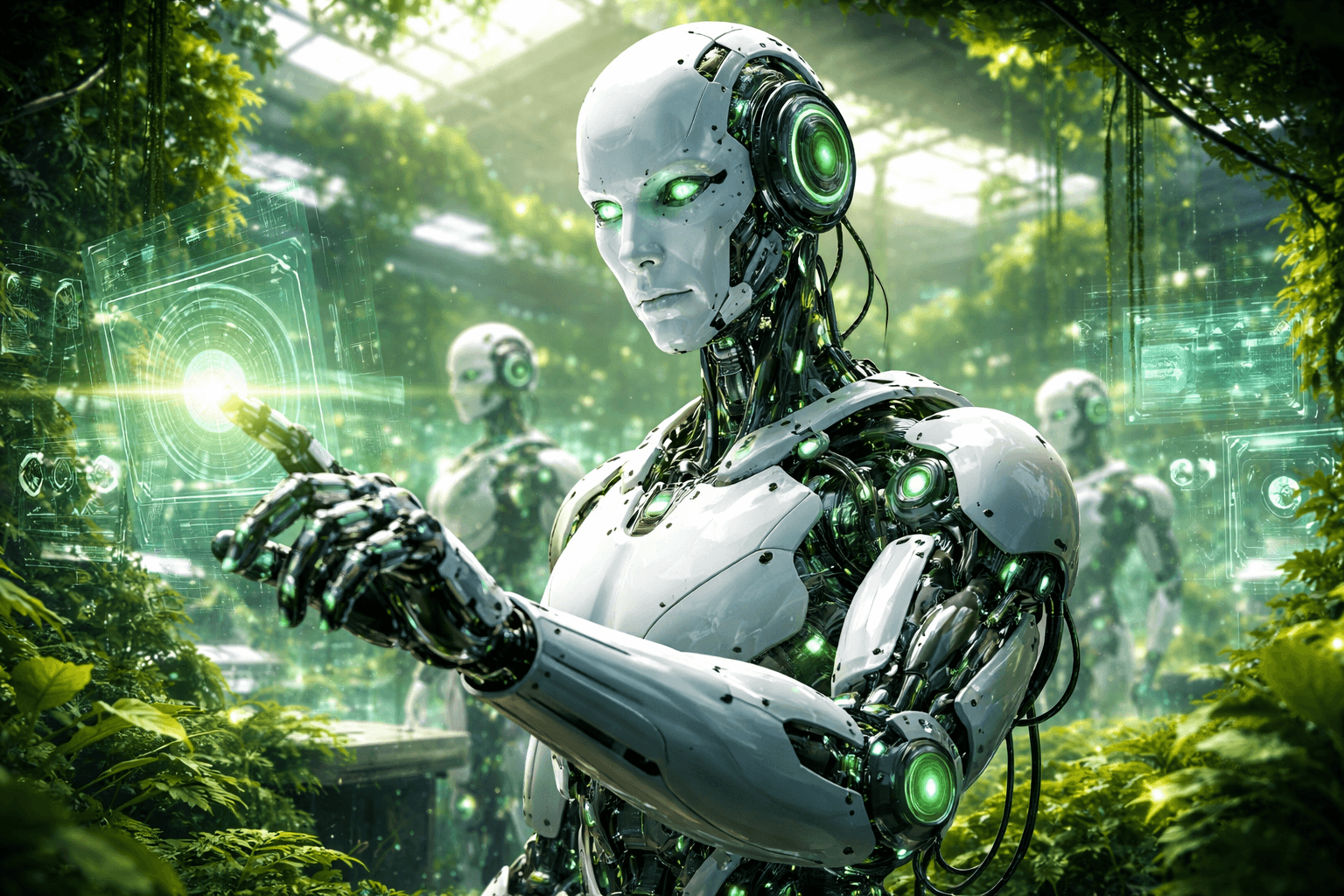
Robotics has been transformed by artificial intelligence (AI) — and that’s just about all you need to know to summarize the current state of robotics today. The question remains: How will AI shape intelligent machines by 2035? We reviewed a lot of research, spoke to a number of scientists, and are getting a clearer view of some possible future developments. Short version: Expect a surge of so-called foundation models for robots, a tsunami of humanoid machines, and a multitude of swarms of tiny autonomous robots.
That being said, things are not as easy as they seem. There is a significant gulf between a laboratory breakthrough and a functioning product in the field. To assist in bridging that gap, policymakers will require three key items: open, and diversified datasets; testing environments designed specifically to test products before they are available to consumers (these testing environments are sometimes referred to as regulatory sandboxes); and new regional robotics hubs. And as always, there will be the requirement of a large amount of funding. And as equally important is the creation of public trust in AI-based machines.
As a starting point, let’s get back to the basics. Robotics and Autonomous Systems include everything associated with developing and implementing automated machinery. This includes anything from robotic arms used in manufacturing facilities to autonomous vehicles to drones.
These machines will require sensors in order to understand their environment. Some common types of sensors include cameras, radar, thermal sensors, etc. The purpose of sensors in a robot is to detect heat, obstacles, movement, vibrations, etc. A basic description of a robot is that it consists of five core components:
A Body — The mechanical parts that hold the entire system together.
An Actuator — Mechanisms that allow a robot to physically move.
Power Systems — Batteries or other power source for energy.
Brain — Computing systems that process information received from sensors.
Sensors — Tools that provide the robot with the ability to perceive its environment.
In the past, robots were somewhat clumsy. Robots operated using a set of fixed rules created by programmers. Any deviation from those rules was likely to result in the failure of the machine to function properly.
The introduction of artificial intelligence into robotics has completely altered the way that robots operate. With the addition of AI, robots now have the capability to independently determine a route to follow, pick up delicate objects without damaging them, and make decisions during operation. AI enables a far superior utilization of sensor data, enabling a robot to rapidly analyze the vast amounts of data coming in from the environment. Several examples illustrate how AI currently supports robots in practical applications.
Sensor Fusion — A robot receives input from multiple sensors simultaneously and uses that input to generate a comprehensive image of the surrounding environment.
Generative AI — Generative AI allows machines to better comprehend and react to spoken human language. This significantly enhances the user experience when interacting with robots.
Computer Vision and Natural Language Processing (NLP) — A robot is able to perform more than simply detecting objects or hearing spoken words. It is able to identify emotions, and/or interpret the overall tone of a conversation.
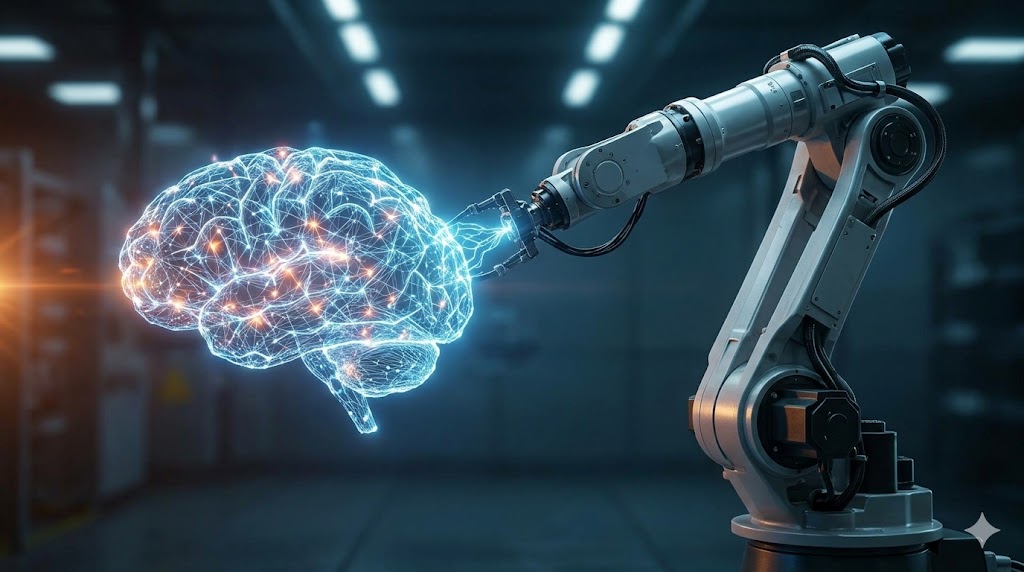
Robotics and Artificial Intelligence (AI) are being transformed by technological advancements. For instance, industry leaders such as Google’s DeepMind and OpenAI are using massive resources to take their most sophisticated algorithms and bring them out of the realm of purely software and into physical equipment. Similarly, at NVIDIA, many believe that robotics is at the threshold of significant progress. At Intel, engineers are working on developing neuromorphic hardware, chips that simulate how the human brain functions. Together, if the technology proves effective, robots will not only be significantly more capable than currently available, but also use considerably less power.
These breakthroughs create immense possibilities for improving security and safety, particularly in those areas of society tied to security and safety. There is also a downside to the creation of this technology. The very same capabilities that offer tremendous potential for enhancing robotics also present policymakers with new risks and uncertainties that ultimately must be addressed. That is the subject of our next section of discussion, based on research papers and expert opinion.
If the rate of advancement in AI continues, then by approximately 2035 robots may demonstrate a type of associative reasoning. Simply put, robots will be able to create a functional memory. Rather than simply react to current input, robots will be able to draw upon prior experiences to determine the best course of action. In other words, robots will be able to learn from their own failures, receive feedback from their surroundings, and conduct internal simulations prior to determining what to do.
Researchers at both Meta and NVIDIA also speak of a symbiotic relationship between robotics and AI. Typically, we view AI as a means to enhance robots; however, robots can also serve to improve AI. As a model receives sensory data and physically interacts with the world, it acquires a type of experience that digital-only models cannot. Researchers commonly refer to this as “physical AI.” Many researchers view this as an important step toward achieving AGI – artificial general intelligence, the ability to reason across a variety of tasks. At minimum, the physical interaction of models provides large models with knowledge of how physical environments function. The UK Research Agency ARIA is already funding projects that aim to provide robots with a form of “tactile skin” so that robots can literally sense the objects they come into contact with.
Below are several critical paths that are likely to influence robotics over the coming decade.
You may be familiar with foundation models. These are large neural networks that are used to power modern chatbots and image generators. Foundation models are trained on large datasets. Some of these models are also multimodal, i.e., they can process multiple types of information simultaneously. For example, images, text, sensor readings, etc.
In the traditional way, training robots was a narrow and arduous process. Engineers would collect a particular dataset for one particular task and train the robot only for that task. Researchers are now conducting experiments with robotic foundation models. Similar to their software counterparts, these models are trained on massive quantities of data that include video of robots making errors, written instructions, and various visual information regarding physical environments.
The objective of these models is to allow robots to encounter new situations and determine the appropriate action to take. In theory, this enables zero-shot abilities, i.e., a machine can successfully execute tasks that it has never previously been instructed to complete. Unlike the traditional method of simply executing commands, robots can now interpret context and make decisions based on that context.
For example, Google DeepMind developed Robotic Transformer 2, which allows a robotic arm to operate in unfamiliar environments, even when encountering objects or configurations that were never part of the original training data. Another example is NVIDIA’s Isaac GR00T N1, released in 2025 for humanoid robots. The system incorporates two modes of reasoning: fast response generation, based on computer vision; and slower, more deliberative reasoning, based on prior experience.
There is a caveat, however. Obtaining quality data for robotics is extremely expensive and laborious. Therefore, researchers continue to question whether the sole application of foundation models will lead to a robotics revolution of unprecedented proportions.
Testing robots in the real world is expensive and dangerous. Hence, developers heavily rely on virtual simulations. Within these simulated environments, robots operate within photorealistic worlds where physical laws behave identically to those of the real world. Machines can repeatedly fall, fail, and run through the same tasks thousands of times without damaging themselves.
World models represent an even more ambitious concept. In this method, a neural network creates its own internal model of the environment, somewhat similar to how humans mentally construct abstract representations of the world. These systems continuously generate a virtual world in real-time and adjust it according to interactions with the user or robot.
Rather than designing a comprehensive simulation from scratch, developers can embed physical rules or characteristics of objects into the model. Both Meta, with its Habitat simulation environment, and NVIDIA, with the Cosmos platform, have made significant investments in the design of 3D environments. The results are impressive: robots trained in simulated environments often perform remarkably well in real-world settings.
However, there is a major constraint. These world models consume vast quantities of computational resources. Most systems can only maintain a coherent and stable 3D environment for a relatively short period of time (typically a few minutes), after which the simulation begins to deteriorate.
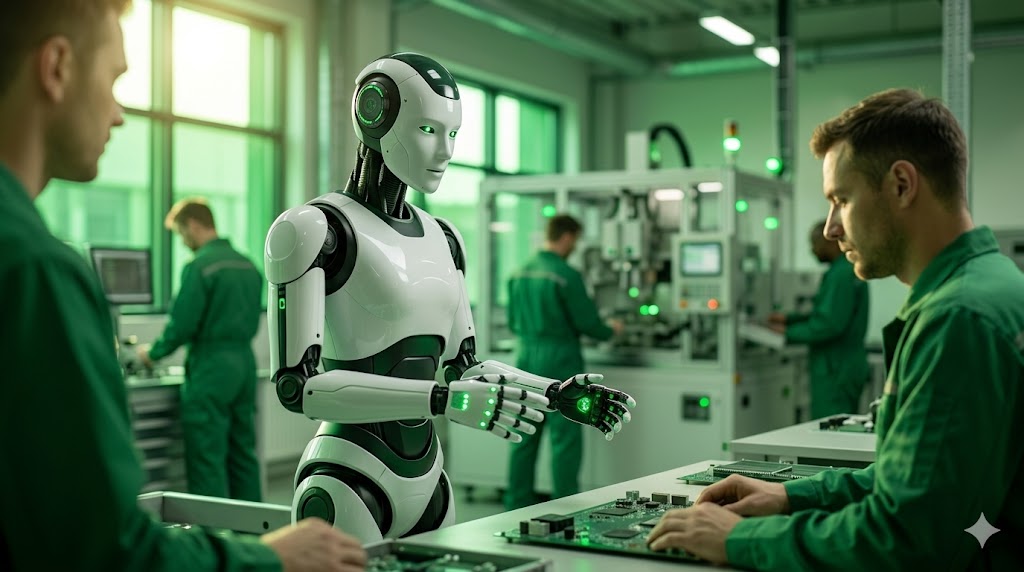
Humanoid robots are basically just as the name says – robots that are created to resemble and mimic the way humans walk, run, think, etc. The idea is quite basic. Most of our world was built based upon the human body; therefore, a humanoid robot would not require a special designed environment. It could go through a doorway (a normal size one), climb up a staircase, pick up a tool (one that was designed for a person).
This area of study has experienced tremendous growth in terms of funding. China openly states that it plans on being the global leader in humanoid robotics by 2027. The total amount of money analysts predict the market will generate by 2035 is approximately $38 billion. Several industry experts, including some at SCSP, believe it is reasonable to believe that we will begin to see humanoid robots used in public places within the next ten years.
Several factors are contributing to the rapid development in the field of humanoid robotics. Many nations are experiencing aging populations and labor shortages, which leads to an increased demand for automation. Additionally, advancements in multimodal AI models and low cost simulation environments have significantly reduced the costs of training and testing these machines. Robots are able to now learn and understand human movement by analyzing large sets of data of human motion. Nvidia’s GR00T N1, for example, uses a combination of synthetic data and imitation of actual human movements for training purposes.
However, the question of whether humanoid robots will actually accomplish what is envisioned is still unanswered. Companies envision them performing tasks in manufacturing facilities, warehouses, and hospitals. However, businesses may pose a practical question: Why do you need to invest in a complex two legged machine when the same work could potentially be performed cheaper with either a wheeled robot or a robotic dog?
Swarm robotics is another rapidly developing area of robotics. This area is based on biological inspiration. Engineers build large numbers of small robots that work together as a team, similar to how ants or bees act. Unlike traditional robots, which depend on a central control unit, swarm robots can adapt and make decisions based on communication between individual robots. Because individual robots in a swarm can fail without affecting the performance of the system, swarming robots are often more reliable.
In most cases, swarm robotics involves the use of small or even nanoscale robots that are equipped with sensors. When one robot senses something, it immediately communicates with the rest of the swarm about its findings. In addition to sensing capabilities, some more advanced swarm designs include the use of onboard GPUs, allowing for real-time data processing while the swarm moves.
A key component to the operation of swarm robotics is artificial intelligence. Artificial intelligence determines the rules that govern the behavior of individual robots in the swarm. Machine learning allows robots in the swarm to modify their actions during a task. Researchers often study video recordings of real insect swarms to understand the cooperative behaviors exhibited and to develop similar coordination strategies for swarming robots.
Possible applications of swarm robotics are vast. Swarms of robots could pollinate crops if the natural bee population declines, build structures using 3D printers, clean up chemical spills, and even deliver medicine directly to cells within the human body. The largest hurdle to transitioning swarm robotics from controlled laboratory settings to the unpredictable real-world setting is the high cost and complexity of doing so.
The biggest obstacle to the advancement of robotics is data. As previously mentioned, large language models became powerful due to the sheer volume of text data available for training. Unfortunately, there isn’t a comparable collection of videos or images of robots demonstrating a wide variety of walking styles, grasping objects, and navigating complex spaces.
Furthermore, because every robot has slightly unique mechanical components and every environment has distinct properties, creating a universal model that can account for these variations is an enormous challenge.
Researchers believe that future intelligent machines will likely require new types of data that researchers have never collected before. For instance, proprioception – the ability to determine where one’s body is positioned in space – or detailed tactile feedback. Creating a tokenized representation of something such as touch (the type of structured information format that AI systems use for processing) is currently considered a major technological challenge. Therefore, many current research projects focus on designing models that are not limited to a particular robot body or platform.

Another major challenge is hardware and market concentration. The components used in robots are rarely off-the-shelf parts. Many of them are custom-built for specific machines, which makes large-scale manufacturing difficult. On top of that, certain parts of the supply chain are dominated by a small number of companies. For example, the Japanese firm Harmonic Drive Systems produces around 80 percent of the world’s high-precision gear systems used in robotic joints. There is also heavy global dependence on China for rare-earth materials that are essential for powerful batteries. Despite efforts by the United States and others to diversify supply, the situation has not changed much so far.
The third, and perhaps most critical issue, is safety. As robots begin to operate closer to people, they must be extremely reliable. This isn’t only about preventing injuries. Public trust depends on it as well. If a language model generates a mistaken sentence, it is usually harmless. But if a large physical robot makes a mistake while moving or calculating forces, the consequences could be serious. Edge cases are especially difficult. For example, how should a self-driving car react if it suddenly encounters a child wearing an unusual costume in the middle of the road? Humans tend to judge machines much more harshly than human drivers. That means sensors must work flawlessly, and algorithms must adapt quickly to the messy and unpredictable conditions of the real world, which look very different from controlled laboratory environments.
The biggest advantage of AI-driven robots is that they can perform repetitive, physically demanding, or dangerous tasks for long periods of time while gradually improving their performance. They can interact with customers in service environments, assist surgeons during highly complex operations, or harvest crops and monitor farmland autonomously. Their capabilities become especially valuable in places where human work is risky or difficult.
Here are three real-world areas where this technology is already in use.
Manufacturing. Industrial production remains the largest area for robotics deployment. Autonomous vehicles move materials through warehouses, robotic arms assemble components, and collaborative robots, often called cobots, work safely alongside human employees. These systems help address labor shortages and move industry closer to the concept of fully automated “factories of the future.” China currently leads the global market for new robot installations, followed by Japan, the United States, South Korea, and Germany. As of 2023, these five countries accounted for about 79 percent of all installations worldwide.
Autonomous transport. Modern autonomous vehicles rely on large arrays of sensors that continuously scan the surrounding environment. To train these systems for unusual situations, such as sudden snowstorms or unexpected obstacles, developers often use synthetic data generated with AI. Machine learning also helps optimize routes, reducing congestion and fuel consumption. Robotaxi services from Waymo already operate in parts of the United States and China, while Wayve is actively testing autonomous vehicles across Europe. Drones are another important part of this ecosystem. Today they are used for tasks ranging from reconnaissance and search-and-rescue missions to infrastructure monitoring and even commercial deliveries.
Space exploration. Robots are particularly valuable in environments where humans cannot survive. NASA’s Perseverance rover has been exploring Mars since 2021, navigating the terrain largely on its own while avoiding rocks and obstacles. Future missions will send smaller robotic systems to map the surface of the Moon autonomously. Deep-space exploration requires compact machines capable of making decisions without constant communication with Earth, because signal delays can be significant. To support this, NASA is experimenting with foundation models developed by Meta, which provide advanced computer vision capabilities without requiring massive onboard computing resources.
The U.S. military believes that robotics will have numerous uses in the defense area. Robots could perform many of the “dull,” “dirty,” “dangerous” or “cognitively-demanding” tasks that often put military personnel at risk.
Already some of these ideas are being developed into prototype systems. These include:
autonomous vehicles to be used for reconnaissance and to safely cross difficult terrain or to traverse bodies of water;
drone systems to provide air-to-air combat and/or ground support for fighter aircraft;
robots that can analyze hazardous chemicals on site without endangering the people who must normally do this task;
telepresence systems to enable safe operation by remote control of robotic avatars operating in hostile areas;
automated logistical systems to rapidly move and unload supplies in chaotic environments such as busy ports.
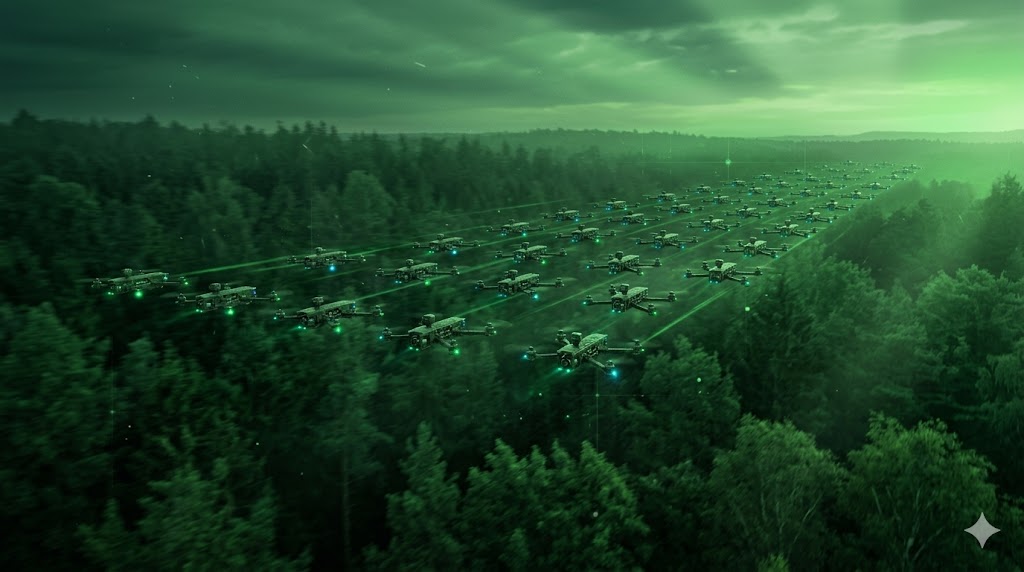
There is little doubt that AI will dramatically impact the way we navigate (at sea) and scout (in the air). Military leaders are already beginning to discuss the benefits of achieving a technological advantage using robotics. Simply stated, robotics allows us to react faster, engage in greater numbers, and protect our people more effectively than before. Robotics will continue to advance as we see increased use in areas like automated resupply platforms, advanced counter-drone systems and autonomous logistics convoys. When commanders have access to an array of robotic assistants, they may take additional risks to accomplish their objectives.
Sounds exciting; however, the truth is much more complex. Although the U.S. has many of the top research institutions in the world, it ranks only 24th in actual implementation of robotics. U.S.-based robotics manufacturers rely heavily upon imported parts. Many local manufacturers produce the structure and frame of the robots themselves, while the primary mechanical components, which include motors, advanced sensors, etc., are typically manufactured in Asia (primarily in China), or the United States. This reliance on foreign suppliers presents a significant risk in our supply chain.
The U.S. government is attempting to mitigate this concern with its introduction of the “Smart Machines Strategy 2035,” and earlier in 2026 it announced a £52 million robotics adoption program. Nevertheless, a long-term strategy that converts lab-based research into large-scale domestic production does not exist.
Another unaddressed issue is regulatory frameworks. At the time of this writing (2026) there are no clearly defined laws regarding liability for damage caused by autonomous systems. Who would bear liability if a highly capable robotic system failed catastrophically by 2035? Would it be the manufacturer of the hardware, the developer of the software, or the operator of the system?
In addition to the issues mentioned above, there is also the direct military implications. The use of AI and drone technology is increasing rapidly and becoming more readily available to governments, as well as non-governmental entities, including terrorist organizations and private military companies. In response to these developments, cooperating nations may need to develop interoperability standards for robotic systems for combined operations.
Finally, there is the issue of cyber security. Any robotic system that is network-enabled can be compromised. Additionally, due to the nature of global supply chains, verifying the source of each component within a machine can be extremely challenging. This creates the potential for an internal threat type situation. An example of this is a compromised autonomous truck causing a fatal accident, or a hacked drone being intentionally redirected into a crowd. Researchers at Recorded Future note that as the robotics industry continues to grow, it will be one of the most targeted areas for large-scale cyber espionage.