23.07.2024
1 min
776



There is no shortage of malware in the world of cybersecurity, but one virus stands out among all the threats. This digital monster has caused enormous damage around the world, spreading at an incredible pace and leaving behind chaos in digital systems. In this article, we will look at the history of the most dangerous virus, its unique distribution methods and devastating consequences. Why has this virus become a real digital plague? Which companies have been hit the hardest? How can we avoid similar attacks in the future? The answers to these questions will help you understand the scale of the problem and learn how to protect your data.
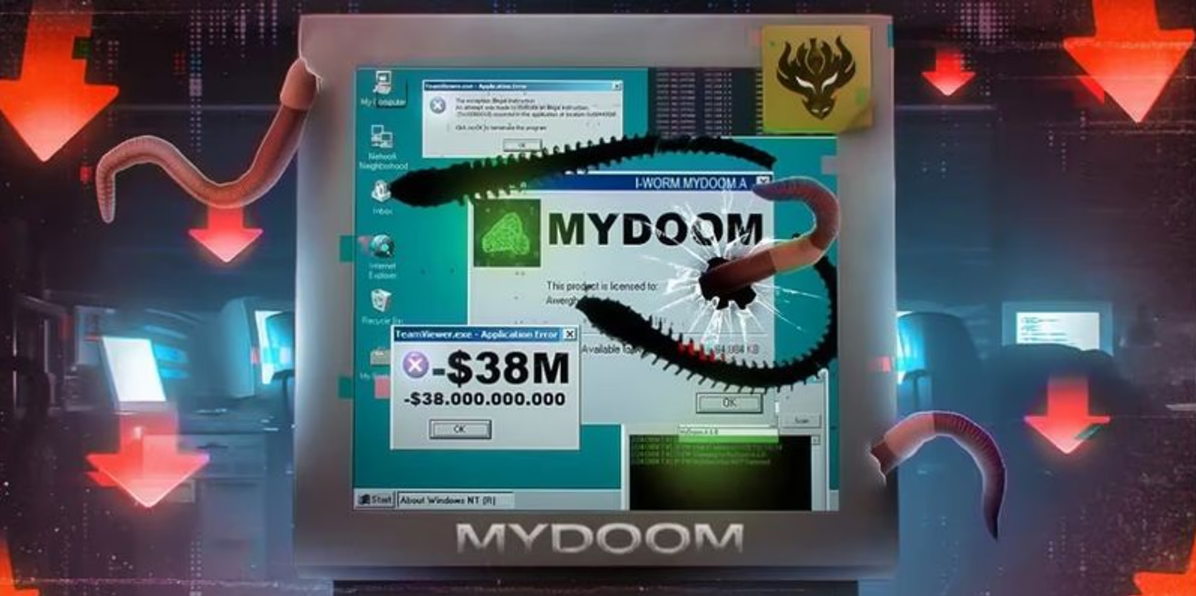
Imagine opening an email on a seemingly ordinary day and unknowingly launching a digital monster that will wreak havoc across the world. This is the story of MyDoom, the worst computer virus in history, which has caused over $55 billion in damage over the past 20 years. Despite significant efforts to uncover its origins, the identity and motives of its creator remain a terrifying mystery. Let’s explore how this cyber-nightmare continues to haunt the digital world, infecting machines at a staggering rate of 1.2 billion emails per year by 2025.
It all started on January 26, 2004, when people around the world began receiving strange e-mails. The subject lines of the e-mails varied, but the message inside often read something like: “I’m just doing my job, nothing personal, sorry.” These e-mails were accompanied by a file that, when opened, would infect the victim’s computer with a worm. This was not just another piece of malware; MyDoom was an extremely sophisticated piece of code designed to exploit vulnerabilities with ruthless efficiency.
Within hours, infected computers began sending copies of the worm to every e-mail address on their contact lists. The scale of its impact was unprecedented: within its first year, MyDoom was responsible for 25% of all e-mail sent worldwide.
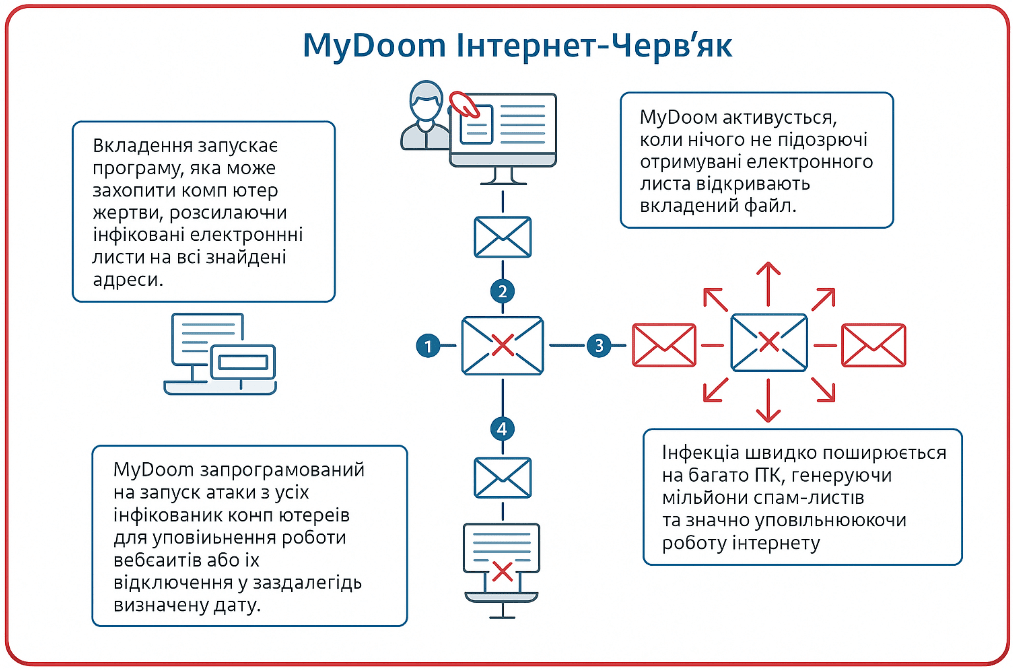
MyDoom’s core functionality was deceptively simple, yet devastatingly effective:
Rapid self-replication: Once activated, the worm scanned the infected computer for email addresses, sending itself to as many recipients as possible.
Botnet formation: Infected machines were added to a vast botnet—a network of compromised computers controlled by the virus’s creator.
DDoS attacks: MyDoom used this botnet to launch distributed denial-of-service (DDoS) attacks on major websites and servers, disrupting businesses and governments alike.
The financial toll from MyDoom is staggering. Direct costs, such as lost productivity and system downtime, combined with indirect costs, such as reputational damage, totaled more than $55 billion. This makes MyDoom the most expensive malware outbreak in history.
By comparison, the damage caused by MyDoom exceeds the GDP of several small countries. Companies have made every effort to strengthen cybersecurity measures, while governments have issued warnings to prevent further spread, but the worm has continued to spread.
Despite Microsoft offering a $250,000 reward for information leading to the arrest of its creator, the identity of the developer of MyDoom remains unknown. Speculation ranges from rogue hackers seeking fame to organized cybercrime groups. Some even suggest that it was a state-sponsored attack.
The cryptic apology in the email (“I’m just doing my job”) adds an eerie charm to the mystery. Was it a disgruntled employee or a cyber-vengeance? The truth, like the worm itself, remains elusive.
Two decades later, MyDoom is still active, sending an estimated 34 million emails a day. Advances in cybersecurity have made it harder for the worm to spread, but its persistence highlights the challenges of using outdated malware. MyDoom has become the digital equivalent of the cockroach—annoying, persistent, and seemingly indestructible.
The story of MyDoom is a cautionary tale of how a single piece of malicious code can turn the digital world upside down. Its continued activity reminds us that the Internet, despite all its advances, remains vulnerable. While cybersecurity experts work tirelessly to thwart the onslaught of new threats, MyDoom lurks in the shadows, like a relic of the early 2000s that won’t go away.
As we enter the era of technologies based on artificial intelligence and quantum computing, let’s not forget the lessons MyDoom taught us: on the information battlefield, self-confident failures can be fatal. And then one day, when an email arrives that seems “strange,” you involuntarily think twice — maybe it’s just MyDoom knocking on your inbox.
The story of MyDoom is a vivid example of how a single virus can cause a global digital catastrophe, causing enormous damage and continuing to exist even two decades after the initial attack. Despite significant progress in cybersecurity, the persistence and survival of MyDoom highlights a fundamental problem in today’s digital world: the vulnerability of legacy systems and the lack of user awareness.
Today, in 2025, MyDoom is a reminder that even old cyberthreats can remain active if not properly addressed. This makes us think about the importance of regular system updates, the implementation of new security technologies and educational activities for users.
Ultimately, MyDoom is not just a piece of cybercrime history, but also an important lesson for future generations of information security professionals. In the fight against digital threats, the best weapon remains not only technology, but also human vigilance, awareness, and readiness to respond quickly to new challenges.