23.07.2024
1 min
776



This article tells the story of a European programmer who built a global cybersecurity business by betting on free antivirus. It shows how an unconventional distribution model, technological expertise, and proper scaling allowed him to enter the global market and change the rules of the game in the information security industry.

Failed chemist Pavlo Baudish began writing his first programs back when the communist regime was still in power in his native Czechoslovakia. Over the years, this interest grew into the main project of his life — the free Avast antivirus, which is now installed on more than 400 million devices and eventually made Baudish a billionaire. How did a man with a reserved character and no loud background manage to build a company that could compete on equal terms with American technology giants?
Standing on the roof terrace of the five-star Hotel U Prince, Pavlo Baudish gazes out at the city where he has spent most of his 59 years. Behind him — the tourist-filled central square of Prague and the sharp Gothic spires of Týn Church, ahead — even rows of pointed ocher roofs.
Before his eyes, the city gradually became brighter and more open. Baudish remembers the dark times well after Warsaw Pact troops crushed the Prague Spring and imposed a harsh communist regime. His father, a psychiatrist, lost his practice, and Pavlo never received a full education. It was only after the Velvet Revolution of 1989 that a period of liberalization began, opening up new horizons for people like Baudish.
Despite all the twists and turns, he remained level-headed and focused. It was this approach that helped him turn a small cybersecurity company he co-founded at the end of the communist era into a powerful player in the market — one that could challenge and sometimes even outpace aggressive American competitors like McAfee and Symantec. Ultimately, this made him one of the few Czech billionaires.
Baudish’s flagship project is Avast, an antivirus installed on more than 400 million computers and smartphones worldwide. Like similar products from the late 1980s, created by McAfee and Norton, it is designed to protect users from cybercriminals and spyware. The key difference is that Avast is distributed free of charge and exclusively online, without being sold in retail stores. It is this freemium model that has allowed the company to grow rapidly and go public on the London Stock Exchange in 2018. The business was valued at $4 billion, and Baudish’s fortune was $1.4 billion (as of June 2019).
Despite his billionaire status, Baudish remains extremely modest. He is wearing a navy blue vest, a black fanny pack, and short, gray hair – nothing suggests big money. During a two-hour conversation on a cool terrace, he chooses his words with restraint, slowly sipping hot chocolate and Staropramen beer. He admits that he has no “expensive hobbies”: his unusual hobby is geocaching, the search for hidden places using GPS coordinates. His investments are also simple and pragmatic – recent purchases include a diaper manufacturer and a hotel with a view of Prague Castle. “I’m not very good at hotel management. This is a good way to learn,” Baudish explains calmly.
The Avast story is not nostalgia for the “old internet” or the biography of a successful entrepreneur. In 2026, it reads like a survival manual for tech products in a world where users don’t want to pay upfront and trust in large corporations is steadily declining. Baudish’s free antivirus appeared long before SaaS, freemium, and AI services, but it worked on the same principles that VPN providers, cloud services, and AI-based tools use today.
Avast showed that free can be a strategic advantage, not a weakness. Mass gave the product data, data gave quality, and quality gave global growth without classic marketing budgets. That’s why this story is important now, when hundreds of startups are trying to repeat the same path, but in a much tougher and more distrustful digital environment.
One of Baudisch’s most lucrative decisions has been to hire the stubborn American who has transformed Avast into a “giant killer.” That man is Vince Steckler, Avast’s CEO for the past decade. He sits across from Baudisch now, speaking over the chatter of tourists and the cooing of couples. This is the first time they have been interviewed by an English-language publication since the IPO. The former Symantec executive seems more boisterous and confident than his Czech boss, his stocky build and bald head reminiscent of a retired general. He is happy to boast about the company’s successes, while Baudisch is more reserved. “I was just reading about Aston Martin today. [On the London Stock Exchange] we were the second-biggest IPO of the year. Aston was the first. We are now worth more than Aston Martin,” Steckler says. He is right. The maker of Bond’s favorite cars has seen its stock fall, and its valuation is now just over $3 billion.
Steckler was not an obvious candidate for CEO. In 2005, when he was a top executive at Logicon, the Securities and Exchange Commission (SEC) fined him $35,000 in a civil lawsuit. It found that Steckler helped Legato, a Silicon Valley software maker, inflate its financial figures by signing a $7 million contract with a termination clause. According to the SEC filing, Steckler knew Legato would not be able to count the contract as sales, so he told the company’s top executives how to hide the clause from the finance department. Employees joked about “former con artists in management,” said a former Avast employee.
Steckler’s story has drawn close attention in the British press as Avast prepares for its IPO. Usually ready to engage in conversation on any topic, Steckler declined to comment on the episode then, and now, in an interview with Forbes. He wasn’t the first on the list when Baudisch and fellow Avast founder Eduard Kucera began looking for a CEO in 2009. The founders initially considered Steckler’s former boss, former Symantec vice president Dieter Giesbrecht. “They found someone they really liked, and it wasn’t me,” jokes Steckler. Giesbrecht turned down the offer, but introduced Baudisch and Kucera to Steckler, who jumped at the chance to move to Prague from Singapore and take over Avast from the founders, who now run the company only as board members.
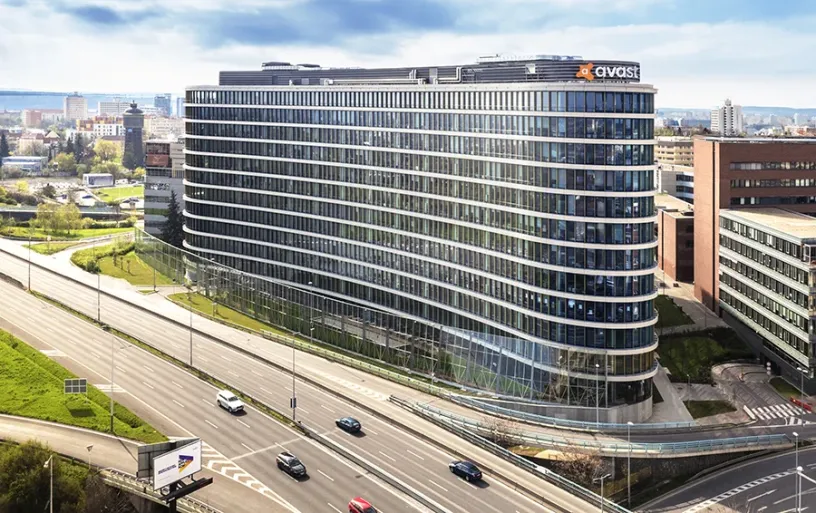
In its battle with McAfee and Symantec, Avast didn’t win with technology—they were initially comparable—but with its distribution model. While American companies sold boxes in stores and licenses to corporate customers, the Czech product was simply downloaded by millions of people. No contracts, no salespeople, no complicated hierarchy. It looked like a temporary market hack, but in fact it became a long-term strategy.
The free model allowed Avast to scale faster, get feedback faster, and adapt to new threats faster. As a result, large corporations found themselves in the role of defenders of old business processes, while a “small” European player dictated new rules. This is a classic example of how a free product can become an economic weapon against much stronger competitors.
Despite Steckler’s less than stellar reputation, the company has doubled its user base under his leadership and posted operating income of $248.3 million in 2018, according to its financial report. Steckler himself recalls that when he joined in 2009, annual revenue was just $20 million.
Thanks to a series of acquisitions that significantly expanded its audience, several successful partnerships, and a tough global growth strategy, the company’s revenue grew dramatically over the next decade. However, Steckler’s era is coming to an end. Just two weeks after we met, he announced his intention to step down at the end of June. He will be replaced by a longtime associate and one of Baudisz’s first employees, Czech citizen Ondrej Vlček.
Steckler may have been a kind of “injection of energy” of American capitalism for the company, but it was the unwavering faith of Pavel Baudish and Eduard Kuchera in their own product that allowed Avast to grow to the status of a “unicorn” and not stop developing.
The decisions that Baudish made are more reminiscent of the path of modern IT tycoons like Mark Zuckerberg, but without the ostentatious publicity and loud gestures. In the late 1980s, he left his studies at the Faculty of Chemistry, honestly admitting that he had no talent for academic science, and focused entirely on computers. In Soviet times, personal computers were a rarity, but Baudish got a job at an institution with the grandiose name “Research Institute of Mathematical Machines”, where employees worked on Olivetti M24s. There he created graphics software, realizing that there was no real market for him – so closed and isolated was Czechoslovakia at that time. “The hardest part was understanding that even if you work well and have the skills, it’s all pointless,” he recalls. The country was at the end of a period of so-called normalization, and the atmosphere was consistent with the failed communist project: people were regularly summoned “for talks” about political views, and any disagreement could cost them their jobs.
The turning point came when Baudish received a floppy disk with one of the first computer viruses, Vienna. “My colleagues didn’t pay any attention to it, thinking it was a toy. So I took it and started to figure it out,” he says. It was then that a tool appeared that could quickly find and remove malicious code. It later became a key component of the first Avast antivirus and a starting point for the future business.
Although the US-Czech partnership later brought Avast significant dividends, in the 1990s and early 2000s competition with American industry leaders nearly broke Pavel Baudish and Eduard Kuchera. They had to constantly fend off attempts by McAfee and Symantec to establish complete market dominance. In 1997, McAfee even tried to buy the Czech company. True to his principles, Baudish recalls that instead of selling, he and Kuchera offered a license agreement to use the antivirus engine. “They said: no, no options. But two weeks later they came back and bought the license anyway,” he smiles.
In the early 2000s, when Symantec went the route of aggressive dumping in its pursuit of global leadership, Avast management was forced to act radically. The plan was to go international, but without a marketing budget, the only option was to make the product free. “We could either close the company or change radically. We had nothing to lose,” recalls Baudisch. AVG’s local competitor had gone down this path two years earlier, but Baudisch says it made a critical mistake by not adapting the service to multiple languages. Avast learned its lesson.
Two years after switching to a free model in 2001, Avast had one million users, and by 2006, it had more than 20 million. Baudisch partly attributes this to a lucky coincidence, but he attributes the open, geeky culture that had been built around the product to a major factor. “We came at a very good time, and we were lucky that the program spread through word of mouth,” he says.
While products like Kaspersky, McAfee, and Symantec’s Norton made money from sales at retailers like BestBuy, Avast relied on something else: a free basic version with a portion of users upgrading to paid features. Over time, these versions became “smarter” thanks to the vast amounts of data collected from users. Marketing partnerships with other software developers became an additional source of income. For example, since 2009, Avast has been recommending new users to install the Google Chrome browser under an agreement with Google, receiving a fee the companies do not disclose.
AVG grew at about the same pace and followed the same approach. Soon after Steckler’s arrival, Avast’s management decided that it needed to get rid of its competitor. After an unsuccessful attempt to go public on the Nasdaq in 2012, Baudisch, Kuchera, and Steckler developed a plan to acquire AVG. Lack of funds prompted them to convince investment firm CVC Capital Partners to buy a large stake in Avast in 2014. The company was valued at $1 billion. Two years later, after numerous rejections, AVG gave up and was sold for $1.3 billion. As a result, the number of computers and smartphones on which Avast-owned software was installed exceeded 400 million. In terms of revenue, the company is significantly inferior to its competitors, but by the end of 2018, the antivirus of its closest competitor McAfee, according to a study conducted by Opswat.
After acquiring AVG, Avast was already preparing to go public. However, less than a year before the IPO in London, a serious incident occurred. The company found that about 2.3 million computers had been compromised by hackers who used one of the acquired assets — the Piriform CCleaner utility — as a tool for cyberespionage. In September 2017, the attackers embedded malicious code into CCleaner files designed to clean systems from dangerous software. As a result, all users who downloaded or updated the program during this period received a backdoor. Cybersecurity experts suggested that structures associated with China could be behind the attack, and the targets could be large IT companies, including Cisco, Intel and Microsoft. The real scale of the attack’s success remains unclear. Baudish, as always, speaks about it without emotion: “We learned a lesson – during such acquisitions, you need to put things in order much faster in internal processes.”
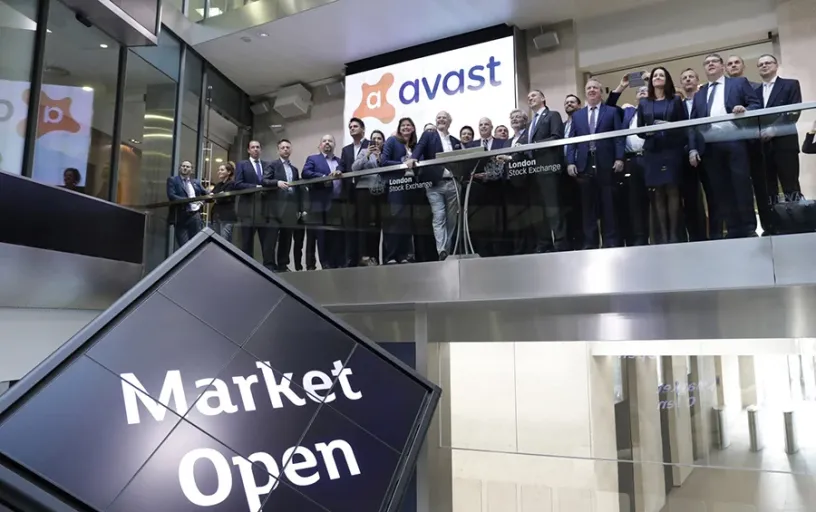
Avast was able to get through the crisis thanks to transparent cooperation with law enforcement agencies and an open dialogue with the cyber community. As a result, the incident was presented as the story of a company that became a victim of one of the most complex espionage operations. This episode did not prevent it from entering the London Stock Exchange: on May 10, 2018, Avast held an IPO with a valuation of $ 3.4 billion, entering the five largest IT placements in the history of London. For Baudish, this far exceeded any dreams of youth. He admits that once he simply wanted to create a product more successful than his early graphics programs: “It’s really impressive and satisfying.”
Looking to the future, the company plans to expand beyond the boundaries of classic antivirus. According to Steckler, Avast is planning to release its first home security device. The small box will analyze all Internet traffic in the home, detecting and blocking threats to Internet of Things devices, from refrigerators to smart speakers. “You can do a lot of damage through a voice assistant like Alexa,” warns Baudish.
The Omni device will be part of a year-long subscription that will cover protection for computers and smartphones. No other competitor in the antivirus market has offered such a comprehensive solution for the home, and Steckler admits that it is a risky move. At the same time, Frost & Sullivan analyst Tony Massimini believes that Avast is in a favorable position: “This idea has been talked about for a long time, but now we will see if it can actually be implemented. I would say Avast has a good chance.”
Steckler himself will no longer participate in further challenges for the company; he officially left his position at the end of June. He was replaced by longtime Avast employee and Czech-born Ondrej Vlček. He recently said that his annual salary will be just $1, and that his main motivations will remain options and a 2% stake in the company — more than enough, according to the board of directors.
Despite all the changes in strategy and management style, the far-sighted Baudíš has kept most of his shares at a time when many around him were in a hurry to sell them. This largely explains why he is now a billionaire and his colleagues are not. Baudíš owns about 27% of the company, while Kučera’s share is 10.5% and Stekler’s 3.3%.
Both inside and outside Avast, people sincerely admire Baudíš’ perseverance in building the cyber giant over the three decades since the Velvet Revolution liberated Czechoslovakia from communist rule. “I’ve known Pavel for over 20 years and I have great respect for him, both as a person and for what he’s built,” says Costin Raui of Kaspersky Lab, a veteran of the cybersecurity industry.
Baudish has also managed to maintain the geeky mindset that underpinned Avast’s growth, despite numerous mergers and acquisitions. “You have to completely change the company — the way it works and how it does business — but at the same time somehow preserve its culture,” he explains. That culture goes a long way toward explaining why more than half of Avast’s 1,700 employees work in research labs in the Czech Republic and California, and why the same Olivetti computer Baudish worked on in the late 1980s is still in the company’s Prague headquarters.
As the sun sets over Prague, Baudish reflects on how much the city has changed. “In 1990, everything was gray, many of the buildings were in poor condition. The center has changed dramatically – now it’s like a zoo,” he says, clearly not particularly enthusiastic about the endless stream of tourists, especially British people who come to celebrate bachelor parties.
Before leaving for his country house, Baudish talks about the Avast Foundation, which directs 2% of the company’s profits to charitable projects. One of the key areas is the development of palliative care in the Czech Republic. In this way, he says, he pays his debt to the country that, despite the difficult legacy of communism and the challenges of modern capitalism, allowed him to become the billionaire he is today.