02.09.2024
12 min
1192



Learn about the results of audio analysis that sheds light on the tragic events surrounding the deaths of aid workers in Gaza. The article provides a detailed analysis of the audio recordings and their significance in the investigation of the incident that occurred on March 23, 2025.
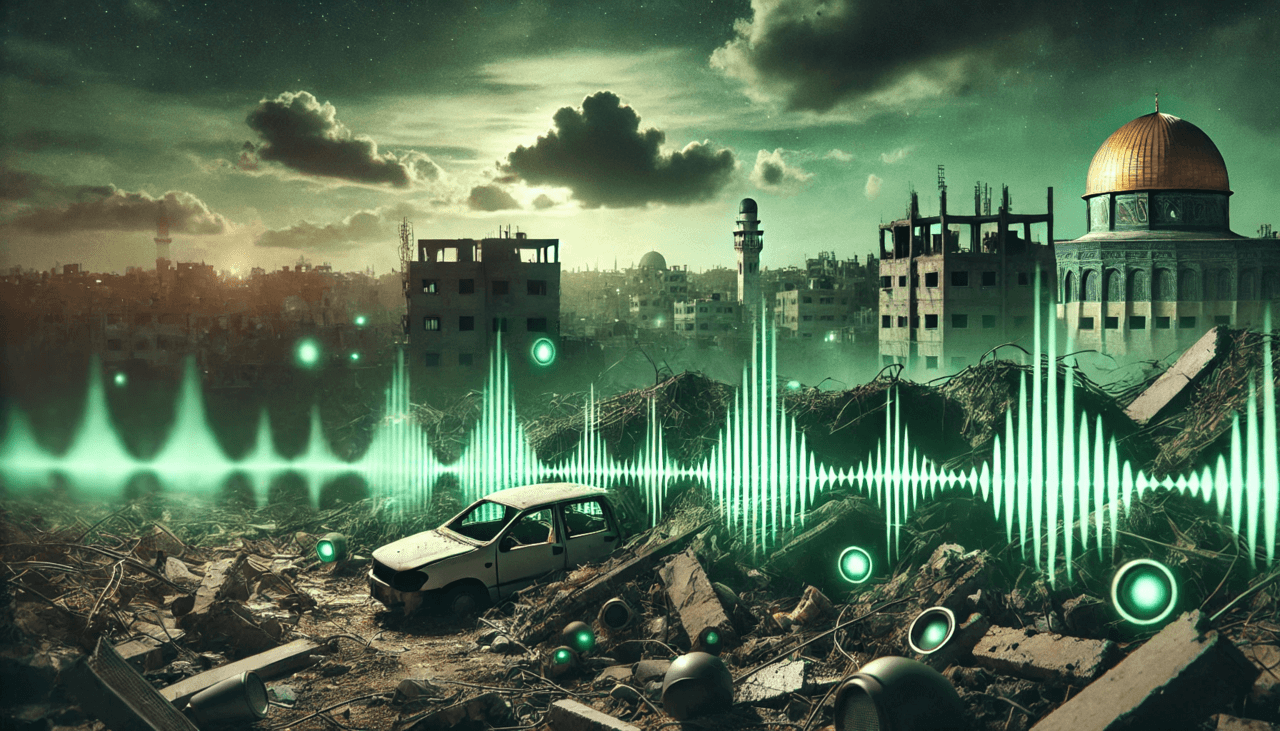
On March 23, the Israeli military announced the start of an operation in the Tal al-Sultan area in the southern Gaza Strip, calling on the local population to evacuate northward toward a humanitarian zone. A convoy of rescue workers was already moving along the road a few hours before the official announcement. The convoy included representatives of the Palestine Red Crescent Society, local civil defense, and UN personnel.
At least four humanitarian vehicles, with their emergency lights on, stopped next to another vehicle when the shooting began.
A phone containing a video recording lasting about seven minutes was found on one of the bodies, which was later released by PRCS. Despite the darkness of the footage, the audio track provides important information about the course of events. An extended, 20-minute version of this video was released on April 8.
The audio recording contains hundreds of gunshots. According to the sound characteristics, most of them have supersonic waves, which indicates the direction of fire – the bullets flew towards the person holding the recording device. The data also indicates that the first shots were fired from a distance of approximately 40-45 meters – precisely in the direction of the rescue column.
Israeli army spokesman Lieutenant Colonel Nadav Shoshani initially stated that the humanitarian mission vehicles could have been perceived as a threat because they approached the military without their lights or flashing beacons on. However, after the publication of a video showing activated emergency signals and headlights, the military made an additional statement on April 7. According to it, the commander of the General Staff ordered an in-depth investigation into the incident, involving a special mechanism to assess the circumstances and determine whether there are grounds for criminal proceedings.
On March 30, the UN released a video showing bodies in life jackets being pulled from a shallow grave. The remains of destroyed ambulances were also found.
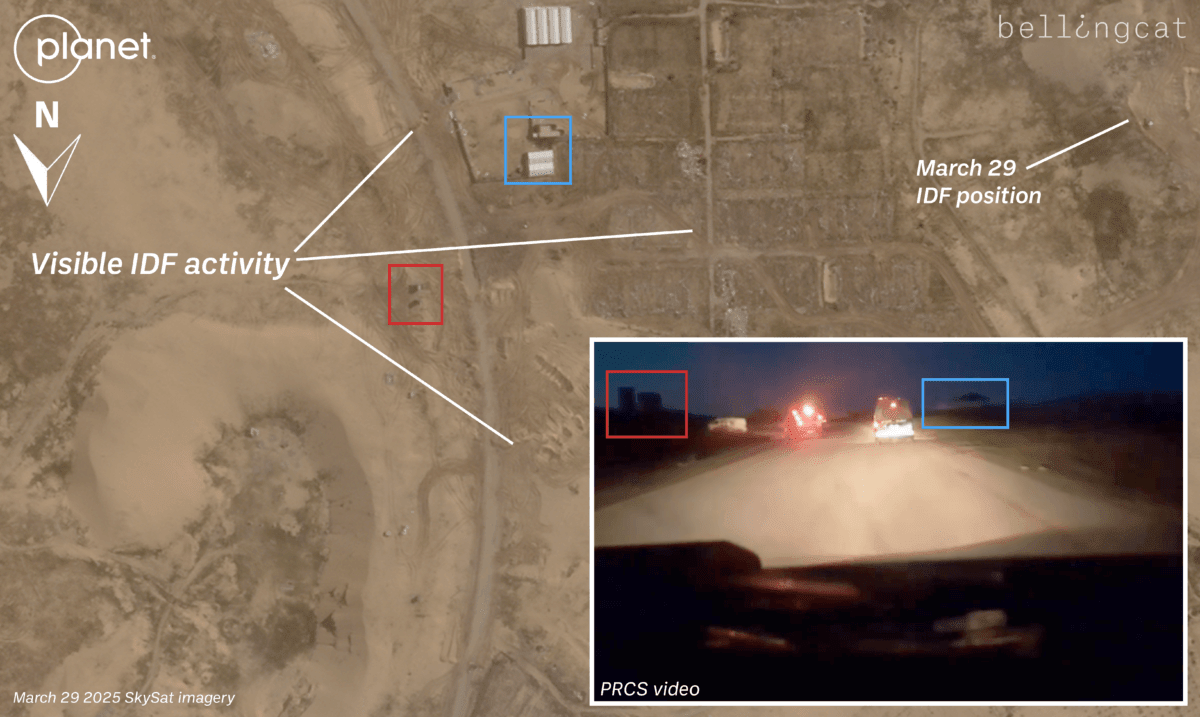
The exact location of the video was determined by the distinctive landmarks in the footage. In particular, the silhouettes of two large concrete structures were recorded to the left of the road, and to the right – new temporary buildings. The objects stood out clearly against the horizon.
By comparing these visual features with current SkySat satellite imagery from Planet Labs, it was possible to confirm that the location of the incident was the area along the Gush Katif Road, located north of the Tal al-Sultan neighborhood.
The SunCalc chronolocation tool was used to determine when the video was shot. It was able to determine that the video was recorded early in the morning. This conclusion is also supported by an assessment from The New York Times.
The footage shows sunlight appearing on the horizon from the east. Calculations of sunlight for this location on March 23 at 5:00 a.m. local time show that the position of the sun matches that recorded in the video.
Audio forensic analysis has previously been used in investigations of high-profile firearm incidents. In particular, it has been used to compare the sounds of gunshots with witness statements and official versions of events.
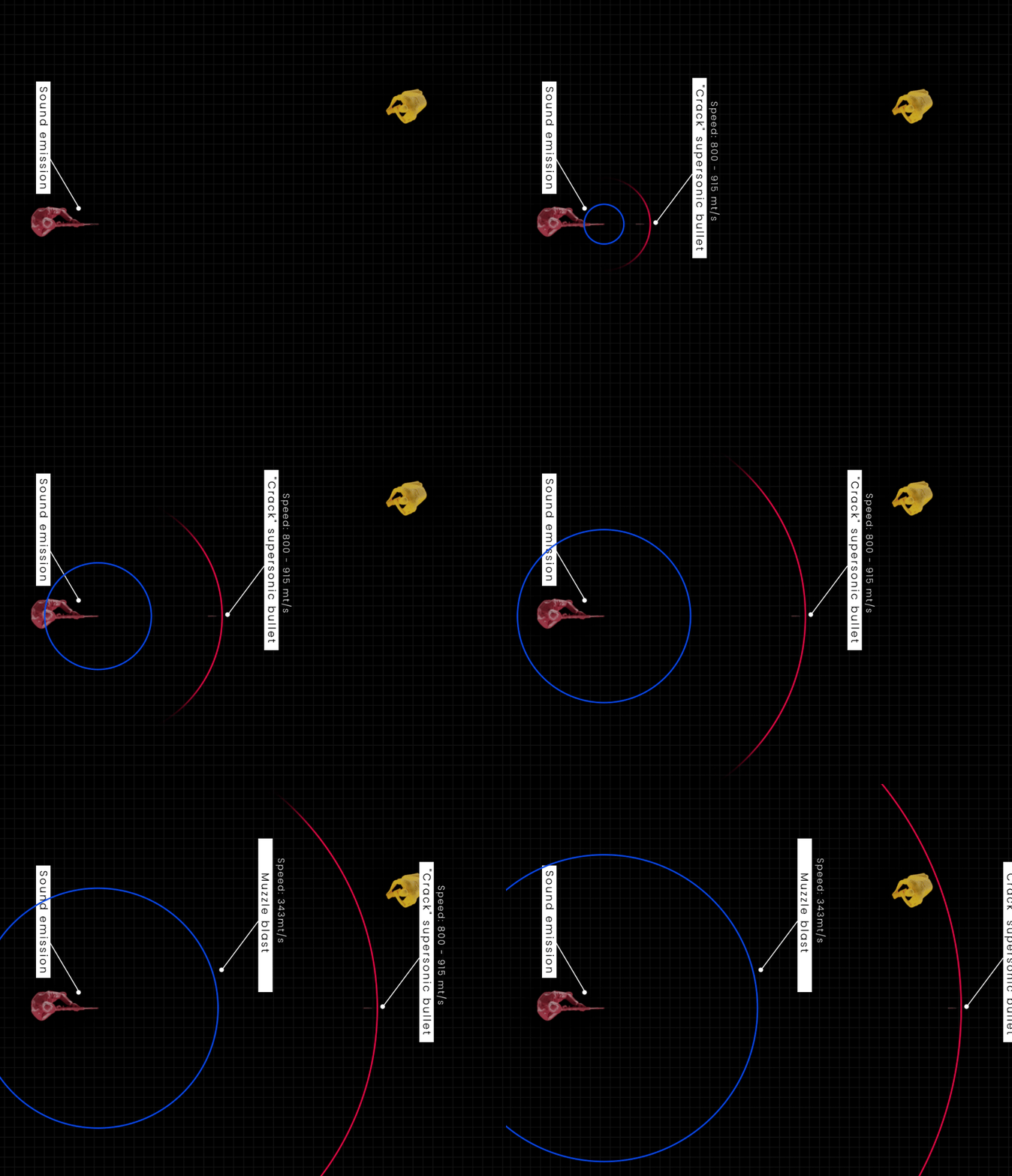
Most modern rifle cartridges have supersonic speeds – the bullet after being fired can travel at speeds of 650 to 1,000 meters per second. In such cases, the shock wave is recorded first – the characteristic “crack” that is formed when the bullet cuts through the air. Only later is the sound of the shot itself heard – an explosion that travels slower, at about the speed of sound.
This delay between the two sounds – the crack and the explosion – allows analysts to establish the direction of the fire, the type of weapon and even the approximate distance to the shooter. This method allows for highly accurate reconstruction of the sequence of events in situations where other sources of information are limited.
Watch our video from a previous investigation for a more detailed explanation.
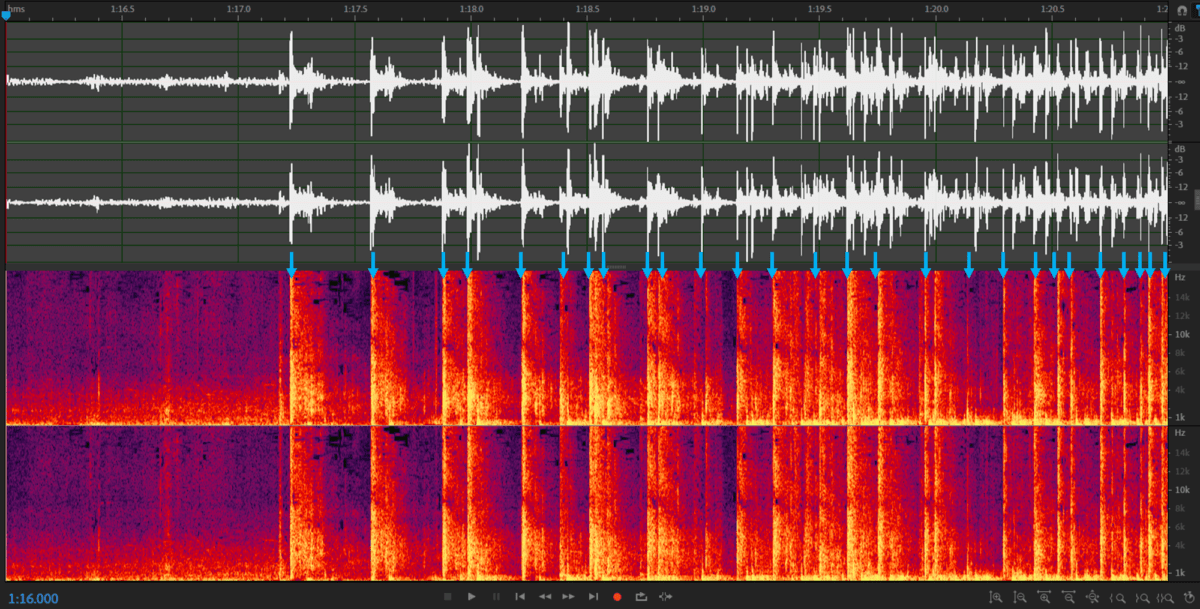
We noted that the first minute of the seven-minute video released by PRCS shows vehicles driving along the road, with no gunfire heard. The shooting recorded on the video begins at approximately 1:17 with a series of rapid gunshots that resemble shock waves (cracks).
During the first 30 seconds of the recording, approximately 150 characteristic sounds were recorded – shock cracks. However, this figure is not accurate, since it probably includes both the shots themselves and secondary effects, including echoes and acoustic reflections from surrounding objects. Due to the density and speed of the bursts, these elements overlap each other and make it difficult to accurately count.
Professional analysis by audio experts showed that several hundred bullets were fired during the entire five-minute period of shooting. According to the results of a preliminary analysis, at least 27 shots were counted in the first three seconds alone.
Such an intense rhythm indicates a high rate of fire, which is an important factor in the reconstruction of events and assessment of the circumstances of the incident.
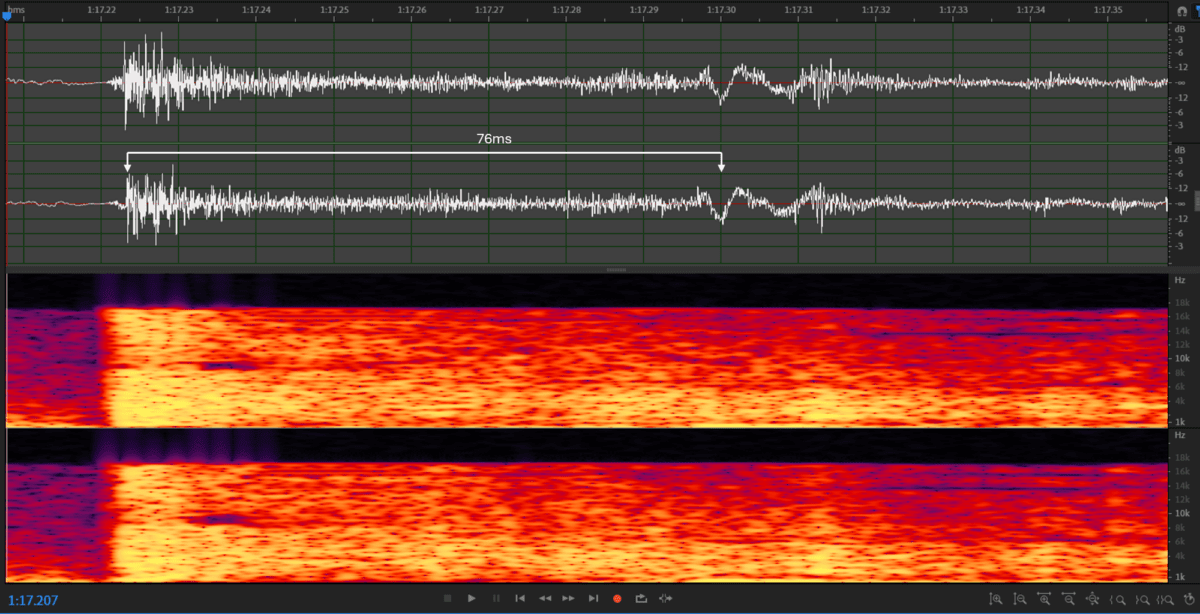
During the shooting, shots with characteristic supersonic shock waves can be clearly heard in the recording. These sounds have a distinct “crack-pop” structure, which indicates the direction of the bullets’ movement — they were flying towards the recording device, which at that moment was probably held by a representative of the humanitarian mission.
The audio file revealed time gaps between the supersonic whistle of the bullet and the sound of the explosion in the muzzle of the weapon. These discrepancies are used to calculate the distance between the microphone and the source of the shot.
Based on the analysis of the duration of the sound delays (approximately 76–77 milliseconds), it was concluded that the shooting was conducted from a distance of about 40–45 meters. This took into account the average speed of the bullet — from 800 to 1000 m/s.
The analysis also shows that at least three people took part in the shooting in the first seconds of the attack. The calculations obtained are confirmed by the testimony of an eyewitness, who noted that the fire was opened from a distance of about 50 meters.
In a later sequence at 4:10 in the seven-minute clip, there is a sequence of five frames with various apparent shock waves and muzzle blasts. Both audio forensics found that the time between these sounds is about 50 milliseconds, indicating a distance of 30 meters.
In other cases, near the end of the video, the time between the cracks and muzzle blasts appears to be shorter (42 and 20 milliseconds), suggesting that these weapons were likely fired closer to the aid convoy.
Dr. Maher noted that, given the sheer number of shots fired, it is likely that several people were firing at different distances.
Without any visual evidence, it is not known whether the shooters were approaching the aid convoy when they fired. Also, crossfire cannot be ruled out due to the large number of shots and the overlapping sounds. However, details from the audio recording suggest that on at least two occasions, the shooting was initiated by gunmen who fired in the direction of the column, rather than from the side of the column.
The shooting heard on the recording lasted approximately five minutes and included several bursts of heavy and intermittent fire, as well as some pauses.
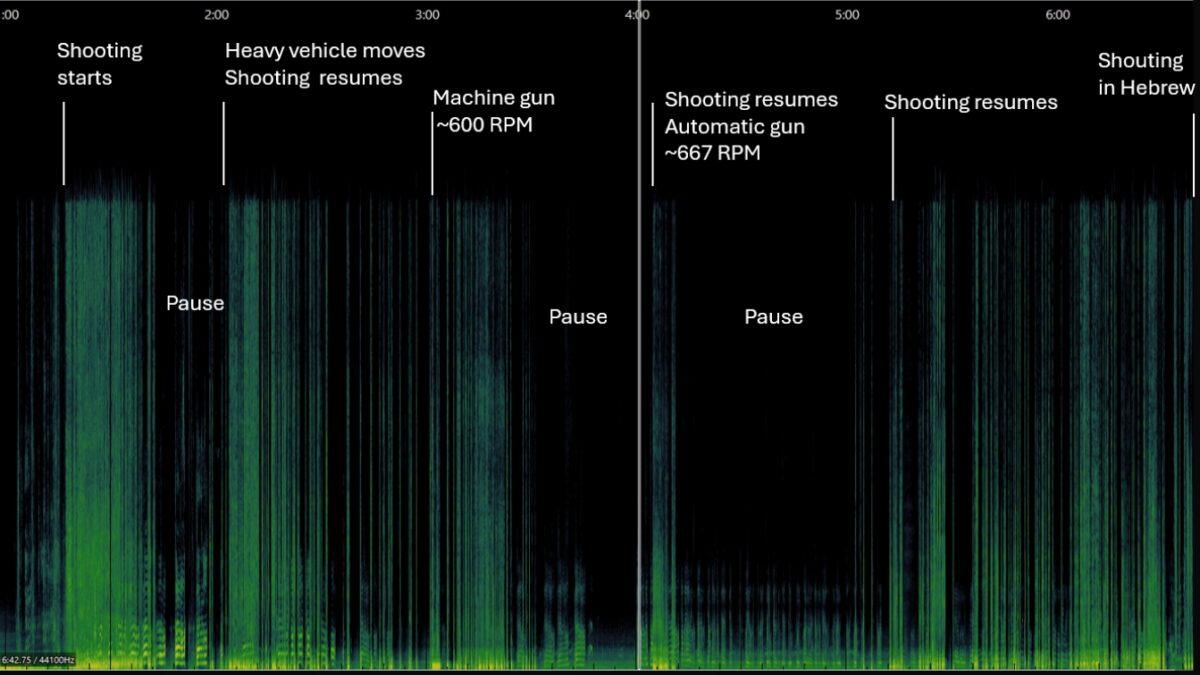
After the initial burst of fire, there is a pause of about 15 seconds. This can be heard at 1:43 in the recording. At approximately 1:58, the shooting resumed. Again, the shots have a crackle and at least one ricochet, indicating that the bullets were likely fired in the direction of the aid convoy.
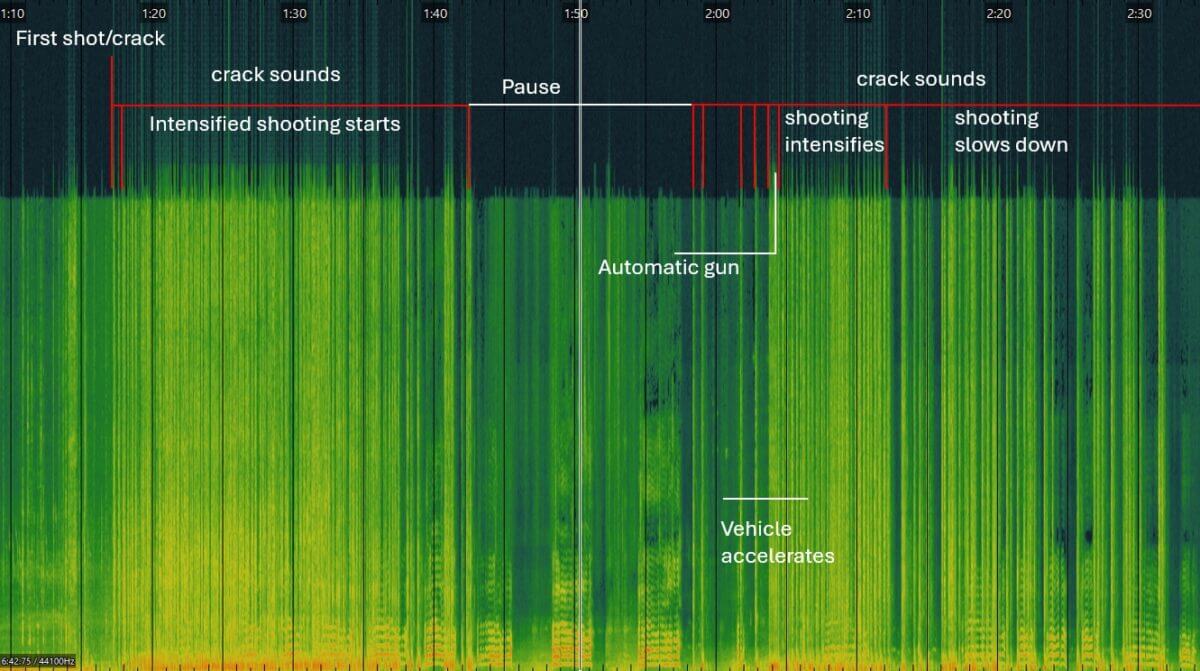
Between 2:35 and 2:57, there appeared to be 14 gunshots, also with very consistent ballistic shockwaves, all from roughly the same distance of about 40 meters from the convoy, according to Beck.
Immediately after this, at 3:01, a more rapid burst of gunfire was heard. Both experts assessed this to be consistent with a machine gun firing at a rate of 600 rounds per minute (22 rounds in 2 seconds) and having supersonic shockwaves. We identified another potential automatic gun that resumed fire toward the convoy after a pause at 4:05.
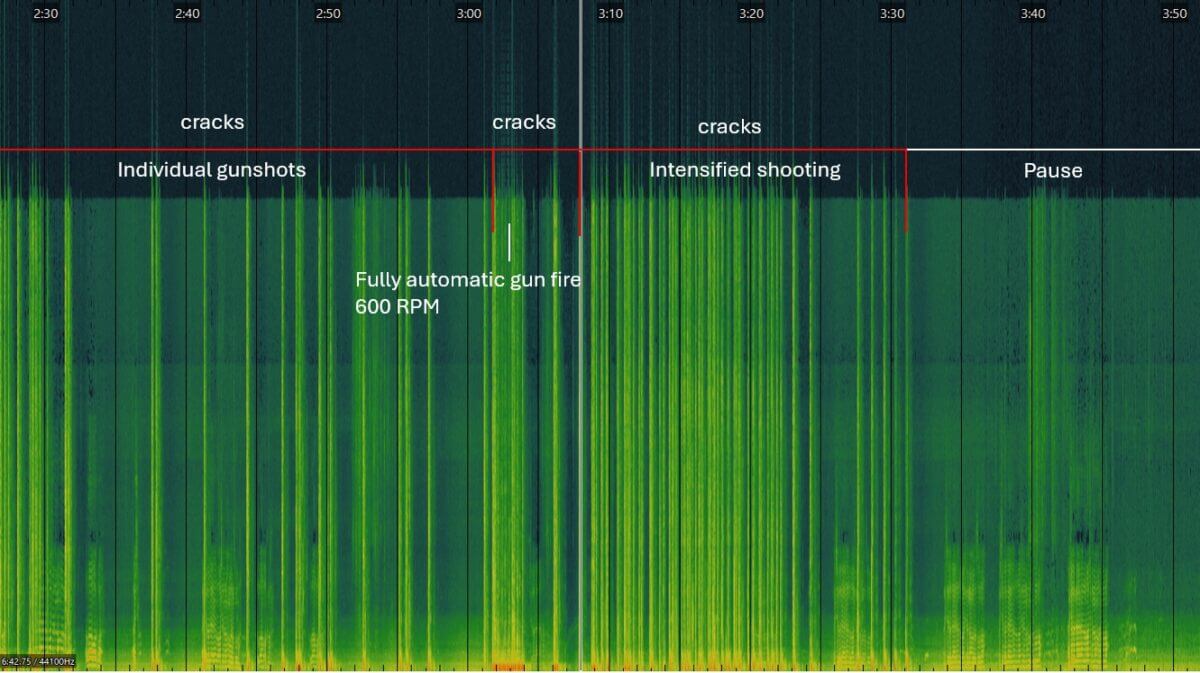
Analysis of the audio recording indicates that the shooting was continuous for approximately five minutes, although the camera would periodically turn off briefly and resume recording. These pauses are likely due to physical activity or the stress of the person holding the device.
It is not possible to determine with certainty from the audio material why the shooting lasted so long. However, the nature of some of the bursts and the sound pattern suggest the possible use of automatic small arms, including machine guns.
The Israeli military said the incident involving the attack on the humanitarian convoy was still under investigation. On April 7, an official statement was issued, according to which the Chief of General Staff ordered an in-depth internal investigation, involving a special mechanism used to determine whether there were grounds for initiating criminal proceedings.
The same statement said that the military opened fire, considering the situation to be threatening – given the previous fighting in the same area. It was also stated that six of the dead were allegedly affiliated with Hamas. However, no evidence was provided to support these claims.
Representatives of the humanitarian mission denied these claims. One of the medics who survived the previous attack on the convoy stressed that the entire team consisted of civilians. In turn, the Palestine Red Crescent made an official call for an independent international investigation into the incident.
Although the data is based on a preliminary analysis of only one audio recording from the scene, the results indicate an unusually high number of shots fired at clearly identifiable aid workers. The audio also suggests that the fire was fired multiple times and likely from multiple locations.
The evidence gathered was presented to an independent expert working under a UN mandate. In his assessment, he noted that the deliberate killing of medical workers constitutes a serious violation of international law, including international humanitarian and criminal law. Such actions may constitute a war crime, including the deliberate targeting of persons and vehicles bearing protective symbols under the Geneva Conventions.
The expert also stressed that such incidents should be subject to thorough and independent investigations. Failure to do so may constitute a violation of the fundamental right to life guaranteed by international law.