In January 2025, the U.S. Border Patrol conducted a raid in Bakersfield, hundreds of miles from the border. Although the official target was migrants with criminal records, an investigation found that most of those detained had no criminal records. Experts say it may have been an abuse of power and pressure on the community.

In early January, agents from the El Centro unit of the U.S. Customs and Border Protection (CBP) conducted a large-scale “Return to Sender” operation in Bakersfield and Kern County, located in central California. According to the official version, the goal was to identify and detain migrants with criminal records.
However, the real focus of this operation has caused much controversy. Representatives of human rights organizations and labor unions have questioned its validity, stating that the agents’ actions were opaque and could have had another reason.
According to CBP, 78 people were detained during the raid, most of whom were Mexican citizens who had long lived in the United States. As noted in the lawsuit, 40 people were deported after the operation, some of them within a few days of their detention.
The raids, which took place at gas stations, a Latino shopping mall, and just on the streets during traffic stops, came as a surprise to Bakersfield residents. What was especially surprising was that these actions were carried out not by ICE immigration agents, as usual, but by Customs and Border Protection (CBP) officers, hundreds of miles from the southern border of the United States.
The editorial staff of the non-profit media Evident and CalMatters analyzed the situation by studying approximately 90 videos from social networks. More than 50 of them were accurately tied to the terrain, which made it possible to identify 24 unique locations where CBP agents were active during the operation.
The journalists also visited the headquarters of the El Centro sector and spoke with border guards, including its leader. Although agents officially claimed to have a specific list of people to detain, internal CBP documents obtained by the investigation partners tell a different story: 77 of the 78 detainees were not listed as individuals with known offenses. Only one appeared in the database as being subject to deportation, which suggests that most of the arrests were random – during checks without prior orientation.
The head of El Centro, Gregory Bovino, commented that any migrant stopped by agents can be detained solely on the basis of the fact of illegal border crossing.
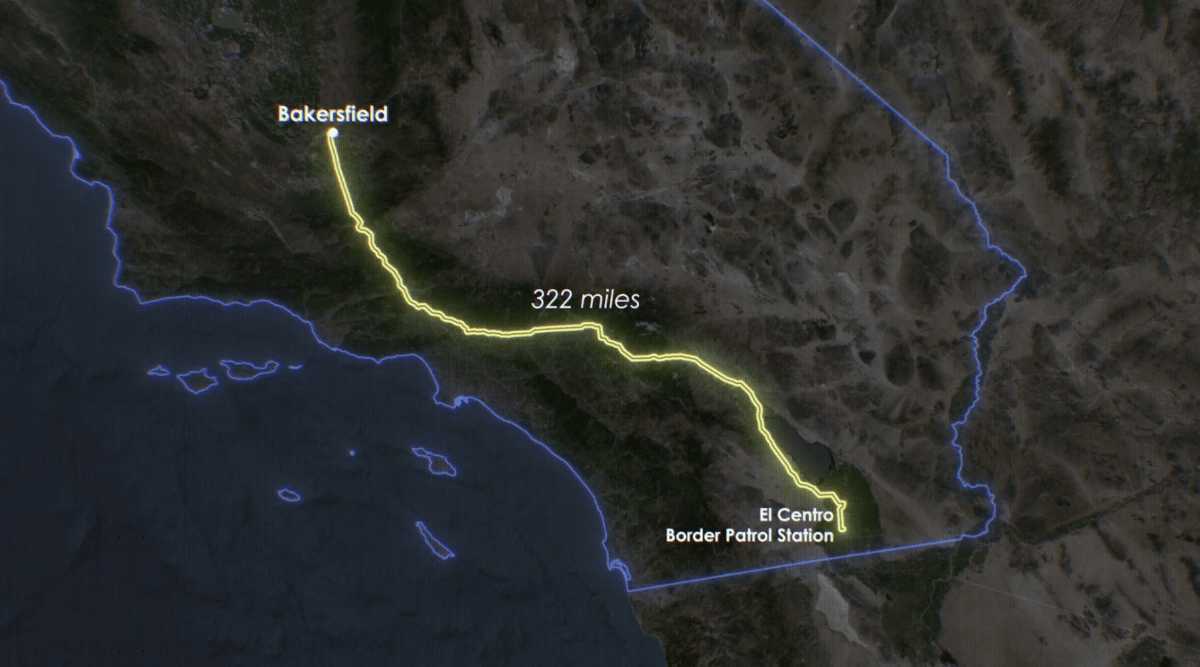
At the same time, CBP teams, which conducted raids more than 500 km from El Centro and the Mexican border, as well as more than 160 km from the California coast, do not exclude that such operations could spread further north in the state.
However, organizations such as the American Civil Liberties Union (ACLU) have spoken out against such actions by the Border Patrol, stating in comments to Evident and CalMatters that such tactics violate constitutional rights and are an abuse of CBP’s authority.
Bree Bernwanger, a senior staff attorney for the ACLU of Northern California, said that yes, CBP does have the right to detain migrants. However, she said, the events in Bakersfield were without legal basis and occurred outside of legal procedures.
“They have clear limitations: they can’t just arrest people without a warrant. First, you have to assess whether they are a flight risk. That involves talking to the person, finding out their connections to the community — whether they have family, housing, whether they really intend to flee, not just return home,” Bernwanger explained.
After the raids, the ACLU filed a lawsuit seeking a temporary injunction against CBP’s actions.
But for many of those deported in the Bakersfield operation, the move will have little impact. Their families are stuck in the U.S., their lives are shattered, and the local community is in shock.
“This has nothing to do with public safety,” Bernwanger said.
Watch the full documentary, Evident, on YouTube and read CalMatters’ version of the story.