The Impact of War on Infrastructure & Civilians
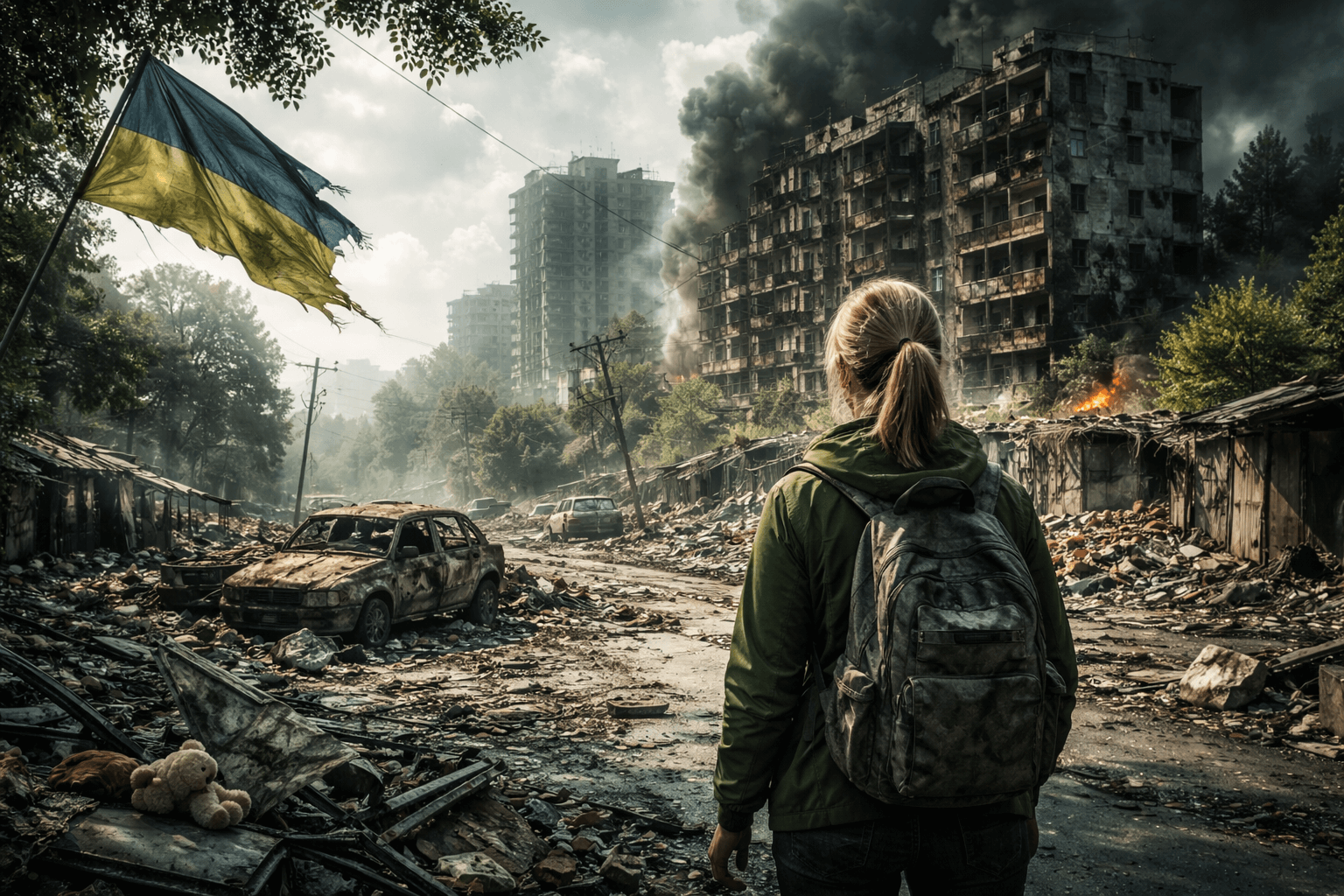
At midnight in the small town of Krasnopillia in eastern Ukraine, a Russian drone flies overhead. Within a few seconds, a hospital in the heart of the village erupts in flames. Fire burns intensely through the skeletal remains of trees, sending huge clouds of black smoke into the dark sky.
Local media reported that dozens of residents were evacuated from their homes but when emergency responders arrived at the hospital, Russian forces allegedly targeted a nearby shelter where over 20 injured patients were seeking refuge, several of whom were physically disabled and unable to leave.
Russian forces attacked the shelter at Krasnopillia only a few hours after they destroyed a large regional hospital in Sumy Oblast (the northeastern part of Ukraine), leaving many residents of Krasnopillia without access to basic health care. “Medical services have almost completely stopped,” said local school administrator Olena Pryima in a phone conversation.
“The Russians are destroying our infrastructure and it is making it impossible for us to live normally. If you want to get a doctor, forget it… there is no way to do anything.” She added that if remaining residents require assistance during the ongoing conflict, it’s unlikely that an ambulance would arrive “because the security situation won’t permit it.”
Pryima also stated that her school was one of the many buildings damaged in the recent Russian attacks and it would be difficult for them to repair the damage until the conflict ends. “We are heating up some areas of the building and trying to keep them warm, especially since this winter has been particularly cold,” she said. “However, we aren’t concerned with rebuilding right now, we’re collecting evidence [documents such as testimony and damage assessment records], because we know that this will eventually stop — and then we’ll try to rebuild again.”
There have been more than 2,500 confirmed cases of civilian injury or death — most of which took place in Ukraine, although dozens of others were documented in Russia — and the use of military force against residential structures resulted in the loss of over 1,100 homes. In addition, hundreds of non-residential civilian sites — including schools, parks, fire stations, hospitals, churches, museums, shops and agricultural businesses — were damaged or destroyed by military action.
The documented cases of civilian harm — which include precise geographic locations of the impact zones obtained through open-source information and represent a small fraction of all of the damage caused to civilians in Ukraine — show that more than 300 attacks have been carried out on schools or other child care-related facilities, 170 attacks were conducted against medical or humanitarian targets, and nearly 40 attacks were made against the production and distribution of food and associated infrastructure.
Many of the attacks were focused on four large urban areas — Kharkiv, Donetsk, Kherson and Kyiv — however, we documented attacks in each region of the country. Cluster munitions were employed in over 100 documented cases.
The use of cluster munitions, which were banned by more than 100 countries (including neither Russia nor Ukraine), resulted in the deaths of over 1200 individuals since the beginning of the war; this is the third year in succession that Ukraine reported the largest yearly number of cluster munitions casualties worldwide, based upon information provided by the Landmine and Cluster Munition Monitor in 2024.
Based upon an assessment conducted by the United Nations Office of the High Commissioner for Human Rights in January 2026, the civilian toll resulting from Russia’s invasion of Ukraine for the past four years is staggering: approximately 15,000 civilians were killed (with more than 750 children killed) and nearly 41,000 others injured.
A study completed by the Armed Conflict Location and Event Data Project (ACLED) last year found that Russia has consistently attacked inhabited locations “…often indiscriminately, and sometimes intentionally.” ACLED statistics for the time frame of February 2022 through the end of January 2026 indicated that thousands of shellings occurred in residential buildings throughout Ukraine, in addition to more than 750 attacks against health care facilities, 1,200 attacks against educational institutions, and 2,400 attacks against energy infrastructure. In February 2025, the World Bank published a report estimating that rebuilding Ukraine will cost more than $500 billion.
However, while the numbers above are a significant part of the story, they do not represent the entire story. Although the majority of the international news media have focused on the political aspects of the conflict or strikes on large metropolitan cities, the residents of remote rural villages have suffered damage to their local schools, hospitals, and cultural institutions – the foundations that support their communities.
For example, the village of Verkhnia Syrovatka, located in the Sumy Region and having a population of slightly more than 3800, contained a photograph taken after a May 2025 artillery attack in which a massive crater had been created through a blue-roofed community center. The photographs inside the community center, as it stood before the attack, showed trophies and photographs lying amongst debris of broken wood and cracked cement.
Similarly, the village’s sole school was severely damaged as many windows were destroyed, thus requiring the students to attend school remotely. The extent of damage to the school is reflective of a larger national trend: UNICEF has reported that the academic performance of Ukrainian students is significantly declining in subjects such as reading, mathematics, and science.
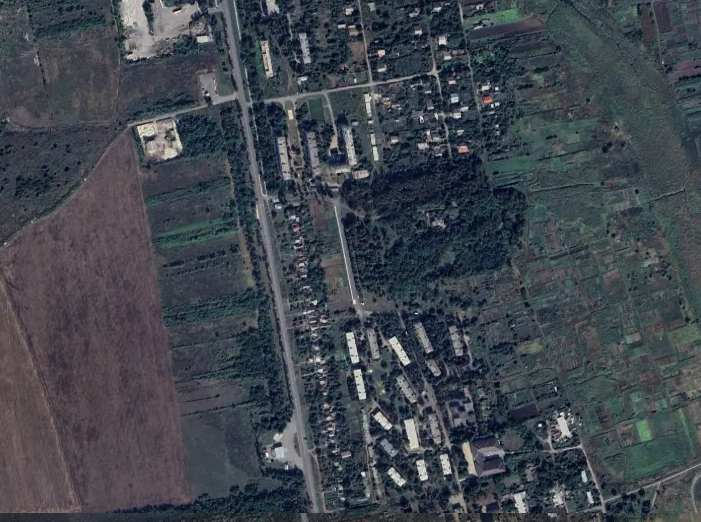
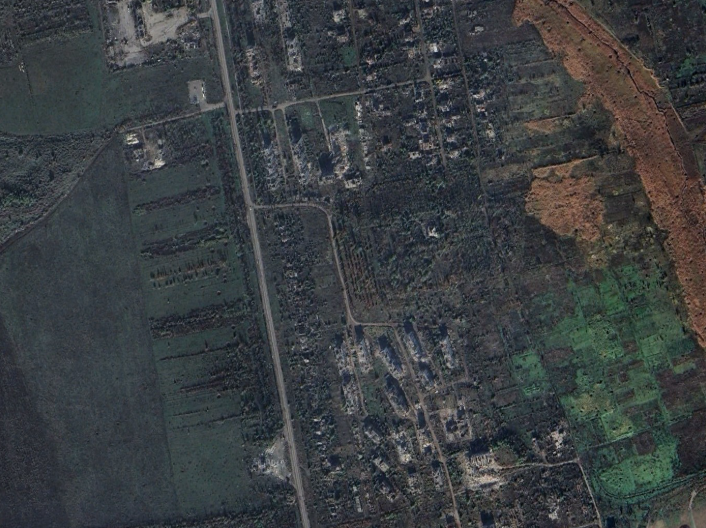
To the south of the village of Verkhnia Syrovatka, the village of Opytne in Donetsk Region continues to be systematically eliminated due to numerous Russian attacks dating back more than a decade — to the time of the occupation of Crimea in 2014.
During the most recent few years, the village has changed hands multiple times. In December 2022, aerial drone footage revealed widespread destruction in the village’s residential districts including a medical facility, a music school and a church. According to media sources, there may be fewer than six residents remaining of the more than 1000 people who resided in the village more than 10 years earlier.