

03.07.2025
4 min
1576



Monitoring conflicts in the face of disinformation is becoming a real challenge. The article shows how to use OSINT methods to verify photos, videos, and testimonies in combat zones. Using the example of events in Manipur (India), the author explains how to analyze weapons by images, verify video by frames using InVID, track drones, and work with closed messengers and social networks. This approach helps to distinguish truth from fakes and form an objective picture even in a situation of complete information blockade.
How can we monitor a conflict zone on the brink of civil war, especially in a region with difficult access, frequent internet outages, and widespread disinformation? In this guide, we outline open-source tools and methods that we can use to prove what is really happening in many such conflict situations.
In this guide, we focus on India, which experienced 84 internet outages in 2024, the most of any democracy. In early June, authorities imposed a curfew and suspended internet access in parts of Manipur after protests erupted over the arrest of ethnic leaders. The northeastern state has been plagued by violence for years.
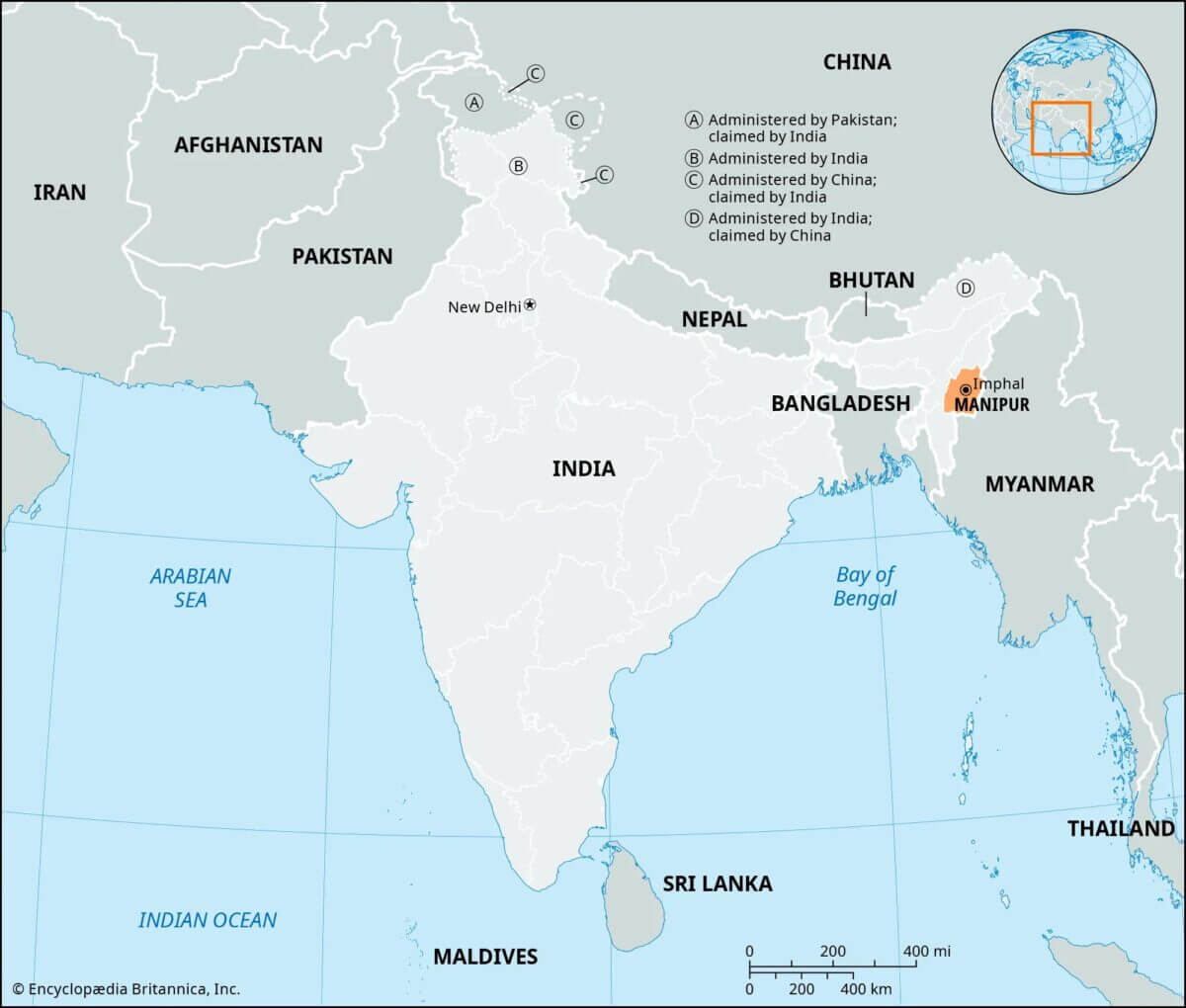
The ethnic conflict between the majority, mostly Hindu Meitei people, and the indigenous, mostly Christian Kuki Zo communities is one of the worst outbreaks of violence that Manipur, also known as the “Land of Jewels,” has experienced in recent decades.
The Imphal Valley in Manipur is surrounded by mountains. It is home to 39 ethnic communities. Just over half of its nearly three million residents belong to the Meitei community, followed by the Nagas (20 percent) and the Kuki Zo (16 percent).
The situation is complex, ethnic armed groups are divided into several factions (this list is not complete):
Ethnonationalist militia – not yet recognized as a banned group – Arambay Tenggol (AT), United National Liberation Front (UNLF) – Meitei
Kuki National Army, Kuki National Front – Kuki
Zomi Revolutionary Army – Zomi
Nagalim National Socialist Council (Isak Muivah) – Naga
In May 2023, the Manipur High Court issued a ruling recommending that the dominant Meitei community be granted Scheduled Tribe status (a category for indigenous communities in India that guarantees positive discrimination and constitutional protection of identity and land). Tribal communities opposed the decision, while the Meitei community held counter-rallies and counter-blockades. Clashes broke out between the Kuki and Meitei groups. The conflict has since displaced over 60,000 people and claimed over 260 lives from both communities.
In this guide, we will show you how to use open source methods in any remote area to:
Analyze images of weapons and the groups using them
Investigate stolen weapons and their locations
Analyze images of drones potentially used as weapons to deploy munitions
One effective approach for open source researchers is to track the digital trail of weapons. In the case of Manipur, local armed groups such as Arambai Tenggol, UNL, and Kuki National Front posted images of weapons, mostly on WhatsApp groups and Facebook accounts.
According to media reports, the war is fueled by weapons looted from police arsenals or purchased on the black market either in Myanmar, across the border, or through the surrender of soldiers during amnesty campaigns.
The 6,000 firearms stolen included pump-action shotguns, grenade launchers, AK-type rifles, INSAS rifles, and ammunition. Police say more than 1,000 weapons were surrendered in February and March alone, with more than half of them coming from the Meitei-dominated valley areas, where most of the weapons were stolen.
Images of weapons from 2023 and 2024 were analyzed, obtained from WhatsApp groups and Facebook accounts associated with non-state actors, including the AT, Kuki Zo militant groups, and various volunteer organizations. While these groups surrendered some weapons under the amnesty, many sophisticated weapons were not surrendered and were only seized during search operations by security forces.
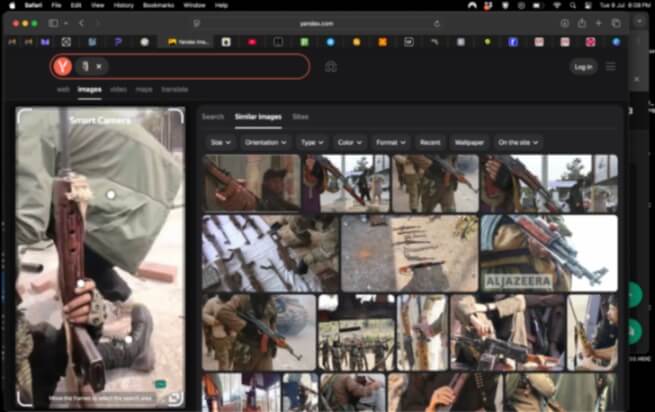
To verify, we first checked screenshots of images of weapons without visible serial numbers or other markings using reverse image searches on Google and Yandex. We then matched the images with resources such as the Small Arms Survey and the Open Source Ammunition Portal (OSMP).
However, these databases are limited in documentation from India.
We also looked at the public Conflict Armament Research (iTrace) toolbox. This is a much larger source of data. However, the full dataset, which contains a huge number of images of weapons from around the world, is not publicly available. The toolbox only shows general statistics, not images.
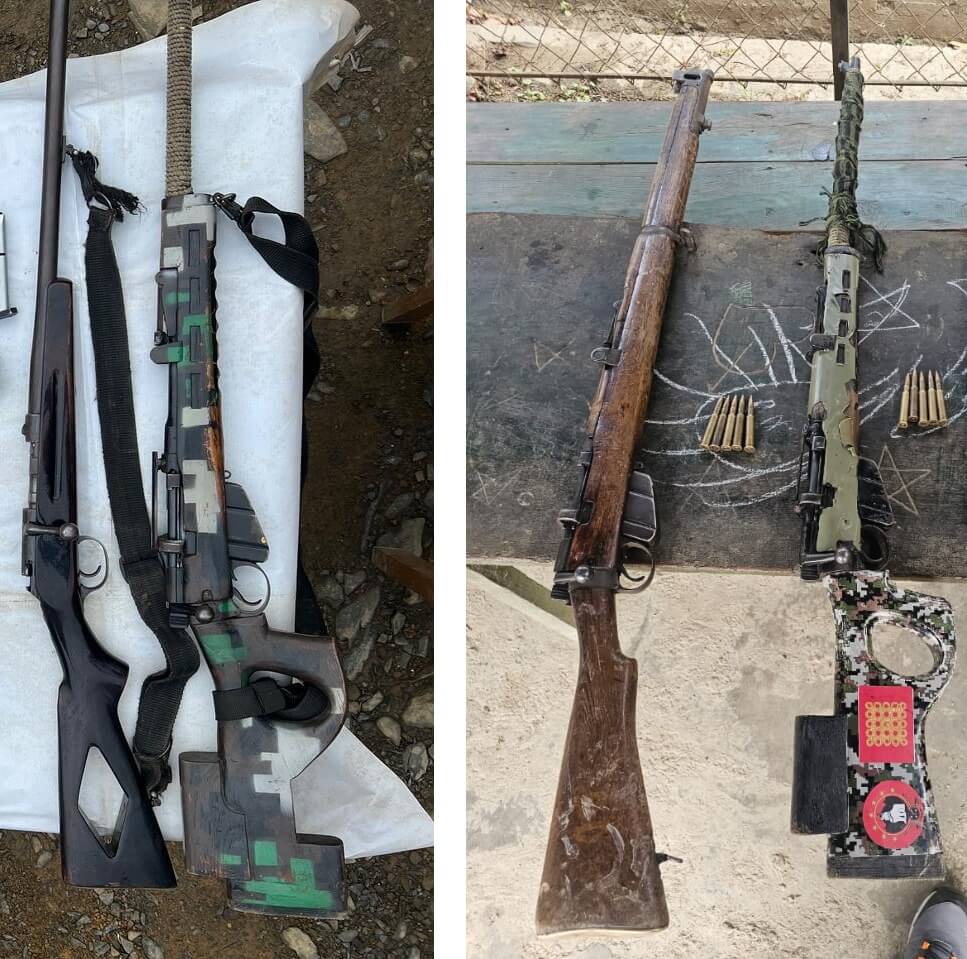
The Small Arms Survey toolbox helped match and identify, with approximate accuracy, some of the older weapon models posted on social media platforms and YouTube. However, guerrilla modifications or customization of weapons by militants and militias made it difficult to identify specific models.
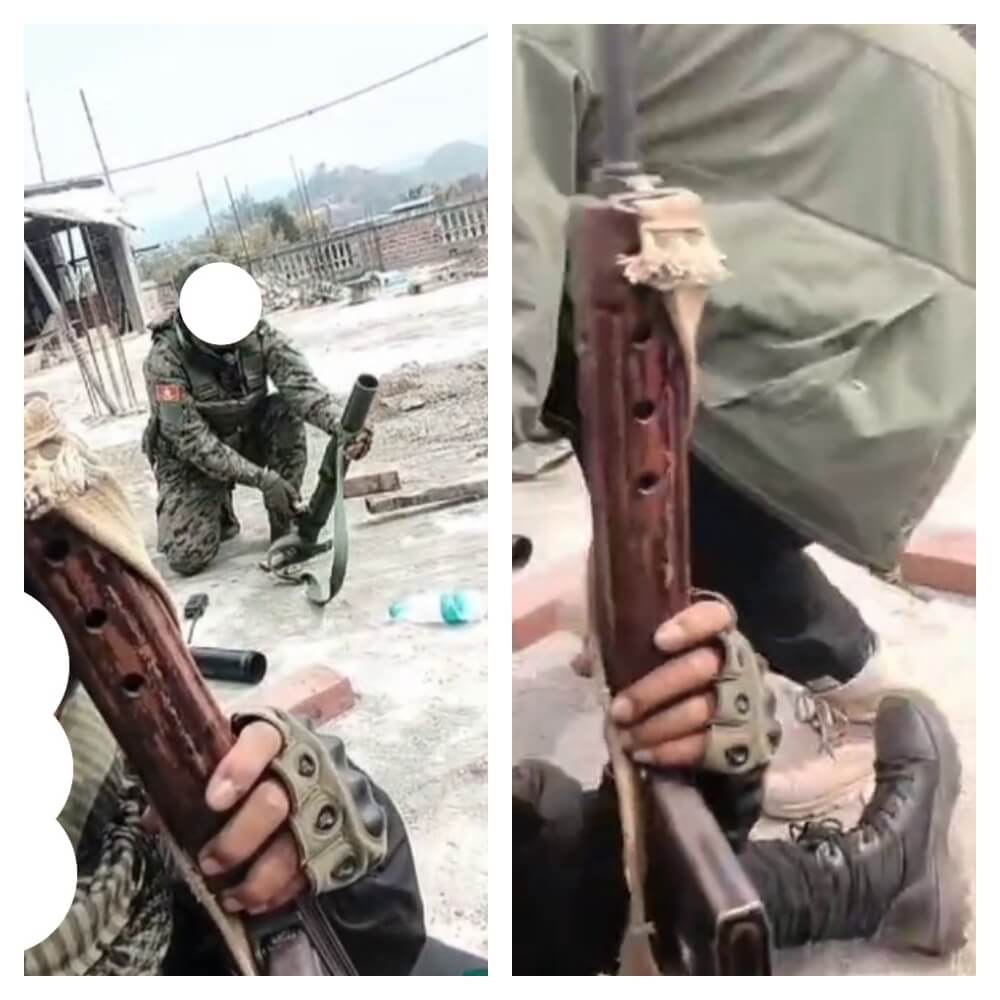
This is what a video posted on X, purporting to show militants preparing to fire a mortar shell, looked like.
By breaking the video into frames using InVID, a platform that includes a number of useful video analysis tools, we were able to identify the weapons, providing clearer images that we could use to feed back into Google and Yandex image reverse mapping tools, as well as the Small Arms Survey guide.
We identified three types of weapons in the video:
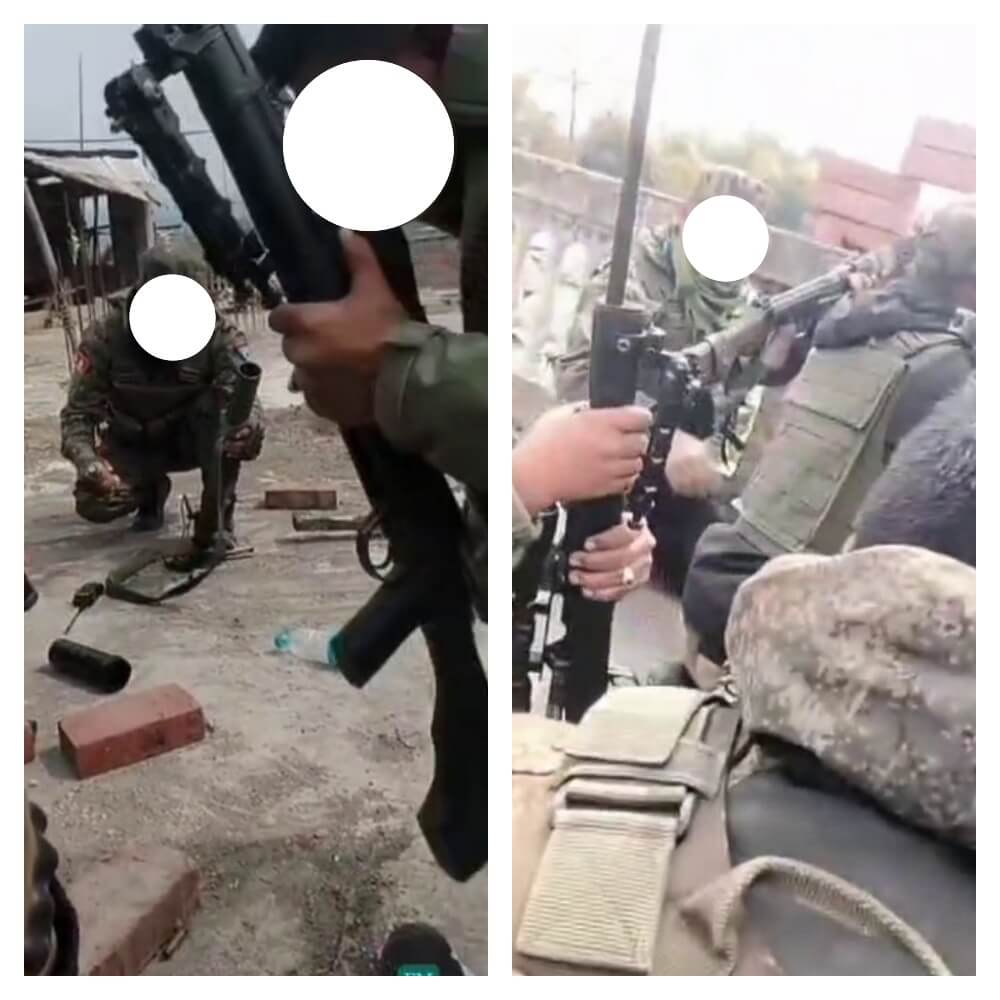
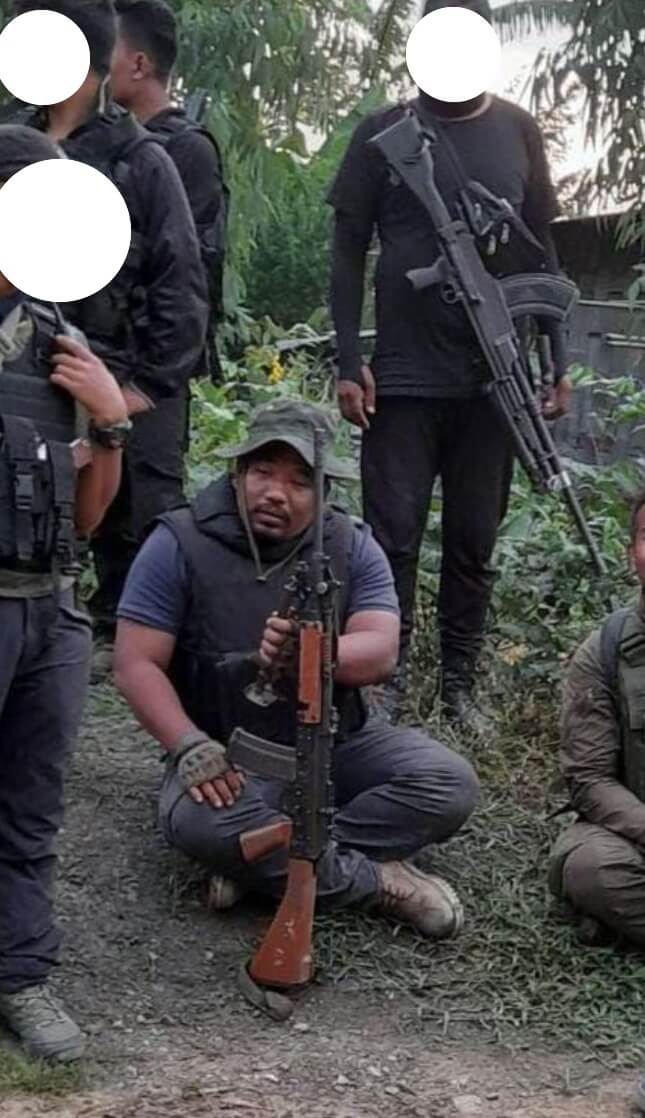
The shape of the weapon held by the cap-and-scarf militant in the same video is consistent with a FAL-type rifle, such as the Indian 1A1 FAL, which has a distinctive long wooden forend with several elongated vents.
“In India, the rifle was manufactured at the Ordnance Factory in Tiruchirappalli and was in service until 1998, when it was replaced by the INSAS rifle. The OFB has produced over a million units of the 7.62mm SLR rifle,” wrote (retired) Major General Dhruv K. Katoch, formerly director of the Land Warfare Research Centre.
Also seen in the video is an unidentified 60mm commando mortar. Commando mortars are more portable, typically with a much smaller base plate and a carrying strap or handle rather than the bipod seen in the images below. A reverse Google image search led us to an archive photo on Wikimedia Commons published by the US Army, in addition to this assessment by Jesús Roman, editor of Revista Ejercitos.
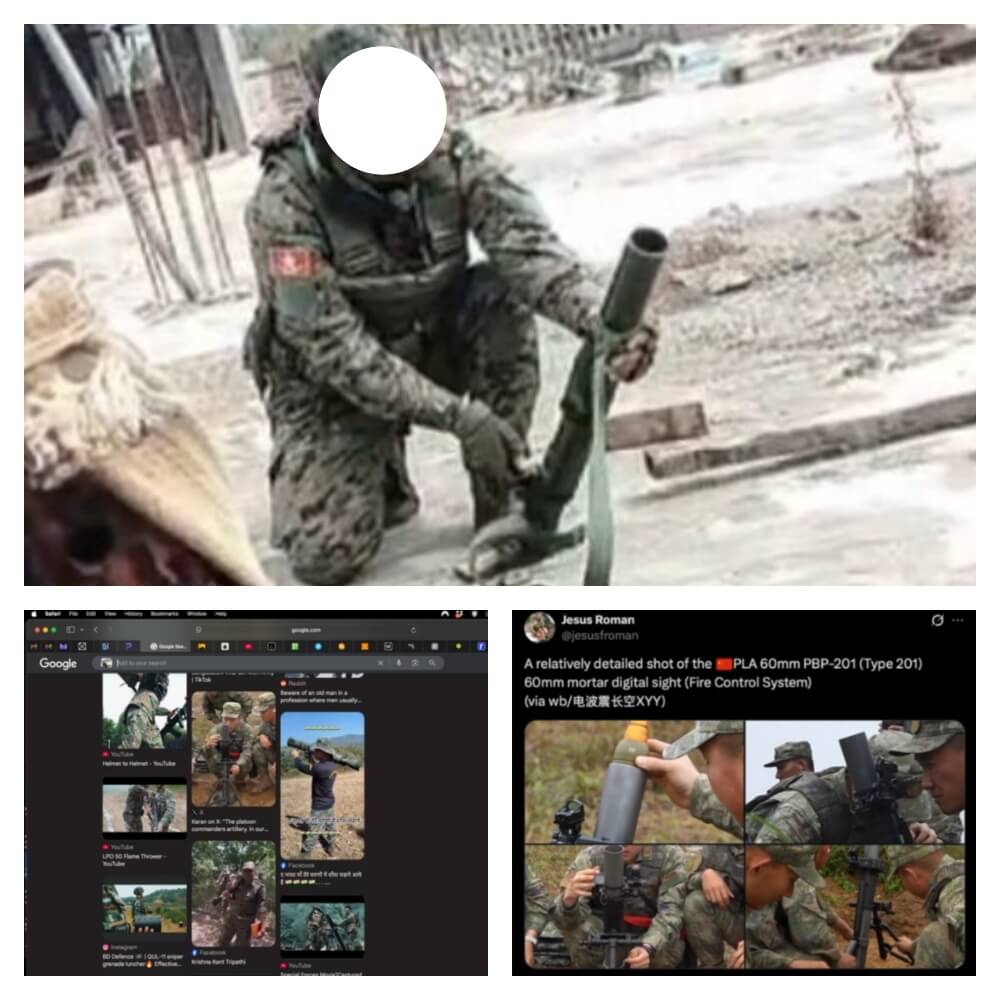
Andro Mathewson, a munitions researcher and PhD candidate in military studies at King’s College London, described it as a possible 60mm mortar. “It looks like the mortar tube is being used by one person, which is quite unusual. It’s usually a team of two or three. And the munition looks light green with a light metal fuze and light silver tail stabilizers,” he said. “It’s definitely a small-calibre mortar that is a mainstay of the armed forces. It looks like it’s military/official production, not improvised,” Mathewson said.
From the data collected in 2023 and 2024, it was found that many of the rifles in the images have various furniture and display cloth wraps, makeshift straps, non-original optics, and even taped forends.
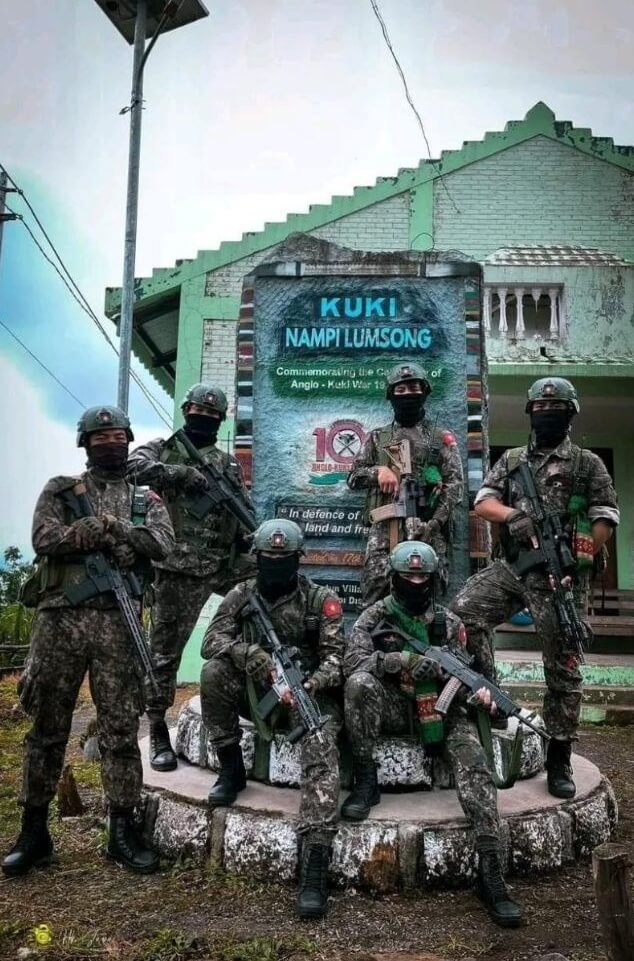
The next step is to identify the different groups in the images. Symbol analysis is a good way to do this. For example, we know that the saipikhupu is a traditional Kuki garment. It symbolizes heritage and identity and is often worn during important events. We also found images of Kuki fighters wearing this hand-woven shawl (saipikhupu) belonging to the indigenous Tadu tribe.
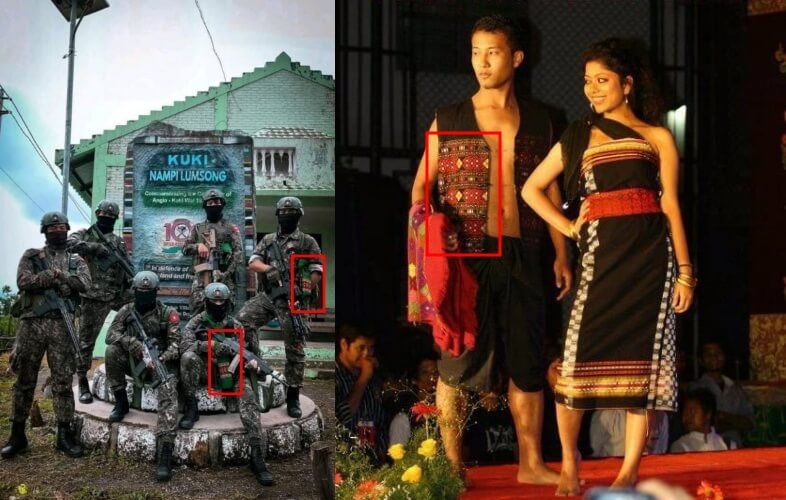
Their uniforms bear the insignia of the presidential faction of the Kuki National Front, which has been accused of attacking paramilitary security forces. Meanwhile, the same group in the image is seen brandishing AR and INSAS rifles. The INSAS rifle is of Indian police or military type, consistent with reports of looting from arsenals. Several of the weapons in the image have also been heavily modified, consistent with the customs of militias or irregular fighters. Other images also offer clues.
The Kangleipak is a seven-color flag that is usually waved by the AT.
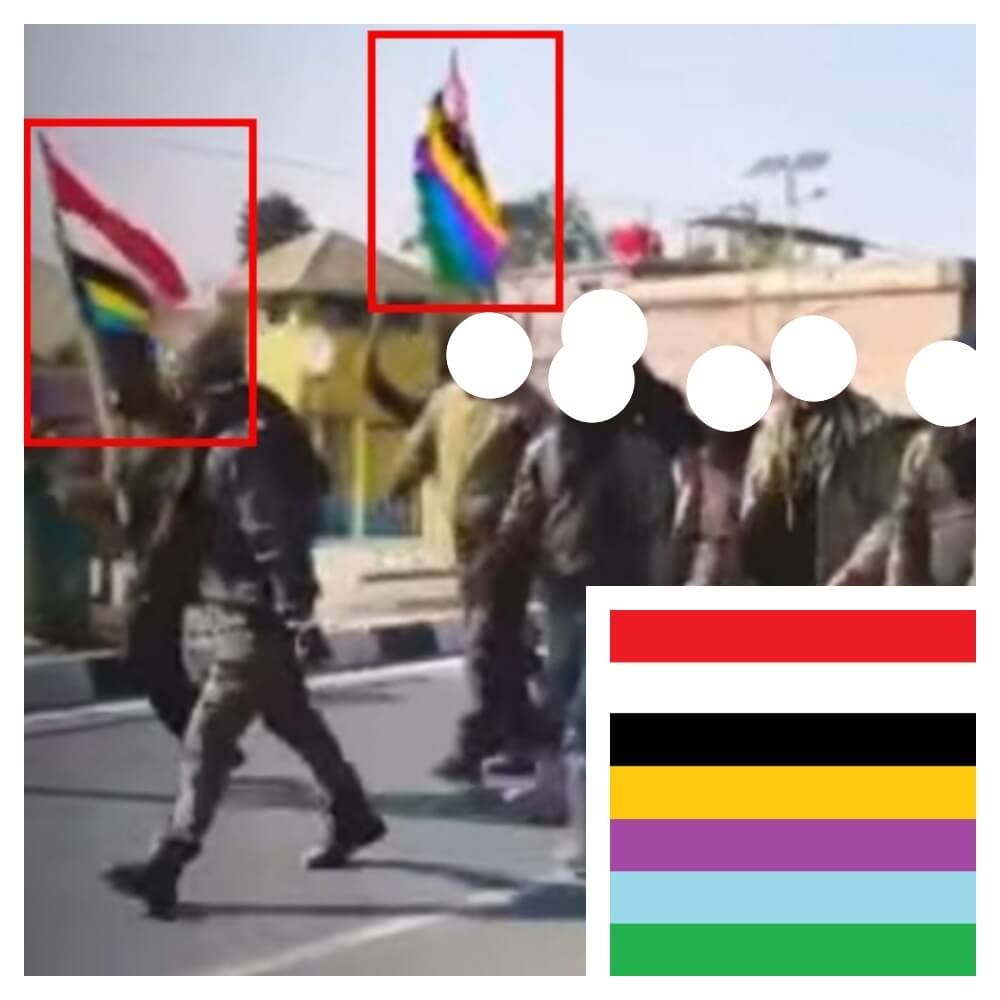
The photos and videos also show the commander-in-chief of the Korunganbu Human, who is actively posting on his Facebook profile and has been widely covered by local and national press.
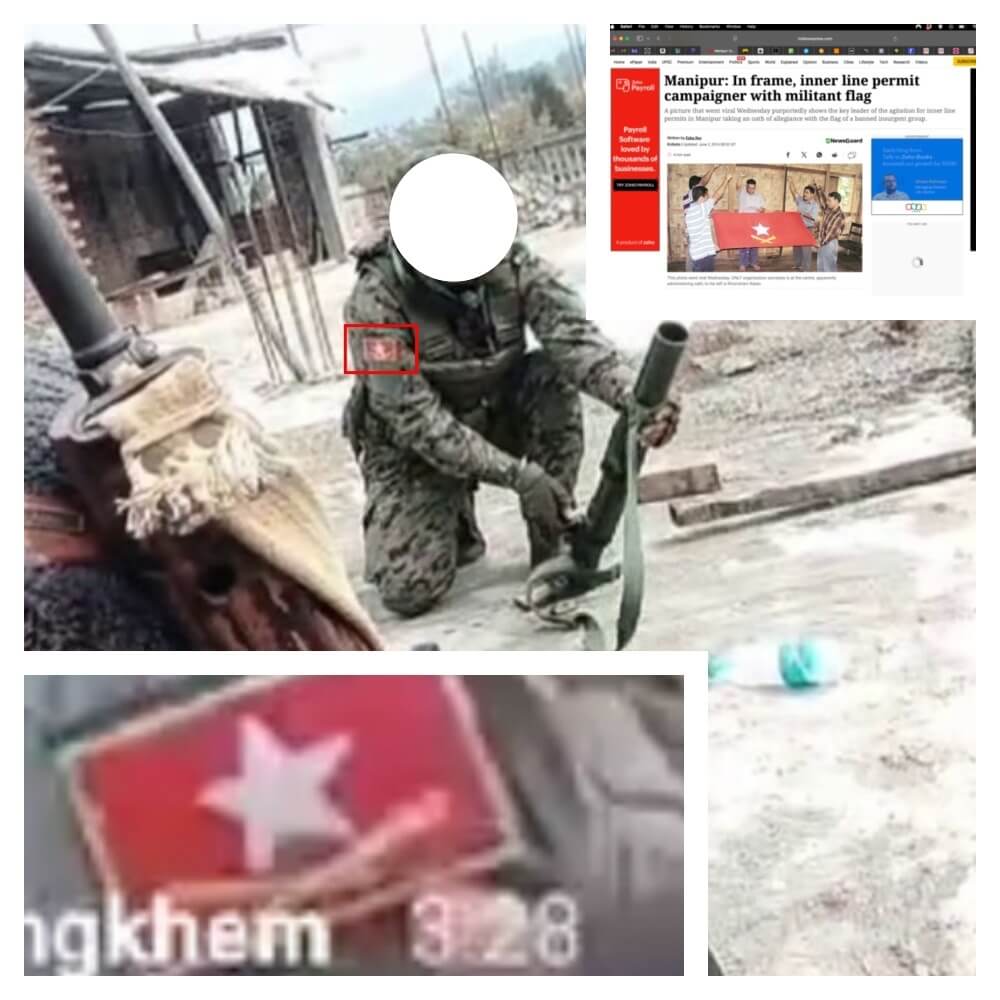
News outlets are also valuable sources of information. They can contain images of symbols, such as flags, which can then be searched for on social media. In one video, we identified fighters speaking the Meitei Lon language, used by the Arambay Tenggol and militant groups such as the UN Ulster Free Front (UNLF), preparing to fire mortars. Their uniforms had insignia that we matched to the UNLF militant group using a reverse image search, which led us to a news report in which the group’s flag was the main image.
Pravin Donty, a senior analyst for Crisis Group who visited Manipur last year during the elections, said that while he did not see any weapons from any of the aforementioned Kuki Zo militant groups, he did see INSAS rifles, automatic rifles and double-barreled shotguns being carried by several young men in the Imphal Valley.
“I saw these young men, who must have been in their teens to early twenties, when I went to meet the Meitei Lipun [a far-right Hindu activist group], initially with what looked like state weapons,” he said. “Later they replaced them with double-barreled guns. But their leader [Pramot Singh] was openly carrying a pistol in a holster when he came to meet me,” Donty explained.
Donty, a former journalist who has covered conflict zones in Kashmir and Chhattisgarh in India, said he was struck by the sight of young men who were heavily armed in a volatile environment with no clear purpose or political ideology guiding them.
Tracing the origins of weapons is one of the most difficult tasks in conflict investigations, especially in regions where misinformation or a lack of reliable data is rampant. This is certainly the case in Manipur.
Of the 6,000 firearms and ammunition stolen from the state police caches mentioned earlier, about half have been recovered to date. According to reports, about 1,200 weapons matched serial numbers from official inventories. Of the weapons recovered, around 800 are complex units likely to have come from outside the state, while 600 are primitive locally manufactured firearms.
The largest number of weapons, over 1,000 units, were reportedly surrendered, with over half of them originating from the Meitei-dominated valley areas, where most of the weapons were looted. The largest cache was surrendered on 27 February at Arambai Tenggol (AT). However, the state police is yet to complete the categorization of information on weapons and ammunition surrendered between 20 February and 6 March against the inventory of weapons looted from state arsenals.
Instead, we decided to try to find information from open sources. We first collected data from the official X platform profile of the state police (@manipur_police) for the period from 10 September 2023 to 14 June 2025. We did this manually and with the help of Meltwater, a social media monitoring tool.
We delved deeper into media reports, expert publications and research to understand what was being used locally. In the case of Manipur, the firearms seized included indigenous bolt-action rifles, homemade mortars and weapons such as the Pumpi, a gun made from recycled metal electric poles. It is particularly common in the mountainous areas where the Kuki-Zo people live.
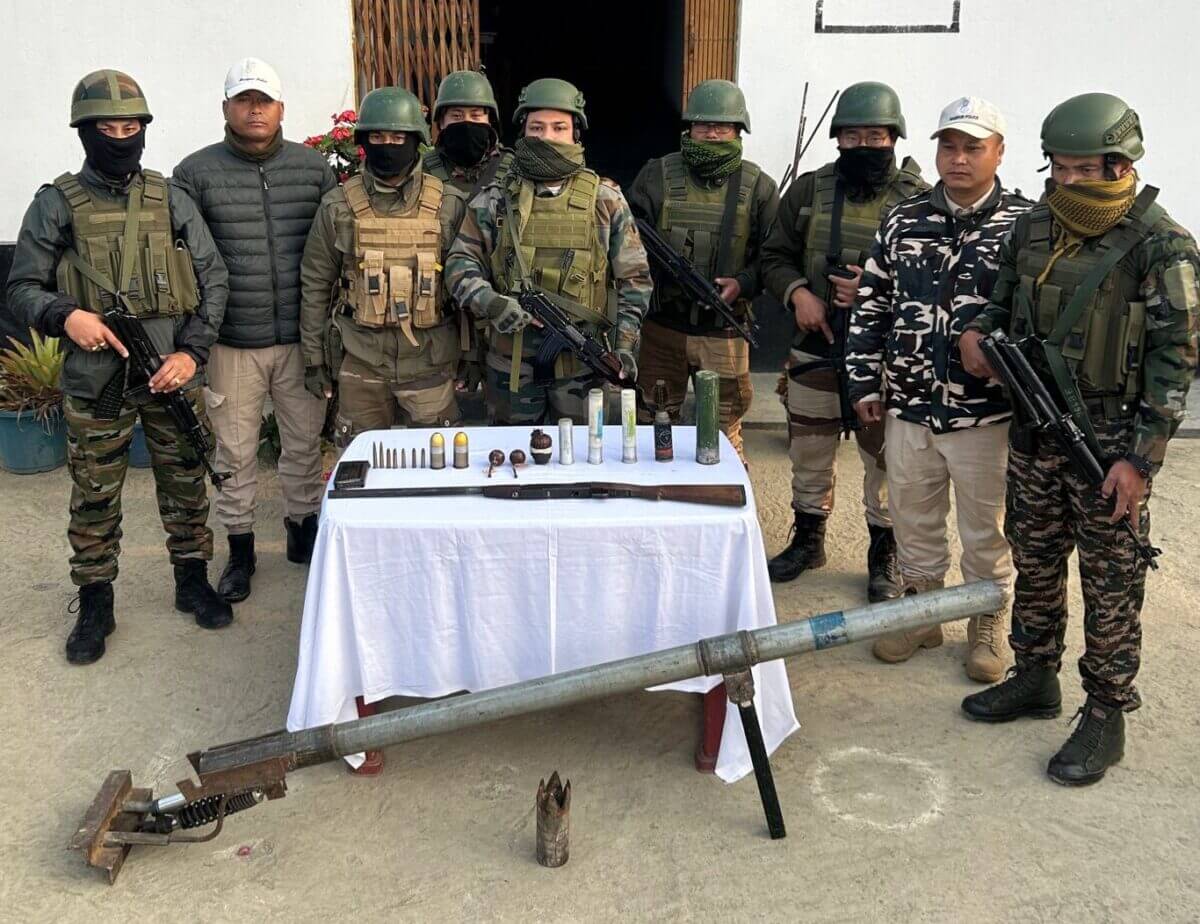
The heavy reliance on grenades and improvised explosive devices is consistent with a guerrilla style of asymmetric munitions – hit and miss, booby traps and avoidance of territory control – rather than large-scale firefights. The presence of multiple types of improvised munitions reflects local workshops or village-level bomb-making, likely complementing limited access to military ammunition, consistent with media reports on this (see here and here).
Last September, Indian media reported that villagers in the valley had witnessed drones allegedly dropping up to 50 bombs. Volunteers and rebel groups from the Kuki-Zo village were reported to have set up bunkers on the hills, similar to their counterparts in Meitei in the valley.
These claims were confirmed by a statement from the Manipur police. The central counter-terrorism law enforcement agency, the National Investigation Agency, which has registered a case of armed drone attacks, told the Manipur High Court that Kuki militants had dropped 40 bombs from drones.
A source in the Ministry of Defence told the Indian news website The Print that the drone videos circulating online were shot either from Myanmar or Palestine. Many videos showed drones delivering fertilizer, but they were deployed by the Myanmar People’s Defense Forces, they added.
Manipur police released images of a drone found in the Kangpokpi district a day after the first series of attacks.
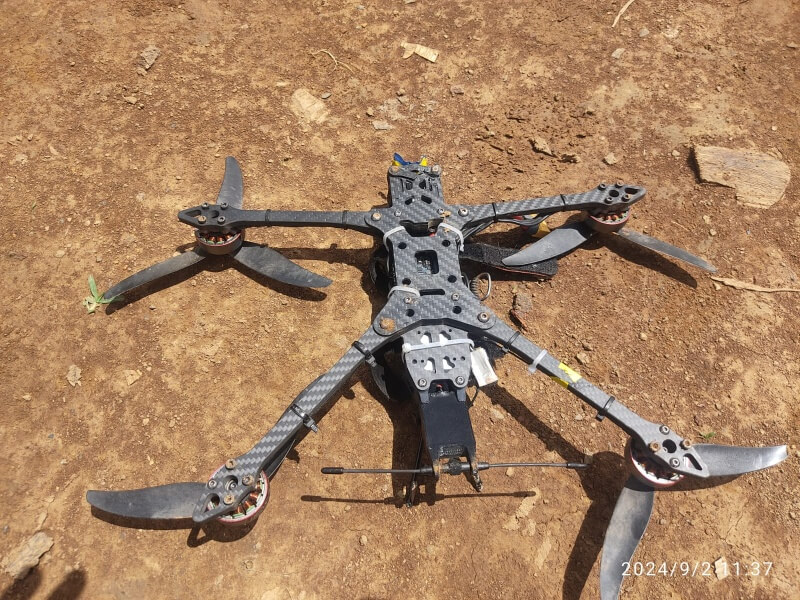
The first step is to identify the possible type of drone. The easiest way is to use Google Image Search. We identified the drone as a commercial-grade drone weighing approximately 181g. These lightweight carbon fiber drones, designed for speed and maneuverability with a payload capacity of up to 1.5kg, are widely available online. Security sources told The Print that the bombs weighed 300-400g and were between nine and ten inches (23 and 25cm) in size.
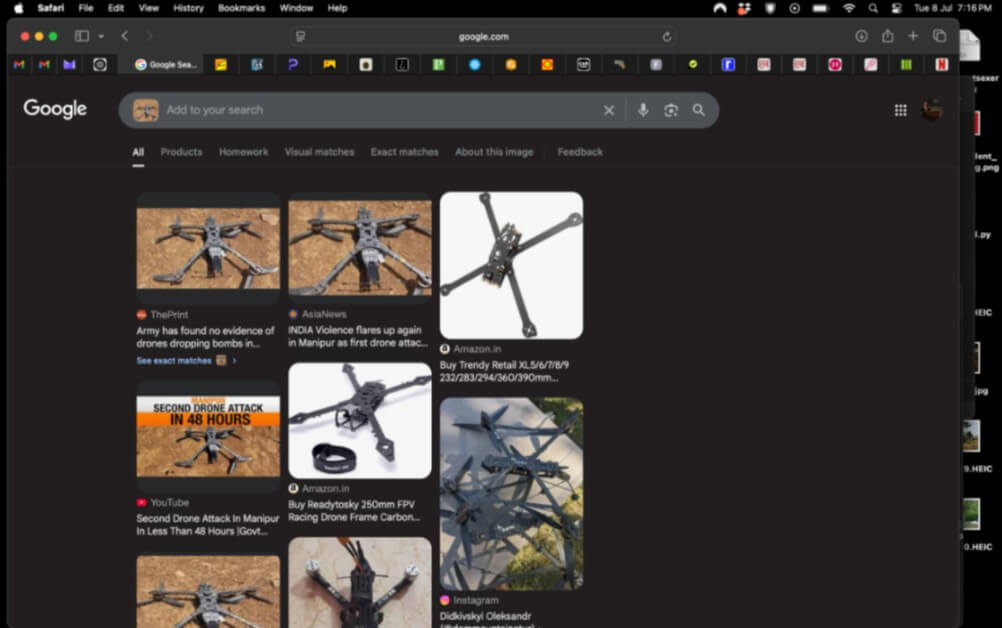
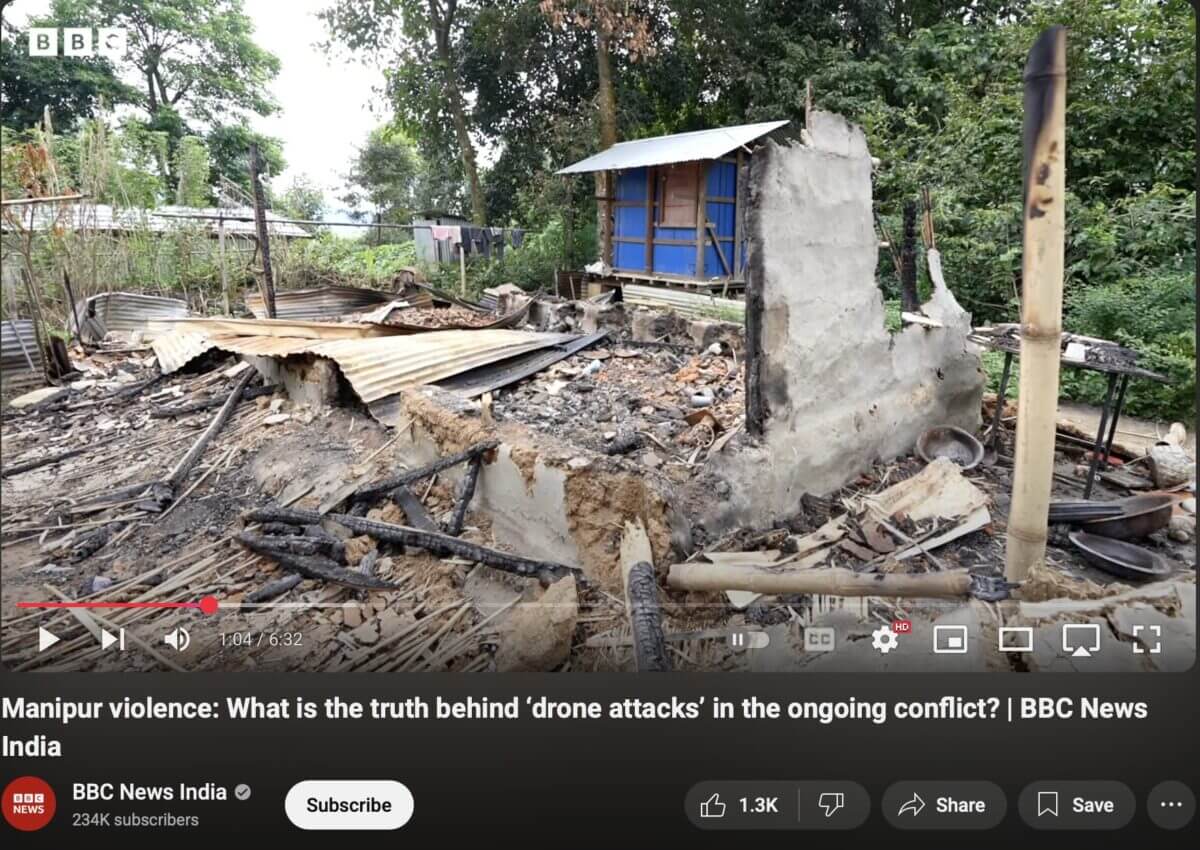
Once we have established the possible type of drone, we can also examine reports of the locations of the strikes. Since we only have images of the attack sites shown in the media, we turned to Andro Mathewson, a renowned munitions researcher and explosives expert who is completing a PhD on combat drones in smaller conflicts at King’s College London.
He said that in this situation, “the payload is probably quite small. So the damage will not be significant.”
“Some of the images published in The Print report,” Mathewson added, “clearly show significant damage, but most of it appears to be secondary damage from fires rather than from the explosions themselves.”
There was nothing visible that could definitively determine whether drones were used to deploy munitions. According to Mathewson, damage from a smaller payload, such as a 400-600g grenade, would not exceed 20-30m, adding that larger or heavier payloads are not typically encountered among non-professional soldiers.
The next step is to determine whether the munitions were adapted for use by drones. Mathewson said that media photos of drone parts do not match munitions deployed by drones.
“This shrapnel looks large, very thick and very heavy, which is more consistent with larger artillery shells or even small rockets,” he said. He also noted that the printed plumage “looks quite small.”
“The edges, made of plastic, are unlikely to be attached to a much larger munition that would produce this type of fragmentation,” adding that “from the scale that we can get in these images, it seems to me that they do not line up.”
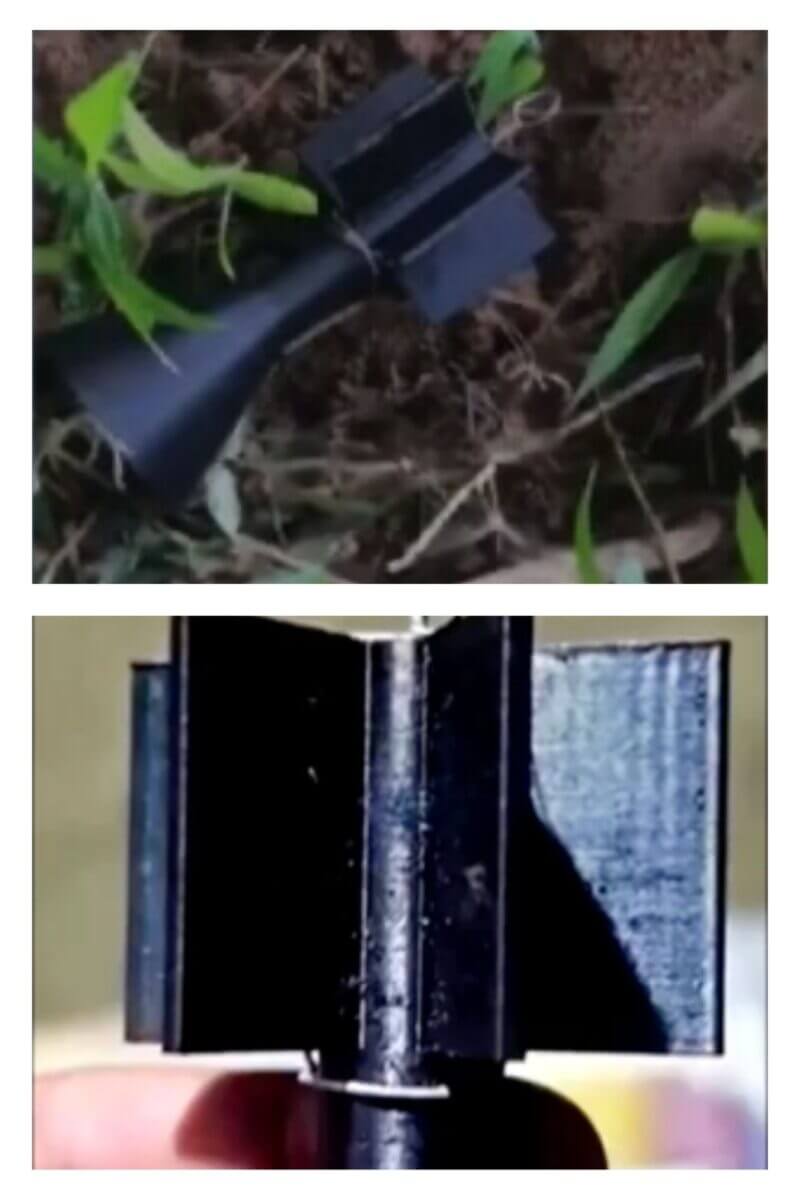
For reference, when we asked Mathewson what to look for to confirm the use of armed drones, he suggested two things. First, you need to review and verify videos of drone strikes, either from other drones or on phones – something that is noticeably lacking in Manipur, despite the authorities’ claims that there were drone strikes, although there is plenty of video online of other sophisticated weapons being used there. Second, Mathewson also said to look for 3D-printed parts of the munitions, such as 3D-printed wings that attach to conventional weapons.
“It’s not necessarily a guarantee, but it’s the most closely related to [modified drones] because the only reason you attach fins to a grenade, for example, is so that it can be dropped from a drone,” he added.

.jpg)