10.04.2025
11 min
680



Incendiary attacks on a flotilla heading to Gaza have shocked the international community. Two incidents in Tunisian waters have raised questions about the safety of humanitarian missions in the Mediterranean. Witnesses have captured video of the fiery projectiles falling, and weapons experts have confirmed that they are potentially live grenades with thermite or smoke charges.
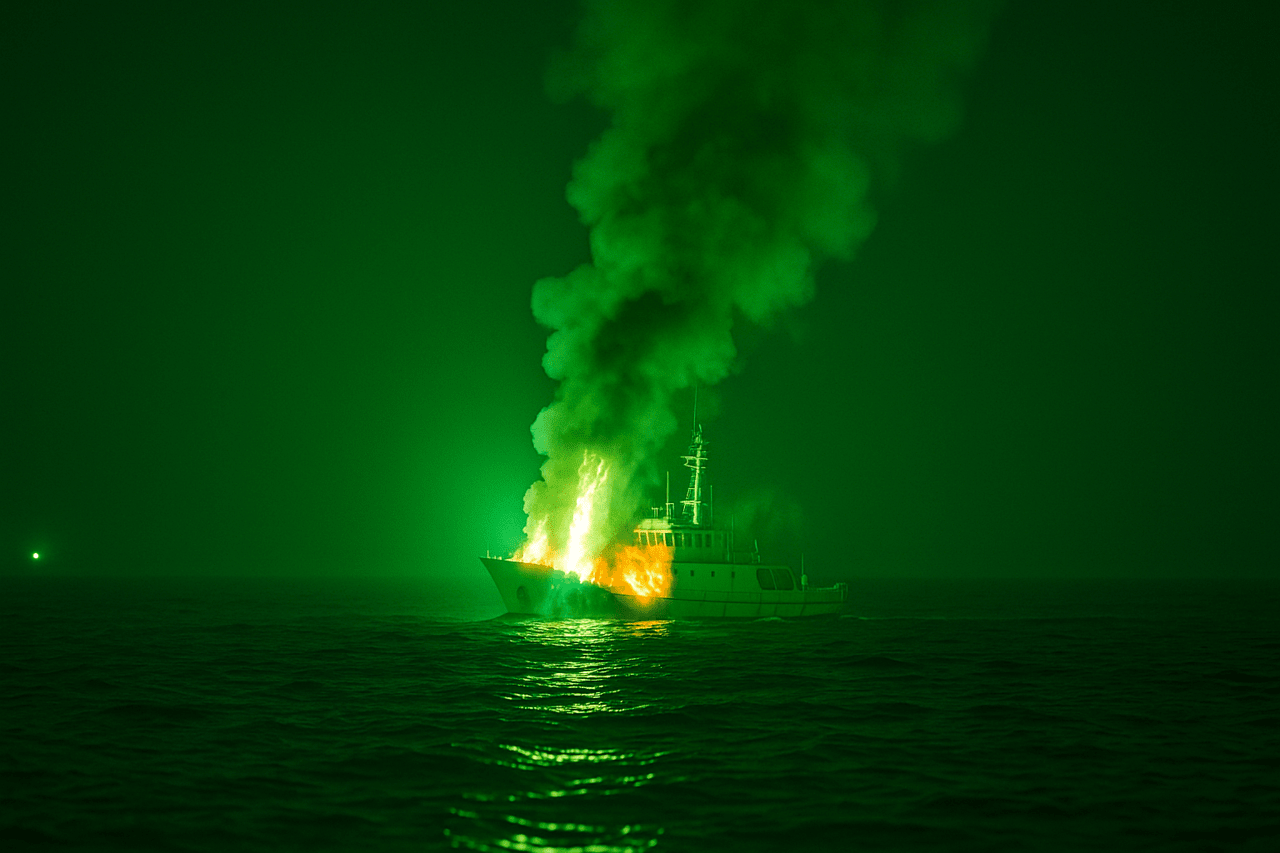
On 8 and 9 September, two vessels of the Global Sumud Flotilla (GSF) en route to Gaza were attacked near the port of Sidi Bou Said in Tunisia.
Experts consulted believe that improvised explosive devices were likely used. The trajectory of the objects and audio recordings also suggest that they may have been dropped from an aerial platform above the vessels. While this is consistent with the testimony of witnesses who claim to have seen a drone, further evidence is needed to confirm the device used in the attacks.
The first attack took place around midnight local time, targeting the lead vessel, known as the “Family Boat”. The GSF’s official statement said that the “Family Boat” was “shot down by a drone in Tunisian waters”, causing a fire on the “main deck and below deck storage”. Six passengers and crew managed to put out the fire. There were no reports of injuries or significant damage.
Official sources in Tunisia initially said that there was “no evidence of any hostile action or external targets.” A statement posted by the country’s National Guard on Facebook said that an initial investigation showed that the fire had started in one of the life jackets “due to a lighter or cigarette butt.” A request for comment was sent to Tunisian authorities but had not yet received a response by the time of publication. On the evening of September 10, Tunisia’s Interior Ministry issued a statement saying that the incident “which occurred yesterday on a ship docked in the port of Sidi Bou Said was a deliberate attack.”
The GSF reported that another boat, the Alma, was attacked for the second time on September 9, shortly after midnight local time, about 24 hours after the first incident. They released a video showing incendiary munitions falling in a similar manner to those that hit the Family Boat. The crew of the Alma managed to extinguish the fire. There were no reports of injuries and the damage was minor.
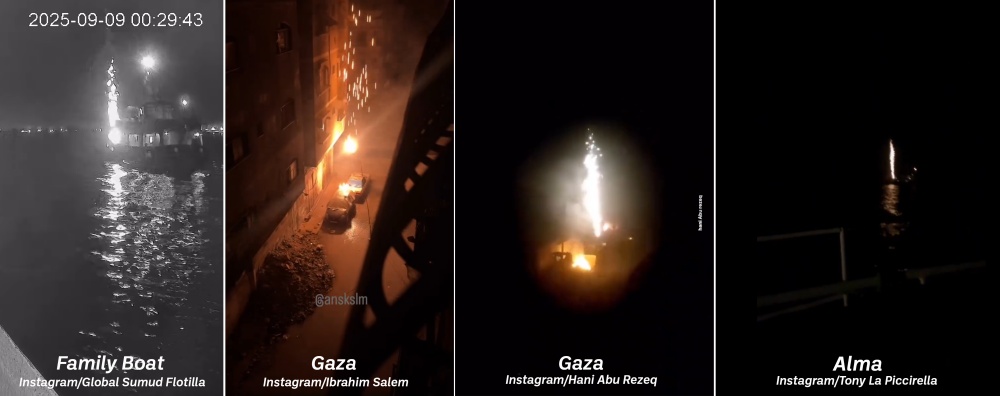
Following the initial attack, the GSF released several videos, including one recorded from another vessel, showing an incendiary device falling on a family boat. The object ignites above the boat’s mast – the highest point on the vessel – before exploding into a larger flaming mass and hitting the deck. The visual evidence appears to contradict the statement released by the country’s National Guard.
The device appears to have been deployed from an aerial platform, as no higher structures or elevated positions are visible in the analyzed footage.
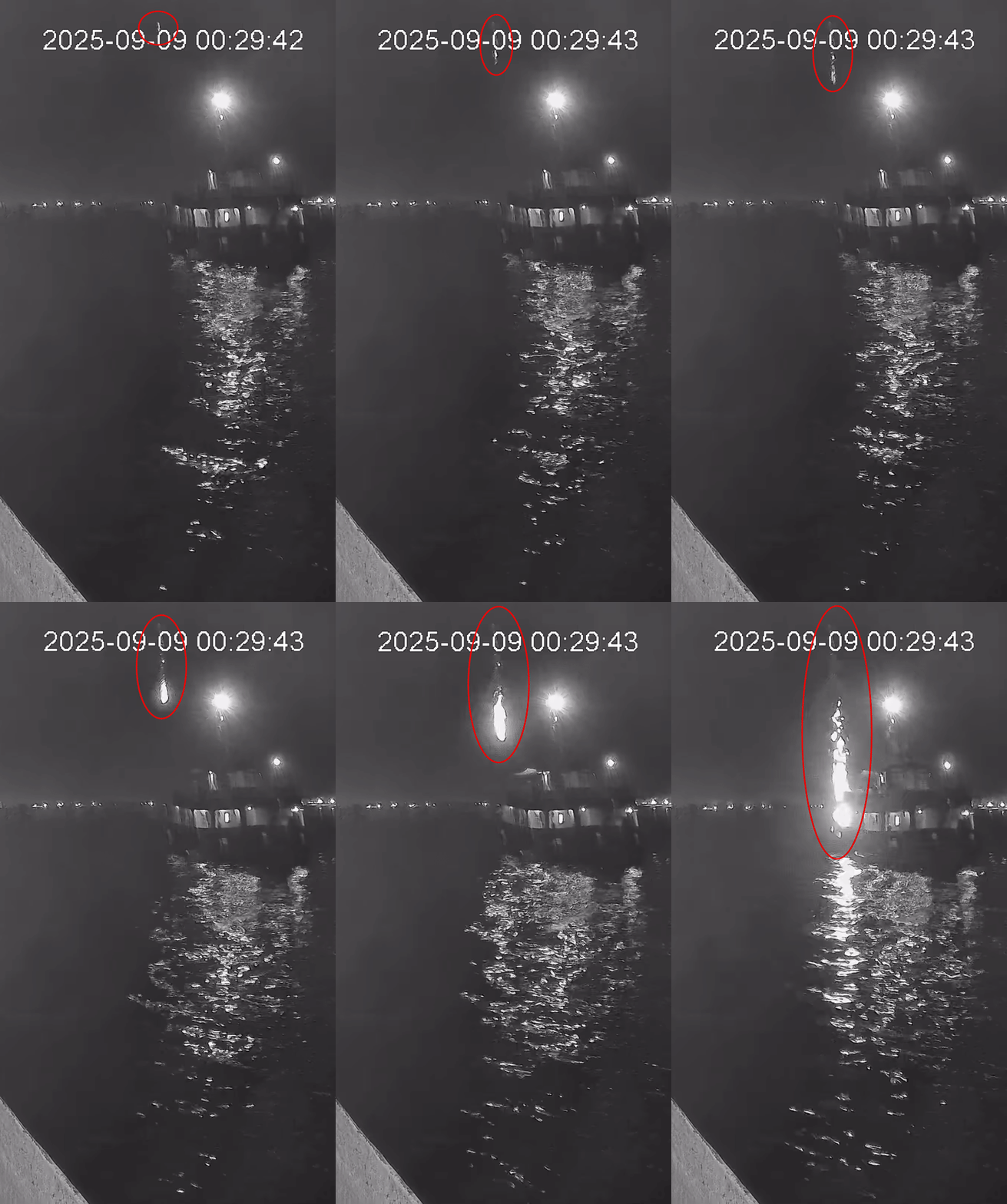
Eyewitness accounts support an airborne origin. Portuguese citizen Miguel Duarte was on the family boat. He can be seen in a video from a camera mounted on the vessel, which shows the aft deck and looking up shortly before the explosion outside the camera. In his statement, he said he “clearly saw the drone about 4 meters” above his head.
Duarte also said the shell fell directly on a pile of life jackets. The boat’s paint was damaged, but the steel did not melt. Bellingcat was unable to identify any munitions remnants from the available open sources documenting the strike.
However, an attempt was made to contact two independent experts who appear to agree that the attack involved an improvised explosive device deployed from an aerial platform.
Dr. N. R. Jensen-Jones of the Armaments Research Service (ARES) said: “The video shows an incendiary object falling onto the deck of the vessel in question. Contrary to some public observations, there is nothing to suggest that it was an explosive munition.” He said that while the available images are limited, which does not allow for the identification of the object at this time, the incendiary object “could likely be a military incendiary munition, a civilian object (such as a flare) or an improvised device.”
Dr. Jensen-Jones also said that “the sound in some of the videos suggests that a flying object, such as a UAV or light aircraft, may have dropped the object from above, but there is no conclusive evidence of this and the noise could be coincidental.”
Pyotr Pyatakov, a retired colonel who is now a consultant in the arms industry, said that the video “looks like an improvised incendiary projectile that fell from 100-130 meters. [There are] no sounds like a rocket engine or an artillery shell, [just] a weak explosion, [possibly] some kind of incendiary material with a fuse, like a Molotov cocktail.”
Audio from the video also shows the presence of a background sound that appears to be coming from a drone.
Bellingcat asked Fain Greenwood, owner of Tarentum Consulting LLC and an expert on unmanned aerial vehicles, to review the video. After reviewing the video, Fain said: “It’s very difficult to say definitively that it’s a drone because we don’t actually have the ability to see it. However, I believe that the nature of the recorded sound, the trajectory of the explosives dropped (as seen in this video) and the known proximity of the boat to the shoreline/port lead me to believe that it is highly likely that this was a drone attack of some form, likely carried out using a multi-rotor platform rather than a fixed-wing one.”
MarineTraffic, a global vessel tracking database, shows that the family boat was moored approximately 1.62 kilometers offshore at the time of the incident.
On September 9, the GSF reported a second attack, this time targeting the Alma. Crew members reported seeing a drone hover over the ship and then drop an incendiary device similar to the one that struck the Family Boat. The crew was able to extinguish the fire, with no injuries and only minor damage.
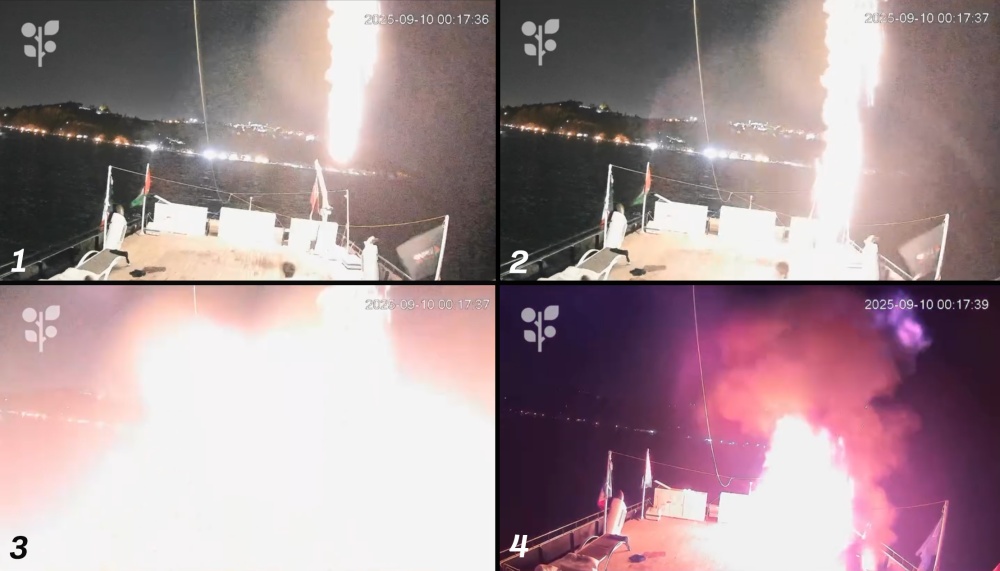
The GSF released a video showing an incendiary munition landing on the stern of the vessel, exploding in a fireball that overwhelms the camera, similar to the one that hit the family boat. Once the camera stops being overpowered, a fire is visible on the deck, which is then extinguished by the people on board.
The incendiary munition that fell on the Alma appears to be the same type as the one seen in the first attack on the Family Boat. Both appear to travel along the same trajectory, have a similar flash as they fall, and both create fireballs on impact that overwhelm the cameras.
Unlike the attack on the family boat, the remaining munitions were recovered and handed over to the GSF after the Alma incident.
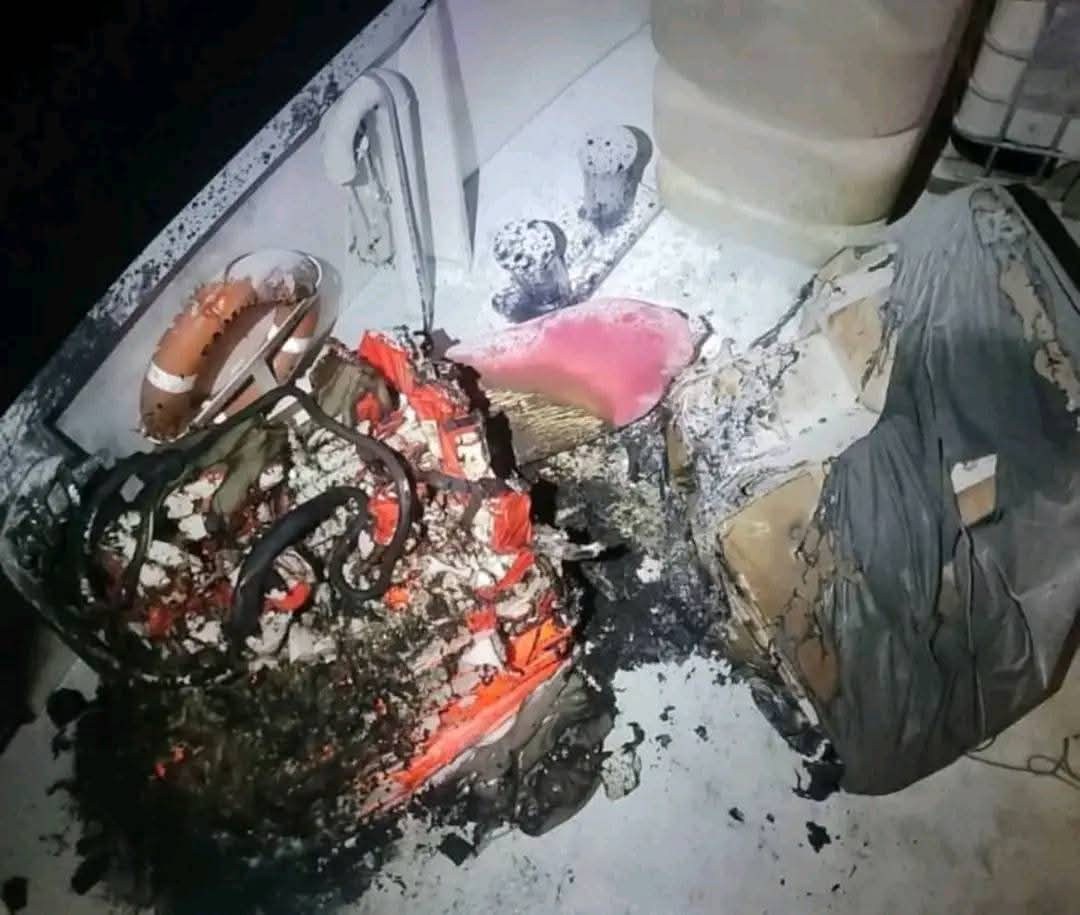
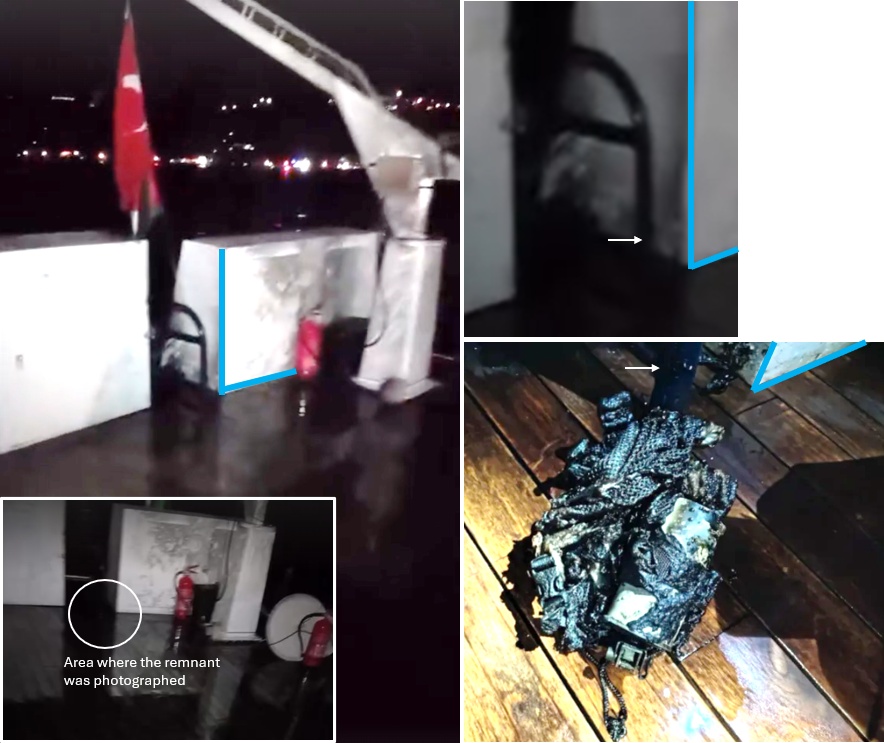
Mauricio Morales, a journalist who traveled with the GSF, sent Al Jazeera a photo of the remains found after the attack on the Alma. It appears to show a grenade attached to a strap or bag.
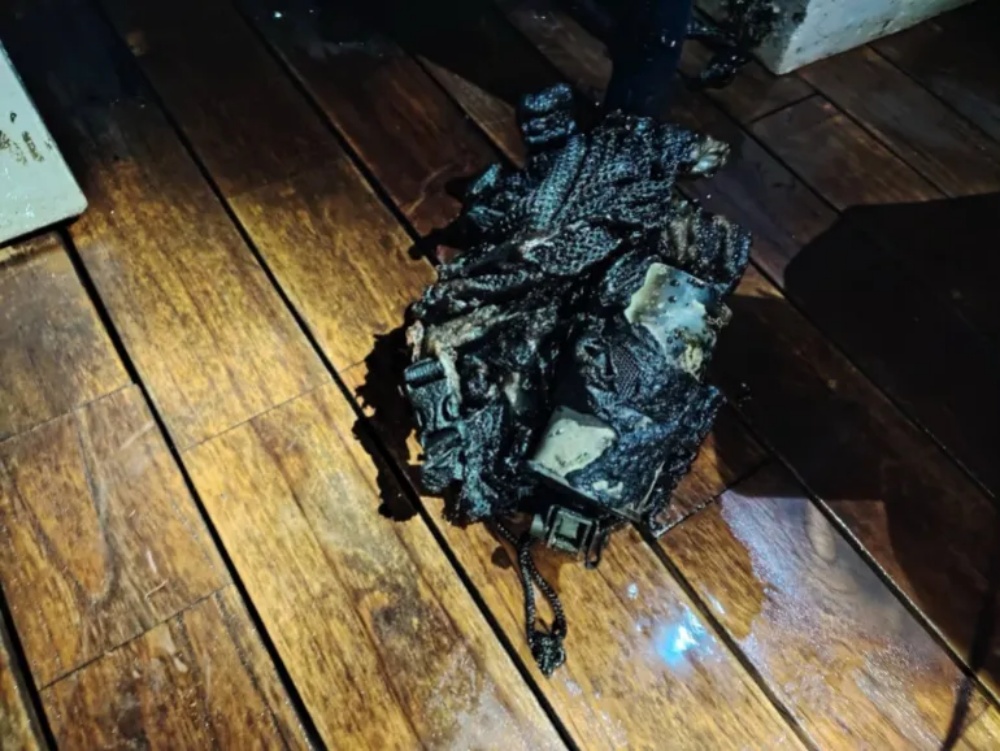
The photo was taken from the rear, near where the incendiary munition hit the ship.
The grenade is similar in appearance to smoke or thermite grenades used by Western militaries, including the United States, as well as Israel.
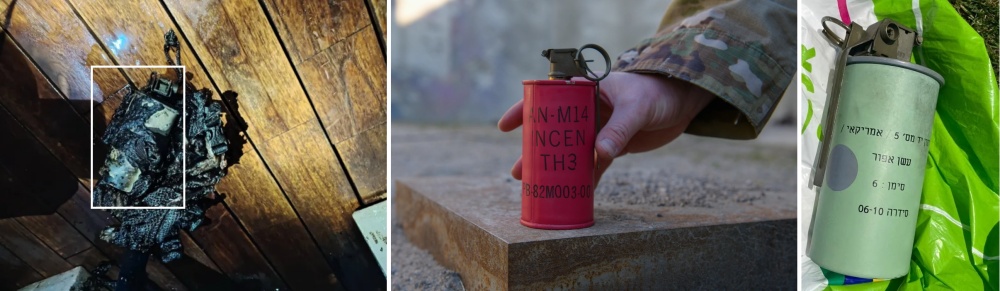
The images and video footage were shown to ammunition expert Dr. N. R. Jensen-Jones of the Armaments Research Service, who said: “They show what would normally be a hand-thrown munition amidst the remains of a molten synthetic bag or pouch. This could be an incendiary grenade or possibly a smoke grenade used to ignite the incendiary charge contained within the pouch.
The safety pin and safety lever of the grenade appear to be missing, indicating that it was cocked and capable of functioning.” Thermite grenades and smoke grenades are similar in design and general appearance. Although the above image of the US AN-M14 thermite grenade is painted red, the colors vary depending on the manufacturer of thermite grenades.
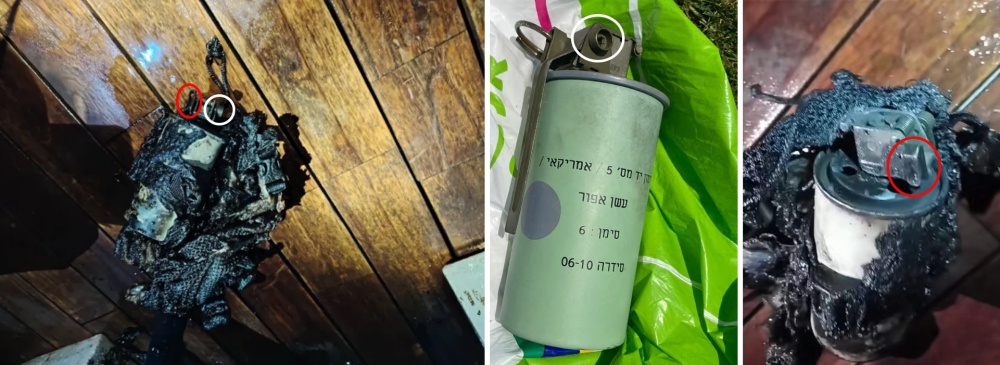
Dr. Jensen-Jones also stated: “The detonator has an external clip for the safety pin ring, as well as a peripheral protection for the cotter pin. These features are common, but not exclusive, to some models of Israeli hand grenades. Better images are likely to reveal important diagnostic details, perhaps even remnants of markings on the ammunition case.”
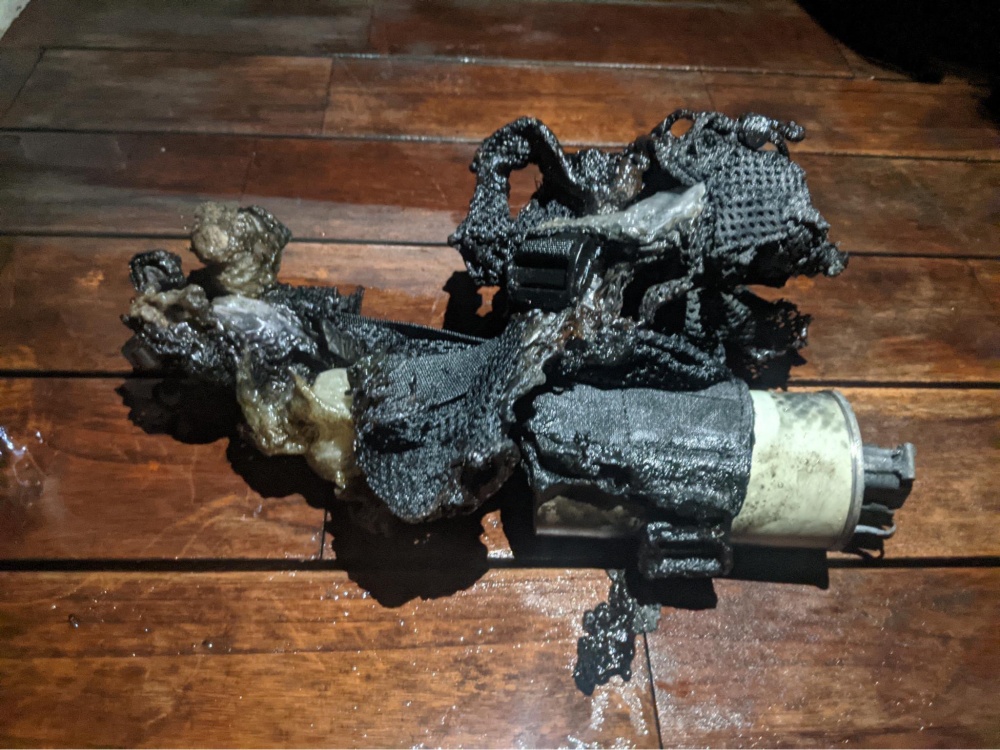
While the exact type of grenade – thermite or smoke – cannot be determined from the available images, the characteristics of the incendiary munitions dropped on the family boat and the Alma clearly indicate the use of an incendiary.
Incendiary grenades are typically filled with thermite or a similar incendiary. According to a recent Forbes report, thermite is not as effective as high explosive munitions against armored targets or personnel. It is, however, very effective against flammable targets.
On the evening of September 10, the Tunisian Ministry of Interior issued a statement describing the incident “which occurred yesterday on a ship moored in the port of Sidi Bou Said” as a “deliberate attack.” The ministry announced that an investigation had been launched to identify those responsible for planning and carrying out the attack.