The article explores the hidden financial and online infrastructure that allows the extremist group Rusich to generate revenue through merch, social media, and third-party intermediaries. The reader learns what digital traces lead to people involved in promoting and selling the group’s symbols, and how OSINT methods help track hidden business chains. The article shows how commercial platforms and online services can inadvertently become part of the ecosystem of radical financing.

In September 2019, 21-year-old Vladislav Gillung registered as a candidate in the municipal elections in St. Petersburg. Public messages on social media by the then campaign manager of a prominent opposition figure indicate that Gillung was trying to run as part of a movement against the current Russian president.
However, the local election commission did not allow him to participate. A few weeks later, he appeared at an event organized by the youth wing of the pro-government United Russia party, effectively marking a dramatic change in political orientation.
Gillung later changed his name to Vladislav Romanov and became close to the paramilitary neo-Nazi group Rusich, which is under sanctions by a number of Western countries. Members of Rusych have been linked to serious war crimes, and one of the group’s founders has been convicted of similar crimes.
After moving to St. Petersburg, Romanov gradually found himself in the circle of people involved in financing and business activities related to Rusych. He was also spotted near the combat zone in eastern Ukraine.
Romanov’s bank details appeared in ads about fundraising for the group. In addition, he is listed as a seller of goods with Rusych symbols on one of the major Russian online platforms. According to experts, the profits from such sales are used to support the group’s activities.
In responses to journalists’ inquiries, Romanov explained that he joined the opposition movement because he intended to start a political career. He confirmed that he helped run an online store associated with “Rusich,” but claimed that he was not an employee or member of the group and acted without pay. There is no evidence of his involvement in violent acts or crimes of which members of the group were accused. Also, at the time of the publications, he was neither under sanctions nor under investigation in cases related to “Rusich.”
The former head of the election headquarters in the 2019 municipal elections recalled Romanov as a reserved, polite person who mostly listened rather than spoke. Later, serious differences of opinion emerged between them — primarily regarding the situation in eastern Ukraine and support for separatist formations in Luhansk and Donetsk.
Political pressure on people associated with the opposition grew, and some activists left Russia. Against this background, it became clear that Romanov was moving in a different direction – he openly sympathized with the system built around Putin’s power and saw it as the only path to a political career.
Romanov himself explained that he left the opposition environment due to disappointment in its goals and methods, which he called harmful to the stability of the state.
Less than two months after the municipal elections, he was photographed at an event where the symbols of the United Russia youth organization were used. This was the first public signal of a radical change in his political trajectory.
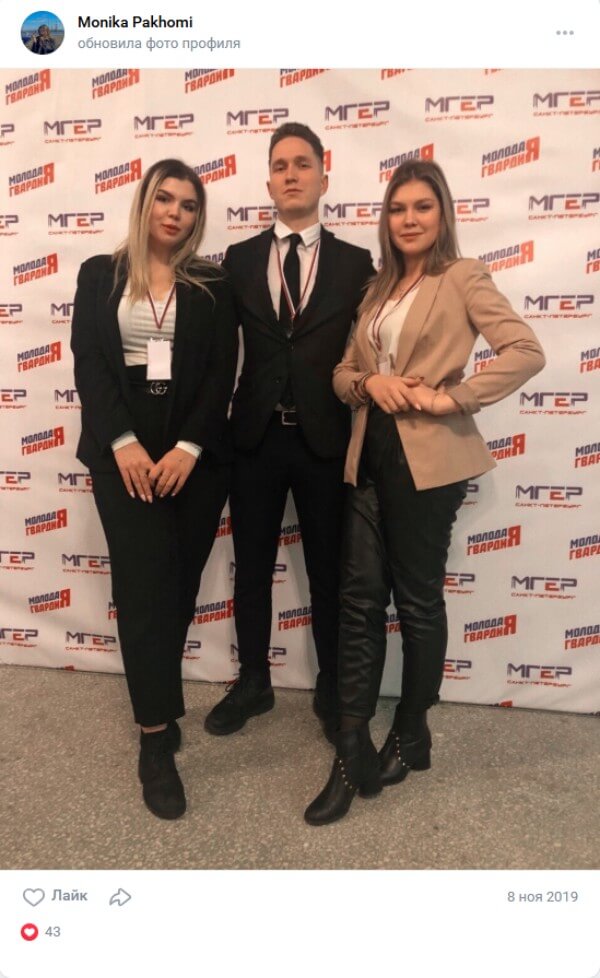
Romanov has stated in public comments that he used to be a member of both the youth wing and the main structure of the United Russia party. According to him, he left politics about three years ago because he had lost interest in this direction and preferred to work in the business sector.
At the event where he was photographed, Monica Pakhomi, the current representative of the Izmailovsky District Council of St. Petersburg, posed next to him. It is known from open sources that Pakhomi received an award from the regional branch of the All-Russian Popular Front for participating in events related to supporting the Russian occupation of the territories of Ukraine. The organization is under sanctions by the European Union. Pakhomi did not respond to requests for comment.
The image from this event became the key to finding other photos of Romanov posted in various open sources.
In one of the photos, distributed on the social network X (formerly Twitter), he is captured with a weapon next to members of the Rusich group. Among them are Jan Petrovsky, convicted in Finland for war crimes, as well as Alexei Zhuravlev, a Russian nationalist politician and leader of the Rodina party, who is under international sanctions. The photo was taken in the Izyum district of eastern Ukraine, when the city was under occupation.
Zhuravlev had previously been reported to be in Izyum, but at that time it was not known that he was accompanied by Romanov. This discovery helped to put into order the chronology of the latter’s movements and contacts.
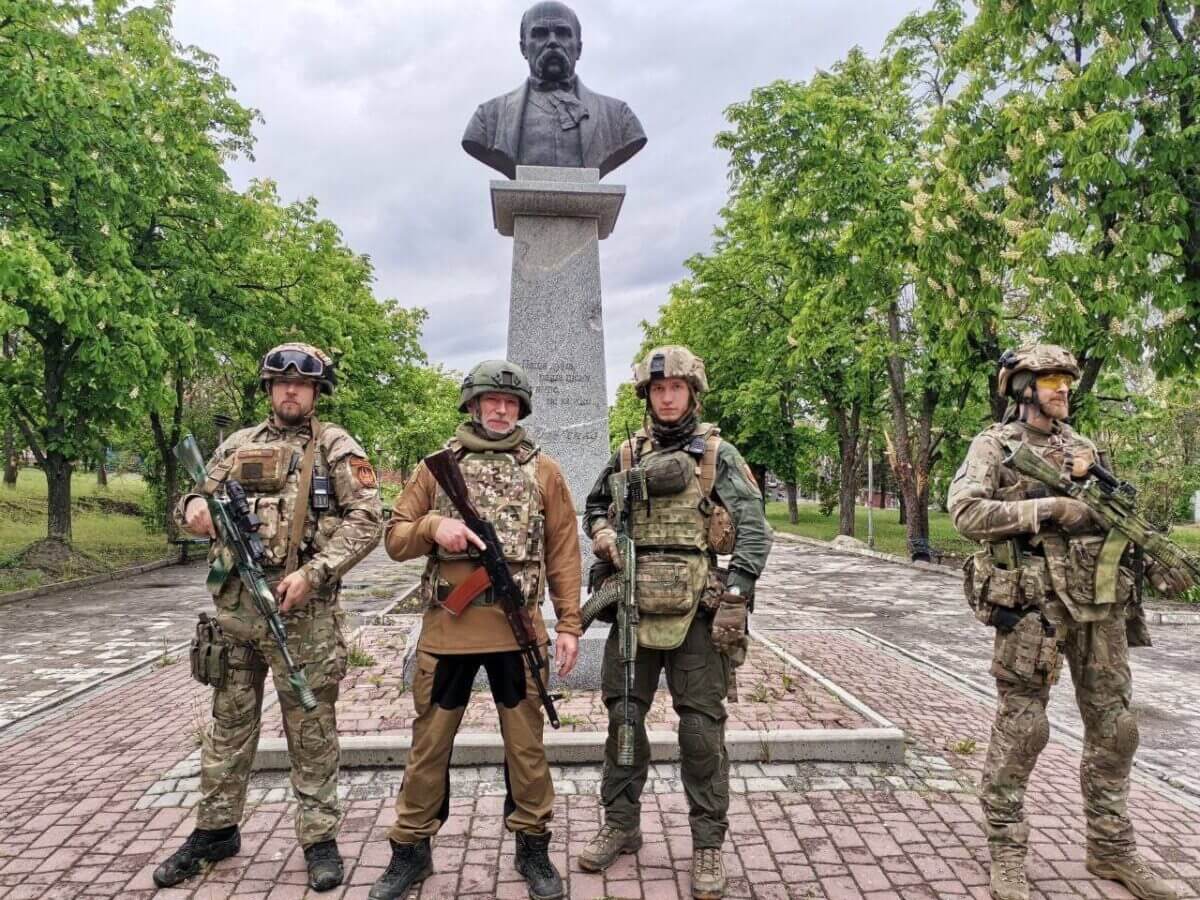
During the discussion of the trip to Izyum, Romanov explained that he spent two days there with Russian politician Alexei Zhuravlev. According to him, the purpose of the visit was to deliver humanitarian aid to local residents, and representatives of the so-called “LPR” temporarily issued them automatic weapons only for “souvenir” photos.
It was also noted that the selection of participants in this trip was allegedly carried out through his university in cooperation with the Youth Parliament of the State Duma of Russia, and it was in this context that Zhuravlev was at the scene of the events. A request sent to the St. Petersburg State University of Economics with a request to confirm this information remained unanswered.
When asked about possible participation in hostilities in Ukraine, Romanov stated that he had never participated in military operations, since he did not have the appropriate training. He also claimed that he was not a member of “Rusych”.
In his letters, he emphasized that he had no military skills and could not join the fighting formations even if he wanted to. According to him, he was engaged in entrepreneurial activities, not in the military sphere.
Rusych is a paramilitary group that has been an active force in Russia’s war in Ukraine. Several of its fighters have participated in Wagner operations in places like Syria, Libya, and the Central African Republic.
One former commander and founding member, Jan Petrovsky, was convicted of war crimes by a Finnish court, and another, Alexey Milchakov, was implicated in war crimes.
The organization and its leaders are under international sanctions, as are some of its cryptocurrency wallets, but many people associated with Rusych remain largely unknown to the public. Vladislav Romanov has so far been one of those who appears to have been operating behind the scenes. At the beginning of Russia’s full-scale invasion of Ukraine, the group claimed to Meduza that it had an IT department and a finance department that organized fundraising and donations from supporters, as well as engaged in cybercrime.
On April 2, 2024, “Rusich” posted a message on Telegram claiming to be funded solely through organized fundraising and advertising.
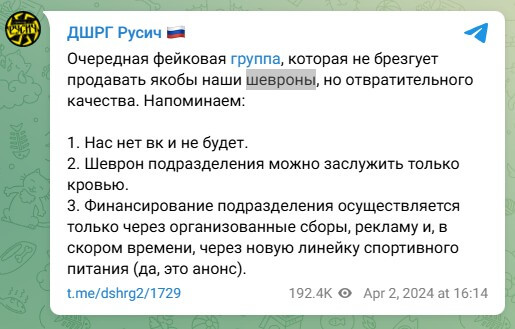
In addition to the usual fundraising, the group began selling its own products: from protein mixes to key chains and sets of stickers with symbols associated with Alexei Milchakov.
According to researchers who studied the activities of “Rusich” in US think tanks, this group has long regularly published requests for support, indicating specific goods and their quantity. At the same time, supporters were offered to either transfer the necessary property or transfer funds to the specified details. Although such ads still occur, experts believe that such requests now appear much less often.
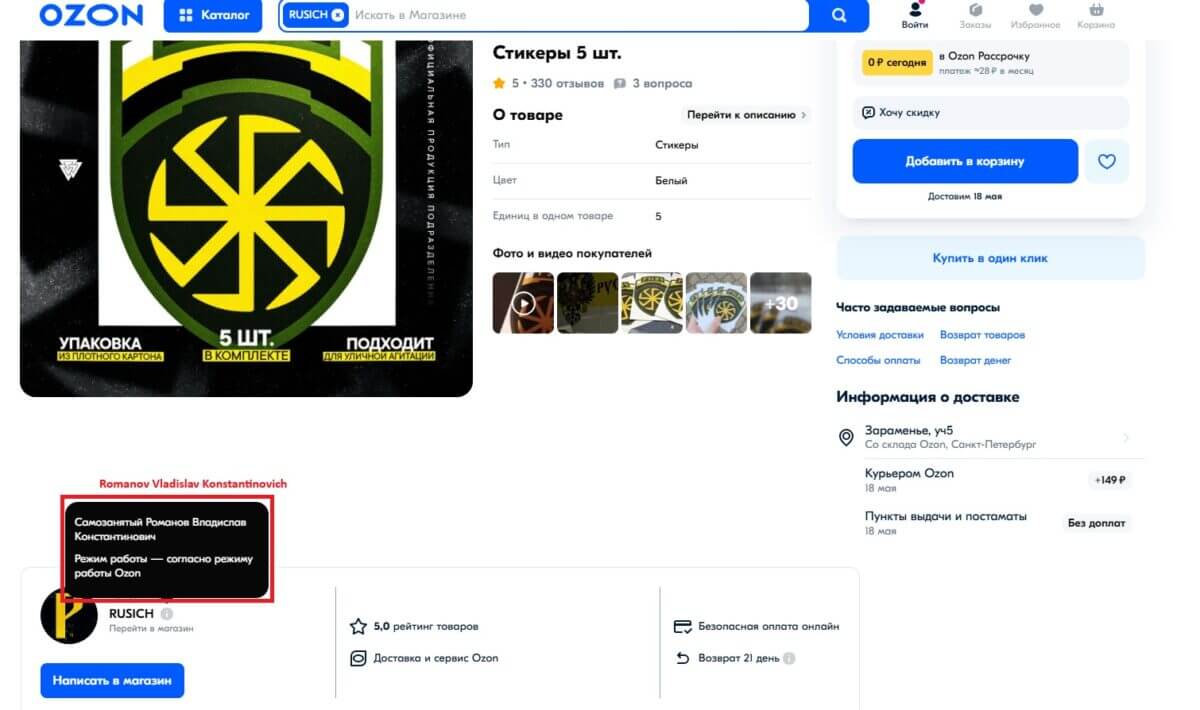
The group has its own resource through which it organizes the sale of goods, but it also actively uses Russian online platforms, in particular Ozon.ru. On the page with products associated with “Rusich”, the seller is Vladislav Konstantinovich Romanov, and the shipment is carried out from warehouses in St. Petersburg.
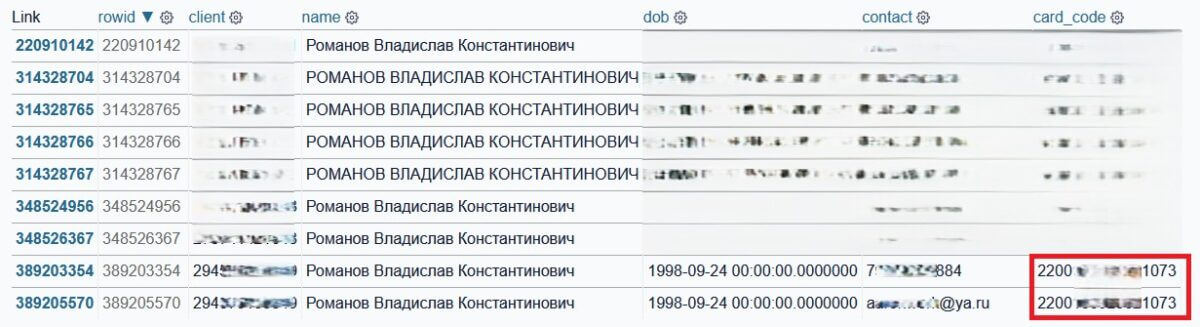
During the open source review, we managed to find several people with the right name in the merged database of Russia’s Alfa-Bank, one of the largest private financial institutions in the country, which is under US and EU sanctions.
Among these records was a person with a bank card ending in 1073. This number had previously appeared in posts on an old Telegram channel associated with “Rusich.” Although this channel has now been deleted, some of its messages are preserved as archives on Telegram statistics services, in particular on TGStat, where a post from 2022 with these details remains.
The messages invited benefactors to make a donation using cryptocurrency or simply transfer money to an Alfa-Bank card whose number matched Romanov’s card number (ending in 1073).
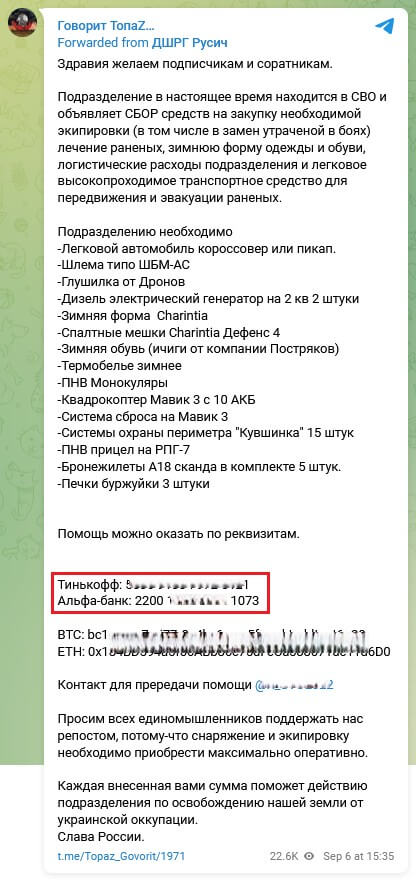
A message dated September 9, 2022, stated that Rusich had raised 900,000 rubles (at the time, $14,805). Two days later, they said they had received 1.2 million rubles (at the time, $19,740). Both messages listed Romanov’s account at Alfa Bank as the place to send donations.
It is impossible to know exactly what Rusich spent the money on. But the September 9 message did mention that the unit needed a variety of equipment.
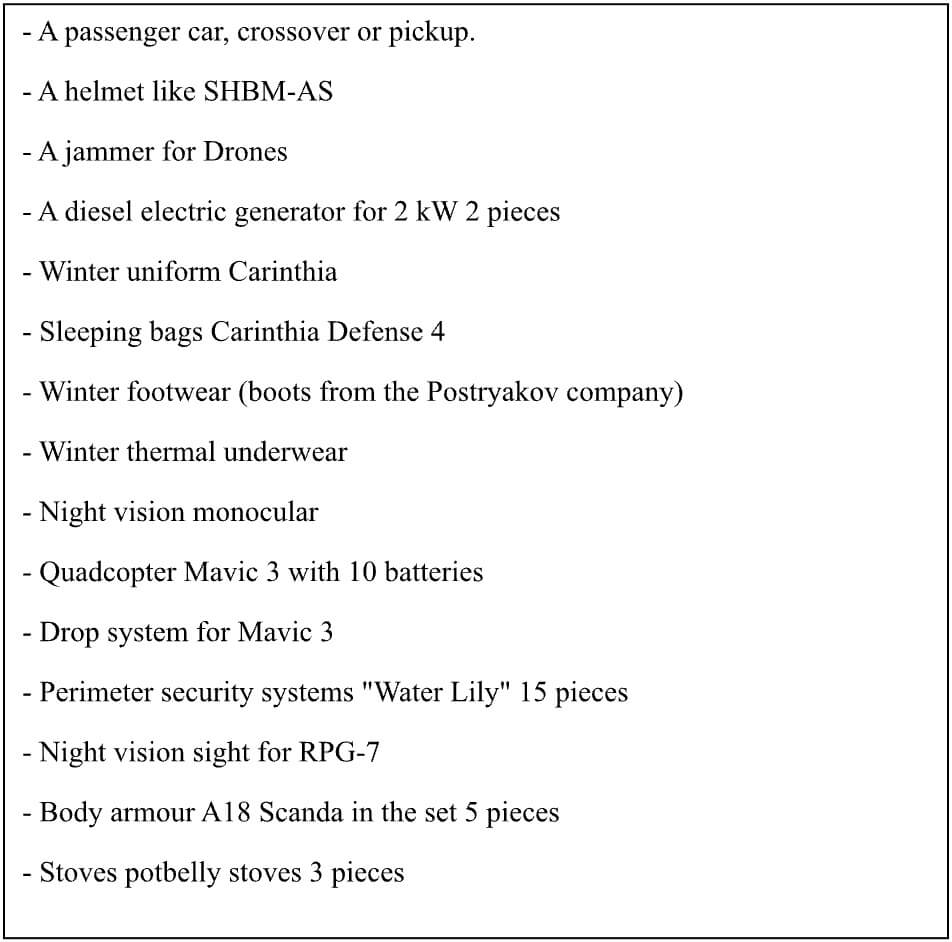
The fact that the account with Romanov’s data appears to be using money for Rusich suggests he’s more than just a “grunt,” said New America’s Deer. Meanwhile, other open-source information links his name to subsequent revenue-generating projects.
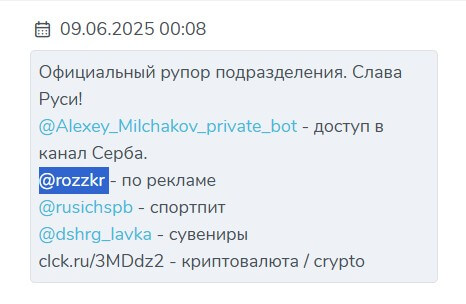
On June 9, 2025, the Telegram channel “Rusich” directed people to contact an account called “rozzkr” with advertising requests. Similarly, messages sent to the Telegram channel “Rusich” receive an automated response asking those who want to advertise with them to contact rozzkr, their “manager.” Rozzkr appears to be linked to one of Romanov’s phone numbers, which ends in 0663, and has been seen in several database leaks.
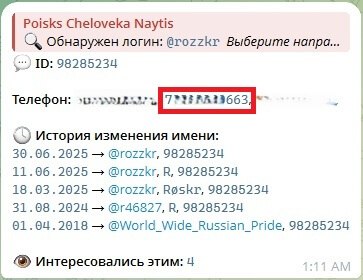
According to the 2022 Yandex Food data leak, for example, a Yandex Food account with this name and number was in use in December 2021.
The Telegram account named rozzkr contains virtually no identifying information. The profile uses a set of numbers instead of a name, uses a standard anonymous image, and the location information looks random and uninformative. All empty dialogs in the account have an automatic welcome message: an image of Alexey Milchakov in military uniform and text with an offer to place an advertisement in the corresponding Telegram channel for 100,000 rubles.
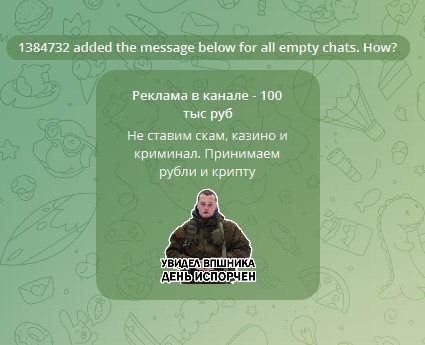
The information about the prices from the rozzkr account corresponds to what Rusich published on January 27, 2024, where, according to them, the money will be used for the needs of the group.
Romanov confirmed that the phone number ending in 0663 was previously registered to him. At the same time, he claimed that around 2017-2018, one of his acquaintances asked to temporarily give him a SIM card in order to register a working account on Telegram. According to him, it was this acquaintance who could continue to use the number. Romanov also noted that he was not aware of the further activity of this number and has no information about who currently owns the account under the name @rozzkr on Telegram.
Attempts to call this number were unsuccessful – it is no longer active. At the same time, Romanov did not disclose to whom exactly he transferred the SIM card and for what reasons the number continued to be used by third parties after 2018.
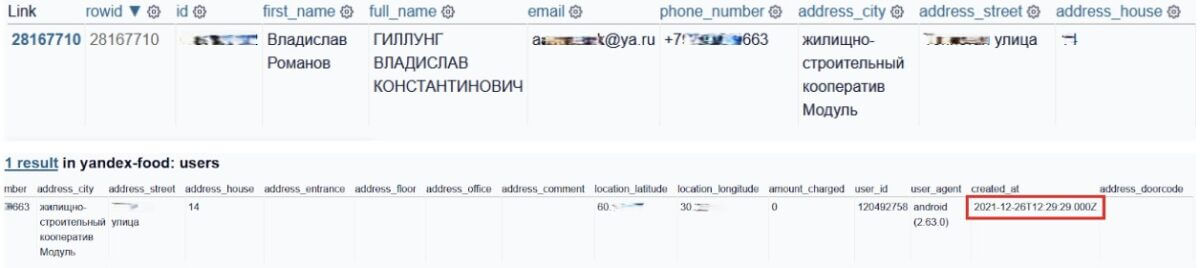
Other leaked datasets show that Vladislav Konstantinovich Romanov used the same phone number when processing shipments with the Russian courier service CDEK in 2021 and 2022.
In addition, one of the Telegram bots that collects open digital traces recorded that another number associated with the rozzkr account was used for mobile banking by a person named Vladislav Konstantinovich R. — this fully corresponds to the first name, middle name, and first letter of Romanov’s surname.
The second number was also checked and an attempt was made to call it — it is currently disconnected. Romanov did not comment on additional questions about this contact.
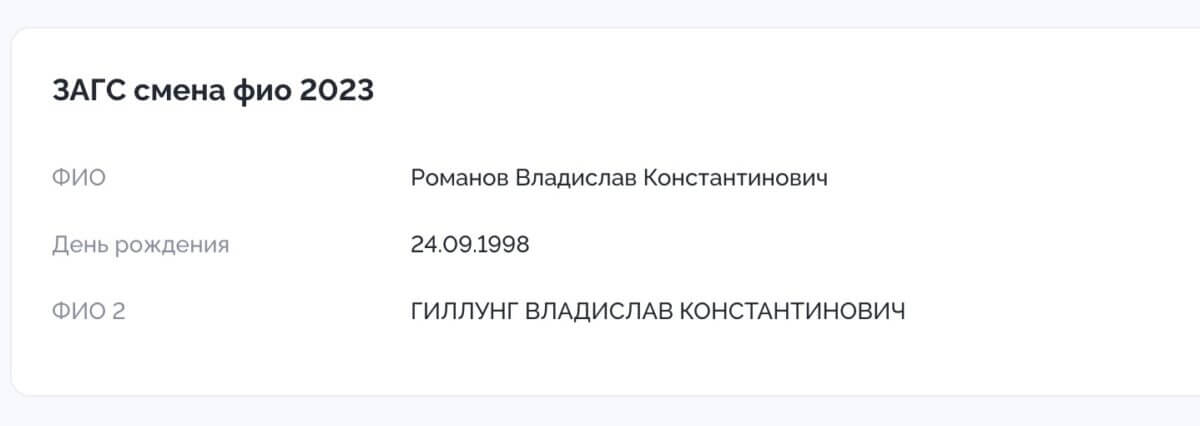
The leaked data from the Russian Civil Registry Office, the registry office of civil status, contains a record that Vladislav Gillung officially changed his surname to Romanov. According to Romanov himself, his parents divorced, and Gillung is his mother’s surname. He noted that he chose his father’s surname because this practice is considered common in Russia.
There is a direct connection between Romanov and Rusych leader Oleksiy Milchakov through the same phone number, which, judging by the leaked data, both used at least once.
In numerous records from the merged database of the courier company CDEK, Milchakov appears as a recipient using a number ending in 386. This same number appears in the leak alongside two other names: Anton Yakovlev and Vladislav Konstantinovich Gillung — Romanov’s previous official surname.
According to Romanov, Milchakov was an old acquaintance and once asked him to pick up a package when he himself could not be present.
Data from the leaked Facebook data indicate that the specified number was also used to register Milchakov’s old Facebook page, which was later deleted.

Meanwhile, Numbuster and GetContact users marked the same phone number as belonging to Milchakov.
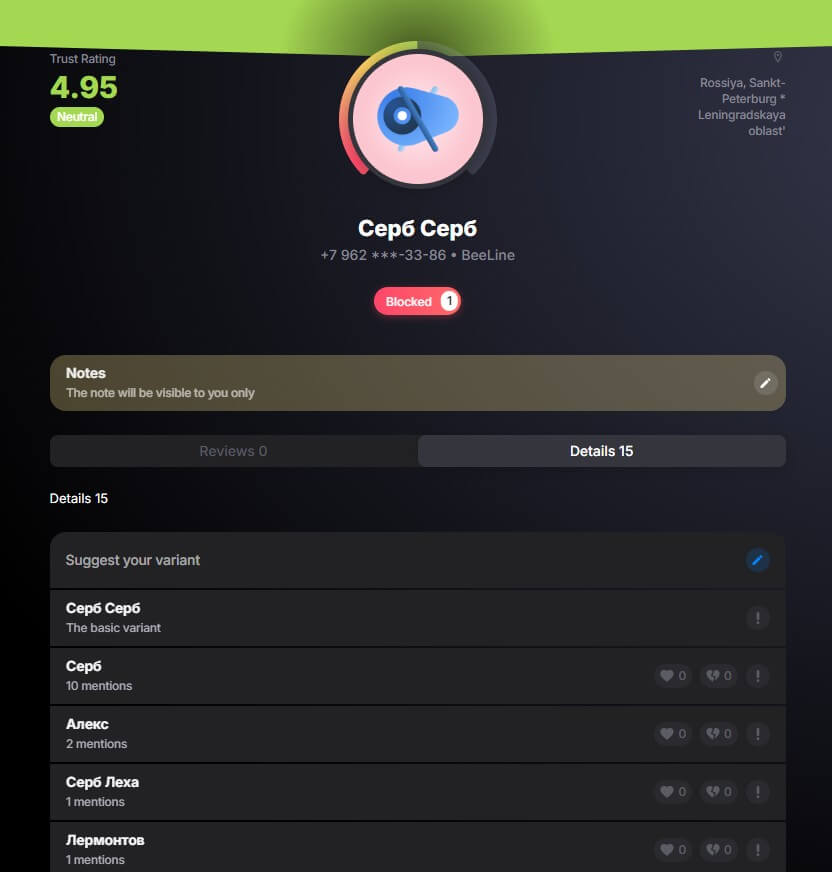
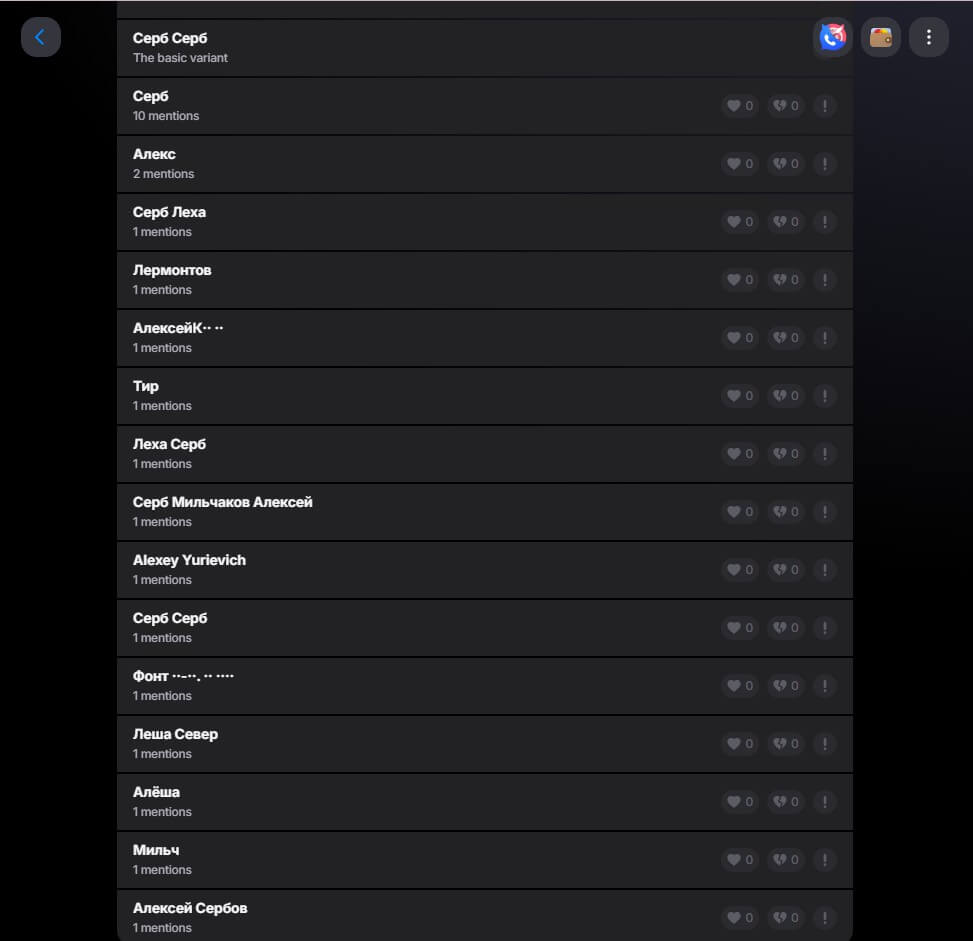
Applications that allow you to form and enrich contact data receive information directly from users’ phone books. Such services often become important sources in various investigations. For example, in a number of high-profile international cases, tools such as Numbuster, GetContact, and TrueCaller have already been used to establish hidden connections and subscriber profiles.
In the Numbuster database, one of Romanov’s phone numbers — the one ending in 663 and linked to his Yandex Food account — is marked as “Vlad United Russia St. Petersburg Youth Policy.”
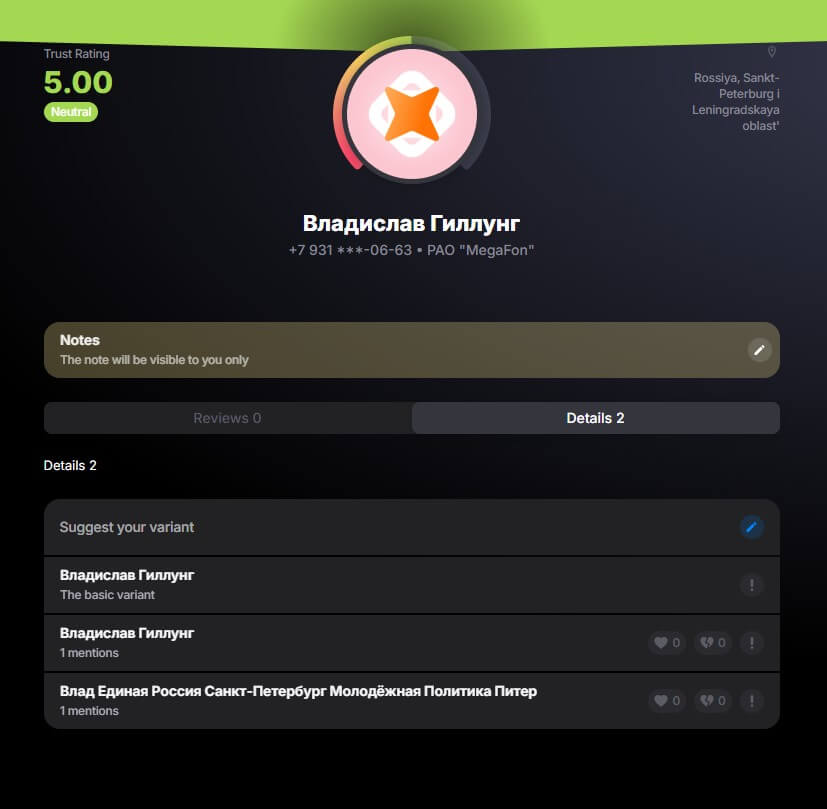
When asked how he met Alexei Milchakov, Romanov explained that their first meeting allegedly took place in a weapons store in St. Petersburg when he was buying a hunting rifle.
The story of Vladislav Romanov demonstrates how intricate the connections between political circles, business and paramilitary groups can be in modern Russia. A man who started out as a participant in opposition initiatives, within a few years found himself in the orbit of the radical group “Rusich” – a structure under international sanctions and associated with war crimes.