28.02.2024
15 min
1716



Nitasenes are a class of synthetic opioids developed in the 1950s that are tens of times more potent than fentanyl and heroin. Due to their extreme potency and high overdose risk, they have never been approved for medical use. However, in recent years, nitazenes have resurfaced on the illegal drug market, raising serious concerns among health experts and law enforcement.

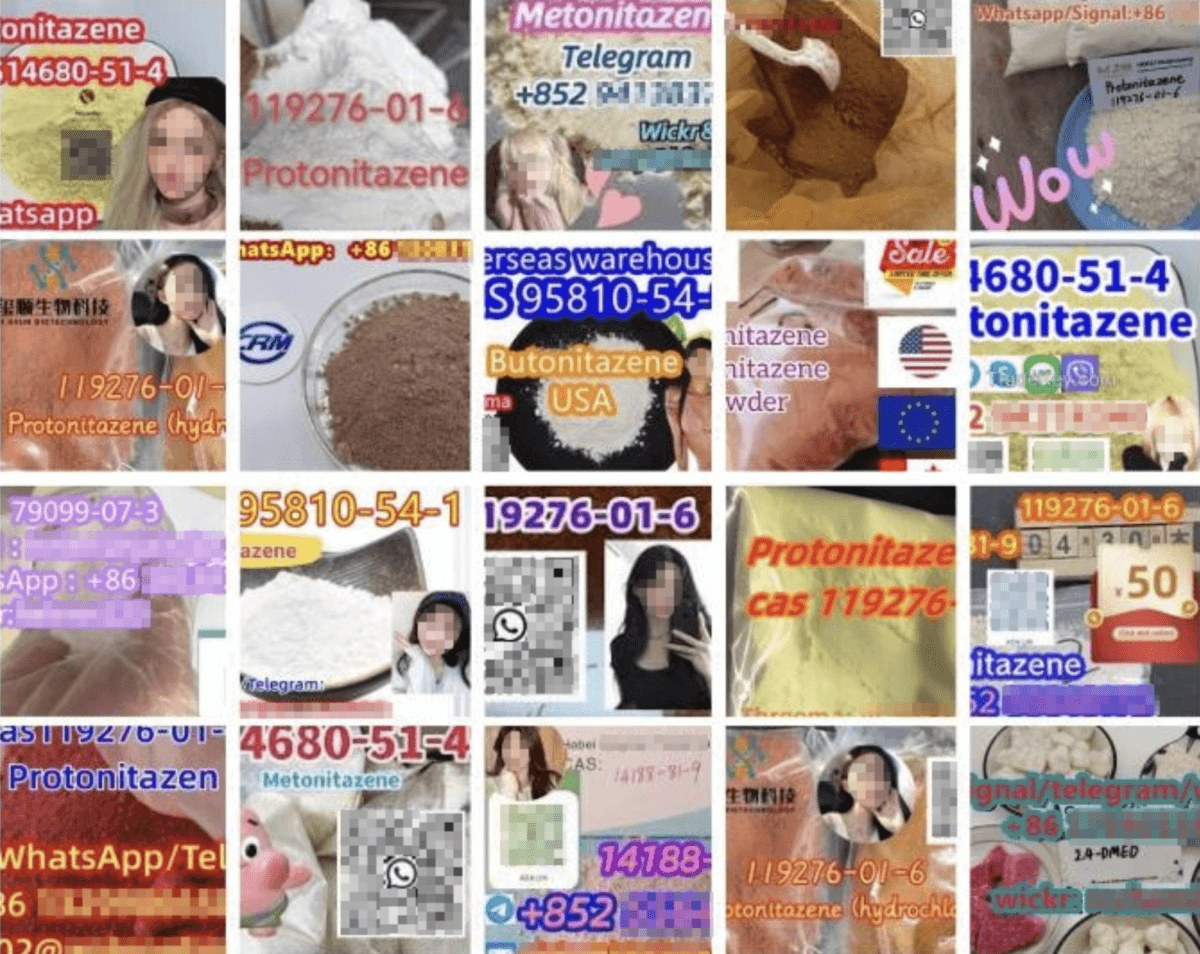
A young woman in a school uniform poses in front of a package that looks like a package of breadcrumbs. Above her head are a phone number, an email address, and two QR codes. In the center of the image, the word “Isotonitazen” stands out, written in large yellow-red font.
The description mentions “guaranteed delivery” of the brown powder to Europe, the US, the UK, and other countries: “If you are interested, contact me.”
Despite its harmless appearance, isotonitazen is a form of nitazene, a synthetic opioid that is 40 times more potent than fentanyl and up to 500 times more potent than heroin.
Nitasane was developed in the 1950s by a Swiss chemical company as a new type of painkiller. However, due to its extreme potency, the drug was never approved for medical use, as even small doses can lead to overdose.
Decades later, nitazene has returned to the illegal drug market. It is found in counterfeit prescription drugs such as oxycodone or benzodiazepine pills, as well as in street drugs such as cocaine, heroin and ketamine.
UN drug control agencies and governments around the world have warned of the serious health risks posed by nitazene. This super-potent opioid has already caused hundreds of deaths in North America, the UK and Europe.
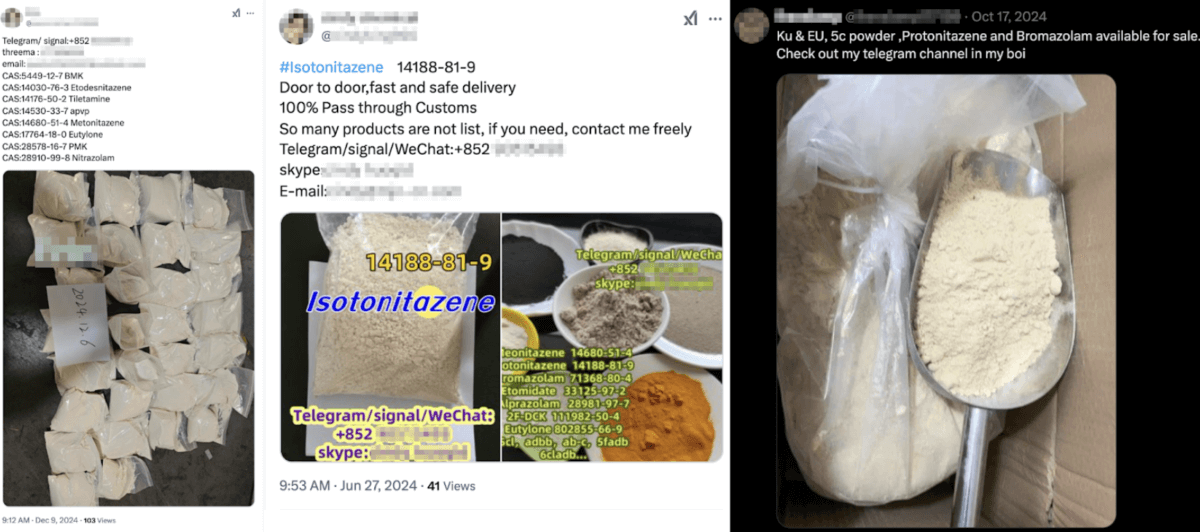
An investigation conducted over several months uncovered more than 1,000 online advertisements for the sale of six of the most common types of nitazene, with the option of delivery worldwide.
The investigators analyzed websites, social media accounts, contact details associated with these advertisements, and checked company registers to gather information on businesses involved in the drug’s sale.
A number of entities associated with these advertisements were found to match those in Chinese corporate registers. In particular, a company was identified that was actively advertising various types of nitazene online.
Public inquiries, including analysis of court and customs documents, confirmed the connection of nitazene seizures in Europe to China.
The findings come as recent geopolitical developments threaten to increase the flow of nitazene around the world. In 2019, China banned all variants of fentanyl, a potent opioid that is fueling the deadliest drug crisis in American history. And in 2022, a “poppy ban” imposed by the Taliban led to a significant drop in opium production in Afghanistan, the source of virtually all the heroin supplied to Europe.
Experts say these factors have created a vacuum for alternative synthetic opioids such as nitazene. “At some point, we know for sure that heroin will dry up, and then there is a danger that some of these people [drug users] could get hooked on nitazene,” said Thomas Piechmann, a senior research fellow at the United Nations Office on Drugs and Crime. . “And that is a particular danger because of its high potency.”
Nitazen ads have been popping up all over the internet, from Australian fishing forums and Congolese media outlets to Singaporean property sites and major publishing platforms.
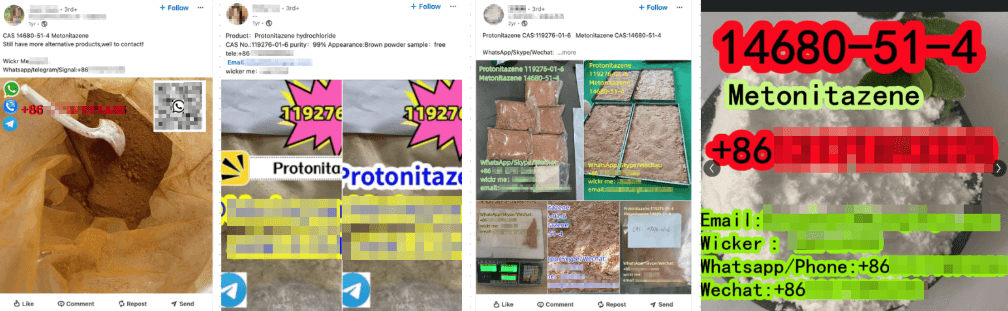
They have been spotted on a range of websites, including popular marketplaces such as TradeFord, TradeKey, TradeAsia and IndiaMART, which target international buyers. They have also been appearing on social media platforms, including LinkedIn and Platform X.
While some platforms have said they plan to remove Nitazen ads, their listings were still available online at the time of last check.
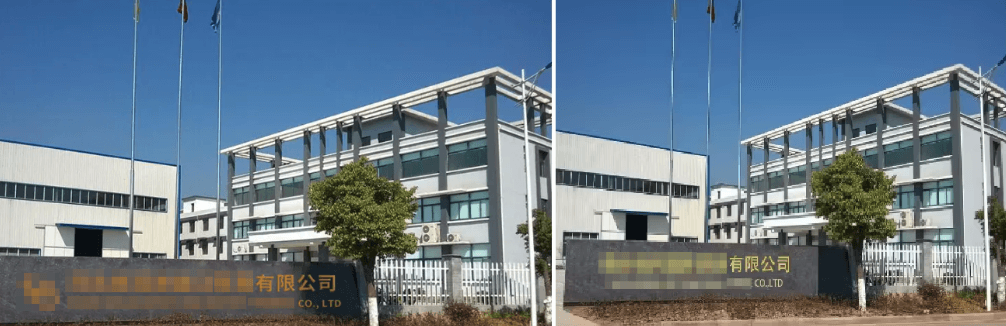
Chinese companies are often cited as suppliers of nitazene. But these entities are shape-shifting entities. The sellers hide behind opaque business structures: they change addresses regularly, use multiple email addresses and phone numbers, and facilitate contact through messaging platforms such as Telegram. Some appear to photoshop their names onto images of large factories. Many use generic photos of young models or celebrities to sell their drugs.
While most of these entities hide behind complex Russian Doll-style company structures, some openly advertise nitazene on their websites, even admitting that its use has led to deaths.
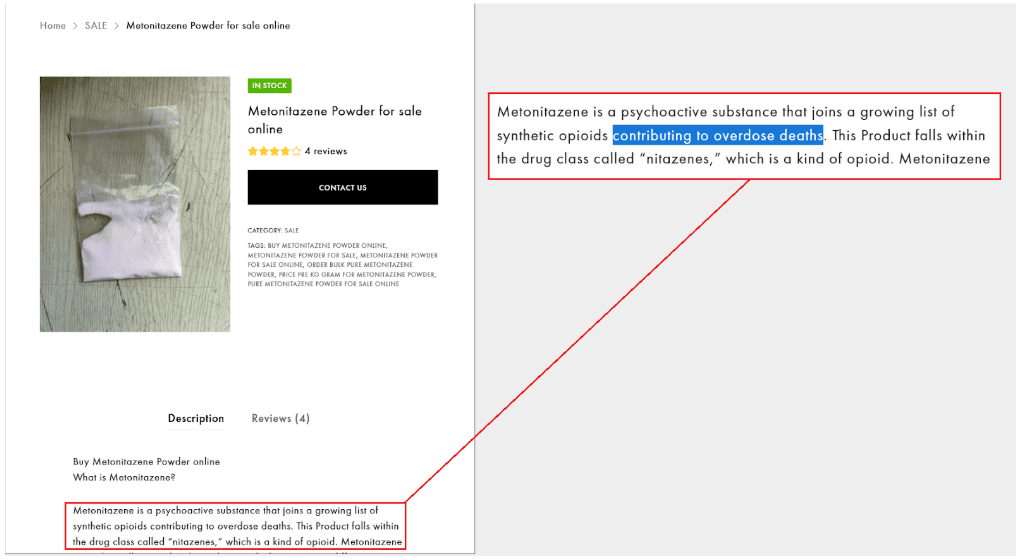
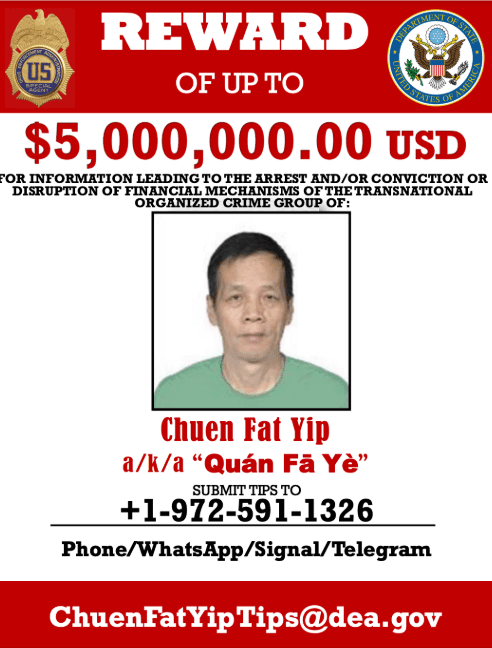
Hiersun Biotech Company Limited is another entity linked to online advertising of nitazene. The company’s email address is listed as a contact on another website that, according to a report by a US Congressional Select Committee, is controlled by Yafeng Biological Technology, a chemical company owned by a state prison that has been accused of human rights abuses.
This investigation found that seven additional legal entities advertising nitazene online matched company listings on China’s corporate registry. Six of these companies have been officially closed, but nitazene advertising under their names remains active on both their own websites and third-party platforms. A seventh company, Guangzhou Wanjiang Biotechnology Co., Ltd., is listed as active and is currently listing a number of nitazenes online.
Guangzhou Wanjiang says it offers a secure door-to-door delivery service, including to Europe, the UK, the US and Australia, boasting “modest” packaging and shipments that “100% pass customs.” The chemical company’s website advertises methonitazen, etonitazen, isotonitazen and protonitazen, and its Telegram account regularly posts images and videos of various drugs, including nitazene.
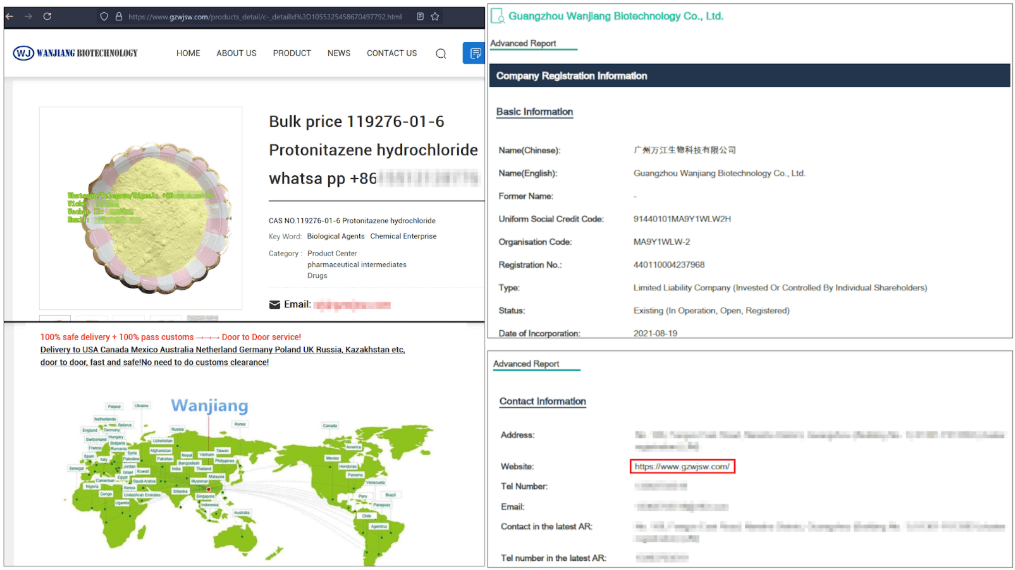
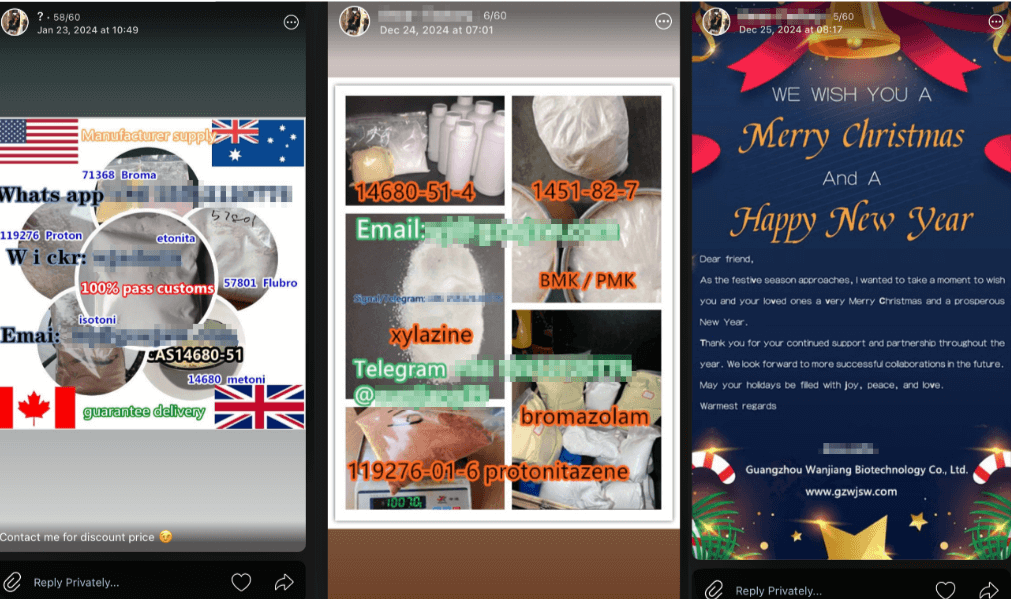
On Christmas Day, the company wished its customers a happy holiday. “Thank you for your continued support and partnership throughout the year,” the Telegram message said. “May your holidays be filled with joy, peace, and love.”
Emails to addresses associated with Guangzhou Wanjiang bounced or did not. A woman who answered the number listed in Guangzhou Wanjiang’s ad said she did not know what nitazene was and was not part of the company. Repeated attempts to reach other numbers associated with the company or listed in its ads were unsuccessful.
In April 2019, Estonia became the first European country to detect the presence of isotonitazene in seized drugs. New types of nitazenes have since emerged and their influence has grown, with half of drug-related deaths in the past two years attributed to these substances.
Estonia has a long history of combating synthetic opioids. In the 2000s, the country experienced one of the first fentanyl epidemics, which lasted almost 20 years and resulted in around 1,500 deaths. After the closure of fentanyl laboratories in 2017, the drug almost disappeared, but it was quickly replaced by the even more dangerous nitazenes.
These substances are spreading rapidly due to their availability and high profitability for drug traffickers. In the past three years, nitazenes have caused 127 deaths in Estonia. Court verdicts show nearly 80 cases involving nitazene since 2020. Often, detainees were found with less than a gram of the drug, hidden in envelopes, bags, or even chocolate eggs. Due to the high danger, the judicial system considers even possession of one milligram of pure protonitazene a criminal offense.
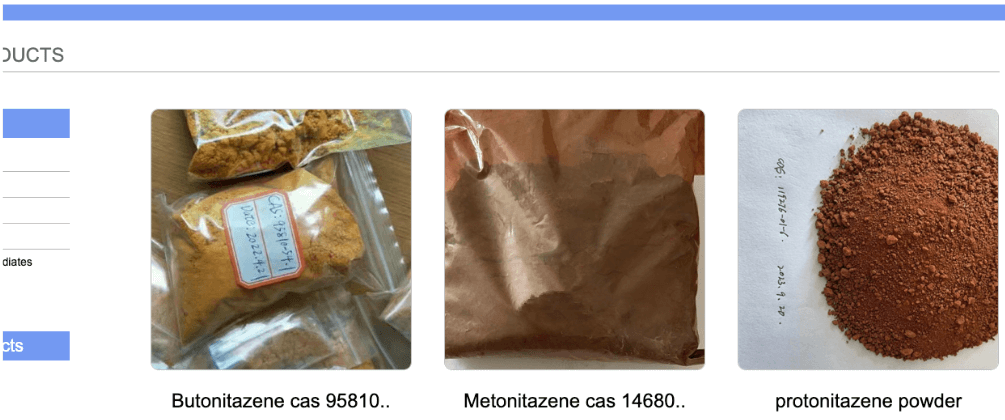
A recent investigation has linked seizures of nitazene in Estonia to its origin in China, based on publicly available documents. In August 2024, a court jailed a man for ordering two shipments of protonitazene. The case file showed that one of the shipments was ordered through a US phone number listed on a Chinese website advertising the sale of pharmaceuticals.
Archives of the website, which claims to be located in the city of Nanjing, show three types of nitazene, including protonitazene, with a claimed purity of 99%. The orders came in packages ranging from 1 kg to 25 kg, and the company positioned itself as a supplier for foreign customers, shipping products to more than 30 countries. The court case states that the shipment of drugs was delivered via a DHL distributor in Germany to Estonia.
Similar cases were recorded in Norway, where customs officers seized seven packages of Chinese-made nitazene in 2023. The total weight of the seized items was over 150 grams, and the largest of the packages, weighing 90.4 grams, was sent via FedEx from Hong Kong to Oslo Airport.
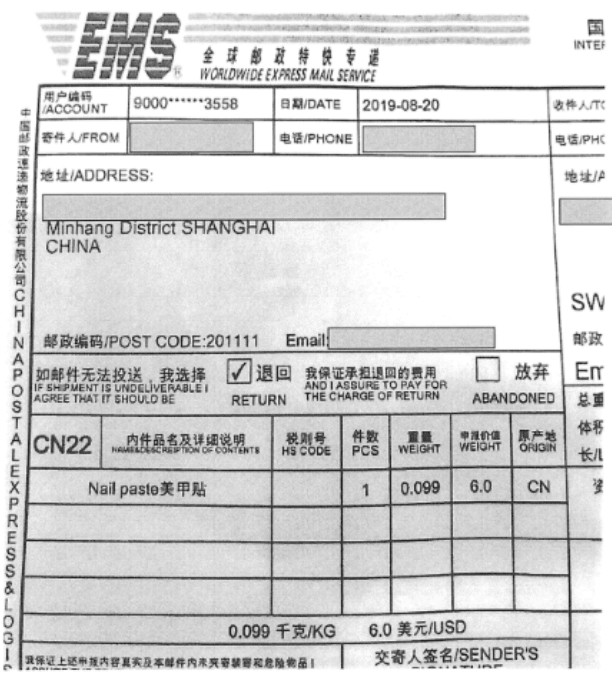
Another case of smuggling was discovered in Sweden in August 2019. Customs officers in Stockholm intercepted a package of yellow powder labeled as “nail paste.” Analysis showed that the package contained almost 49 grams of isotonitazene. It was delivered from Shanghai.
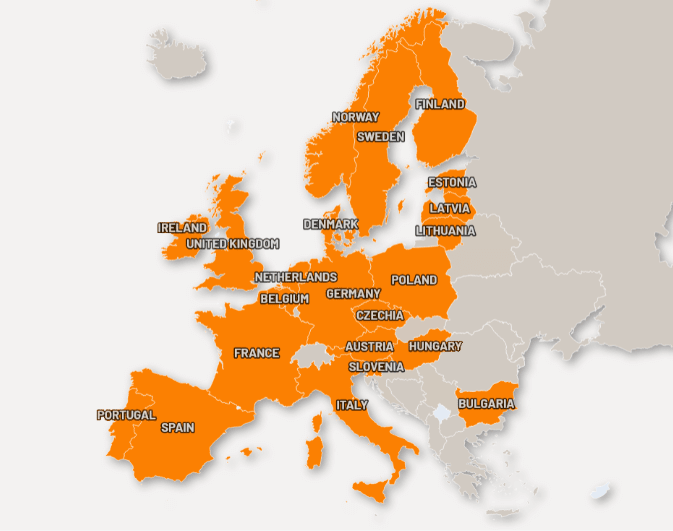
Sweden, which has recorded 37 nitazine overdose deaths, is one of at least 20 European countries to have identified the drug at its borders since 2019. In the UK, authorities confirmed 179 nitazine-related deaths between June 2023 and May 2024. In Ireland, nitazine outbreaks in 2023 caused 77 overdoses. And in Latvia, nitazine-related deaths rose from two in 2022, accounting for just 3 percent of all drug-related deaths, to 38 in 2023, accounting for 29 percent of drug-related deaths in the country. The US, Canada and Australia have also battled outbreaks in the past five years.
Synthetic opioids are often disguised as counterfeit painkillers such as OxyContin or Subutex. In 2023, nearly 6,000 counterfeit oxycodone tablets containing N-desethylisotonitazene were seized in Portugal, and 12,600 tablets containing methonitazene were seized in Poland. In the UK that same year, police made a record seizure of 150,000 nitazene tablets, the largest seizure in the country’s history. There was also a case in a Polish taxi bound for Sweden where over 3,000 counterfeit OxyContin tablets containing methonitazene were found.
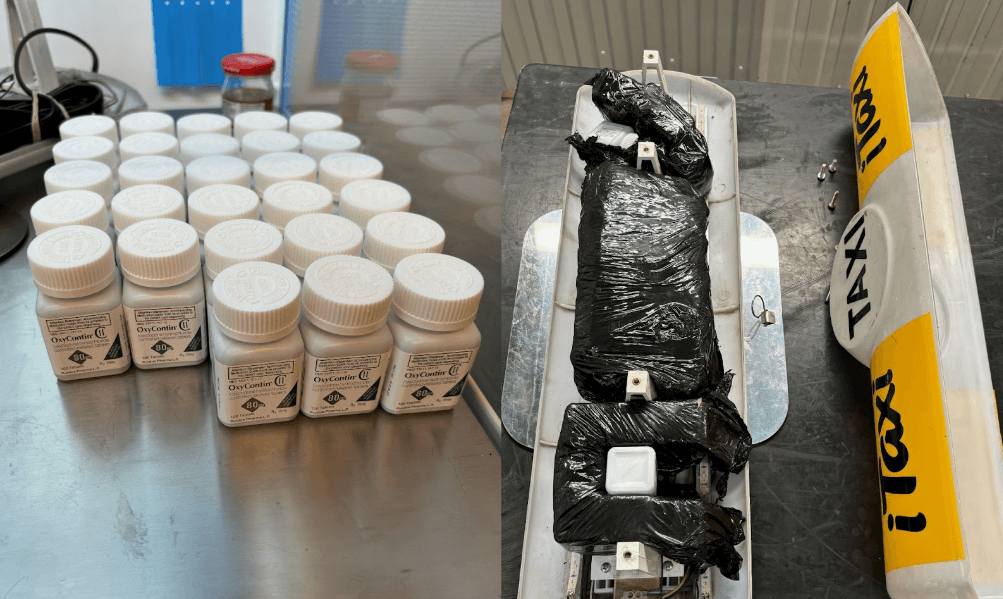
Swedish authorities recently said that nitazene and other drugs were being ordered from darknet websites, including Flugsvamp 4.0 and Archetyp. British detectives also suspect the darknet as a source of nitazene. Some of the hundreds of reviews posted on these accounts tell a grim story of how the drug’s potency left users confused.
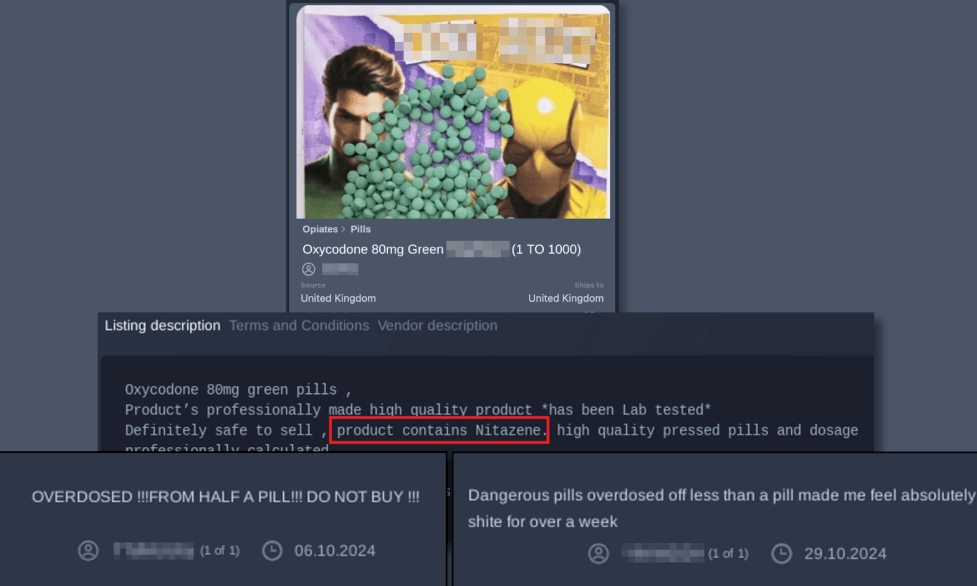
Nitasenes are so potent that they can be transported in very small quantities, making them difficult for law enforcement and customs to detect. According to the EU Drugs Agency, less than 20 kg of nitazenes have been seized in EU countries over the past five years, despite hundreds of cases being reported.
While these are still small amounts, UNODC spokesman Piechmann said the market for nitazenes is growing rapidly, raising serious concerns.
China banned nine types of nitazenes in 2024 in an effort to curb their spread. However, there are now 23 confirmed varieties of the synthetic substance worldwide, a significant increase from 2019, when only one was known. Despite the new restrictions, manufacturers are adapting quickly, continuing to sell these powerful opioids through their own websites and third-party platforms.

Obtaining nitazene seems like a fairly straightforward process, as buyers can contact sellers directly through contact details listed in ads on legal trading and social platforms.
Some platforms have already taken action. TradeAsia has removed all nitazene listings, frozen the accounts of sellers who violated its policies, and announced a complete ban on such products. TradeFord has also removed over 200 nitazene ads and blocked related keywords. ISSUU has taken action by flagging the ads as violating its terms and conditions and is working to implement technology to automatically detect prohibited materials.
LinkedIn has removed some nitazene ads, citing its policy of not advertising illegal or controlled substances. However, some ads remain active despite its stated policy.
Other platforms, such as IndiaMart, TradeKey, and X, have yet to respond to requests for comment. Contacts of sanctioned companies listed in the advertisement are no longer available: emails are bounced, and phone numbers have become inactive.