11.11.2024
1 min
999



The protests in Illinois have captured the world’s attention after reports of the use of force by federal agents. This article examines key events, video evidence, and a court response that has questioned the proportionality of the actions of law enforcement officers. It examines how the Midway Blitz immigration operation affected freedom of assembly, why the use of tear gas has sparked a wave of criticism, and what legal consequences may await those responsible.
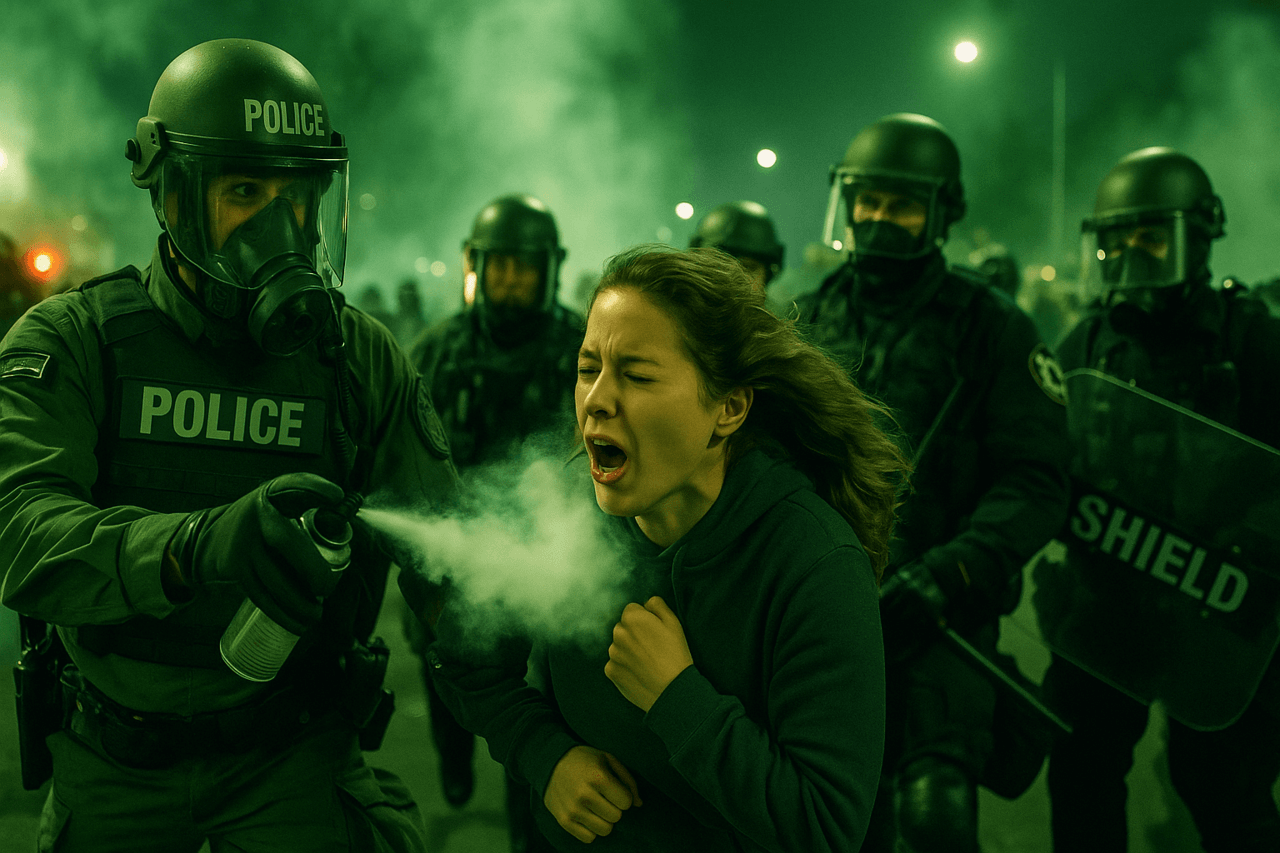
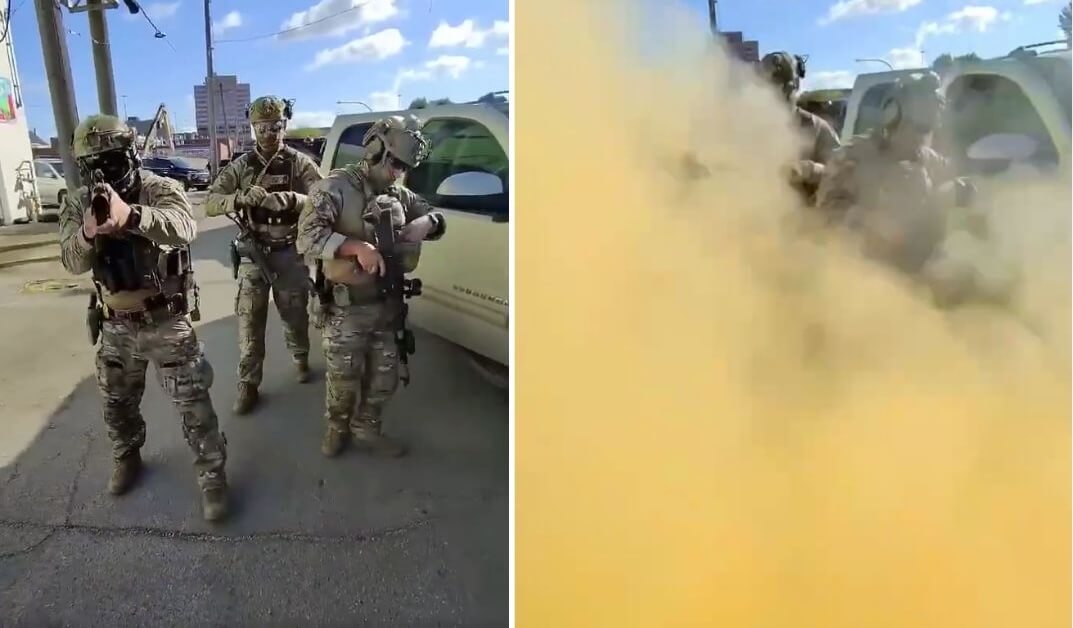
Children in Chicago’s Old Irving Park neighborhood were preparing for a Halloween parade on Oct. 25 when federal agents reportedly fired tear gas into the street to disperse protesters protesting immigration arrests in the neighborhood.
“These children were tear gassed as they were walking to celebrate Halloween in the parking lot of a local school,” U.S. District Judge Sarah Ellis said in court Tuesday, according to CBS News. “I can only imagine how scared they must have been.”
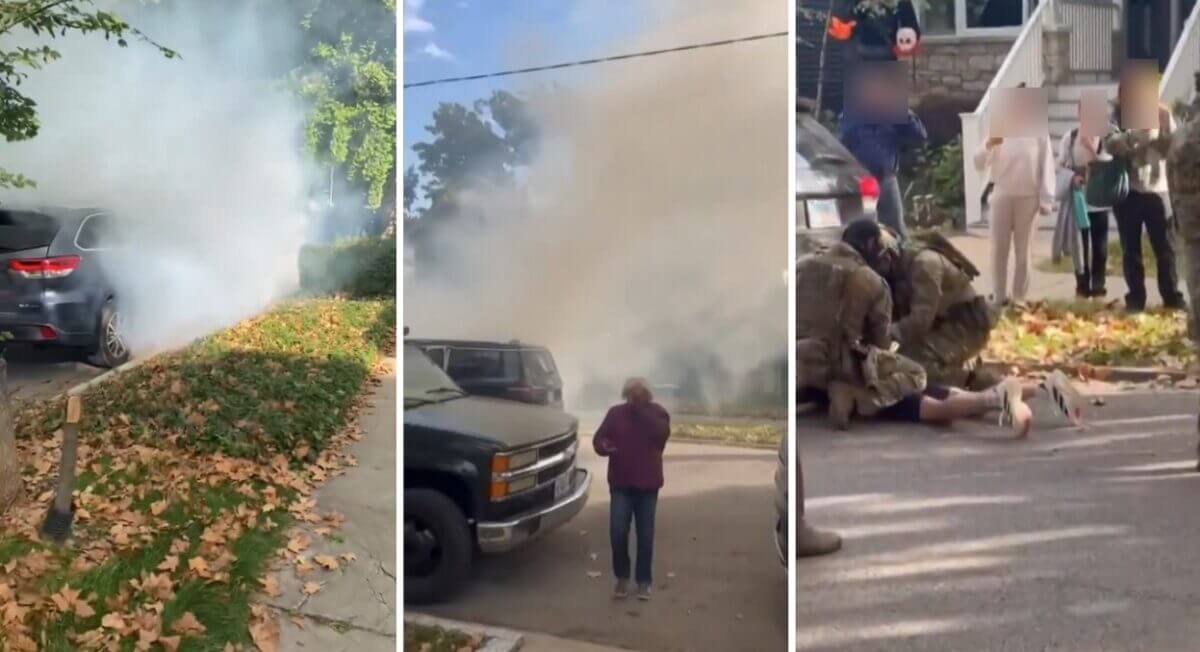
Ellis questioned U.S. Customs and Border Protection Commissioner Gregory Bovino about this and other incidents that protesters say violate a temporary restraining order (TRO) she issued earlier this month.
The Oct. 9 restitution order came after a group of journalists, religious leaders and protesters filed a lawsuit against the Trump administration over what they called a “pattern of extreme brutality” by federal agents against peaceful protesters since Operation Midway Blitz — an interagency operation targeting “criminal illegal immigrants” in Illinois — began on Sept. 2.
When Judge Ellis asked Bovino to provide all use-of-force reports from Sept. 2 from agents involved in Operation Midway Blitz by the end of Tuesday, Bovino said it was impossible because of the “enormous volume.” Ellis then ordered Bovino to turn over those reports, along with the accompanying body camera recordings, by the end of Friday, Oct. 31.
The court order places restrictions on federal agents’ ability to use “riot control weapons” such as tear gas and pepper spray, use force against individuals, and require people to leave public places they have a legal right to be in.
A subsequent court filing, dated Oct. 27, alleges that federal agents have violated the Restitution Order “almost daily” since it was issued. “Immigration enforcement does not ordinarily require the daily use of tear gas against civilians in residential areas,” the filing states.
An analysis of social media videos from 28 events in Illinois from October 9 to 27 revealed numerous examples of the use of force and weapons to control riots.
In total, we found seven incidents that appeared to demonstrate the use of weapons to control riots when there appeared to be no apparent immediate threat from protesters and no audible warnings. Nineteen showed the use of force, such as knocking people to the ground when they were not offering any apparent resistance. Another seven showed officers ordering or threatening people to leave public spaces. Some of the events we found showed incidents that appeared to fall into more than one of these categories. You can view the full dataset here.
It is important to note that the full context of an incident may not be clear from social media videos alone. For example, bystanders often begin filming only when an arrest is already underway, which can make it difficult to determine what happened in the moments before force was used. Each of the incidents included in our dataset was confirmed to have occurred in Illinois in recent weeks by at least two sources—videos taken by different people, local reports, or statements from the Department of Homeland Security (DHS).
The U.S. Department of Homeland Security, which oversees Customs and Border Protection (CBP) and Immigration and Customs Enforcement (ICE), has justified the use of force or weapons to quell the unrest by claiming that protesters were threatening or attacking agents.
The Department of Homeland Security has also stated several times in its response that its officers “have seen a 1,000 percent increase in assaults on them.” It’s a claim the department has made in the past, commenting on clashes with protesters during immigration raids in other cities, such as Los Angeles and Portland. However, an NPR analysis of court records earlier this month found only about a 25 percent increase in assault charges against federal officers through mid-September compared to the same period last year.
The TRO states that weapons or force to control a riot can be used in circumstances such as an “imminent threat” of physical harm to officers or others, when multiple warnings have been given, or when it is “necessary and proportionate” to make an arrest. We did not include videos where it was clear that such conditions were met.
Despite the limitations, bystander videos are often the only evidence of such incidents, which may not be reported by the media or may be over by the time reporters arrive on the scene.
Our analysis found videos showing the use of riot control weapons, such as tear gas, pepper spray, and other less-lethal weapons, in seven instances where protesters appeared to pose no visible threat in the video and where no audible warnings were given.
Among its provisions, the Crime Suppression Act prohibits the use of these weapons against people “who do not pose an immediate threat to the safety of a law enforcement officer or other persons” and in cases where their use against targets would result in injury to those who pose no threat.
One of these videos captured Bovino throwing what appeared to be a tear gas canister during clashes on October 23 in the Little Village neighborhood, during an operation that resulted in the arrest of eight people, including a 16-year-old U.S. citizen. Bovino and the Department of Homeland Security said he was hit in the head by objects thrown by protesters before the tear gas canister was thrown.
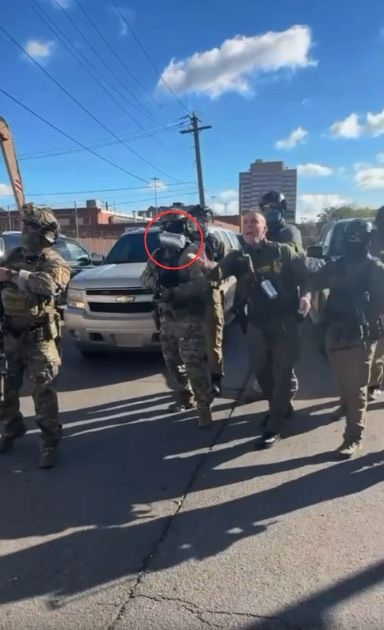
The Department of Homeland Security posted the video on Facebook, claiming it was evidence that “the use of chemical weapons was in full compliance with Customs and Border Protection policy and was necessary to ensure the safety of both law enforcement and the public.”
The video shows a rock sliding on the ground behind Bovino, but does not show the moment it allegedly hit the Border Patrol agent in the head. The protester who filmed the encounter reportedly denied that Bovino was hit.
Tear gas was also used on October 12 in Albany Park, October 14 on Chicago’s East Side, October 24 in Lakeview, and October 25 in Avondale.
The videos we reviewed also showed other types of riot control weapons mentioned in the refund request. Another video from the October 23 protests in Little Village, posted by a protester named Enrique Bahena, shows an agent firing a less-lethal projectile directly at the person filming. A court document dated October 26 says Bahena was shot “in the neck from a distance of five feet with a pepper ball.”
Analysis of the video, which appears to be the same as screenshots in court documents, revealed that the video actually shows an agent deploying a B&T GL-06 40mm launcher, which can be used to launch chemical irritant shells, such as the one seen in the video.
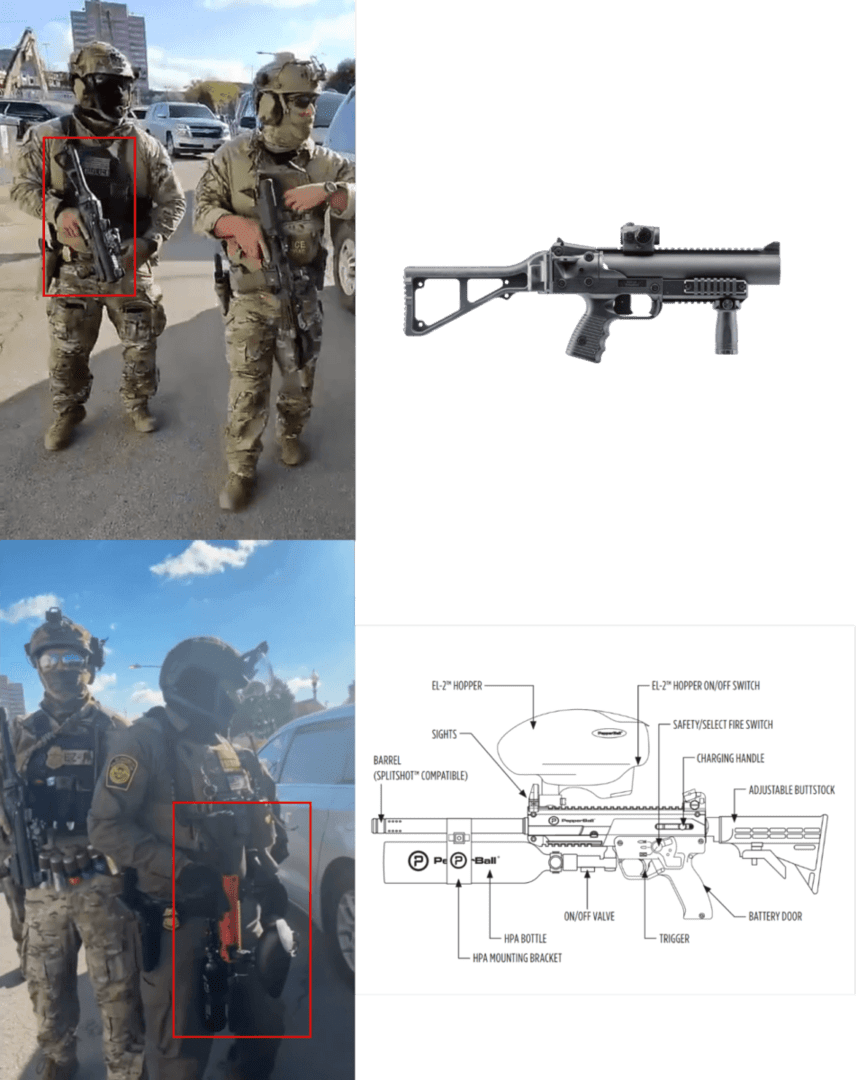
In an interview with the Chicago Block Club, a local publication, Bahena said that the agents did not warn him before shooting him “in the throat” and throwing tear gas canisters at a group of protesters who were yelling at them to leave. He also said in the interview that protesters did throw objects at the agents, but that this happened after the agents had already used force.
B&T’s specifications for its 40mm rounds state that “shootings to the head, neck, spine, or heart should be avoided unless lethal force is warranted,” and users are advised to aim for the waistline.
A 2021 report by the Office of Inspector General of the U.S. Department of Homeland Security noted that “ICE’s use-of-force policy states that a 40mm launcher is a lethal weapon when fired at someone, while CBP’s use-of-force policy only instructs officers not to aim for a person’s head or neck.”
During the same incident in Little Village, video footage showed other officers apparently firing less-lethal weapons at protesters.
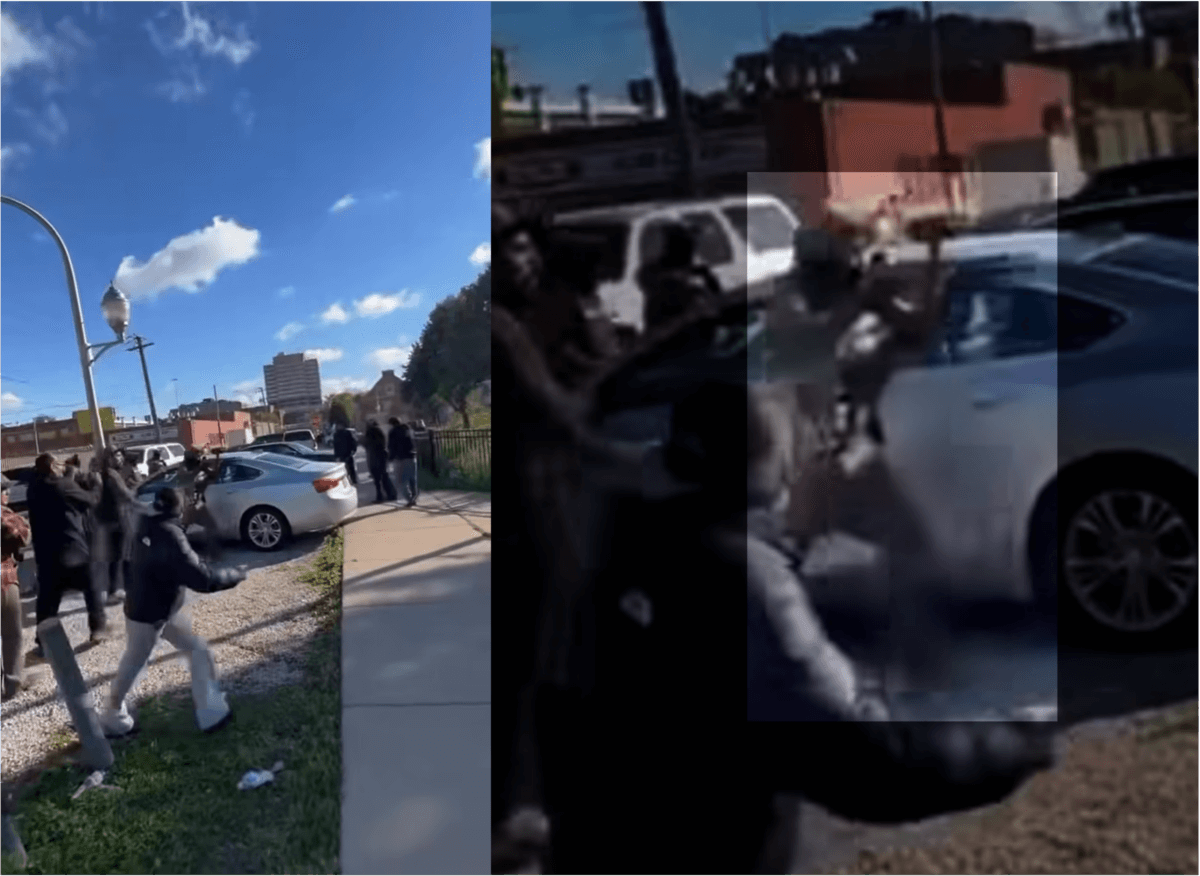
The Cashback Act restricts the use of air-powered or munitions launchers, such as 40mm launchers, to hit a person, including in the neck, unless they pose an “imminent threat of serious bodily harm or death.”
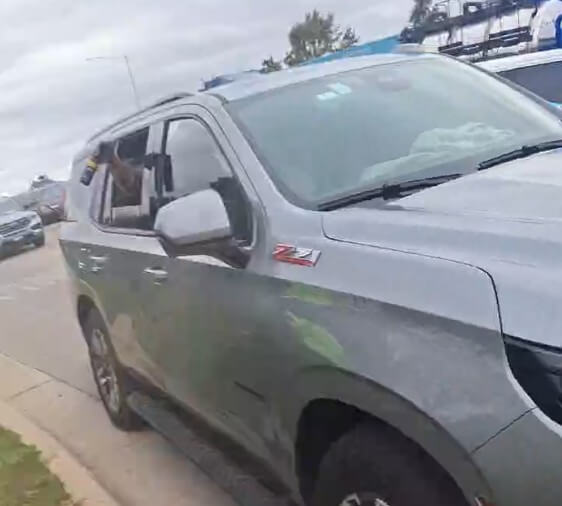
In another incident on October 22, an agent appeared to quickly roll down his window and spray what appeared to be a chemical irritant at protesters who were confronting federal officers outside a Sam’s Club in Chicago’s Cicero neighborhood.
The incident was captured on two separate live streams, showing several protesters standing next to a dark gray Chevrolet Tahoe with no front license plate. One of the protesters raps on the car’s window. Someone then rolls down the window and sprays what appears to be a liquid very quickly, then raises it again as the car leaves the scene. One of the people filming said in a post for the live broadcast that it was pepper spray.
It also reviewed several videos of agents’ use of force during arrests believed to be related to Operation Midway Blitz, and found those where the force shown appeared to be potentially excessive and the person being arrested did not pose an “imminent threat of physical harm to others”—the requirements of the Restitution Act for the use of force, such as to knock someone down or push them to the ground.
On October 10, the day after the appeal order was issued, an ICE agent was seen pulling a teenage girl out of a car in Hoffman Estates, a suburb of Chicago, and throwing her to the ground while she screamed, “I am not resisting.” The teenager, reportedly an 18-year-old U.S. citizen, was handcuffed and the officer appeared to knee her in the back. Assistant Secretary of Homeland Security McLaughlin stated in his post that the incident was a 2024 “burglary” arrest that did not involve ICE, although this information has been denied by numerous news outlets.
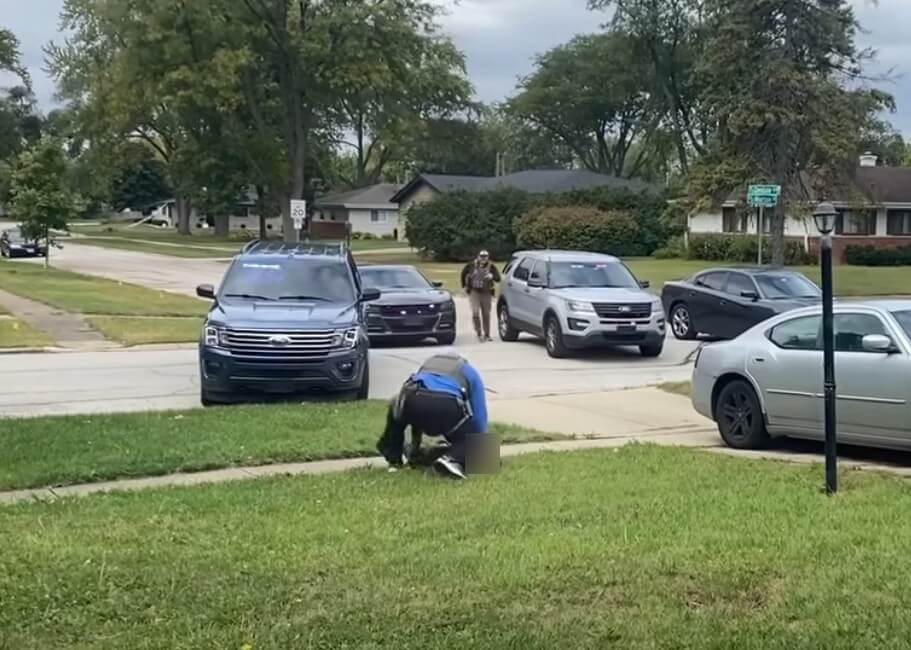
This was not the only time the DHS version of events appeared to contradict a video of the incident posted on social media.
On October 22, a woman, identified by the Department of Homeland Security as Isabel Mata, was arrested by Border Patrol agents in Little Village. Video of the incident shows several agents assaulting her, with one of them kneeling on her back to keep her on the ground. The Department of Homeland Security said in the incident that Mata “allegedly threatened a law enforcement officer, stating that she would hit Chief Gregory Bovino.” A review of the video, which appears to show Mata moments before the agents assaulted her, did not hear any threats, although Mata appeared to be standing next to the person filming.
Another video from October 10 shows agents engaging a car on Hubbard Street and pulling the driver by the legs. The woman, identified as Diane Figueroa, told Newsweek that she was going to get coffee before work and “instead of treating the situation as a normal traffic accident,” armed, masked agents forcibly removed her without question or notice that she was under arrest.”
The DHS reportedly told Newsweek that Border Patrol agents were making a targeted arrest when Figueroa’s vehicle blocked the agents and crashed into an unmarked government vehicle. They also said she “violently resisted” and was arrested for assaulting a federal agent.
The video shows agents making an arrest before one of their vehicles swerved into another lane and appeared to hit Figueroa’s car. Several bystanders can be heard shouting that the agents first crashed into Figueroa’s car and then turned around in the middle of the street.
Це був не єдиний випадок, коли версія подій DHS, схоже, суперечить відеозапису інциденту, опублікованому в соціальних мережах.
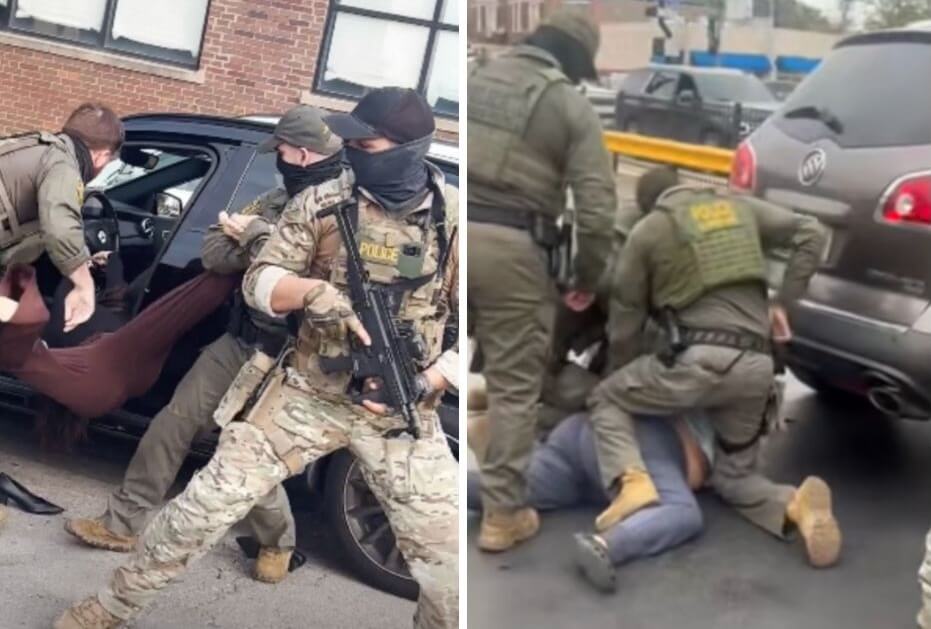
The Dispersal Act prohibits federal agents from “issuing a crowd-dispersal order requiring any person to leave a public place where they have a lawful right to be unless the dispersal is justified by exigent circumstances as defined in the Department of Homeland Security’s Use of Force Policy.”
In a video recorded on October 24 in Arlington Heights, Chicago, a masked man with a rifle tells a cameraman to “get across the street” and “get back in your car.” The cameraman yells that the agents attacked a woman and knocked her phone out of her hands, and the video appears to show the woman struggling with the masked agent. Another video from the same location and date shows agents arresting a man on the ground.
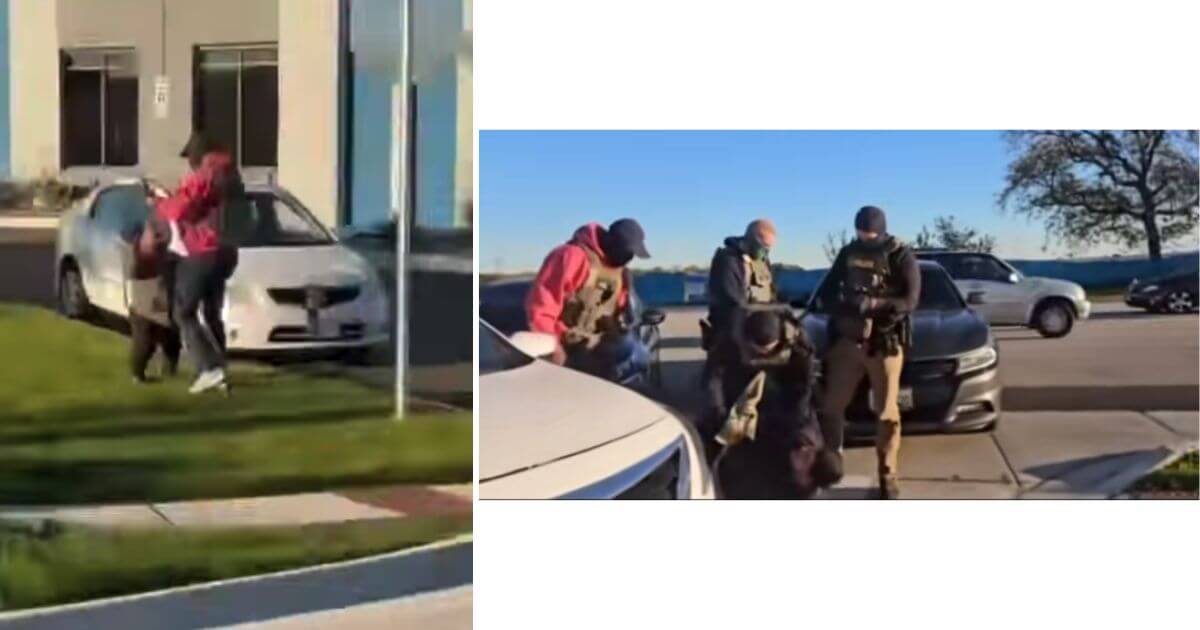
In some of these cases, agents appear to point non-lethal weapons at civilians, ordering them to leave public spaces. A video from October 16 shows agents telling protesters to “get off the street,” directing pepper spray at them, and threatening them with arrest in the Evanston neighborhood of Chicago.
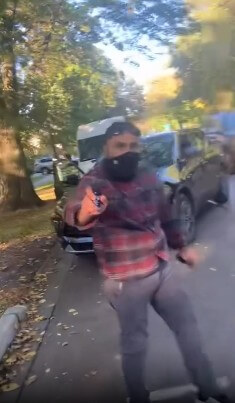
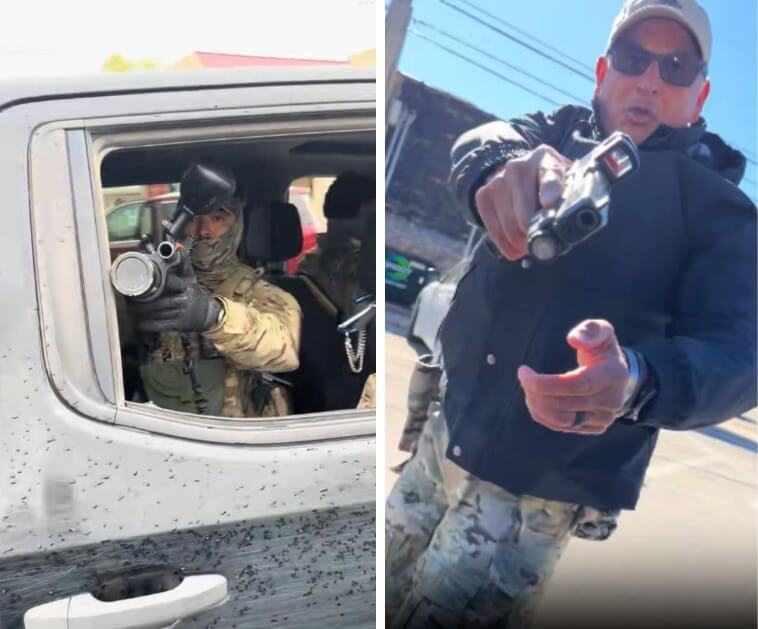
A similar incident occurred on October 19 in Rolling Meadows, when an officer was photographed pointing a pepper spray gun from a moving vehicle at a person filming him in a parking lot. A federal judge reportedly called the incident “disturbing” and called for answers.
On October 20, in Berwyn, an agent pointed a gun at a woman who said she was pregnant. The woman said the agents were chasing two people, and video footage shows her honking to warn others nearby. A DHS agent told Newsweek that the agent “acted to protect his own life and the safety of others, and exercised great restraint.”
Judge Ellis’s Restitution Order expires on November 6. A hearing is scheduled for November 5 to determine whether the Restitution Order should be converted into a preliminary injunction.
The events surrounding Operation Midway Blitz in Illinois have highlighted serious problems with the way federal agents use force during immigration raids and confrontations with protesters. Tear gas, pepper spray, and forceful tactics were used in various Chicago neighborhoods in situations where there was no apparent threat or warning. Some of the incidents involved children and bystanders, further fueling the public backlash.
Multiple videos, confirmed by various sources, contradict DHS’s official explanation and indicate possible violations of the terms of the temporary injunction. Judge Sarah Ellis has already questioned the proportionality of the agents’ actions and has demanded a full report on the use of force.
Ultimately, these events raise an important question: Can federal agencies act within the law and respect human rights when it comes to immigration operations? The situation in Illinois shows that public oversight, transparency, and independent verification of evidence remain critically needed, especially where forceful methods affect civilians.