20.04.2023
5 min
3945



In 1979, one of the most mysterious incidents with the release of anthrax occurred. The article reveals the circumstances of the tragedy, the scale of its consequences, and the authorities’ attempts to hide the truth. Readers will learn about how the investigation was conducted and what actually happened.

On March 30, 1979, an accident occurred in one of the military towns where biological weapons were produced. According to microbiologist Kanatzhan Alibekov, on that day one of the workers did not replace the filter on the equipment, which led to tragic consequences.
Kanatzhan Alibekov, also known as Ken Alibek, later emigrated to the United States and told about this event in his book “Biological Hazard”. He also developed an even more dangerous strain of anthrax elsewhere after the incident.
Alibekov claimed that the Siberian used in this incident was created from documentation obtained from the Japanese military after World War II.
On April 2, 1979, due to negligence and the lack of a filter, anthrax spores escaped through the ventilation and spread to the southern areas of the city, covering several residential areas and other facilities.
On April 4, 1979, patients began to arrive at the hospital with seemingly ordinary symptoms that were initially diagnosed as pneumonia. However, after a few days it became obvious that the disease is much more dangerous.
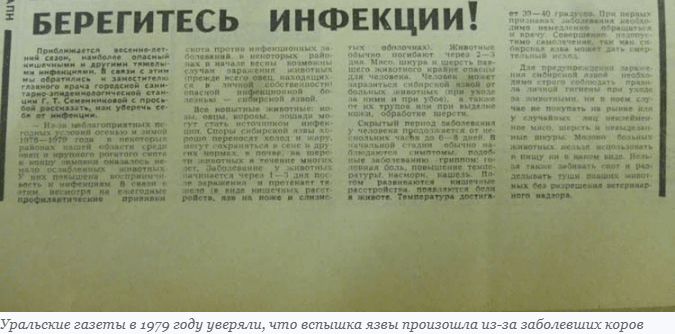
The authorities initially tried to hide the scale of the event, but after the disease spread among the population, a legend about spoiled meat was created to hide the real cause.
After the accident, a perimeter was established around the contamination zone, where all stray animals were destroyed, illegal meat traders were arrested and hospital records were destroyed. The bodies of the dead were treated with chemicals to hide traces of anthrax.
On April 5, 1979, Voice of America reported on the development of biological weapons and the leakage of anthrax, which caused numerous deaths. However, this information has not been confirmed.
On April 10, doctors first performed an autopsy on the body of one of the deceased, ruling out all other diagnoses until the only possibility remained – anthrax.
On April 12, the death toll continued to rise, drawing attention at the state level. A group of specialists flew in from Moscow and immediately began the fight against the dangerous bacteria, treating the entire district with disinfectants.
The authorities organized mass vaccination, and people were not allowed to work without proof of vaccination. During the epidemic, 80% of the population of the district was vaccinated.
Panic in the city grew as rumors spread quickly and many residents fled the city. The official version of the outbreak was infection through livestock, which led to the mass destruction of animals and the removal of meat.
Despite the official version, after the autopsy of many bodies, it became clear that the infection was transmitted by inhalation, and not through meat, which cast doubt on the official explanations.
After the collapse of the state, the new president faced the task of restoring relations with Western countries. One of the important steps was the complete cessation of the biological weapons program.
In the conditions of changes in the political arena, the investigation became possible, and the access of scientists to the necessary information corresponded to the national interests. All administrative issues of the group were coordinated by the president’s adviser, which contributed to the successful conduct of research.
In 1992, a team of specialists arrived at the scene of the tragedy:
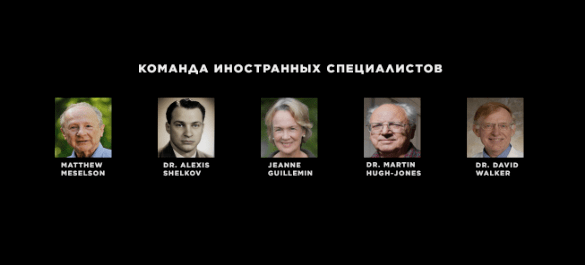
Group leader: Matthew Meselson (Harvard University) In 1983. led an investigation into an incident involving the use of T-2 toxin by warring parties in Southeast Asia;
Jeanne Guillemin (Boston College) Matthew’s wife, later wrote the book: “Anthrax: The Investigation of Deadly Outbreak” Specialized in the problem of misuse of bacteriological science, government weapons programs;
Dr. Martin Hugh-Jones (Louisiana State University) Professor Emeritus at Louisiana State University; veterinary epidemiologist with global experience;
Dr. Alexis Shelkov (Salk Institute) Ethnic Russian, born in Harbin, emigrated to the USA, where he received a higher education in the field of medicine, from the official biography of Alexis, you can learn that he participated in various government (including military) programs to study and combat viruses;
Dr. David Walker (University of Texas) In 2001, he was involved as an expert in the investigation of a terrorist attack using the Anthrax controversy.
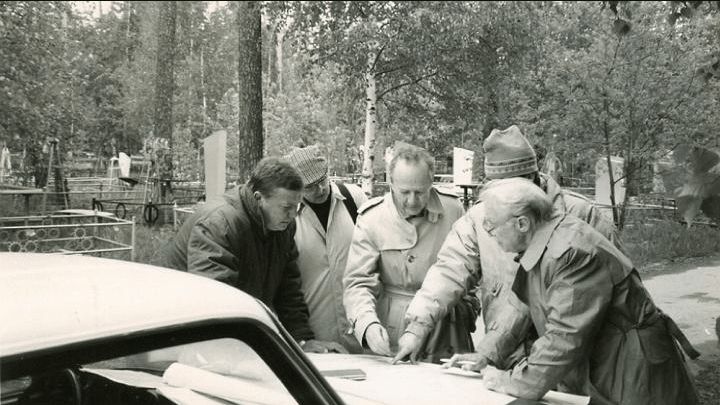
Thus, the research team consisted of scientists specializing in pathogens, some of whom already had experience working with US law enforcement agencies.
One of the key pieces of evidence was the anthrax death list, which contained address information, which made it possible to interview local residents. Additional data on dates of birth and death were obtained from the epitaphs on the graves, since all the victims were buried in the same cemetery.
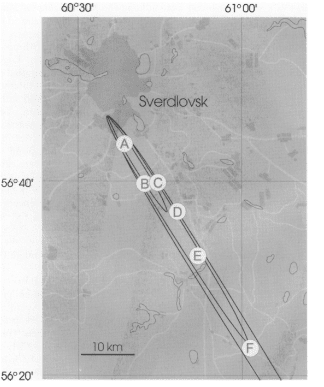
The group faced difficulties in orientation due to the inaccuracy of the map. However, after purchasing an accurate map from local residents and comparing it to a satellite image, the researchers found that all of the deaths occurred among residents who were in the southeast of the city on the morning of the incident.
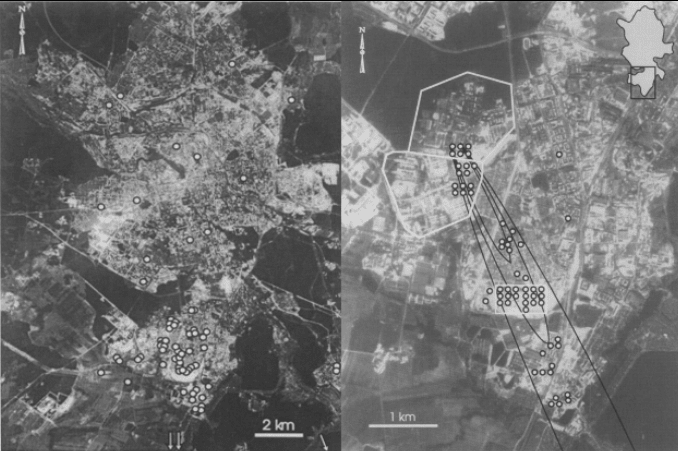
Back then, up-to-date maps were really rare and had to be bought from local kiosks, and access to satellite images was almost impossible for ordinary people.
Today, mega-corporations such as Google and Baidu provide tools for obtaining up-to-date maps and satellite images. This is an important resource for research, as shown in the previous examples where accurate maps helped to determine the location of an event.
Another key piece of evidence was archived airport records that showed the direction of the wind at the time of the incident.
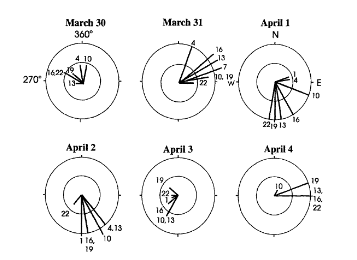
As you can see, on April 2, the wind blew from the northwest to the southeast. The epicenter on the map is “Sverdlovsk-19”, the most frequent deaths occurred to people who were southeast of “Sverdlovsk-19” on April 2.
The version about the epizootic nature of the anthrax outbreak was refuted based on the analysis of address information, surveys of relatives of victims and data on weather conditions. The article states that the group of researchers did not take the official version seriously, which indicates their desire to confirm another version – about a leak from the laboratory.
The group likely had access to intelligence that they were trying to confirm on the ground. In 1993, the researchers returned for an additional survey of the residents of the region, which again refuted the version about contamination through meat.