18.09.2024
2 min
1383



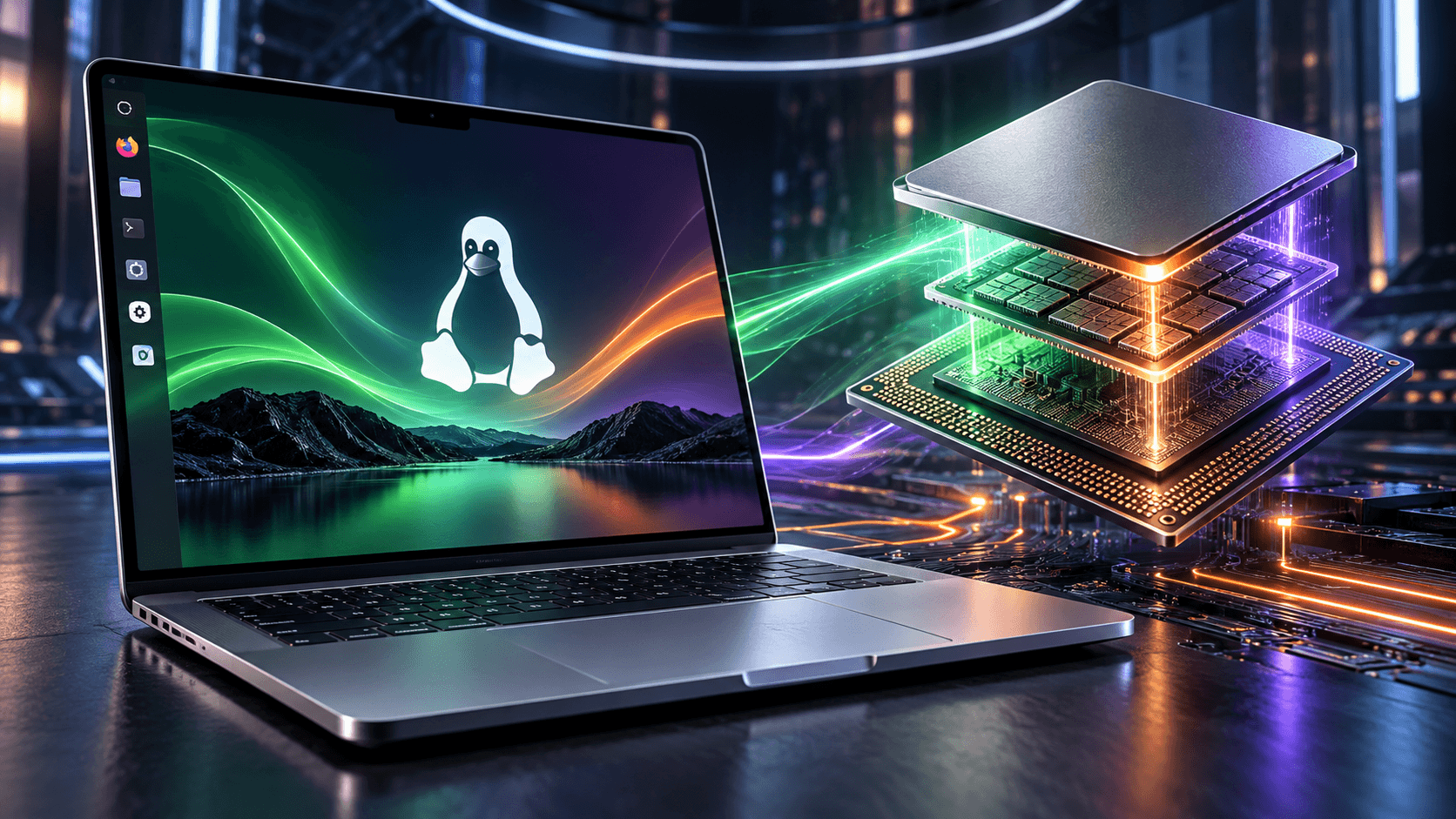
Asahi Linux developers added support for M3-powered computers to the distribution’s installer over the weekend. Linux can now be installed on most Mac models featuring the third generation of Apple Silicon chips. The only exception is the M3 Ultra Mac Studio, which remains unsupported.
According to the Asahi Linux team, almost everything that already works on M1 and M2 Macs is now available on supported M3 machines. This includes webcams, internal microphones, USB 3, Wi-Fi, Bluetooth, and hardware-accelerated video decoding with AV1 support.
However, Apple GPU support is not yet complete, so users should not expect high performance or energy efficiency when working with 3D graphics. The developers are also continuing to work on full support for Apple’s Display Co-Processor, known as DCP.
Due to incomplete DCP support, sleep mode does not currently work on M3 Macs. Users are also unable to use the built-in HDMI ports. These are significant limitations for anyone planning to use Asahi Linux as their primary operating system for everyday work.
Since M3 support was only recently added, the system can currently be installed only through the installer’s Expert Mode. The Asahi Linux team hopes to remove this requirement before the Fedora Linux 45 beta arrives in the coming weeks.
Asahi Linux is a community-led project that aims to bring full Linux support to Mac computers powered by Apple’s custom chips. Apple does not provide Linux developers with technical documentation for its hardware, so the team must independently reverse-engineer the company’s chips and peripherals and develop the necessary drivers.
The project began shortly after Apple introduced the first M1 Macs in 2020. The first publicly available alpha version of Asahi Linux was released in 2022. Since then, developers have gradually added support for an increasing number of components across Apple’s M-series hardware platform.
In 2023, Fedora Asahi Remix became the project’s primary distribution. It combines Fedora Linux with the kernel, drivers, and other components required to run on Apple Silicon computers.
Despite the popularity of Macs among developers and power users due to their performance, Apple does not officially support Linux on these devices. As a result, installing an alternative operating system on a Mac depends on the work of independent developers.
According to Phoronix, M3 support is already being actively upstreamed to the mainline Linux kernel. Initial boot support is already available, but several additional patches must still be upstreamed to achieve the same level of compatibility offered by Asahi Linux. Some of these changes are expected to arrive in Linux 7.4 and later versions.
Linux has previously demonstrated its ability to expand the hardware capabilities of modern Apple computers. In May, an engineer managed to connect an external Nvidia RTX 5090 graphics card to an M4 MacBook Air and use it through a Linux virtual machine, even though macOS does not support external GPUs on Apple Silicon.
The setup required extensive modifications to QEMU, custom workarounds for Apple’s DMA limitations, and the resolution of numerous technical issues. The experiment showed that Linux can provide access to hardware that remains unavailable in macOS.
Asahi Linux takes this idea much further by allowing Linux to run directly on M-series Macs and serve as the primary operating system. Official support for most M3 models marks another important step in that direction.