01.10.2025
2 min
788



Regular interaction with chatbots and customer service robots may influence how people communicate, perceive themselves, and express emotions. Researchers have called this potential effect “robotoid humanness.”
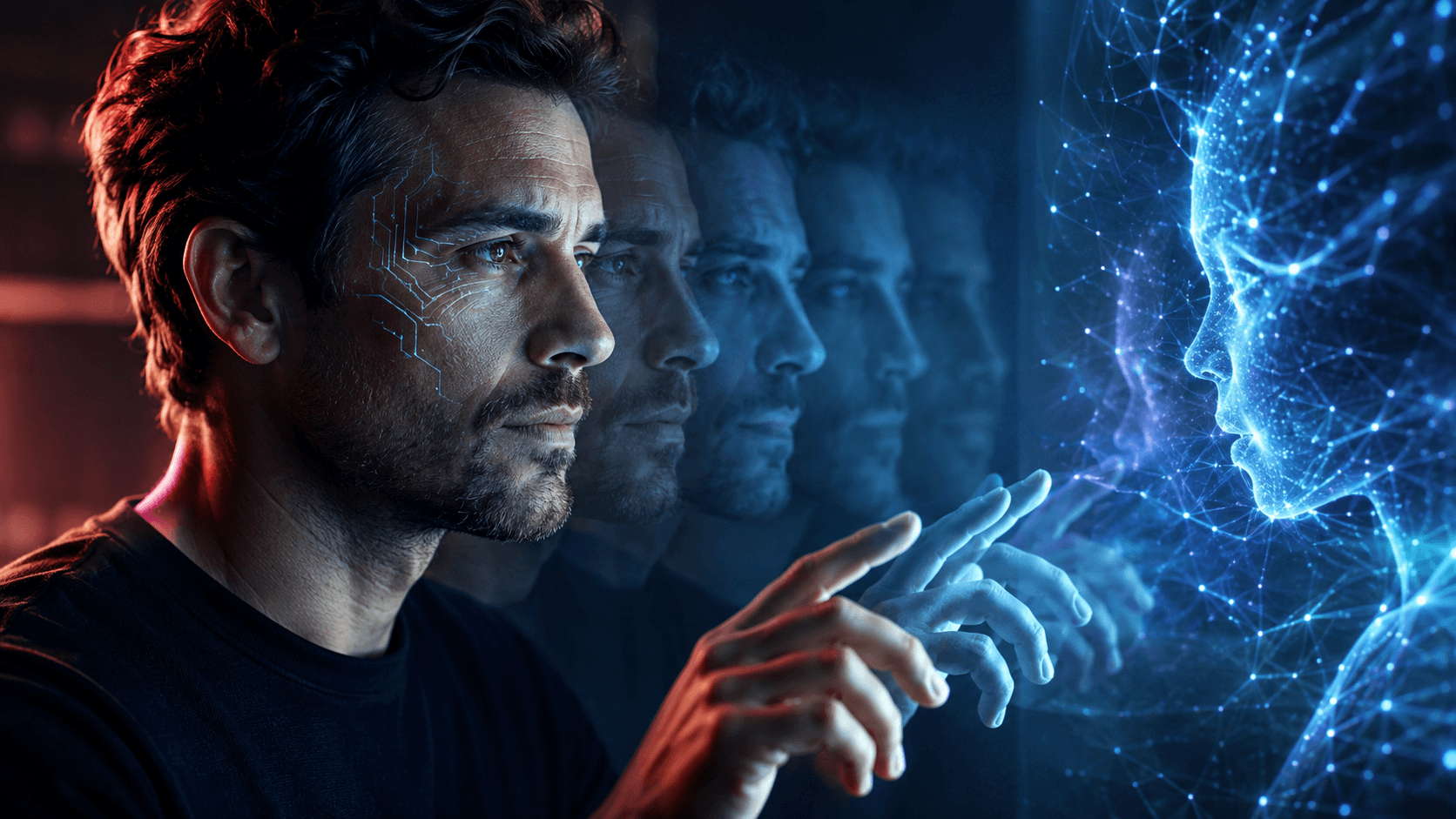
AI systems are trained on human-created texts to better reproduce natural language, emotional responses, and social cues. However, the authors of a new paper published in AI & Society suggest that this influence may work both ways: bots become more like humans, while humans gradually adapt to machine logic.
This effect may be especially noticeable when people interact with customer service systems. AI is already being used in retail, hospitality, tourism, and healthcare, where chatbots and social robots imitate human speech, gestures, and emotional responses.
The paper’s authors, Selcen Ozturkcan, Jean-Paul de Cros Peronard, and Inci Toral-Manson, represent Linnaeus University in Sweden, Aarhus University in Denmark, and the University of Birmingham in the United Kingdom. They introduced the concept of robotoid humanness to describe the gradual adaptation of humans to the pace, categories, and logic of machines.
“Robots become more like people, and people become more like robots,” explained the paper’s co-author Inci Toral-Manson.
During conversations, people often unconsciously imitate the behavior, intonation, and expressions of the person they are speaking with. This phenomenon is known as mirroring. According to the researchers, a similar mechanism may emerge during prolonged interaction with AI, which responds confidently, maintains a consistent pace, and favors predictable phrasing.
The mechanism proposed by the authors consists of three stages. First, the user enters a synthetic social environment and begins to perceive interaction with the bot as meaningful communication. The system then creates a simplified statistical profile of the person and reflects it back through personalized responses.
During the third stage, users may gradually change how they express themselves so the machine can understand them more easily. They begin communicating more briefly, clearly, and predictably, adapting to the types of requests the system can successfully recognize and reward with useful responses.
Repeated exposure to this scenario may create a closed feedback loop. The user acts, the AI responds, and the person gradually internalizes the characteristics of the interaction. Algorithms can further reinforce this process by adjusting their behavior based on previous requests and building an increasingly personalized model of the user.
The researchers warn that persistent algorithmic mirroring may affect self-esteem, personal identity, and the tendency to seek confirmation of existing beliefs. Positive responses from the system may increase confidence, while negative or emotionally cold signals could lower a person’s self-esteem.
At the same time, individual reactions may depend on technological readiness, cultural background, and personality traits. One of the main concerns is that users may begin relying on algorithms as a source of validation for their self-worth.
The paper was published as an open-access Open Forum article on August 19th, 2026. Importantly, it presents a theoretical model rather than a completed experiment measuring changes in human behavior. The authors developed the concept, explained a possible mechanism of influence, and proposed hypotheses for future empirical research.
The researchers argue that customer-facing AI systems should be viewed not only as convenient interfaces but also as technologies capable of influencing identity formation. They also raise the question of whether people should have the right not to be reduced to a simplified set of characteristics that an algorithm can understand.