26.05.2025
2 min
839



A hotel guest. A bathroom mirror. A hidden camera allegedly detected by artificial intelligence in just 90 seconds. This is just one of several stories currently circulating on X. But do these methods actually work? To find out, journalists turned to cybersecurity experts.
You may have already seen similar posts on X. They are shared by self-proclaimed AI enthusiasts who often present themselves as experts in digital security and privacy. Others promise to teach people how to make money with AI or improve business efficiency. These stories often begin with a sensational claim along the lines of: “Wait, Claude can actually do that?!”
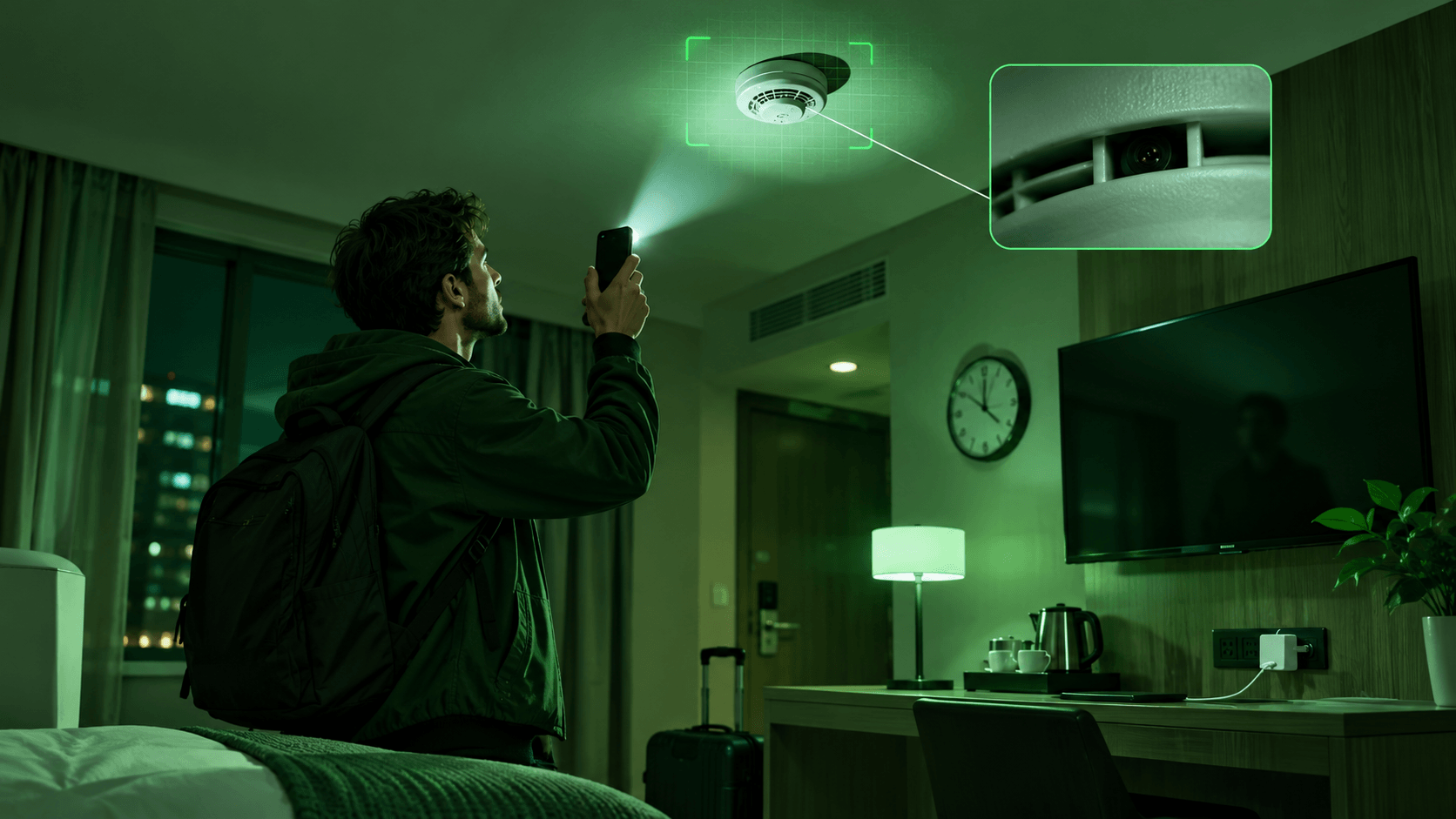
One such post was published by user @Damir_Akaza. According to him, a friend and his girlfriend checked into a hotel and used Claude Code, Anthropic’s AI coding assistant, to discover a hidden camera in the bathroom. The entire inspection allegedly took just 90 seconds.
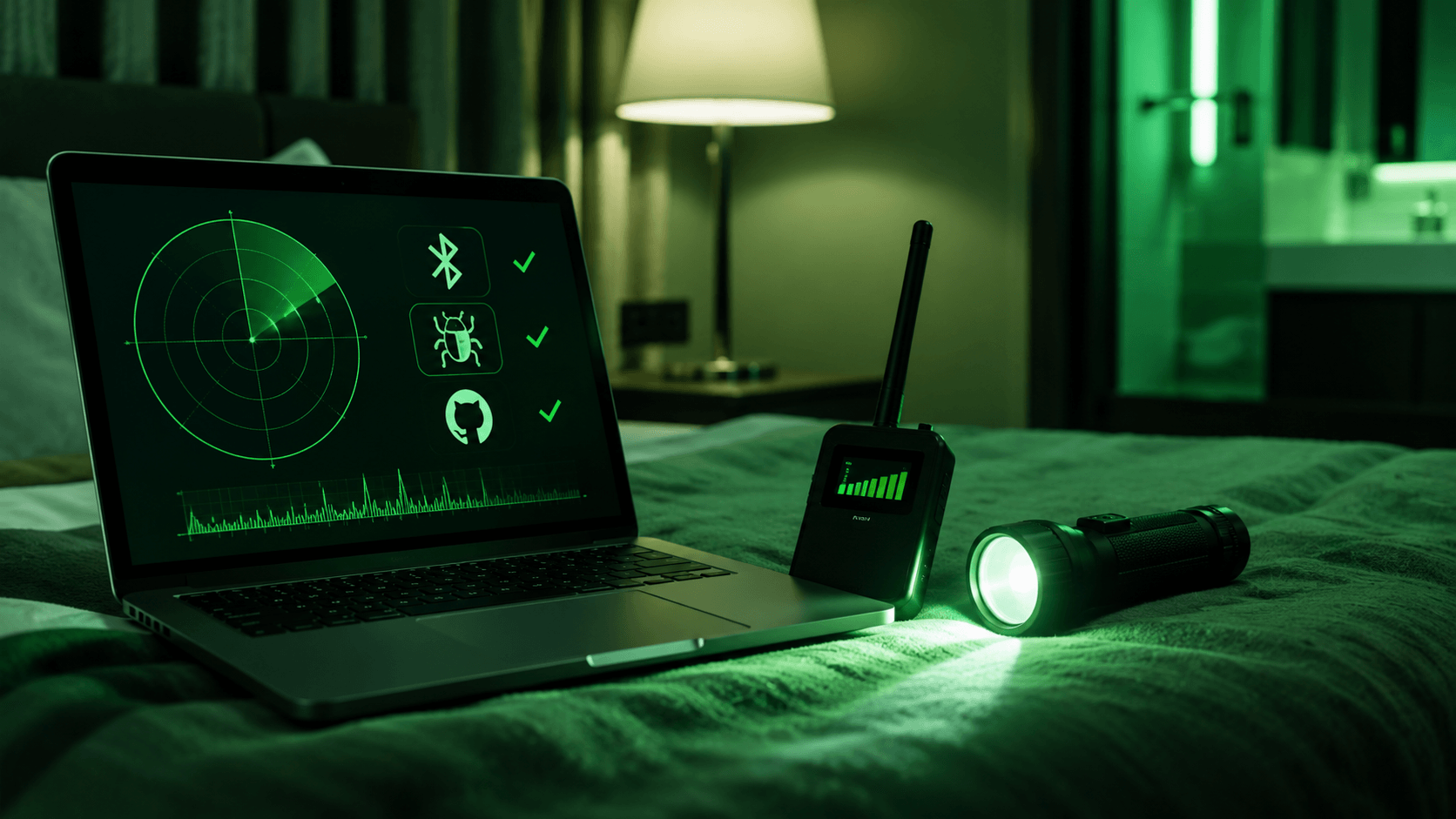
The author also outlined a five-step security check that travelers can perform using their laptops before even unpacking their belongings in a hotel room or an Airbnb rental.
The process begins by scanning the hotel’s Wi-Fi network using Nmap, an open-source network scanning tool. Claude Code is supposed to identify connected devices, their manufacturers, and open ports that could be used to transmit video.
The next step involves scanning for Bluetooth devices to detect potential tracking devices, including Apple AirTags. The assistant then suggests checking the user’s smartphone for possible signs of spyware using Amnesty International’s Mobile Verification Toolkit.
If the network scan produces no results, Claude Code helps guide a physical inspection of the room. Users are advised to examine mirrors, ventilation openings, and other places where cameras might be concealed. An ordinary flashlight is all that is needed for this step.
Finally, the system generates a report describing suspicious findings, assessing potential risks, and recommending further action. For example, it might suggest asking hotel management for another room or contacting the police.
My friend checked into a hotel with his girlfriend, ran a single script in Claude Code, and found out in 90 seconds that a hidden camera was running right behind the bathroom mirror
After what he told me, neither of us even unpacks a suitcase in a hotel or an Airbnb anymore… https://t.co/VmAdLOzkgd pic.twitter.com/CfNcAMxW7p
— Damir Akaza (@Damir_Akaza) October 25, 2026
In a similar post, user @Starmexx claimed that Claude Code reverse-engineered a hotel room’s electronic lock in just 90 seconds, identified outdated encryption, and discovered a connection between the lock and a smoke detector.
The same account also promoted a set of ten security rules for Claude Code, supposedly designed to help detect hidden cameras and check hotel equipment for signs of compromise. Readers were then encouraged to purchase the DigiShield app for $39.99 for the complete package.
Samuel Hassine, CEO and co-founder of the French cybersecurity company Filigran, explained that the methods described are legitimate but have significant limitations.
“The methods described in these posts are real and well-established: network scanning, Bluetooth device detection, and Amnesty International’s toolkit for analyzing phones.”
According to Hassine, AI simply combines these tools into a single workflow and explains the results in plain language. This can be genuinely useful, especially for people without specialized technical knowledge.
However, cameras that record footage locally or use a separate connection will remain invisible to such scans. This includes many inexpensive hidden cameras that store recordings on SD cards and are commonly used for covert surveillance.
As for detecting Bluetooth trackers, the expert noted that built-in smartphone alerts may actually do a better job. Meanwhile, @Starmexx’s claim that Claude Code could unlock a hotel room door with a single command, without even getting out of bed, raised far greater doubts for Hassine.
“Nobody has actually demonstrated that this is possible.”
Brian Higgins, a cybersecurity expert at Comparitech, also questioned the need to involve artificial intelligence in such security checks.
“It seems reasonable to assume that someone who is concerned enough about security to carry out these kinds of checks would already be familiar with the capabilities and effectiveness of the relevant tools. Adding another layer in the form of Claude Code therefore seems unnecessary.”
At the same time, artificial intelligence can genuinely help identify vulnerabilities in connected devices. Christian Beek, Vice President of Rapid7 Intelligence, shared the results of his own experiment.
He ran an open-source AI model without an internet connection and asked it to examine his home network of IoT devices for potential security issues.
“In about 20 minutes, the system found a device with a vulnerability I didn’t even know existed. The manufacturer had neglected some basic hardware security measures. When I asked the model to compromise the device, it did so within minutes and then generated a complete vulnerability report that I was able to send to the manufacturer.”
However, as Beek explained, finding a hidden camera in a hotel room is an entirely different challenge.
“I have no doubt about what the technology can do, but I’m concerned about how its capabilities are being used. Pay attention to whether the whole story ends with a link asking you to buy something.”
The expert emphasized that the device on his home network was accessible for scanning and had serious design flaws. Hidden cameras in hotels, by contrast, are often deliberately configured to avoid detection.
“This device was on my home network, was accessible, and had a poorly designed architecture. A hidden camera in a hotel room, on the other hand, is designed to avoid this kind of detection. It typically records video to a memory card or uses its own cellular connection. No model can analyze a signal it simply isn’t receiving,” Beek explained.
Some authors of these posts, including @Damir_Akaza, may simply be trying to gain more followers. Others use eye-catching demonstrations of AI capabilities to attract attention to paid apps and tools.
Sai Molige, Senior Threat Hunting Manager at Forescout, warned that such posts could trigger a new wave of scams similar to the spread of fake applications. This time, however, instead of conventional software, users may be offered ready-made AI prompts, additional skills, and repositories that they are expected to download and run themselves.
“This could expose users to malware, backdoors, and trojanized versions of legitimate tools. A hidden camera detection app is a particularly effective lure because users may willingly grant it access to their network and Bluetooth, believing they are protecting themselves,” Molige explained.
Raghu Nandakumara, Vice President of Industry Strategy at Illumio, also pointed out that there is nothing fundamentally new about the methods being described.
“Remove Claude Code from these instructions, and all you’re left with is network scanning, a Bluetooth receiver, an open-source spyware detection tool, and a flashlight.”
Artificial intelligence makes these tools more accessible to people without technical expertise. However, even if a scan finds nothing suspicious, that does not guarantee the room is safe.
Molige also highlighted the legal implications. Using such tools while staying at a hotel may violate the terms of use of its local network.
“Many guest Wi-Fi agreements explicitly prohibit activities such as port scanning, vulnerability scanning, and collecting other technical information, regardless of the user’s intentions,” the Forescout expert warned.
If you are still concerned about the possibility of a hidden camera in a hotel room or rental property, experts recommend starting with a simple physical inspection. Check mirrors, ventilation openings, showerheads, smoke detectors, televisions, and any objects facing the bed. Most importantly, proceed carefully and avoid damaging someone else’s property.