
05.08.2026
3 min
350



Cybersecurity researchers have uncovered a large-scale attack in which hackers infected hundreds of payment terminals across multiple countries and stole data from at least one million bank cards. The attackers exploited a Windows vulnerability that Microsoft had patched back in December 2024. Businesses and cardholders in Brazil were the most heavily affected.
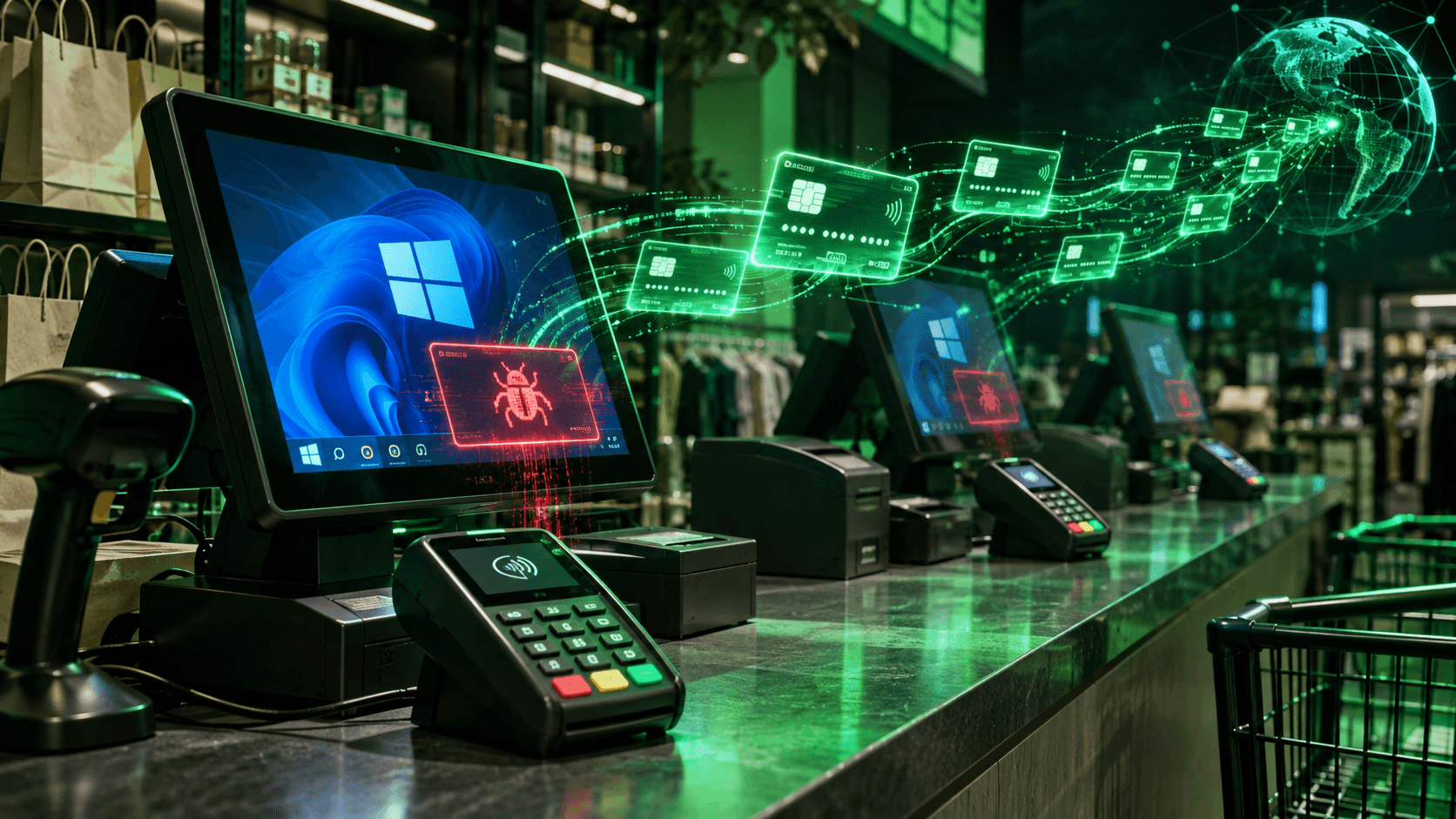
During the investigation, researchers discovered an unsecured server operated by the attacker that contained nearly the entire infrastructure used in the attack. They found malware source code, vulnerability exploitation tools, and a dedicated control panel for managing stolen payment data called VINY JUNIOR TRILHAS.
The server also contained information about 782 compromised POS terminals. These devices and computerized checkout systems are used by stores, restaurants, and other businesses to process payments. The infections were detected across multiple countries, with the highest number of affected systems located in Brazil. Researchers believe the attacker may also be based in Brazil, as the documentation and reports contained linguistic clues pointing to the country.
Statistics from the infected devices revealed that 379 terminals (48.47%) were running Windows 10 Pro 32-bit, while another 280 (35.81%) used Windows 11 Pro 32-bit. Together, these two versions accounted for more than 84% of all compromised systems. Other affected devices were running Windows 7, Windows Server, and specialized Windows editions designed for enterprise equipment.
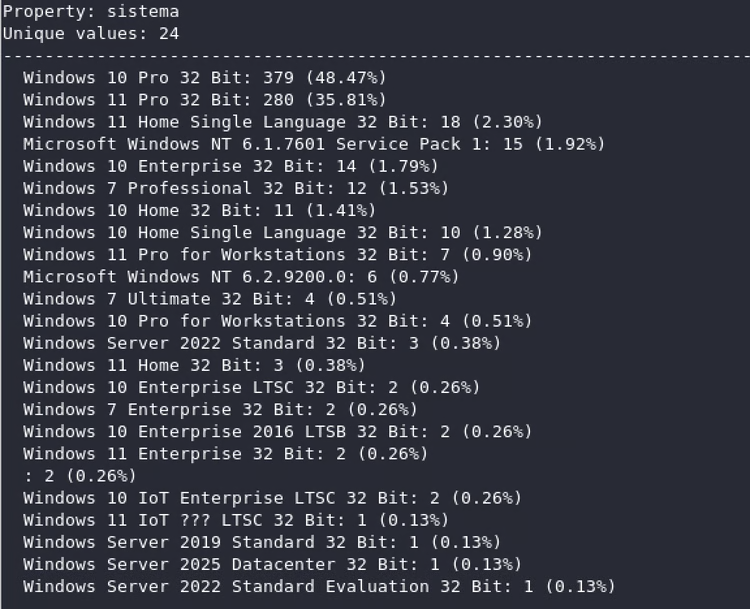
Distribution of infected POS terminals by Windows version. The largest share ran 32-bit editions of Windows 10 Pro and Windows 11 Pro.
The main problem was the lack of timely security updates. Some payment systems remained vulnerable for at least one year and nine months after Microsoft released a patch, allowing hackers to exploit a long-known operating system flaw.
The attackers exploited CVE-2024-49138, a vulnerability in the Windows Common Log File System (CLFS) driver. It is classified as a local privilege escalation vulnerability and allows a user with limited permissions to gain significantly higher access privileges within the system.
Microsoft fixed the issue back in December 2024, but many businesses failed to install the necessary updates. As a result, payment terminals remained vulnerable for a prolonged period after the patch became available.
Researchers discovered that the hacker did not develop the exploit entirely from scratch. The code found on the server was based on a previously published proof-of-concept (PoC) exploit, which the attacker modified for use against POS systems.
After gaining initial access to a terminal, the attacker exploited CVE-2024-49138 to escalate privileges. This enabled the installation of a remote access trojan (RAT) that collected payment card information during transaction processing. Essentially, every infected checkout system became a continuous source of sensitive financial data.
In the attackers’ exposed control panel, researchers discovered records belonging to at least one million unique credit and debit cards. The stolen information included:
Payment card numbers (PANs) and expiration dates.
Bank identification numbers (BINs) and the names of issuing banks.
Countries of card issuance, card types, and payment networks.
Payment transaction data and information about the sources from which the data was stolen.
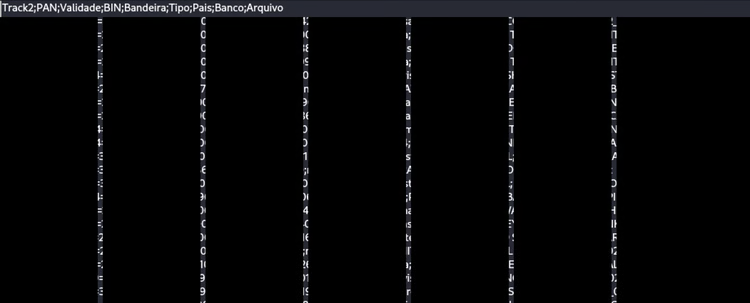
A sample of the stolen payment data. The table includes fields for Track2, PAN, card expiration date, BIN, payment network, card type, issuing bank, and record source. Sensitive values have been redacted.
In addition, the server contained information about the infected devices themselves, including operating system versions and geographic locations. This allowed researchers to assess the scale of the operation and determine that the primary targets were payment systems used by businesses operating in Brazil.
Specifically, 677 infected terminals (86.57%) were located in Brazil. Another 22 devices (2.81%) were identified in the United States, eight (1.02%) in Russia, and four (0.51%) in Germany. Additional infections were detected in Canada, China, Romania, Kazakhstan, the Netherlands, France, and other countries. The locations of 52 devices (6.65%) remained unknown.
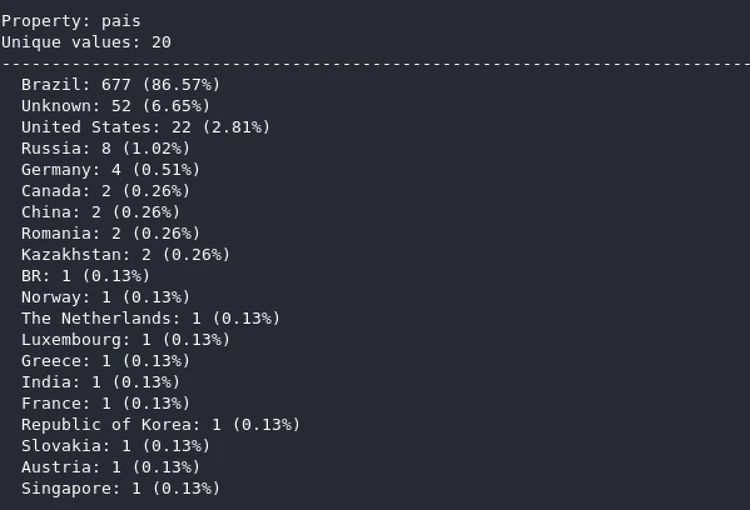
Geographic distribution of compromised POS terminals. Brazil accounted for 86.57% of all recorded infections, while the remaining devices were located in other countries or had unknown locations.
Because the compromised terminals were used for everyday payments, the number of stolen cards could have continued to increase. The attackers did not need to target each customer individually: the installed malware collected information as new transactions were processed.
The attacker’s exposed server became inaccessible on August 31, 2026. On September 8, information about the findings was shared with Brazilian computer incident response specialists. However, the server’s shutdown alone does not confirm that all infected terminals have been cleared of malware.
For affected cardholders, the incident poses risks of unauthorized purchases and financial fraud. The consequences for individual customers depend on how quickly their banks detect suspicious transactions and what security measures they have in place. Cardholders are advised to review their transaction histories, enable payment notifications, and contact their banks immediately if they notice unfamiliar charges.
According to researchers, this incident highlights one of the key security challenges facing payment infrastructure. Businesses often delay updates to their checkout systems due to concerns about disrupting equipment operations, the need to verify software compatibility, or insufficient attention to cybersecurity.
However, these delays create favorable conditions for cyberattacks. Criminals can use publicly available exploits against systems that should have been patched long ago. In this case, an old Windows vulnerability and hundreds of payment terminals left without timely updates were enough to steal data from more than one million bank cards.