

09.04.2024
2 min
1221



London police are testing an app that allows officers to identify suspects from smartphone photos in just seconds. The images are compared against a police database of photographs of people who have been arrested. The six-month trial involves 100 officers, and a person’s consent is not always required for the identification check.
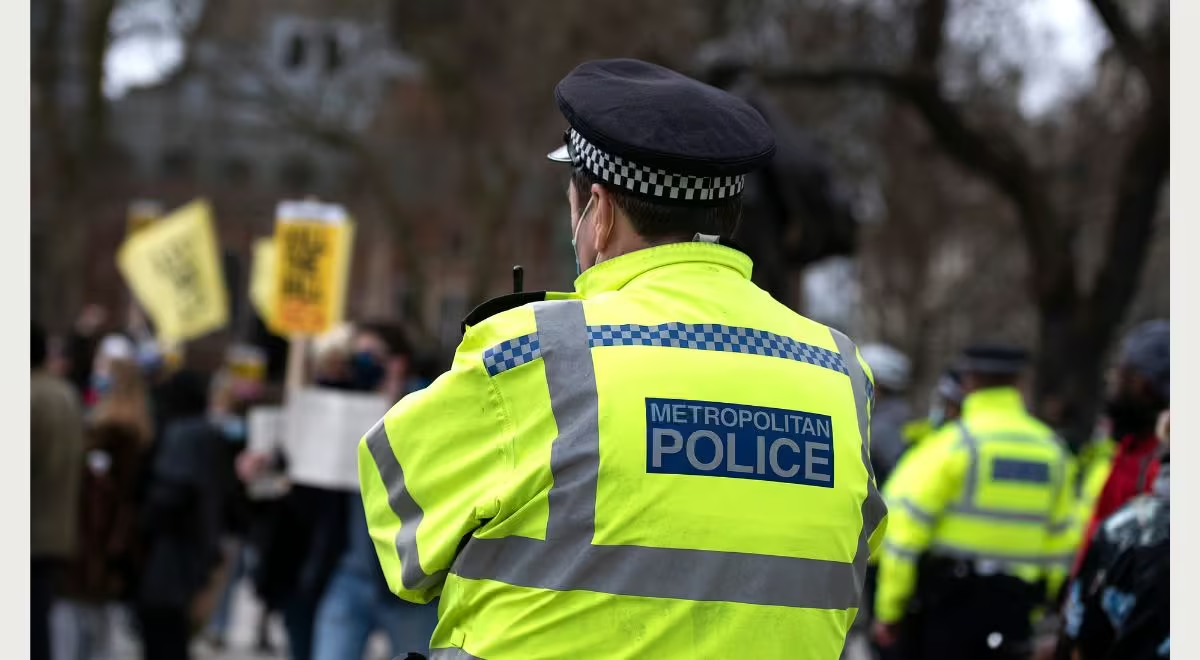
London police have begun testing a new way to identify people directly on the street. Officers can simply take a photo of a suspect using a police-issued smartphone and run a search through an app that compares the image against a police database.
As part of the six-month trial, the technology will be used by 100 specially trained officers. Checks will take place in central London, as well as at custody facilities in Croydon and Brixton, according to The Telegraph.
The app may only be used to identify people suspected of committing a crime or considered a potential danger to themselves or others. Before taking a photograph, an officer must inform the person of their intentions, but their consent is not required.
The new technology is intended to help in situations where a suspect refuses to identify themselves or provides false information. However, police officers cannot physically force someone to pose for a photograph. If a person avoids being photographed, officers must follow standard legal procedures, which may include taking them to a police station if there are lawful grounds to do so.
The app will not be used on children under the age of 13. During the first month of the trial, all minors under 18 will also be excluded from facial recognition checks.
During a demonstration of the technology, The Telegraph editor Charles Hymas agreed to test it on himself. The system gave his photograph a match score of 8,900 out of a possible 9,999, with a minimum threshold of 6,600. The journalist was not originally in the police database—his image had been added specifically for the test.
The app displayed the journalist’s photograph, full name, and custody record identification number. Police did not reveal some of the other information available through the system.
Met Police can now take a picture of suspects on their phone without consent
byu/JackStrawWitchita inTheUnitedKingdomNews
Despite police assurances that the app will only be used in limited circumstances, the new technology has sparked criticism. Social media users fear that it could be used for unlawful surveillance or harassment.
Similar incidents have already occurred in the United States, where at least 50 law enforcement officers were caught using automated license plate recognition systems, including Flock, to track their current or former partners.
Other users have expressed concerns about the security of personal data, particularly if a police-issued smartphone is lost.
Lindsey Chiswick, the Metropolitan Police’s lead for facial recognition, previously told The Guardian that a person’s biometric data would be deleted immediately if the system failed to find a match.
Similar controversies have already surrounded other surveillance systems. For example, Flock Safety develops automatic license plate recognition cameras whose data can be used by law enforcement agencies. The spread of these devices has even led to the emergence of the DeFlock movement in the United States, whose members oppose mass surveillance.
Another example is Facewatch, an AI-powered facial recognition system used to identify suspected shoplifters. However, the technology has repeatedly misidentified innocent people as suspects.
In one case, comedy event organizer Matt Arnold was asked to leave a Sainsbury’s supermarket after the system mistakenly identified him as a shoplifter. In some similar cases, people were not even told why they had been banned from entering a store.
Unlike Flock and Facewatch camera systems, the new Metropolitan Police app allows officers to check a specific person’s identity directly from a smartphone and receive results within seconds. It is precisely this ease of use that has raised concerns about the potential misuse of the technology.