

01.09.2026
3 min
235



Most of the most popular free Android games contain dozens of trackers that may send user data to advertising and analytics companies abroad. Proton’s research found that among the 100 most popular games in the US, 81% were linked to data sharing with companies in China, while 71% contained trackers from Russian companies.
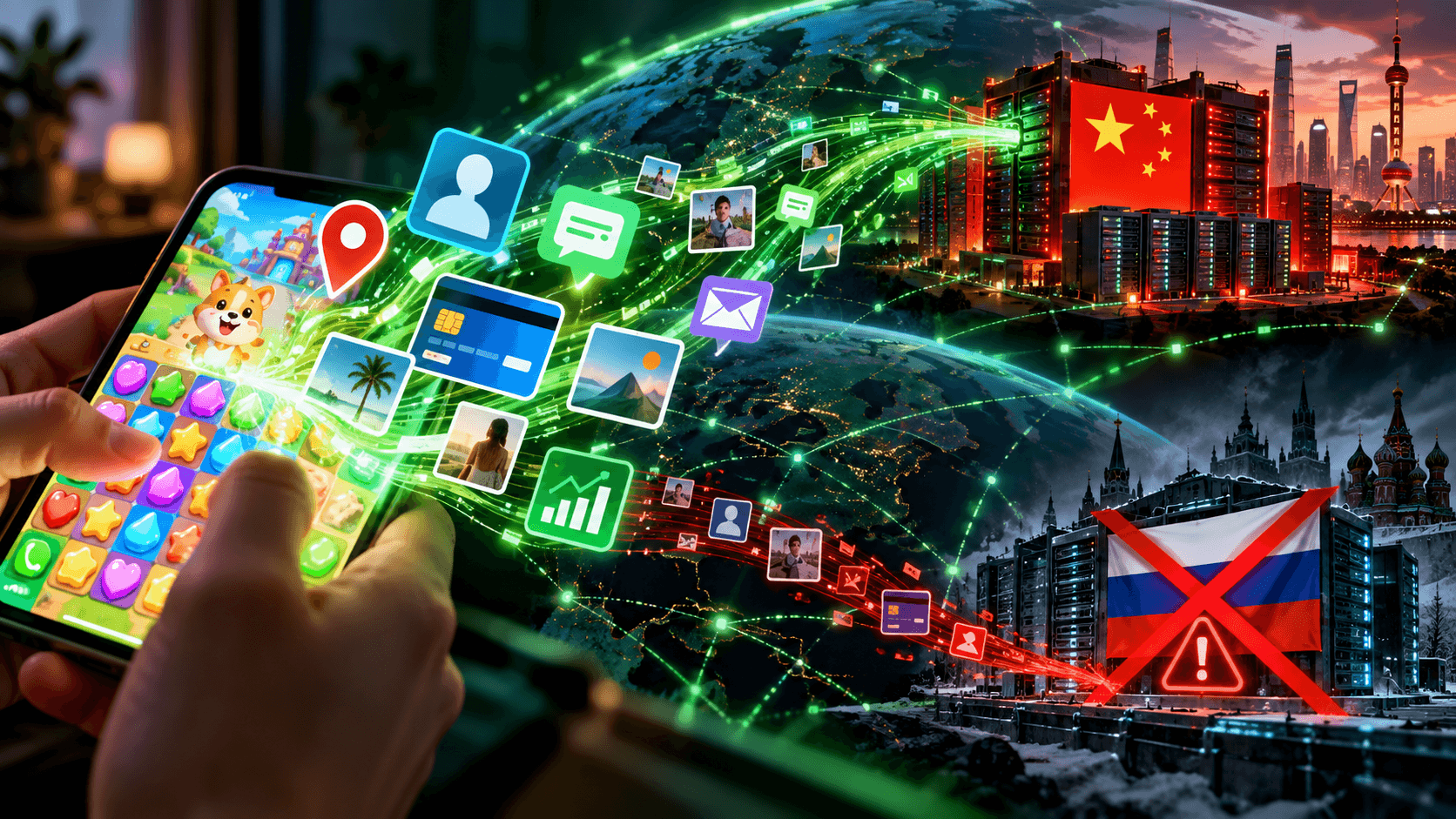
Proton analyzed the most popular free mobile games on Google Play in the US, UK, Germany, and France. The company examined how many trackers the apps contained, where user data could be sent, and how many users could potentially be exposed to this kind of tracking.
To count the trackers, the researchers used data from Exodus Privacy, an open platform that analyzes Android apps and identifies code associated with analytics, advertising, and profiling systems. Proton obtained May 2026 download figures from AppTweak.
In the US, 98% of the 100 most downloaded games contained trackers from companies based in Five Eyes countries, which include the US, UK, Canada, Australia, and New Zealand. Trackers linked to Israel were found in 95% of the games, 81% contained trackers linked to China, and 71% included trackers from Russia. A total of 70% of the games were connected to all of these groups at once.
On average, each game contained 29 trackers. Proton listed Block Blast!, Disney Solitaire, Vita Mahjong, Coin Master, Castle Busters, and other titles among the popular apps with particularly high numbers of such components. Combined, the games analyzed in the study had been downloaded nearly 20 billion times worldwide.
In May 2026 alone, the ten most popular games in the US recorded nearly 20 million downloads. According to the researchers’ estimates, 15.8 million of those downloads were for games containing trackers from Chinese companies, while more than 13.7 million were for apps with Russian trackers. Another 1.7 million downloads were linked to games capable of tracking users’ physical location.
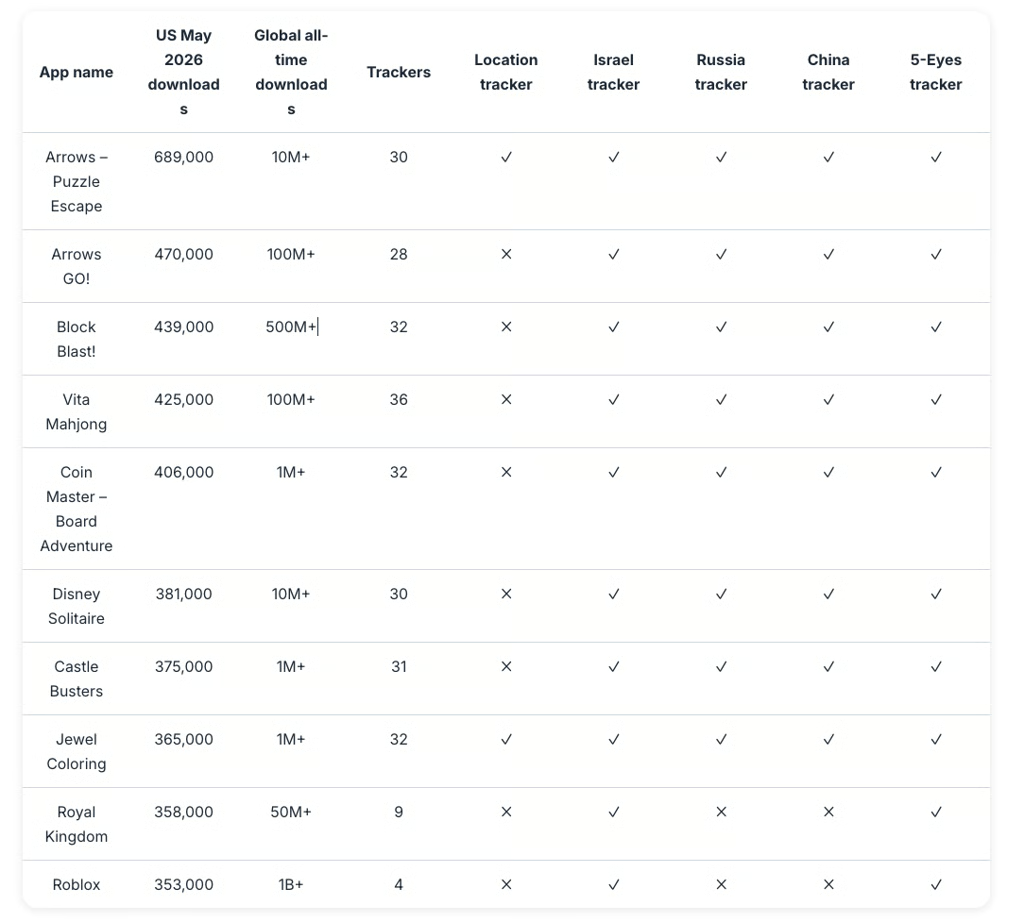
Trackers can collect far more than basic technical statistics about launching a game. Depending on the specific component, they may gather information about the device, installed apps and services, user behavior, age, gender, payment data, and location. The presence of a tracker does not necessarily mean that a particular game collects every one of these data types, but such code creates the technical capability for large-scale profiling.
Location tracking is a particular concern. Proton identified seven popular games that contain location trackers:
Magic Tiles 3™ – Piano Game
Pokémon GO
Chess – Play and Learn Online
Arrows – Puzzle Escape
Jewel Coloring
3D Bubble Shoot – ASMR Game
Rebel Glam: Dress Up Games
In the case of Pokémon GO, access to geolocation is directly tied to the game’s mechanics. However, the researchers point out that similar access is also requested by puzzle and coloring games, where constant location tracking does not appear to be as obviously necessary for core functionality.
Location data is particularly sensitive because, over time, it can reveal where a person lives and works, which places they regularly visit, and how they move throughout the day. Such a history could potentially expose visits to a hospital, a religious institution, a protest, or meetings with other people.
“While most gamers understand this monetization model, they are unlikely to grasp the true scale and intrusiveness of this tracking, or the fact that their data ultimately ends up in China, Russia, and Israel.”
The situation is similar outside the US. In the UK, 84% of the games analyzed contained Chinese trackers, 74% contained Russian trackers, 95% had Israeli trackers, and 99% included trackers from companies based in Five Eyes countries.
In Germany, the figures were 82% for China, 69% for Russia, 91% for Israel, and 97% for Five Eyes. In France, the corresponding figures were 78%, 70%, 93%, and 98%.
In May 2026, the 100 most popular games in Germany were downloaded more than 3.9 million times. Games with Chinese trackers accounted for around 3.2 million downloads, while those with Russian trackers accounted for 2.7 million. More than 371,000 downloads involved apps capable of tracking users’ physical location.
In France, the top 100 games were downloaded more than 4 million times during the same month. Around 3.1 million of those downloads were for games with Chinese trackers, 2.8 million were for games with Russian trackers, and more than 330,000 involved apps with geolocation tracking.
The scale of this tracking is tied to the free-to-play business model. Instead of charging a one-time fee for a game, developers make money through advertising, analytics, and integrations with ad platforms, while users’ personal data becomes part of that ecosystem.
The risk is not limited to data being shared with advertising companies. Third-party analytics platforms can also become targets for hackers. Proton points to Mixpanel, an analytics platform embedded in various apps, as one example. In November 2025, the company disclosed a breach in which attackers accessed historical analytics data and metadata that could be used to identify users. Among the games using Mixpanel, the researchers mention Roblox.
To reduce tracking, Proton recommends using ad and tracker blockers that filter DNS requests and prevent apps from connecting to known advertising and tracking domains. The company also points to paid, ad-free games as an alternative to a model that relies heavily on monetizing user data.
The research shows that the issue is not limited to a few suspicious apps. Tracking has become a routine part of the free mobile gaming ecosystem, while users often have little visibility into how much information is collected or which companies it passes through.