
30.12.2024
2 min
949



None of the Rassvet satellites launched in July managed to reach their operational altitude. Some are now losing altitude or approaching re-entry into Earth’s atmosphere.
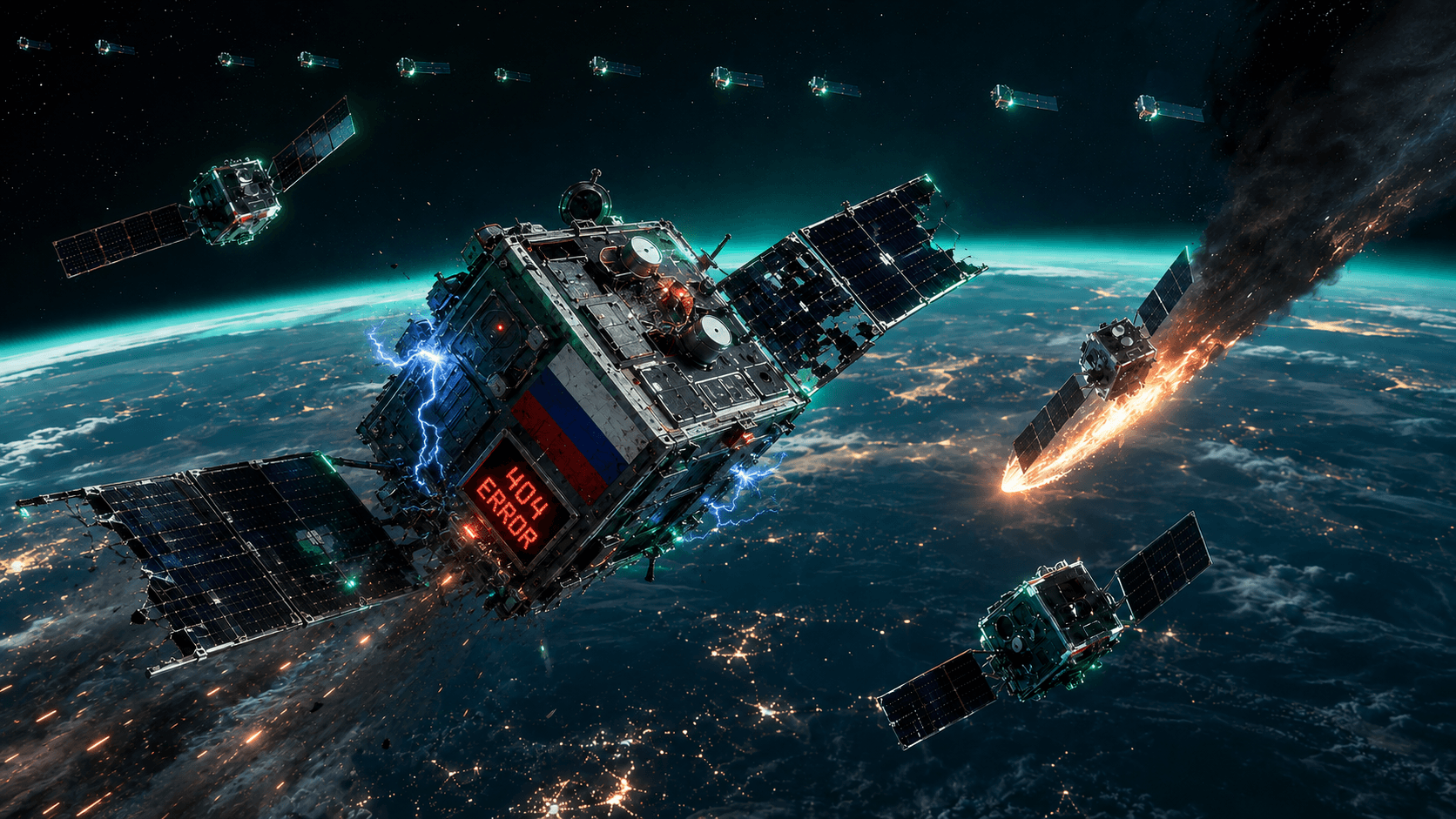
A recent analysis by the Institute for the Study of War (ISW) suggests that the Rassvet satellite program, intended to become an alternative to SpaceXAI’s Starlink, is not yet achieving its objectives.
None of the 16 satellites in the second batch, launched on July 19, 2026, had reached the expected altitude of 342 miles, or 550 kilometers, as of August 31. This is according to data from the N2YO satellite tracking service cited by ISW.
Many of these spacecraft remained at altitudes between 300 and 400 kilometers, or 186 and 248 miles. This is significantly below the planned operational altitude of 870 kilometers, or 540 miles.
For comparison, Starlink satellites orbit approximately 550 kilometers above Earth and have a service life of around five years, according to SpaceXAI.
ISW’s analysis indicates that some Rassvet satellites are experiencing orbital decay, meaning they are gradually losing altitude. In addition, at least two spacecraft are reportedly approaching re-entry into Earth’s atmosphere.
Operating in lower orbits shortens satellites’ service lives because of stronger drag from the upper atmosphere. The spacecraft must also consume more fuel to maintain their orbits.
According to ISW, the previous batch of Rassvet satellites performed better. Twelve of the 16 spacecraft launched on March 24 reached the expected altitude of 342 miles, or 550 kilometers, and remained there as of August 31.
These satellites provided Russian forces with two daily communication windows with ground terminals over Ukraine, lasting up to a total of an hour and a half per day. Russia launched its full-scale invasion of Ukraine in 2022.
ISW notes that Russia will struggle to create a fully functional alternative to the Starlink satellite constellation unless it dramatically increases the number of successful Rassvet satellite launches.
According to some estimates, Moscow would need at least 200 to 300 satellites to provide stable, round-the-clock connectivity over Ukraine.
Meanwhile, Ukraine continues to strike facilities involved in the production and launch of Rassvet satellites. This creates further obstacles to Moscow’s plans to deploy a fully functional Starlink alternative.
The Starlink satellite constellation, which provides high-speed internet access, plays a vital role in Ukraine’s defense and in maintaining civilian communications amid persistent outages.
In 2026, Ukrainian President Volodymyr Zelenskyy awarded SpaceXAI founder and CEO Elon Musk the Order of Freedom for his “outstanding personal contribution” to protecting human life and freedom.
At the same time, relations between Musk and the Ukrainian government have remained strained, as the entrepreneur has previously criticized Zelenskyy publicly.
The Donald Trump administration also threatened to cut off Ukraine’s access to Starlink if Kyiv rejected an agreement concerning critical minerals.
According to media reports, Musk rejected Ukraine’s request in 2022 to provide Starlink coverage over Russian-occupied Crimea during Ukraine’s counteroffensive because he feared nuclear escalation.
However, after reports emerged that Russian forces were using Starlink terminals obtained on the black market to control attack drones, SpaceXAI quickly disabled all devices that had not been authorized by the Ukrainian authorities.
According to sources, Musk also opposes Ukraine’s use of Starlink to conduct strikes deep inside Russia because he does not believe it would help bring the war to an end.