

Russia’s GRU may have gained access to Jared Kushner’s personal iPhone as early as 2017, when he was serving as a senior adviser to Donald Trump. Dutch intelligence later allegedly recruited a Russian hacker and used access to the same device to monitor Kushner’s financial transactions linked to the Middle East.
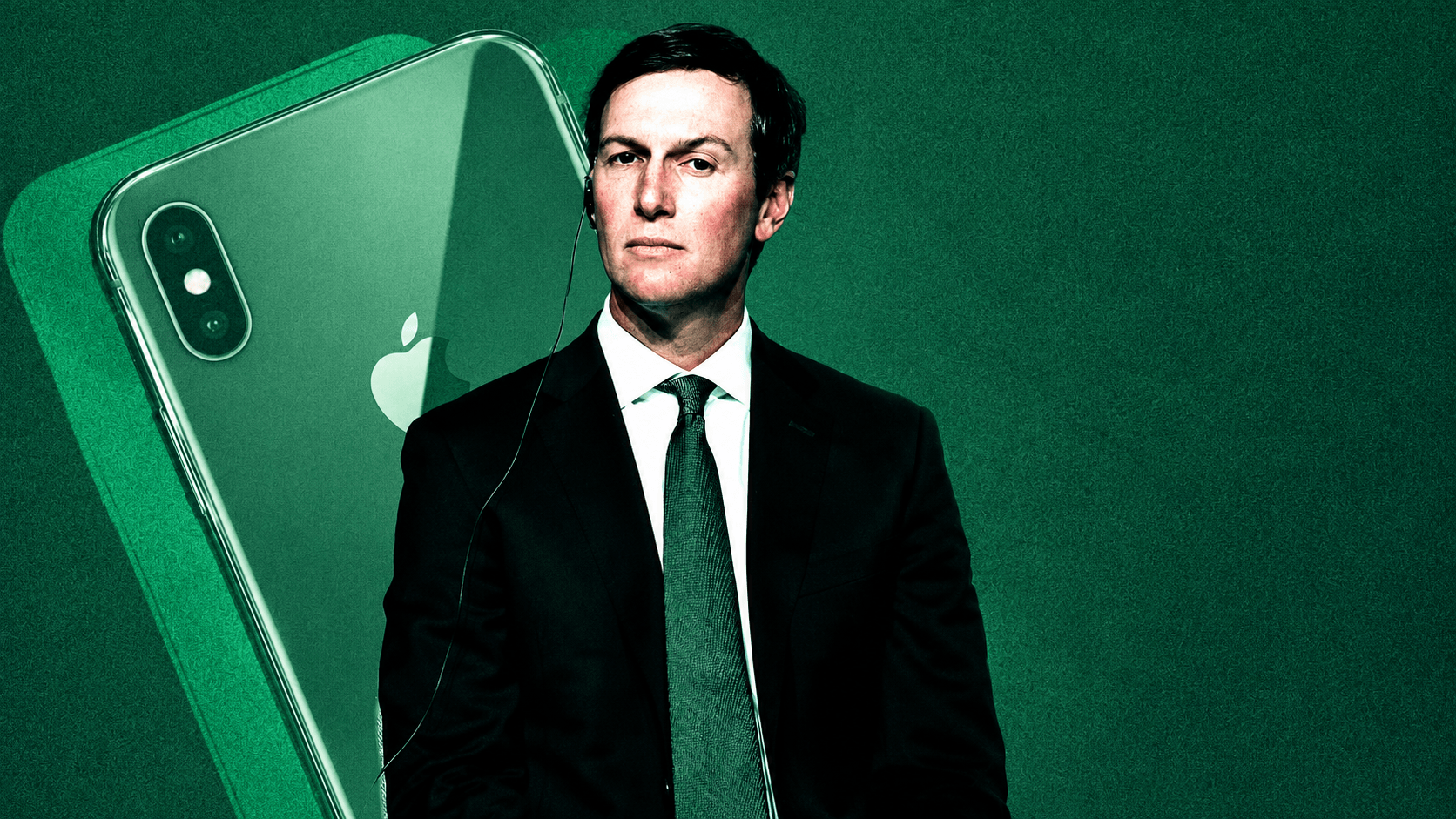
American investigative journalist Matthew Cole, in his new book Princes and Thieves: Jared Kushner and Mohamed bin Zayed’s Secret Plot to Remake the Middle East, describes an alleged intelligence operation conducted by Russian and Dutch intelligence agencies targeting Jared Kushner, Donald Trump’s son-in-law and one of his closest advisers. According to information published by Vanity Fair, Russia’s military intelligence agency, the GRU, gained access to Kushner’s personal iPhone in 2017. At the time, he was serving as a senior adviser to the US president and was responsible for negotiations aimed at achieving peace in the Middle East.
According to Cole, Kushner’s use of a personal smartphone instead of a secure government-issued device may have made it easier for Russian hackers to compromise his phone. The Trump administration may not even have been aware of the breach. However, the Dutch Military Intelligence and Security Service (MIVD) reportedly learned about the operation and decided to exploit the situation for its own intelligence purposes.
In late 2017, Dutch intelligence agencies learned that a GRU hacker specializing in stolen banking data was planning to travel to the United Kingdom on an intelligence assignment. MIVD contacted British authorities to request permission to detain the Russian operative. After receiving approval, Dutch agents approached him upon his arrival and offered him a choice: cooperate with them or face arrest in the UK on espionage charges. According to Cole, the Russian hacker agreed to work with Dutch intelligence.
The recruited hacker subsequently provided MIVD with access to a GRU server in Rostov, where Russian cyber specialists stored stolen information. Among the materials, Dutch intelligence officers discovered screenshots from Kushner’s personal iPhone. Rather than informing their American allies that the device had been compromised, MIVD reportedly decided to replicate the hacking method used by the Russians.
According to Cole’s account, Kushner was using an iPhone X, which Apple introduced in November 2017. The smartphone featured Face ID facial recognition and other security mechanisms considered advanced at the time. Nevertheless, Dutch specialists reportedly discovered a vulnerability that allowed them to capture images of the device’s screen. Their access had certain limitations: intelligence officers could not turn the phone into a listening device, remotely control its camera, or freely modify files. However, they could view the screen whenever Kushner used his phone. The captured images were automatically stored on Dutch intelligence servers.
While monitoring the smartphone, Dutch intelligence officers allegedly observed Kushner accessing a bank account in Dubai that had received approximately $750 million. According to Cole, the account, codenamed Alpha, belonged to the Watani Al Emarat Foundation, which was funded by the government of the United Arab Emirates. It was held at First Abu Dhabi Bank, headed by Tahnoon bin Zayed, the brother of UAE President Mohamed bin Zayed.
Cole claims that the money originated from the UAE and Saudi Arabia and was transferred through banking institutions in Azerbaijan. According to the journalist, these transactions helped conceal the source of the funds and made financial oversight more difficult. The account itself, Cole notes, was not formally owned by Kushner. However, he allegedly had signing authority and access to the funds, which were used for unofficial diplomatic purposes. One of Cole’s sources, familiar with the financial arrangements, explained:
“Jared was looking for shortcuts in his diplomacy.”
According to the journalist, there was also a second account, codenamed Beta. Mohamed bin Zayed allegedly transferred approximately $1 billion to it through Azerbaijan and the Central Bank of Israel. Cole’s source claimed that these funds were intended for Kushner’s personal benefit, although how the money was ultimately used remains unclear. Together, the two accounts described in the investigation involved approximately $1.75 billion. These alleged financial transactions remain claims made by the book’s author, not facts established in court.
US financial disclosure rules require government officials to report their access to foreign bank accounts, including accounts over which they have signing authority. If such arrangements were confirmed, they could raise questions about whether Kushner complied with the relevant disclosure requirements.
Jared Kushner categorically rejected the allegations, describing Cole’s account as “complete insanity.” In a post on X, he stated that none of the events described had ever occurred.
“During the period in question, I was one of the most thoroughly vetted people in the world, under intense media scrutiny, and subjected to numerous congressional investigations and a special counsel investigation,” Kushner stated.
He also emphasized that he voluntarily cooperated with investigators and provided more than 30 hours of testimony.
“None of these allegations ever surfaced because none of these events ever happened.”
Kushner also pointed to the absence of documents supporting the alleged financial transactions, including bank statements, wire transfer records, account details, and specific dates. His attorney, Chad Mizelle, also rejected the allegations, describing the central claim of the investigation as categorically false. According to the lawyer, the accounts described in the book do not exist, and Kushner’s legal team is considering filing a lawsuit.
American cybersecurity journalist Kim Zetter also commented on the controversy. She noted on X that a potential defamation lawsuit could lead to the disclosure of Kushner’s financial records during legal proceedings.
“Kushner’s bank statements, wire transfers, and correspondence would be subject to discovery, and he would have to testify under oath.”
The story emerged amid renewed diplomatic contacts between the United States, Russia, and Ukraine. Kushner has been involved in negotiations over a potential peace settlement alongside US presidential special envoy Steve Witkoff. Relations between American and Dutch intelligence agencies provide additional context. The Financial Times previously reported that the Netherlands had restricted intelligence sharing with the United States over concerns about respect for human rights.
Cole’s account of the alleged intelligence operation remains unverified by publicly available independent evidence. Nevertheless, the story raises questions about the security of senior government officials’ personal devices and the risks of using unsecured communication channels to discuss sensitive government and international affairs.