
26.07.2026
5 min
319



German manufacturer FRITZ! will add built-in DNS filtering to FRITZ!Box routers, allowing them to block ads, trackers, malicious websites, phishing pages, and botnet domains across all devices on a home network. The feature will arrive with the upcoming FRITZ!OS 8.50 update.
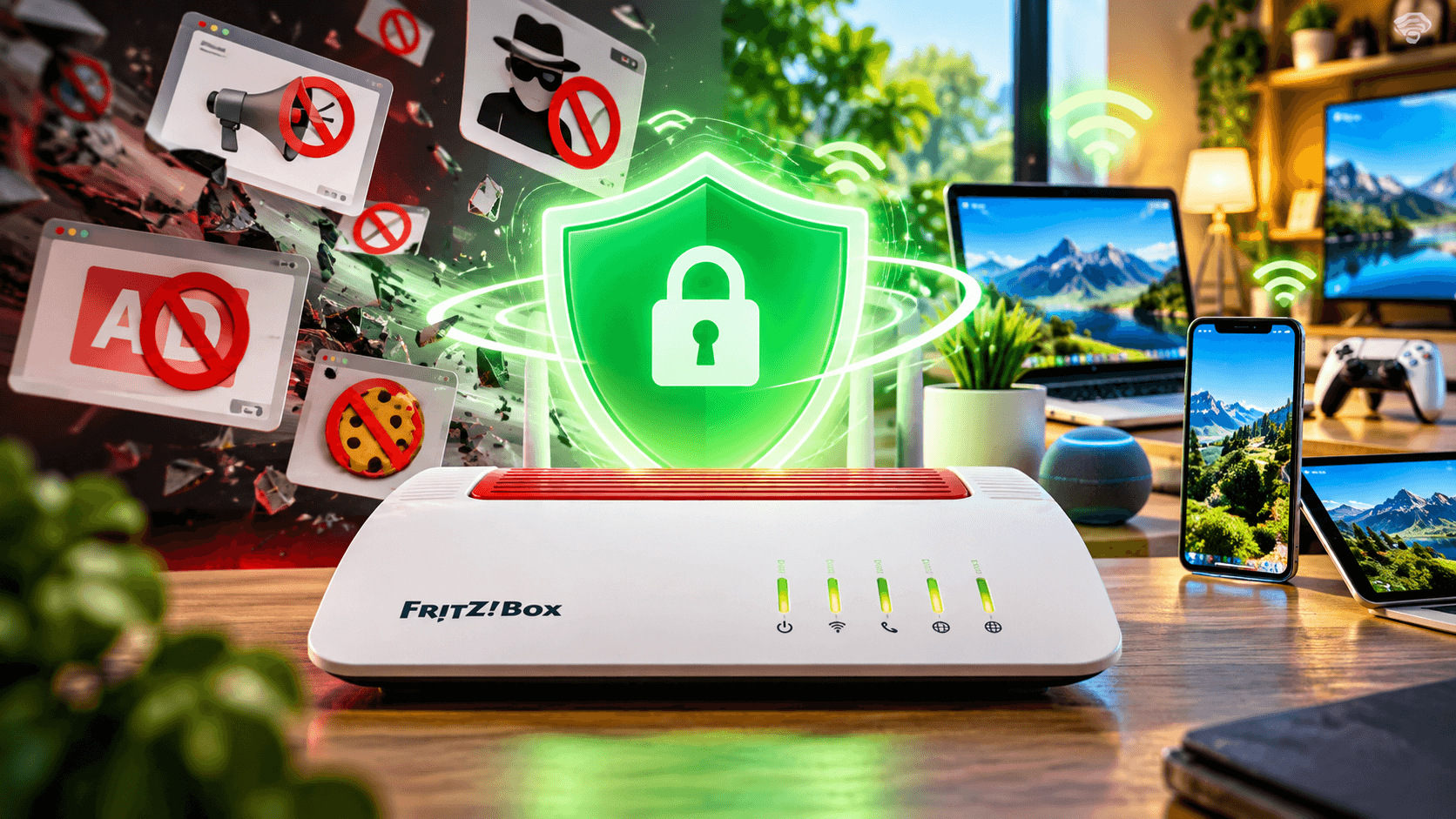
Previously, router-level ad blocking largely remained a solution for enthusiasts. It typically required setting up Pi-hole on a Raspberry Pi, using a more advanced network firewall, or configuring a private DNS service. FRITZ! now wants to make this approach much simpler by allowing users to enable filtering directly in the router settings.
In a FRITZ! press release, the company explains that the new DNS filter will allow unwanted resources to be blocked simultaneously across all devices on a home network. This applies not only to laptops and smartphones, but also to smart TVs, smart light bulbs, refrigerators, and other devices connected to the internet through a FRITZ!Box.
“With the new DNS filters, unwanted websites can be blocked simultaneously for all devices on the home network,” FRITZ! said.
The filters will be able to block websites known for excessive advertising, user tracking, or malware distribution. The system will also be able to block phishing sites, botnet domains, and other unwanted content. If one of the devices attempts to access an address on a blocklist, the FRITZ!Box will automatically stop the DNS request.
Users will not have to create all the rules manually. FRITZ!Box will support common blocklist formats, allowing router owners to use ready-made free lists, including those maintained by online communities. According to Cybernews, German publication Heise has already tested a beta version of the feature and found that it requires minimal effort to configure. Many filtering lists are already ready to use and are regularly updated.
FRITZ! is not the first router manufacturer to bring ad blocking to the entire home network. ASUS, for example, already offers similar capabilities through AiProtection, a suite of network security tools built into supported routers. Amazon offers ad blocking for eero through an additional subscription costing $99 per year or $9.99 per month, while Netgear includes its Unlimited Adblocker & Anti-Tracker feature in the Netgear Armor Plus plan for $149.99 per year.
However, router-level blocking also has limitations. DNS filtering works with domains and subdomains, so in some cases it can make not only an ad element unavailable, but also part of the website itself. Overly aggressive rules can sometimes break web services. In addition, this method cannot effectively remove all ads when they are delivered from the same domain as the main content. YouTube is one of the most obvious examples.
Browser-based ad blockers are more precise in this respect because they can selectively remove advertising scripts and elements directly from a webpage. However, they do not work inside apps and cannot protect smart TVs, IoT devices, or other equipment where installing a browser extension is impossible. This is where router-level filtering has an advantage: if a smart TV, refrigerator, or another device tries to send data to trackers or connect to blocked advertising infrastructure, the router can simply prevent the connection.
In addition to ads and tracking, DNS filtering can block domains associated with malware, phishing, command-and-control servers, and other cyber threats. At the same time, finding the right balance between strict filtering and normal website functionality is not always easy. Cybernews previously tested similar configurations and found that aggressively blocking Meta tracking scripts, for example, can interfere with loading Reels or Facebook posts.
The spread of router-level ad blocking could create additional problems for the advertising industry. Unlike a browser extension, such a filter covers every device on the network and can stop advertising and tracking requests before they ever reach a specific app or browser. According to Funnel, the advertising industry may have lost around $54 billion in revenue in 2024 due to the use of ad blockers. If network-level filters become a standard feature in mainstream home routers, the scale of blocking could grow even further.