

23.05.2025
2 min
794



The world’s tallest 3D-printed tower, Tor Alva, has been unveiled in the Swiss village of Mühlens. The 30-meter-high building was created without the use of formwork and looks like a giant wedding cake, with the goal of revitalizing a region suffering from decline.
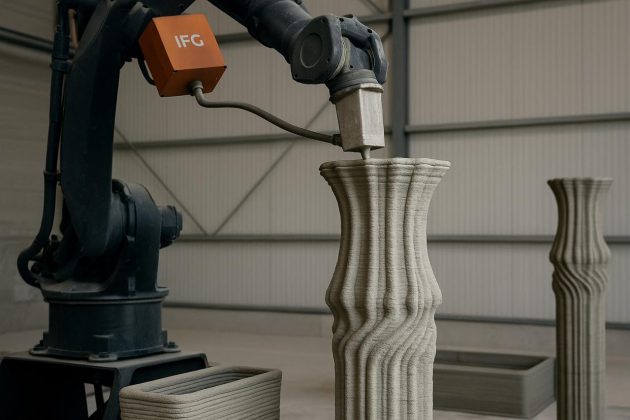
Tor Alva (which translates from Romansh as “White Tower”) was created through a collaboration between the Nova Fundaziun Origen cultural foundation and the Swiss university ETH Zurich. Architect Michael Hansmeier and a team from ETH developed a structure with 124 unique elements, including 48 load-bearing columns. They were printed in 900 hours using a special concrete that hardens in layers, without traditional molds. A second robot inserted reinforcement every 20 cm.
The inspiration for the design was the history of the emigration of confectioners from the canton of Graubünden – hence the association with cake. Mühlens, a village in the Alps with only 11 inhabitants, is gradually losing its population. The project should become not only a tourist attraction, but also a cultural center – excursions and theater performances are planned here.
Tor Alva is not only an innovative architectural solution, but also a socio-cultural experiment. The synthesis of 3D printing, digital design, sustainable tourism and cultural revival of small communities can become a new trend in the preservation of historical regions. The tower will be in the village for at least five years, after which it can be moved and assembled elsewhere.